by Dr A. Mesut Erzurumluoğlu | Principal Bioinformatician at Bicycle Therapeutics (formerly at Boehringer Ingelheim, and Univs. of Cambridge, Leicester & Bristol) – blogging since 2006. All views mine unless stated otherwise
‘Ondan da b*k – Bilim’ serisinde farklı bilim soslu safsatalar hakkında yorumlarımı sunuyorum. ‘Az iş çok laf’ serisinde ise Fikri’yle beraber genelde, başarılı, bilgili ve ‘cool’ insanlarla hafif konularda muhabbet ediyoruz. Twitter’da #AzIsCokLaf ya da #Ondandabok hashtaglerini kullanarak öneride bulunabilirsiniz. (Not: Yavaş konuştuğumu düşündüğünüz bölümlerde Spotify ya da Youtube’un 1.2x hızlandırma özelliğini kullanabilirsiniz)
Ondan da b*k – Bilim: Bölüm 4: Düz Dünyacılar (19/02/21)
Bu bölümde, “bilim insanları nasıl çalışır?” ve “bilim nasıl yapılır?” bilmedikleri için, aslındabilime ve bilim insanlarına toptan karşıt olan ‘düz dünyacılar’ın mantıksızlığından bahsedeceğim (Not: ironi içerir – her ne kadar da bu konuda fazla yetenekli olmasam da 😉 )
Kaynaklar:
1- James May Witnesses Curvature of Earth (YouTube)
2- Kharroubi Amira and Touir Jamel. The Geocentric Model of the Earth: Physics and Astronomy Arguments (PDF) – dünyanın (affedersiniz ama) en kıytırık dergilerinden birinde (The International Journal Of Science & Technoledge’de) yayınlanmış ve makale baştan sona teorik – yani sıfır delil. Maalesef – yüksek ihtimal (T. Jamel) Hoca öğrencisinin aklını çeldi ama – fanatik dincilerin kendilerini/gruplarını “dünyadaki tek akıllılar” sanmasının en bariz örneklerinden biri bu
4- Is the moon upside down? – Stargazing Live: Australia – BBC Two (YouTube)
5- Was the Moon Landing faked? | Big Questions with Neil deGrasse Tyson (YouTube)
6- Unmasking the Face on Mars (Link) – Insan zihninin rastlantısal durumları kabul etmeyerek yanılması ve alakasız veriler arasında bir bağ kurmaya çalışmasına ‘apofeni’ deniyor. Mars’tan gelen düşük çözünürlüklü fotoğrafta görülen ‘yüz’ de buna bir örnek… (Twitter)
Gönül muhabbet ister podcast bahane! 🙂 Genelde, başarılı, bilgilive ‘cool’ insanlarla hafif konularda muhabbet ediyoruz. Twitter’da #AzIsCokLaf hashtagini kullanarak öneride bulunabilirsiniz. (Not: Yavaş konuştuğumuzu düşündüğünüz bölümlerde Spotify ya da Youtube’un 1.2x hızlandırma özelliğini kullanabilirsiniz)
Az İş Çok Laf – Bölüm 10: Amerikan ve Türk edebiyatı ve sahaflık üzerine – Dr İdris Çakmak (26/01/21)
Bu bölümde, karşılaştırmalı edebiyat uzmanı Dr İdris Çakmak’la Amerikan ve Türk edebiyatı, okuma alışkanlığı kazanma, dil öğrenme ve kitap koleksiyonerliği üzerine konuştuk
İdris Hocanın Kitap tavsiyeleri:
Körleşme (Auto-da-Fé) – Elias Canetti
Kahire Üçlemesi – Necib Mahfuz
İskenderiye Dörtlemesi (The Alexandria Quartet) – Lawrence Durrell
Stiller – Max Frisch
Ficciones – Jorge Luis Borges
Doğu-Batı Divanı – Enis Batur
Geceleyin Kütüphane (The Library at Night) – Alberto Manguel
Why We Sleep: The New Science of Sleep and Dreams – Matthew Walker
Mesut’un kitap tavsiyeleri (max 3):
Hamlet – William Shakespeare
Mesnevi (Masnavi) – Mevlana Celaleddin Rumi
Savaş ve Barış* (War and Peace) – Leo Tolstoy
(*Tolstoy’dan daha kısa bir kitap için: İnsan Ne İle Yaşar – How Much Land Does a Man Need?)
(Not: Popüler bilim kitap listesi: A Brief History of Time – Stephen Hawking, The Greatest Show on Earth: The Evidence for Evolution – Richard Dawkins, ve Fermat’s Last Theorem – Simon Singh)
Fikri’nin kitap tavsiyeleri (max 3):
Doktor Jivago – Boris Pasternak (Rus edebiyatı)
Tatar Çölü – Dino Buzzati (İtalyan edebiyatı)
Bülbülü Öldürmek – Harper Lee (Amerikan edebiyatı)
‘Ondan da b*k – Bilim’ serisinde farklı bilim soslu safsatalar hakkında yorumlarımı sunuyorum. ‘Az iş çok laf’ serisinde ise Fikri’yle beraber genelde, başarılı, bilgili ve ‘cool’ insanlarla hafif konularda muhabbet ediyoruz. Twitter’da #AzIsCokLaf ya da #Ondandabok hashtaglerini kullanarak öneride bulunabilirsiniz. (Not: Yavaş konuştuğumu düşündüğünüz bölümlerde Spotify ya da Youtube’un 1.2x hızlandırma özelliğini kullanabilirsiniz)
Ondan da b*k – Bilim: Bölüm 3: ‘Türk geni’ ve ırkçılık (02/02/21)
Bu bölümde, genetikten ve akraba evliliklerinden örnekler kullanarak (i) “en üstün ırk Türklerdir”, “Türkiye Türklerindir”, “yabancılarla evlilikler yasaklanacaktır” gibi söylemlerin ve ırkçılığın (işin ahlaki/etik tarafından bağımsız olarak) hiçbir bilimsel temelinin olmadığından ve (ii) ‘Türk geni’ söyleminin muğlaklığı ve mantıksızlığından bahsedeceğim (Not: ironi içerir – her ne kadar da bu konuda fazla yetenekli olmasam da 😉 )
Kitap tavsiyesi:
How to Argue With a Racist: History, Science, Race and Reality – Adam Rutherford
Kaynaklar:
1- Biyoloji (sadece bildiklerimiz) ve ırkçıların odaklandıkları (Tweet)
Solda: biyoloji (sadece bildiklerimiz)
Sağda: ırkçıların odaklandığı (melanin üretimi cilt rengini belirler – soldaki resimde de içi boş bir kırmızı daireyle gösterilmiştir)
‘Ondan da b*k – Bilim’ serisinde farklı bilim soslu safsatalar hakkında yorumlarımı sunuyorum. ‘Az iş çok laf’ serisinde ise Fikri’yle beraber genelde, başarılı, bilgili ve ‘cool’ insanlarla hafif konularda muhabbet ediyoruz. Twitter’da #AzIsCokLaf ya da #Ondandabok hashtaglerini kullanarak öneride bulunabilirsiniz. (Not: Yavaş konuştuğumu düşündüğünüz bölümlerde Spotify ya da Youtube’un 1.2x hızlandırma özelliğini kullanabilirsiniz)
Ondan da b*k – Bilim: Bölüm 2: Aşı karşıtlığı ve ‘büyük oyun’ (01/02/21)
Bu bölümde aşı karşıtlarından ve ‘büyük oyunu’ gören vatandaşlarımızdan bahsedeceğim(Not: ironi içerir – her ne kadar da bu konuda fazla yetenekli olmasam da 😉 )
Sağlık konusunda bilim insanlarına itimat etmiyorsanız, bari zengin elitlerin ne yaptığına bakın – çünkü onların tabir-i caizse ‘canları tatlıdır’ ve genelde uzun ve sağlıklı bir hayat sürdürürler 😉 COVID-19 aşısını yaptırıp-yaptırmama konusunda da kararsız kaldıysanız şunu bilin isterim: zengin elitler gerekirse farklı ülkelere uçup aşıyı yaptırıyorlar. (“elit” eşittir “ünlü” değil bu arada – İngiliz kraliyet ailesi, Gelişmiş ülkelerde yaşayan aristokrat aileler, üst düzey hakimler vs. gibi gerçek elitler)
Kaynaklar:
1- İlk onaylanmış COVID-19 aşısını üreten BioNtech biyoteknoloji şirketinin kurucusu Prof. Uğur Şahin ve Dr Özlem Türeci (Tweet)
Bu resme bakıp "Korona laboratuvarda üretildi ve aşısı zaten hazırdı!", "Korona-morona hikaye; asıl sorun 5G!" diyenlerden birkaçı "yanılmışım" der mi acaba?
Ayrıca, samimiyetle "bu süreçte yanıldım" diyen (Yabancı/Türk) birkaç insan arıyorum ama çogumuz en baştan herşeyi bilmiş https://t.co/LS39Z8Joi1
2- Andrew Wakefield’in ‘Otizm ve MMR aşısı’ makalesiyle ilgili (en ünlü tıp dergilerinden biri) The BMJ dergisinde yayınlanan yazı: Wakefield’s article linking MMR vaccine and autism was fraudulent (Link)
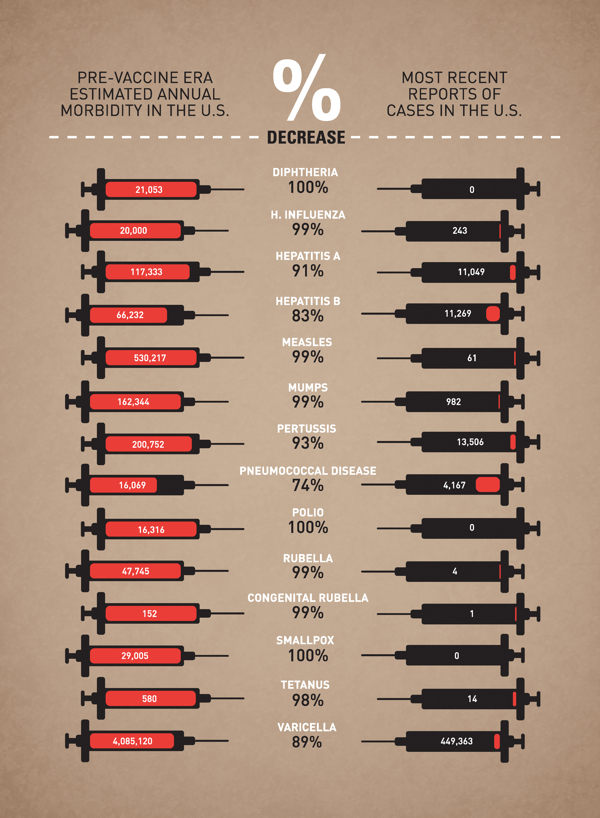
4- Çeşitli hastalıkların aşı bulunduktan önce ve sonra ölüm oranları: How Vaccines Have Changed Our World In One Graphic (Link)
Toptan aşı karşıtlarına tokat gibi bir grafik. (Grafikteki rakamlar 2007’den) Sadece Amerika’da difteriden senede >20 bin insan vefat ediyormuş. Difteri aşıları geliştirildikten sonra ise hiç ölüm kaydedilmemiş. Diğer aşıların da istatistiğini paylaştığım linkte ve başka kaynaklardan da bulabilirsiniz. Kaynak: Leon Farrant
‘Ondan da b*k – Bilim’ serisinde farklı bilim soslu safsatalar hakkında yorumlarımı sunuyorum. ‘Az iş çok laf’ serisinde ise Fikri’yle beraber genelde, başarılı, bilgili ve ‘cool’ insanlarla hafif konularda muhabbet ediyoruz. Twitter’da #AzIsCokLaf ya da #Ondandabok hashtaglerini kullanarak öneride bulunabilirsiniz. (Not: Yavaş konuştuğumu düşündüğünüz bölümlerde Spotify ya da Youtube’un 1.2x hızlandırma özelliğini kullanabilirsiniz)
Ondan da b*k – Bilim: Bölüm 1: Bilim ve insan (01/02/21)
Bu bölümde bilimin kendisi ve bilim insanları arasındaki ilişkiden bahsedeceğim (Not: ironi içerir – her ne kadar da bu konuda fazla yetenekli olmasam da 😉 )
Bence (az ya da çok farketmez) veri analizi veya yorumlaması yapan her genç bilim insanının okuması gereken 5 kitap: 1- The Art of Statistics: How to Learn from Data (D. Spiegelhalter)
Fizik, Biyoloji, Kimya, Jeoloji gibi ‘doğal bilimler’ dünyasının en gözde basım evlerinden biri olan Nature Publishing Group’un (@nature) 2016’dan beri her sene yayınladığı ‘Nature Index’ (2020) sıralaması açıklandı geçenlerde.
2- Dr Amy Cuddy’nin TED Talks konuşması – bölümün yayınlandığı günde toplam >60 milyon insan izlemiş (Link)
3- Google Scholar – merak ettiğiniz akademisyen/bilim insanının ismini yazmanız yeterli genelde (Link)
4- Blog yazım: Müslüman bir genetikçi olarak evrim teorisi hakkında görüşlerim (Blog) (Not: yayında bahsettiğim yazı da 2009’da kaleme alınmıştı – isterseniz blogumda paylaştığım ingilizce yazılar arasından araştırıp bulabilirsiniz 😀 )
5- Blog yazım: Okuduğumuz sağlık haberleri ne kadar doğru? (Blog)
6- Gözlem, hipotez ve (deneyle desteklenmiş) teori üzerine bir bilgisel (Twitter)
Bu yüzden genel halka oranla milyoner olma “isteği"* ya da milyoner olmayı gerektiren “şartlar”* doktora yapanlar arasında daha düşük oranlarda olacaktır ve bundan dolayı basit bir analiz yaparsanız doktora yapmakla milyoner olma arasında NEGATİF bir ilişki bulursunuz. pic.twitter.com/VR5BsPvQEp
— A. Mesut Erzurumluoğlu (@mesuturkiye) May 23, 2020
“Doktora yaparsanız fakir olursunuz” (şimdi silinmiş)tweetinin problemleri üzerine epidemiyolojik bir bilgisel yazmıştım
‘Ondan da b*k – Bilim’ serisinde farklı bilim soslu safsatalar hakkında yorumlarımı sunuyorum. ‘Az iş çok laf’ serisinde ise Fikri’yle beraber genelde, başarılı, bilgili ve ‘cool’ insanlarla hafif konularda muhabbet ediyoruz. Twitter’da #AzIsCokLaf ya da #Ondandabok hashtaglerini kullanarak öneride bulunabilirsiniz. (Not: Yavaş konuştuğumu düşündüğünüz bölümlerde Spotify ya da Youtube’un 1.2x hızlandırma özelliğini kullanabilirsiniz)
‘Ondan da b*k – Bilim’ serisinde farklı (aşı karşıtlığı, düz dünyacılık, ırkçılık gibi) bilim soslu safsatalar hakkında kısaca yorumlarımı sunacağım. Konular ağır olduğu için – seri biraz eğlenceli olsun diye – araya Kemal Sunal filmlerinden replikler de ekleyeceğim.
Not: Bu seri bol bol ironi içerir – her ne kadar da bu konuda fazla yetenekli olmasam da 😉
Gönül muhabbet ister podcast bahane! 🙂 Genelde, başarılı, bilgilive ‘cool’ insanlarla hafif konularda muhabbet ediyoruz. Twitter’da #AzIsCokLaf hashtagini kullanarak öneride bulunabilirsiniz. (Not: Yavaş konuştuğumuzu düşündüğünüz bölümlerde Spotify ya da Youtube’un 1.2x hızlandırma özelliğini kullanabilirsiniz)
Az İş Çok Laf – Bölüm 9: 70’lerden bu yanaTürk futbolu – Kadir Özcan (14/01/21)
Bu bölümde, 70’lerde İngiltere’ye gelen – Leicester’lıların “futbolcu Kadir abisi” – Kadir Özcan’la anıları, ve Türk ve Dünya futbolunun son 40-45 senesinde aklında kalan futbolcular, takımlar ve maçlar hakkında konuştuk
Kadir abinin Türkiye ligi karması/kadrosu:
Kale (biri): Ilie Datcu/Turgay Şeren
Defans: Alpaslan Eratlı (sol), İsmail Arca, Fatih Terim/Popescu, Turgay Semercioğlu (sağ)
Ortasaha: Yusuf Tunaoğlu, Alex/Hagi, Emre Belözoğlu/Oğuz Çetin
(Not: Yabancı futbolcular için Türkiye’de oynadıkları dönemi sayıyoruz – öbür türlü Roberto Carlos, Pepe, Eto’o, Drogba, Meireles gibi futbolcuları eklememek olmazdı. Eğik çizgiyle (“/”) ayrilan futbolcular maçına göre alternatif veya aynı seviyede futbolcular olarak eklendi)
Gönül muhabbet ister podcast bahane! 🙂 Genelde, başarılı, bilgilive ‘cool’ insanlarla hafif konularda muhabbet ediyoruz. Twitter’da #AzIsCokLaf hashtagini kullanarak öneride bulunabilirsiniz. (Not: Yavaş konuştuğumuzu düşündüğünüz bölümlerde Spotify ya da Youtube’un 1.2x hızlandırma özelliğini kullanabilirsiniz)
Az İş Çok Laf – Bölüm 8: Kazandığı burslarla Bill Gates’i batıran kız – Mine Köprülü (05/01/21)
Bu bölümde, Lisans, Master ve Doktorayı (Cambridge Üniversitesi, University College London gibi)İngiltere’nin en iyi üniversitelerinde (United World College of Atlantic, Gates Foundation gibi kurumlar aracılığıyla)tam burslu olarak okuyan Mine Köprülü’yle hayat hikayesi, akademik çalışmaları ve hayalleri hakkında konuştuk
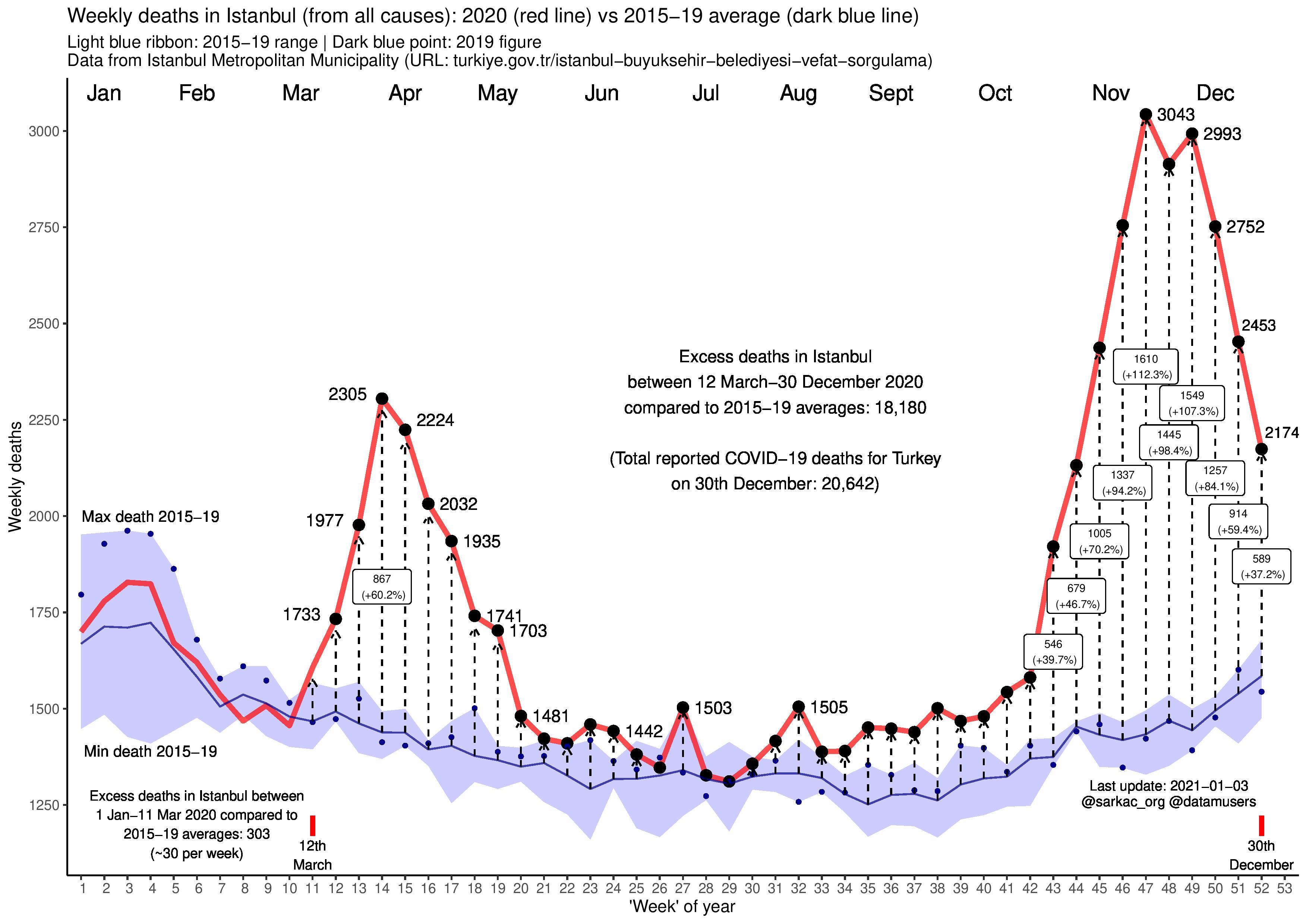
Figure showing excess ‘all-cause’ mortality in Istanbul (Turkey-wide data currently not available) in 2020 compared to 2015-19 averages – up to and including 30th December. We see a sharp increase in the number of excess deaths from week 11 onwards (i.e. 12th March onwards) – the week when the SARS-CoV-2 outbreak seems to have really took off in Istanbul. Reported number of total COVID-19 deaths on 30th December for Turkey was 20,642 (Reported number of total COVID-19 deaths on 25th October for Istanbul was 3,253 – last update; source: Ministry of Health/Sağlık Bakanlığı). But between 12th March and 30th December, we estimate excess deaths in Istanbul alone to be ~18,180 (NB: excess deaths were ~30 per week between 1st January and 12th March). Our estimate most likely points to either/both (i) an underestimation of deaths directly caused by COVID-19 and/or (ii) excessive deaths indirectly related to the current COVID-19 epidemic in Turkey. Both reasons deserve an extensive investigation by the media. Important notes: This figure will be updated and shared on my Twitter feed every few weeks until the end of 2020 (the commentary below – posted 25th May 2020 – will not be updated). The current (red line) plot finishes on the 52nd ‘week’ (i.e. 7-day interval) of 2020 which corresponds to 30th December, but the figures were updated on the 3rd January 2021 because the data provided by Istanbul Metropolitan Municipality is being updated retrospectively – which stabilises after ~7 days. Further details on Istanbul’s death figures can be found here (Mayor of Istanbul’s statement and additional analysis carried out by Financial Times’ analysts) – including details about the initial confusion on whether these figures are ‘burials in Istanbul’ or ‘all deaths in Istanbul’. Plot wholly generated using the ggplot2 library in R.
Prominent newspapers in Turkey (e.g. Cumhuriyet, BirGün, duvaR, T24 – with >1M followers)have picked up on our analysis (incl. commentaries such as: Sınırlı veri, sınırsız pandemi)
Commentary/discussion (25/05/2020)
Excess ‘all-cause mortality’ (that is, deaths from all causes – not just COVID-19) is probably the most informative statistic when comparing countries as there is no standard in reporting COVID-19 deaths between countries (e.g. differential PCR-based testing accuracy, cause of death coded differently e.g. dying with vs due to COVID-19). Premature deaths are also the ultimate outcome to prevent* and easy to measure – making it less likely to be affected by measurement error. Excess all-cause mortality comparisons have their own caveats when comparing all the countries in the world as many countries aren’t transparent even in this regard (e.g. isolated and/or autocratic countries). However, we can still access reliable data from plenty of developed and developing countries – including cities with relatively autonomous local governments (e.g. Istanbul) in countries known to have ‘transparency’ issues.
All-cause mortality statistics can be very useful for acountry/government to analyse how good it is tackling the multi-factorial challenges posed by the epidemic. As is shown in the above figure, analysing excess all-cause mortality will point us to deaths directly and indirectly related to the SARS-CoV-2 epidemic in Turkey. The indirect reasons include (not exhaustive): (i) people being scared to go to hospitals when they should have (and therefore died and not tested), and (ii) when they do, they may not have received the treatment they otherwise would have got due to insufficient number of beds, doctors/nurses.
I really like this figure by the Office of National Statistics (ONS; United Kingdom) as it can be very informative in preventing further unnecessary deaths. An analysis like this can point us to the indirect causes of excess deaths due to the epidemic. For example, there seems to be more people dying of Dementia/Alzheimer disease in England in April 2020 compared to the previous years, thus the causes of this spike should be further looked into (e.g. is it misdiagnosis or due to insufficient treatment?). There also seems to be less dying because of ischaemic heart disease, which probably means some of those who would have died in 2020 because of heart disease died due to COVID-19 – which makes sense as most who have died from COVID-19 were >65 aged men. Turkey (and all countries) should also make this data available. Image source: ons.gov.uk
We should note that (i) 2020’s Istanbul is a relatively less lively city than 2015-19’s Istanbul (e.g. less traffic on the roads and people on the streets) as there have been varying lockdown measures in the last couple of months, and (ii) we do not have access to Turkey-wide data to estimate what the total excess death figure in Turkey is. In our analysis we calculate excess deaths in Istanbul by comparing 2020’s results with 2015-10 averages. So, it is possible that the excess deaths are even higher in Istanbul (and most metropolitan cities around the world). This is something the Turkish government needs to be transparent and open to suggestions/improvement about. They clearly need help but only transparency can ensure that there is minimal unnecessary deaths.
The reasons behind excess deaths and whether the government could have done something about them should also be factored into whether a government is successful or not as very high excess all-cause mortality figures will show that they have tried to tackle this multidimensional problem using narrow-minded approaches. Especially the media need to ask the right questions (e.g. why is Turkey-wide data not available? what are the causes of these excess deaths? what is being done about them? who are advising the Turkish government?).
Aside from current excess deaths, long-term strategies should also be carefully taken – as although current excess deaths maybe low now for some countries (possibly including Turkey – we don’t know for sure), it may end up being as bad as other ‘poorly’ performing countries come the end of 2020 (with the additional ‘double whammy’ of destroying the economy of the country due to stricter lockdown measures). I therefore do not share the view of many academics who are repeatedly calling some countries ‘very successful’ as I think it’s too early to call any country ‘successful’ now. For me, there can only be ‘unsuccessful’ countries at the moment (e.g. Brazil seems to be a clear example of this – unless there are huge changes in policy by the government).
Finally, I value this exercise as I don’t think the media in Turkey is doing a good job of looking into what is causing these additional deaths. I will stop contributing to these analyses once I feel this issue is being properly looked in to by the government and the media**.
I am open to suggestions and criticism regarding these analyses. I am also happy – with appropriate attribution – for anyone to use the figure or the contents of this blog post (including direct Turkish translations).
Thanks for reading!
The official Covid-19 death toll worldwide is above 440,000
But in 27 countries alone, the BBC found at least 130,000 more excess deaths during the pandemic that were not directly attributed to coronavirus
— A. Mesut Erzurumluoğlu (@mesuturkiye) May 25, 2020
Footnotes:
*If I was to provide an extreme example just to prove the point, imagine if whole of the UK was infected (e.g. due there were no lockdowns imposed or the lockdowns didn’t work at all, no education of the public regarding the spread) but there was no deaths from COVID-19 in the country because of world-class treatment provided to all those who were hospitalised, then we could safely say that the UK government/country was very successful. And vice-versa, if the total number of cases was only 100,000 in the whole country but all 100,000 died, then we could easily say – although the lockdowns etc. have worked – that government/country did a terrible job of handling the epidemic.
**There is criticism from some of my Turkish followers on why I’m not doing a similar analysis for the UK (my country of residence). However, similar – and better – analyses have been/are being carried out by scientists and the media professionals for the UK. Needless to say, the media, academia/intelligentsia and civil society in the UK is (i) more inquisitive, and (ii) have considerably more ‘know-how’ than their Turkish counterparts.
PS: Turkish version of the figure will appear on Sarkaç’s Twitter page (@sarkac_org) and blog every week – without the above commentary, as this is solely mine and does not necessarily reflect the views of Sarkaç.
PPS: I’m very concerned about a lack of preparation for an impending (large) earthquake in/near Istanbul. Combining this with more people being at home due to the epidemic, I fear the worst. The government and media must get on this matter as soon as possible.
Gönül muhabbet ister podcast bahane! 🙂 Genelde, başarılı, bilgilive ‘cool’ insanlarla hafif konularda muhabbet ediyoruz. Twitter’da #AzIsCokLaf hashtagini kullanarak öneride bulunabilirsiniz. (Not: Yavaş konuştuğumuzu düşündüğünüz bölümlerde Spotify ya da Youtube’un 1.2x hızlandırma özelliğini kullanabilirsiniz)
Az İş Çok Laf – Bölüm 7: “Nasıl başardım?” – Tarık Gönen (22/12/20)
Bu bölümde blogunda (link: http://siirimemnu.blogspot.com/) paylaştığı şiirleriyle sosyal medyada ünlenen Tarık Gönen’le şiirlerinin arka planı, hayalleri ve hayat felsefesi hakkında konuştuk
Ben 12 yaşındayken (2000) ailecek İngiltere'ye taşındık ve ingilizcem neredeyse sıfırdı. Bunu duyan (Karen Holman adında) Sınıf Öğretmenim, kendimi evimde hissedeyim diye tüm arkadaşlarıma Türkçe cümleler dağıtmış. Sınıfa girer-girmez arkadaşlarımın hepsi bana "Hoşgeldin" dediler




 An ordinary blog by an ordinary bloke
