Feeds:
Posts
Comments

Archive for the ‘English’ Category

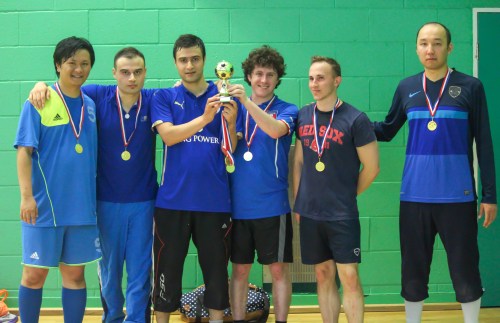
UBU Staff League Cup 2015 winners ‘Flying Foxes’ team (Left to Right): Chris Z, Esat E, Mesut E, Guillermo B, Adam T, Askhat T. Tom R was also in the team

UBU Staff League Cup 2015 winners
‘Flying Foxes’ team (Left to Right): Chris Z, Esat E, Mesut E, Guillermo B, Adam T, Askhat T. Tom R was also in the team

‘Flying Foxes’ Team: Mesut Erzurumluoglu (Captain), Esat Erzurumluoglu, Tom G Richardson, Askhat Tleuov, Adam JW Trickey, Jie ‘Chris’ Zheng, Guillermo Fernandez Bunster

See link for full details: Mesut and Co win University of Bristol Staff League Cup 2015

Results

Group Stage:

Flying Foxes 7-1 Mighty Midgets (Mesut 3, Guillermo 2, Adam, Tom)

UoB Staff Team 1-2 Flying Foxes (Adam, Guillermo)

Phys Pharm 2-8 Flying Foxes (Mesut 3, Guillermo 2, Adam 2, Tom)

Eintracht Autopiroozeurs 1-1 Flying Foxes (Adam)

Group Standings (top three)

1st: Flying Foxes (10pts), 2nd: UoB Staff Team (9pts), 3rd: E. Autopiroozeurs (7pts)

Final: Galbani Team 2-4 Flying Foxes (Mesut, Esat, Guillermo 2)

Read Full Post »

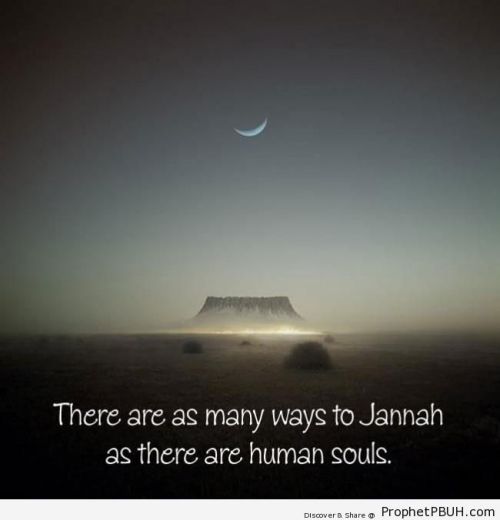
There are as many ways to Paradise as there are human souls - Rumi

There are as many ways to Paradise as there are human souls – Rumi

“Does God/Allah have an ego issue?” was one of the questions asked by a Muslim girl (judging by the headscarf she wore) to a well-known (judging by the YouTube hits) and knowledgeable Muslim sheikh at a gathering in Bristol (UK). However, to my surprise he did not have an answer and dodged the question. I presume because he had never come across such a controversial question before – especially from a Muslim.

I realised more clearly there that we (and I mean all of us!) wrongly take for granted and assume that everybody in our vicinity/close circle has the same amount of faith as we do. We also pretend that everyone will find the answers to their questions without anyone actually answering them – and therefore make no effort to gauge the theological/philosophical issues that exist within our communities.

Unfortunately we Muslims (generally speaking) do not have the same ‘free spirit’ as Westerners when it comes to asking controversial questions*. We think too much about what others would think and the reaction we would get, and maybe rightly so (as it would probably get us into trouble in the “backward” and corrupt countries that most of us are from)… However, virtually all of us harbour such questions** but mostly those who are born and bred in Western countries have the desire to seek answers and the guts to ask them to a scholar and/or in front of the public. However “why this is?” is another topic for us to ponder upon – and maybe for researchers to empirically analyse.

I believe that Islamic philosophy*** has to be resurrected from its ashes by today’s knowledgeable Muslim scholars to start contributing not just to the Muslim intellect, but to the World’s way of thinking (just as it was in the ‘Golden age’ of Islamic civilisations which lay the foundations for the ‘enlightenment’ in the West). For tough questions to be adequately approached, collaborations from many fields are required, which is the main missing ingredient in the ‘Islamic’ world at present… It is quite a shame as Islam lay its foundations on the brotherhood and unbreakable bonds between the Muhajir and the Ansar. But today, the ‘Muslim’ world is a mess! All hates all!

I am glad to say however that there are signs of change with some great movements (advocating dialogue, tolerance and peace) being initiated in the Muslim world. Hope they will bear fruits soon as we are fed up of living in a world full of killing, violence and bloodshed (some supposedly being done in the name of religion)!

Getting back to the question at the start, I have thought on this issue a bit and believe the answer should have been along the lines of: “Whatever I say, it is not going to convince everyone as the real answer lies within ourselves, not in any book or scholar. However the answer is a definite NO. God does not have an ego issue. It is we who do!”

“God has created us, given us everything that we have (from our parents to our intellect); and sent us to this Earth to test us for a tiny amount of time (in the grand scheme of things). However we have paid him back with disobedience, disloyalty, negligence to his message, ignorance to his messengers who were the greatest and most kind of mankind (list can go on)… But He (The Most Merciful, The Most Gracious) is willing to forgive each and every one of us if we wholeheartedly ask for His forgiveness. He will then grant us with Paradise (forever) for the little bit of good that we did in His name (in that finite time period that we call ‘life’).”

So to say that he has an “ego issue” after all the things that he has done for us, reflects the enormous “ego issue” that we have within ourselves. I am not a scholar (wish I was!) therefore I cannot give comprehensive answers, but all I can say is that there is need for us to return back to the basics and start teaching the true essence of Islam to people, starting within our own communities (i.e. Muslim).

* Just Google search the same question, and you will see that the it has been asked repeatedly by people of other faiths or no faith, but it is quite hard to find a similar one in an ‘Islamic’ website

** Being a Muslim does not change the fact that you are still a human being like any other – with ‘human’ problems

*** I do not mean the philosophical/theological thinking done by Ibn Taymiyyah or Omar Khayyam (whose ideas are totally against the teachings of the Prophet (s.a.v) and the Qur’an) but similar to ones carried out by (Sufi) intellectuals/scholars such as Rumi, Bayazid Bastami, Al-Ghazali and Ibn Arabi. A more recent example is Said Nursi, who is a scholar of the 20th century. His ‘Risale-i Nur‘ collection is considered one of – if not the – greatest Islamic exegesis (tafsir) by many; and thus should be read by all interested in deepening their understanding of the Qur’an, the Prophet (PbuH) and Islam as a whole.


PS: I do not like preaching my beliefs (although I do try and give answers if I am asked) as I believe everyone’s on their own journey to find the truth about God, life and the hereafter. We may all arrive at the same conclusion through (sometimes totally) different means…

Read Full Post »
King and his Jester jokes are also a common theme in Turkish caricatures

King and Jester jokes/stories are also a common theme in Turkish caricatures. In this example, the jester’s provoking/fooling the king by saying: “you can defeat your enemies blindfolded”.

Turkish sense of humour – just as with most cultures – has been shaped by past events and influential figures. However we Turks do not like to make fun of ourselves (e.g. like the English), therefore we create (semi*)fictional characters and make fun of them. We take ourselves too seriously…

However we still managed to obtain a great sense of humour with all sorts of jokes/funny stories. They include stories/jokes from religious figures such as Nasreddin Hodja, naive and funny figures such as Temel and Dursun, and stingy but funny figures (e.g. People of Kayseri are famous for being successful businessmen but also for being tight with money, therefore these types of jokes are attributed to them).

We also generally – for some reason – hold this belief that a joke should make you think as well as make you laugh, therefore a lot of our jokes have a moral story behind it. Although I am not against the ‘make you think’ part, I believe that the primary aim of a joke is to make you laugh and relax the mind, therefore the focus should be on being funny. Sometimes the primary goal has been forgotten, therefore we have many jokes which do not even make you smile, let alone make you laugh 🙂

You can find English translations of Temel and Dursun jokes, and Nasreddin Hodja stories all over the internet. Google them, or you may wish to click the hyperlinks for some chosen examples…


Less known (in English) are the ‘People of Kayseri’ jokes. A couple of examples are below:

Father and Son

Son asks his father: “Could you lend me 50 lire dad?”

Father replies: “40 lire? What do you need 30 lire for? Isn’t 20 enough? Here’s 10.”

And he takes out a 5 lira note and gives it to his son.

The son goes: “I needed 5 lira anyway…”

Father: “You naughty boy! Nearly had me if I hadn’t given you fake money”

On his death bed

A man from Kayseri is on his death bed. He asks: “My dear wife, are you here?”

Wife: “Yes, right next to you”

Man: “My sons Mehmet and Ahmet, are you here?”

Mehmet and Ahmet: “Yes, father”

Man: “My beautiful daughter Fatma?”

Fatma: “Yes, my dear father”

The man gets up rapidly and shouts furiously: “If you’re all here, who’s looking after the shop!?”


* I say “semi” because it is not hard to see that we have living Temels and Dursuns scattered around the streets. Turkey is a fun place with a plethora of funny (or tragicomic) characters which you can easily observe in daily life. Sometimes as you’re walking to work, you yourself are involved in or come across a few jokes/funny events 🙂

An example would be: You might ask where “so and so café” is. You shouldn’t surprised if you get a reply like: “I don’t know, where is it?”; or “Are you blind? Can’t you see it’s right there!” (I wouldn’t have asked if I’d seen it!)

Read Full Post »

vase breaking

Could be a song about a guy/girl whose trying to get the attention of the girl/guy he/she likes by (intentionally but apparently ‘by accident’) bumping into her/him, dropping stuff on the floor, doing clumsy stuff.

Can’t tell you I need you
Can’t tell you I want you
Stop thinking about you
Coz I can’t breathe around you

Seems like you’re not gonna talk to me either

So…
Oops oops whoopsie daisy
Oops oops whoopsie daisy (x2)

Can’t tell you I love you
Stop guys walking around you
Wished I wasn’t so speechless
A coward, so sapless

Although you’re brightening my day
Haven’t got a clue what I’d say
As my brain’s numb when you’re close to me

So here it goes…
Oops oops whoopsie daisy
Oops oops whoopsie daisy (x2)

Oh Lord!
Give me hope, give me strength
The load, is getting too much
Don’t wanna keep doing this no more
She’s worth it but I’m at a loss
One last time, here it goes…

Oops oops whoopsie daisy
Oops oops whoopsie daisy (x4)

Read Full Post »

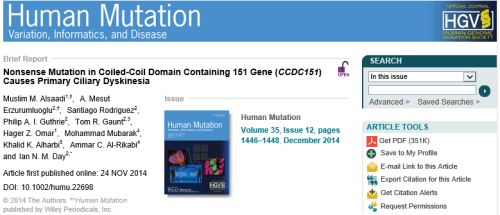
Human mutation mesut erzurumluoglu

Primary ciliary dyskinesia (PCD) is a rare disease that affects tiny, hair-like structures (called cilia) that line the airways. Respiratory cilia carry mucus (which contains inhaled dust and bacteria) toward the throat to be coughed/sneezed out of the body (or digested). In PCD patients, these cilia do not perform their job properly thus allow bacteria and dust to stay in your airways and cause chronic respiratory diseases/infections.

humu22698-fig-0002

Cross‐sections of respiratory cilia in (A) control (non affected) and (B) CCDC151 mutated proband. Image from Alsaadi and Erzurumluoglu et al (2014,  Human Mutation)

We, at the Bristol Genetic Epidemiology Lab (BGEL, University of Bristol, UK), discovered a new Primary ciliary dyskinesia (PCD) causal gene (collaborating with colleagues from the King Saud University, Saudi Arabia).

I, on the 27th of November 2013 – whilst analysing the DNA sequencing data obtained from our participants – discovered the c.925G>T:p.[E309*] mutation in a homozygous state (i.e. two copies of the mutation) within the CCDC151 gene of one of our PCD affected participants. The CCDC151 gene was a great candidate as indicated by previous animal studies, however was not observed as a ‘causal gene’ in PCD affected individuals.

Once this mutation emerged as a clear candidate, we then followed it up by further phenotyping, and bioinformatics and wet-lab studies; and this finding was eventually published more than a year later (i.e. December 2014 issue) in the very respectable clinical genetics journal ‘Human Mutation’ (manuscript sent: 2nd Jun 2014^).

Please see the paper (Alsaadi and Erzurumluoglu et al, 2014. DOI: 10.1002/humu.22698) and the supplementary files for further details on the methods used and full list of co-authors.


Author Contributions:

AME wrote the manuscript (with guidance from SR, TRG and INMD). AME carried out in silico and wet-lab analyses. INMD and MMA led the study; and together with SR, KKA, PAIG and TRG, provided guidance throughout study and also commented on the manuscript. MMA carried out diagnosis and obtained consent from family. ACA, MM, HZO and MMA led the collection and processing of EM images for cilia. PAIG and AME performed DNA extraction, quantification and other DNA quality control procedures. All authors approved final version of manuscript.


^Now we know that another group (Hjeij et al, 2014) had submitted a paper with similar findings (albeit with additional animal models) to the journal AJHG a week before us (23rd May 2014). Although both groups identified CCDC151 to be a PCD causal gene independently, subsequent citations have all been directed to their paper – reflecting the critical importance of publishing before anyone else.

Read Full Post »

Please be aware of the fallacies you commit when constructing an argument – and likewise spot them when the opposition is using them against you. Constructing a completely valid argument is one of the hardest things and therefore requires sincerity, practice and knowledge. The former reason is important as committing fallacies can be an easy ‘exit strategy’ from a debate – and can win you the argument in the eyes of an uninformed/uneducated audience.

For those of you looking for real-life examples of the fallacies below, I’m sure you can observe them very frequently in political debates – and therefore can improve your ‘valid’ debating skills by not emulating them.

There is a Coursera course on How to Reason and Argue. Also see this link.

Examples of fallacies used in arguments

NB: I have always been against ‘useless’ debates (e.g. Science v Religion, Islam v Christianity) and more in favour of dialogue. However I do recognise that debates are sometime a must for human intellect to evolve, especially in natural and social sciences.

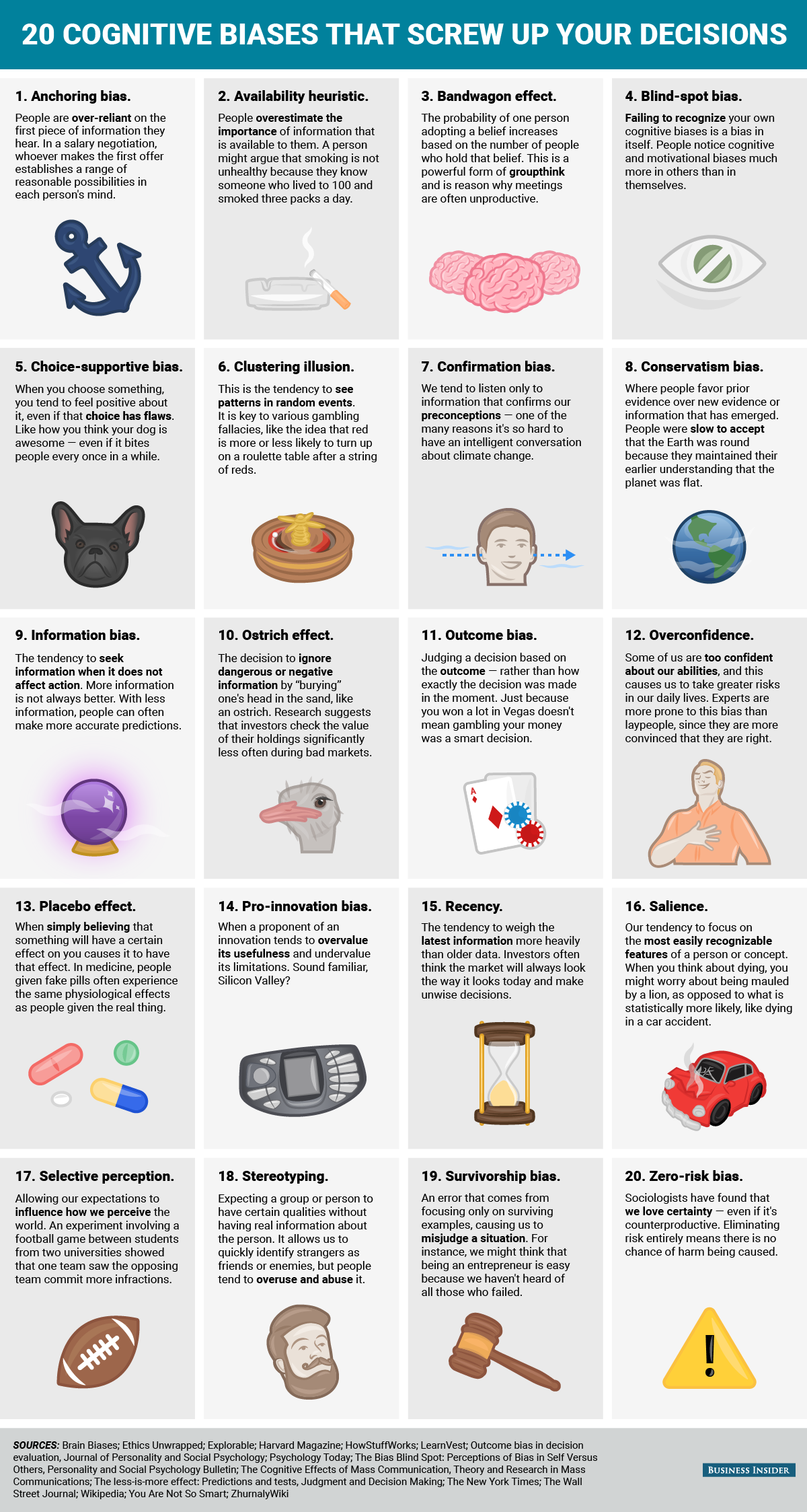
PS: There are also other biases which we probably all have – and all need to be rectified before we can reach our full potential as ‘open-minded’ human beings. See below:

Biases which affect our decisions in a negative way

Biases which affect our decisions in a negative way

Read Full Post »

Obesity is a big problem World-wide

Obesity is a ‘big fat’ problem World-wide (Image from Wikipedia)

Obesity increases the risk of a variety of disorders such as coronary heart disease (UK’s biggest killer!) and cancer (e.g. colon, breast) and influences other health related traits such as increasing blood pressure and blood fats. Therefore it is always important to know what your normal range for body mass index (BMI) is. Keeping within this range is bound to decrease your risk for obesity related disorders – although should not be solely relied on. Intake of right amount of minerals and vitamins is also crucial.

The NHS have created an online BMI calculator which I found very useful:

BMI healthy weight calculator


PS: Please also check the BMI of your loved ones (especially elder members) as most people usually ignore the early signs and become obese… Warn them if they’re overweight so that it is easier to lose weight compared to when they’re already obese!

PPS: There is also some useful and succinct info on this website

content provided by NHS Choices

Read Full Post »

Peace is the only way forward! (Image from www.israellycool.com)

Peace is the only way forward – for both sides! (source URL: www.israellycool.com)

A few hate-driven Palestinians (or whoever they are) fire rockets to Israel aiming to kill their citizens. Israel has the right to find and punish them (and only them!). However, what Israel does is go out and kill civilians (including many children and women) in return by using weapons of mass destruction. Now tell me what the difference is between Israel (a state) and those few brainless radicals. I really can’t see the difference in the way they act. Surely a state has to act differently than a bunch of terrorists! We must be against anyone, any group and any state who kills civilians! It doesn’t matter who they are or what they claim to represent! Terrorism (and killing civilians) has no religion or ideology!

Graffiti in Bristol, UK - Palestinian people deserve freedom and independence just like Israel does

Graffiti in Bristol, UK – Palestinian people deserve freedom, peace and independence just like Israel

Belfast International Peace Murals

Belfast International Peace Murals

Both sides must take a long hard look at themselves. As long as these atrocities carry on (on both sides) and we keep turning a blind eye, there’ll never be peace in the Middle East; and therefore the World. For peace to ever become sustainable, inter-faith and inter-cultural dialogue is a must! People must learn and agree to disagree! I do not want to see one more life ending prematurely due to terrorism (by radical groups or by states) – on both the Palestinian and the Israeli side; or any other side! One life is one too many!

The greatest way to avenge your enemy is by learning to forgive” – Quote from the documentary

Read Full Post »

A collection of “must read” documents provided by the UBU Turkish Society website:

Avoiding plagiarism – Effective note making – Exam stress

How to write a good CV – How to write a Research Proposal

Improving your reading skills – Making the most of lectures

Poster presentations – Referencing & Bibliographies

Revision and exam skills – Using Twitter in research and impact

What is critical reading? – What is critical writing? – Writing a Dissertation

Writing Essays – Writing for Science – Writing Reports


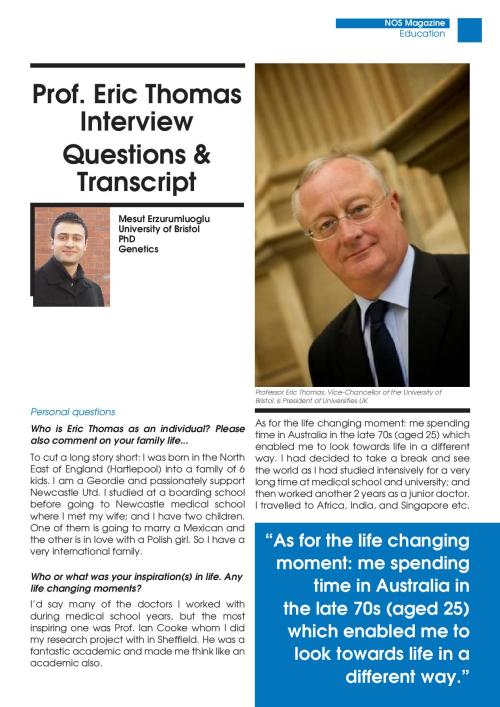
Also see the interview by Prof. Eric Thomas for tips and suggestions on how to be successful (click below to download):

NoS magazine (May 2013) – Interview only

NoS magazine (May 2013) - Interview by Mesut Erzurumluoglu

NoS magazine (May 2013) – Page 1 of Interview with Prof. Eric Thomas

Read Full Post »

Could you give me heart please?

Could you give me your heart please?

Love is like life, it’s given. You cannot make anyone love you.

However just like with life, we crave the ones we don’t have…

We try to steal their hearts, but the reality is they’ve got to give it to you…

So to be happier, do a ‘reality check’ and make the most of what is given to you!

PS: It is easier said than done, I admit! Most of us believe that we have a shot with anyone however out of our league they are. Since our eyes are always on these ‘false hopes’, we tend to ignore the ones that have already given their hearts (or *love) to us… In the process (barring a few instances), everybody ends up sad.

The heart and the brain are separate organs for a reason – use them both! One gets attracted but using the other will help you stay objective and not be blinded by love…

*I include our parents and God in this category also, not just the opposite sex…

Read Full Post »

« Newer Posts - Older Posts »