Feeds:
Posts
Comments

1- Yaptigimiz isin iyi veya kotu oldugunu nereden anlariz?

“O isi yaparken Allah’a kavusmak (olmek) korkutmuyorsa o is iyidir; hayir, rahatsizlik duyuyorsaniz o is kotudur” (Reca bin Hayve)

2- Seytan namaz kilmayan (alni secdeye inmeyen) bir adama:

“Ben Hz Adem’e bir kerecik secde etmedigim icin cennet’den kovuldum; sen is her gun bes vakit namazin her secdesini terk ediyorsun… Acaba halin ne olacak?”

3- Yuzme bilmeyen cimrinin birisi denize dusmus ve etraftakiler kurtarmak icin “Ver elini” diyorlarmis, ama adam bir turlu vermemis…

Onu iyi taniyanlardan birisi “Al elimi” deyince, adam uzatmis…

4- Kanuni Sultan Suleyman merakindan, zamaninin Islam alimi (her soruya cevap vermesiyle meshur ve ayni zamanda Sut kardesi olan) Yahya efendiye Osmanli’nin sonunun nasil olacagini soran bir mektup yazmis…

Cevap olarakta Yahya efendi “Neme gerek” yazmis; Kanuni bu cevaba sasirmis ve hikmetini bizzat kendisi sormak icin yola koyulmus…

“Kardesim, neden soruma cevap vermedin?” deyince; “Cevap verdim; bir devlette haksizlik ve zulum yayilir, bunu isitip gorenler Neme gerek derlerse, o zaman o neslin yok olmasini bekle”

5- Bir inkarci, Islam alimine 3 soru sorar:
i) Allah varsa bana goster
ii) Her isi Allah yaratiyorsa neden suclu ceza gorur?
iii) Seytan atesten yaratildiysa, cehennem atesi nasil ona etki eder?

Alim yerden bir kerpic parcasi alip onun basina calar… Basi aciyan inkarci solugu hemen mahkemede aliverir ve Hakim alime sorar: Sen bunun basina vurmussun oylemi?

Alim: Bana 3 soru sordu, bende ona cevap verdim
Hakim: Nasil?
Alim: Allah varsa bana goster demisti; basinin agridigini iddia ediyorsa gostersin… Iki, herseyi Allah yaratiyorsa ben neden suclu olayim? Uc, Topraktan olusan kendisine (yine topraktan olan) kerpic nasil etki ediyor?

Sonuc: Beraat

Our eyes have been blurred with distractions
Our eyes have become blurred with distractions. We lost touch with the realities of this life.
Note: Scroll down for the English version of this post

Hayatın anlamını araştıran/sorgulayanların çoğu zaman, dinleri ve Allah’ı tamamen yalanlayanlardan olmasını anlamıyorum; gerçekten anlamıyorum!

Soylemeliyim ki hiçbir zaman bulamayacaksınız; egonuzu (nefsinizi) yenip/dizginleyip, Hakk’ın (c.c.) önünde eğilmediginiz surece! Biraz sert bir cevap gibi gelebilir ama gerçek bu. Samimiyetle O(c.c.)’nu bulmak istersek, ben Allah’ın bize ‘doğru yol’u gosterecegine inanıyorum. Buna siz de inanın!

Shakespeare, Tolstoy, Dostoyevsky, Dickens, Orwell’i okumak/anlamak için harcadıgımız zamanın onda birini Allah’ı (şimdilik varlıgına inanın ya da inanmayın) tanımaya/anlamaya harcasak da ondan sonra kararımızı versek.

Bir köpek dahi sahibini tanıyorsa, insan kendisini yaratandan geleni hayli hayli tanır. Kendi tecrübemden konuşuyorum. Kuran’a bakın; ve size (herkesinki farklı) tesir edecek öyle ayetler karşınıza çıkacak ki “işte bu kitap beni Yaratan’dan gelmiş!” dedirtecek!


Ek: İşe nasıl bir mucize ve ne kadar önemli birisi oldugunu tefekkür ederek başlayabilirsin. Ben de (beni etkileyen) bir örnekle yardımcı olmaya çalışayım: Mesela senin gibi bir insan dünya tarihinde olmadı; olmayacak! Eşsiz bir insansın! Allah seni (evet sadece seni!) yaratmak için annenle babanı tanıştırdı ve kalplerini birbirlerine ısıttı. Annenin 300 küsür yumurtasının arasında, babanın da milyarlarca spermi arasında seni yaratacak kombinasyonu seçti. Aynı şey, anne-baban ve dede-ninelerin için de gecerli… Onların anne-babası için de… Onlardan önceki nesiller içinde… Bu halkada bir tane eksik veya degişim olsaydı, sen olmayacaktın!

Ek 2: Arzu ederseniz ‘Evrim teorisi‘ (ingilizce) ve ‘hayat gayem‘le ilgili yazdıgım eski yazılarıma da göz gezdirebilirsiniz…

rumi_mevlana

People who’ve asked me “what is the meaning of life?” had one thing in common: Outright denial of all religions and (any idea of a) God

This is what I can’t understand; I really can’t!

Most of the time, any answer I gave would be thrown back at me with distaste. Sorry but – as a friend whose willing to help you – I’ll tell you what I believe and try backing them up with as much evidence (which convinces me) as possible, but it is up to you to be convinced or not. I don’t have the power to tune anybody’s heart or mind…

For me: Without religion, there’s no* meaning to life! Otherwise life just becomes: “You live because you were born; you had no choice!”

“Life was just an accident and your sperm happens to be the (un)lucky one out of the zillions that your father produced – also the same applies to your father; and his father… You just have to put up with it.”

Having no sense of meaning in life is why many people who have no belief in God and the afterlife commit suicide or waste their life (e.g. drugs, night life, gambling, games); and the one’s who don’t, live in constant fear of death – especially when they get older…

There can only be one “true” religion in the world – others will have no, some or a lot of truth in it but can’t be the “true religion”; and everybody has to make it their primary aim to find it! We spend hours reading Orwell, Shakespeare, Tolstoy, Dostoevsky’s works (rightly so! they can teach us a lot) but rarely do we look at the books which have (trying to word it as an objective person) “supposedly” been sent to us by God himself. Why aren’t we curious about them? How many of them have we read?

The true religion has to answer all reasonable philosophical questions which come to mind, whilst not contradicting scientific and historical facts… Also this doesn’t mean that we must “like” the answers that are given. Truth almost always hurts.

I believe I’ve found it and it has stood the test of time, however what convinces me may not convince you/others. Therefore everyone’s on their own conquest to find the truth and the true religion – the thing that will give our lives a meaning.

Please see my post God of Science for a few arguments on the existence of God (and the wrong belief that current scientific knowledge in genetics is incompatible with God). Happy to discuss any points…

*Read Albert Camus and other ‘existentialist’ philosophers (e.g. Sartre, Nietzsche) if you don’t believe me – they were atheists and believed that life had no meaning, so try(!) enjoying it while lasts…

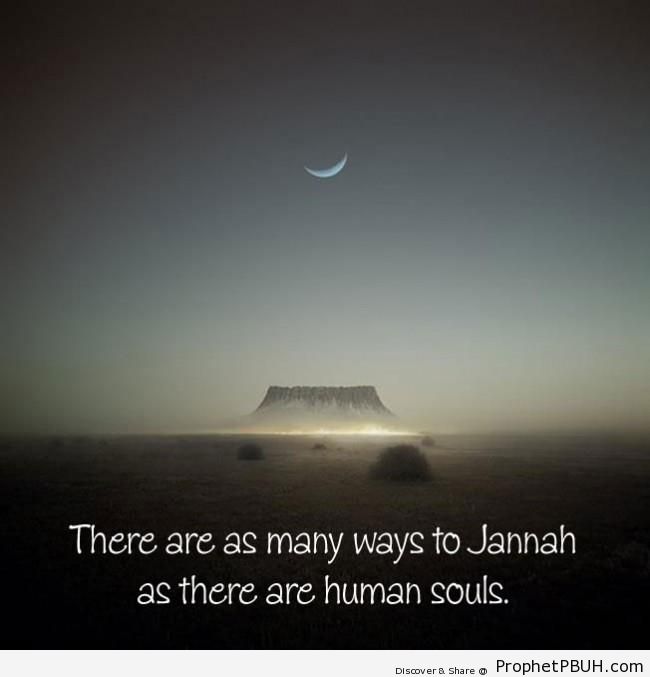
Rumi-Quote-Ways-to-Jannah
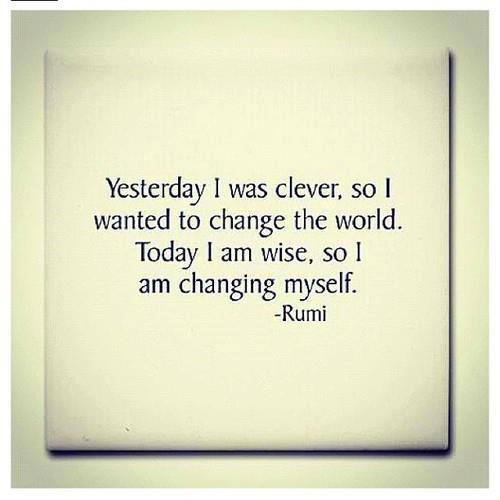
There are as many ways to Paradise as there are human souls – Rumi

PS: There is a school of thought which believes that we’re made up of life, soul and body. Thus as long as we’re alive, the soul is tied to the body (via life). This can explain why we become unconscious (and ‘blackout’) when we faint. However when we die, we will not be unconscious as the ‘tie’ that is life (as we understand it) does not exist anymore. Thus the soul is free to travel (and get rid of the shackles/limitations of the body) and meet the Creator. Please read around the idea if interested. Happy to discuss…

PPS: I respect everyone’s beliefs – and lack of it. It is their own life choice at the end of the day! However it would selfish of me not to share/propagate something that I believe is to be true (i.e. belief in the existence of an omniscient and omnipotent God).

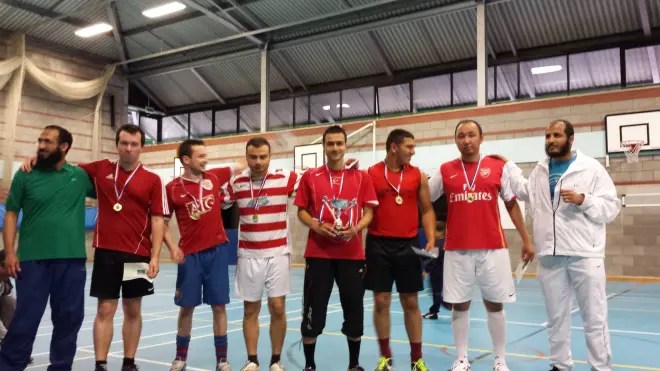
UBU Turkish Society team: Mesut Erzurumluoglu (Captain), Tom G. Richardson, Gavin Lunney, Esat Erzurumluoglu, Azad Tuncel (GK) and Askhat Tleuov


University of Bristol Student Union (UBU) Turkish Society football team has brought home the Bristol International Cup (22/06/2013). The 6-a-side football tournament was organised by the Saudi Students in Bristol (Venue: Bristol Grammar School). Individual awards were also given to Mesut Erzurumluoglu (Golden Boot) and Azad Tuncel (Best Goalkeeper)

Results were as follows:

Turkish Soc. 5-0 Chinese Soc. (Mesut 2, Askhat, Tom, Esat)

Saudi Soc. 1-3 Turkish Soc. (Esat, Mesut, Askhat)

Turkish Soc. 3-0 UWE ISoc (Mesut 3) – see video below

Kuwaiti Soc. p-p Turkish Soc. (opposition did not turn up)


Turkish Soc. was followed by UWE ISoc (in second) and Chinese Soc. (in third) in the league rankings


Source: Bristol International Cup 2013 Winners: UBU Turkish Society


Video of Final game (taken by my friend Jie ‘Chris’ Zheng):

Video shared by organisers:

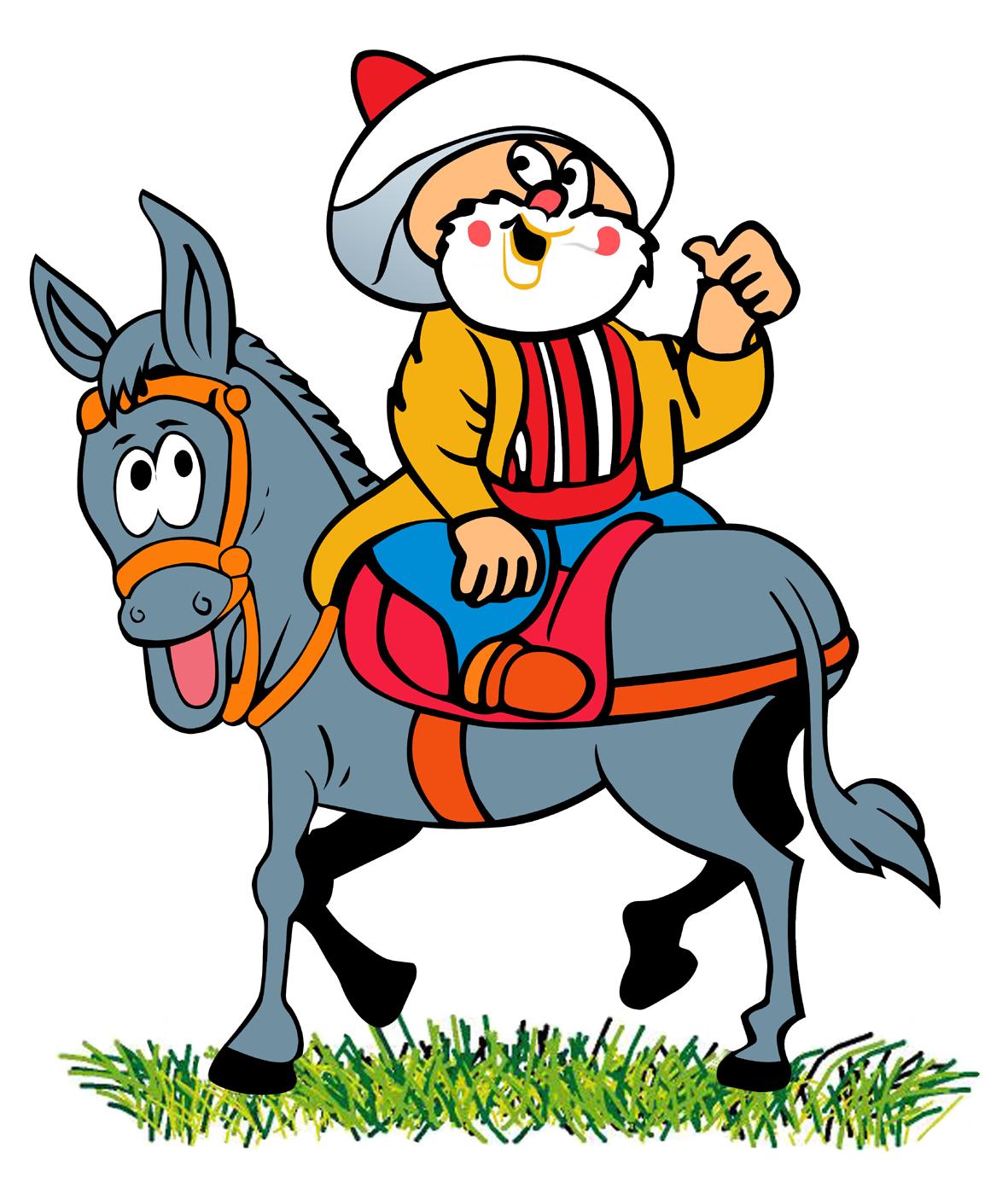
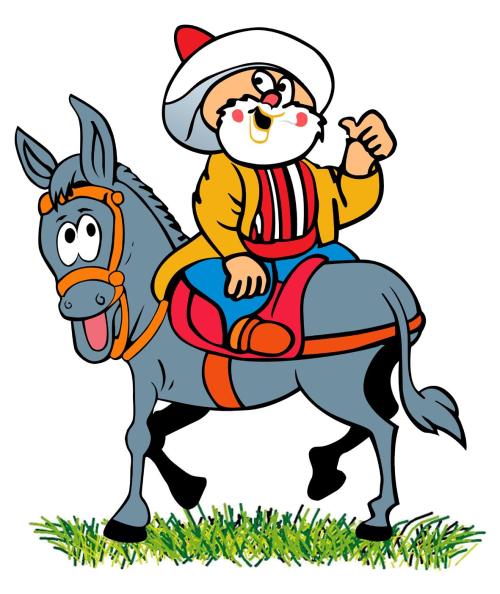
Nasreddin Hodja's Famous Caricature - Sitting backwards on his Donkey

Nasreddin Hodja’s Famous Caricature – Sitting backwards on his Donkey, telling the people who questioned why this was the case: “I do not want to be seen as a person who’s following the same path as a donkey”

Nasreddin Hoca (read Hodja, which means ‘scholar’ or ‘teacher’ in Turkish) is a popular historical (13th century) figure and an imam known for his wit, wisdom and courage. By means of humour, he wanted to bring the vices that were widespread in the community (e.g. backbiting/slander, stealing, corruption) to the attention of the people  -which he was very successful in doing. Therefore many of his quotes/experiences were passed down the ages. However, as time passed, many stories which fit the characteristics mentioned above, whether it belongs to him or not, were associated with him. Click for a selection of his stories in English: (i) Tales of the Turkish Trickster* (ii) Other stories attributed to him. Click for Wikipedia page.


* I disagree with the word ‘trickster’ in title but the website itself is very good…


PS: We need more of his kind today… Especially in the ‘Muslim’ world!


A peek at some of his stories that I translated:

The cauldron that died

Nasreddin Hodja, needing a large pot to cook a stew, borrowed his neighbor’s copper cauldron (a large pot), then returned it in a timely manner the next day.

What is this?” asked his neighbor upon, examining the returned cauldron. “There is a small pot inside my cauldron.

Oh!” responded the Hodja. “I forgot to tell you. While the cauldron was in my care, it gave birth to a little one. Because you’re the owner of the mother cauldron, it is only right that you should keep its baby. And in any event, it would not be right to separate the child from its mother at such a young age.

The neighbor, thinking that the Hodja had gone quite mad, did not argue. The neighbor had a nice little pot and he was happy with the outcome.

Some time later the Hodja asked to borrow the cauldron again.

Why not?Perhaps there will be another little pot inside when he returns it.” thought the neighbour to himself.

But this time the Hodja did not return the cauldron. After many days had passed, the neighbor went to the Hodja and asked for the return of the borrowed cauldron.

My dear friend!” replied the Hodja. “I forgot to tell you but I have bad news. Your cauldron has died.”

What are you saying?” shouted the neighbor. “A cauldron does not live, and it cannot die. Return it to me at once!

“I’m sorry!” answered the Hodja. “But this is the same cauldron that gave birth to a child, a child that is still in your possession. If a cauldron can give birth, then it also can die.”

And the neighbor had no answer to this. He never again saw his cauldron again 🙂


Moral of the story: There are many things that we can take from this story but the main one is that we shouldn’t lie our way into tricking others for our personal gain as it can come back to haunt us.


Eat, my coat, Eat!

The Hodja was invited to a banquet. Not wanting to be pretentious, he wore his everyday clothes – only to discover that everyone ignored him, including the host. So he went back home and put on his fanciest coat, and then returned. Now he was greeted cordially by everyone and invited to sit down and eat and drink.

When the soup was served to him he dunked the sleeve of his stylish coat into the bowl and said, “Eat, my coat, eat!

The startled host asked the Hodja to explain his strange behavior.

When I arrived here wearing my other clothes,” explained the Hodja, “no one offered me anything to eat or drink. But when I returned wearing this fine coat, I was immediately offered the best of everything, so I can only assume that it was the coat and not myself who was invited to your banquet.”


Moral of the story: He powerfully presents that it’s the person that should be valued and not the fancy things that one owns.


Walnuts and Pumpkins

Nasreddin Hodja was lying in the shade of a walnut tree. His body was at rest, but, befitting his calling as an imam and scholar, his mind did not relax. He started contemplating; looking up into the mighty tree, he considered the greatness and wisdom of Allah/God.

Allah is great and is most wise” said the Hodja, “but was it indeed wise that such a great tree as this be created to bear only tiny walnuts as fruit? Behold the stout stem and strong limbs! They could easily carry the pumpkins that grow from spindly vines in the fields, vines that cannot bear the weight of their own fruit. Should not walnuts grow on weakly vines and pumpkins on sturdy trees?
After a while the Hodja dozed off, only to be awakened by a walnut that fell from the tree, striking him on his forehead.

Allah be praised!” he exclaimed, seeing what had happened. “If the world had been created according to my meager wisdom, it would have been a pumpkin that fell from the tree and hit me on the head. It would have killed me for sure! Allah is great! Allah is most wise!


Moral of the story: We shouldn’t question the wisdom of God/Allah – or things/phenomenon that we cannot fully grasp.


The battle of wits

In old times wise men would travel around the country, extensively searching for facts or ideas to support their newly-formed theories. Three such men one day arrived in Aksehir, and calling on the governor, asked him to summon the most learned man of the district to be present at the market place the next day – so that they would see whether they could profit from his wisdom. As the most wise man of Aksehir, Nasreddin Hodja was duly informed and the next day he was there and ready for, what proved to be, a battle of wits. Quite a crowd had gathered for the occasion.

Before holding discussions with him, they wanted to test his wit. One of the wise men stepped forward and asked the following question to Hodja:
Could you tell us the exact location of the centre of the world?
Yes, I can,” replied the Hoca. “It is just under the left hind leg of my donkey.
Well, maybe! But do you have any proof?
If you doubt my word, you are welcome to measure and see.

There was nothing more to be said, so the first wise man withdrew.

Let me ask you this,” said the second learned man, stepping forward.
Can you tell us how many stars there are in the heavens?
As many as the hairs on my donkey’s back,” was the ready reply.
What proof have you in support of this statement?
If you doubt my word, you are welcome to count them all and find out.
Come now, Hodja!” said the second learned man. “How can anyone count the hairs on your donkey’s back?
Well, when it comes to that, how can anyone count the stars in the skies?
This silenced the second wise man, upon whose withdrawal the third one stepped forward.

Since you seem so well acquainted with your donkey,” said the third man sarcastically.
Can you tell us how many hairs there are on the tail of the beast?
Certainly,” replied the Hoca, “as many as the hairs in your beard.”
And how can you prove that?
Very easily, if you have no objection. I will pull one hair from your beard, and you will pull one out of my donkey’s tail. If both do not finish at the same time, then I will admit that I have been mistaken.”
Needless to say the third wise man had no desire to try the experiment, they realised the greatness of Hodja.


Moral of the story: As we say in Turkey, “akıl akıldan üstündür” which means (with a lot lost in translation): Two heads are better than one. There’s always someone out there whose wisdom is useful. We should always search for them to make better decisions.

Websites which should be checked every now and then…

For Everyone…

Coursera Online Courses:

https://www.coursera.org/#courses

Stanford University Online Courses:

https://class.stanford.edu/courses/

TED Talks:

http://www.ted.com/talks

Busuu Language Courses:

http://www.busuu.com/enc/

NOS (Network of Students) Events:

http://www.networkofstudents.org/events.html

LCSS (London Centre for Social Studies) Events:

http://www.socialstudies.org.uk/events

ABTA (Association of British Turkish Academics) Events:

http://abtanet.org.uk/Events/

Dialogue Society Events:

http://www.dialoguesociety.org/

Turkish Review Magazine:

http://www.turkishreview.org/

British Museum Events:

http://www.britishmuseum.org/

Science Magazine ‘How To’ Series:

http://sciencecareers.sciencemag.org/tools_tips/how_to_series

The National Archives – Education

http://www.nationalarchives.gov.uk/education/default.htm

BBC Languages – Turkish:

http://www.bbc.co.uk/languages/other/turkish/guide/

LTR (London Turkish Radio):

http://www.londonturkishradio.co.uk/


For the Bristol (UK) based…

‘What’s On’ by University of Bristol:

http://bristol.ac.uk/events/

UBU (University of Bristol Students Union) Events:

http://www.ubu.org.uk/events/

BoB (Best of Bristol) Lectures:

http://www.boblectures.org.uk/

University of Bristol – Botanic Garden Events:

http://www.bristol.ac.uk/botanic-garden/events/

UWE Lecture Series:

http://info.uwe.ac.uk/events/eventlisting.aspx?categoryID=78

Network of Students Logo

Network of Students Logo

Well done to NoS for going the extra mile this month (May 2013) by publishing a magazine for students, when they were already organising many educative and interesting events. A PDF version of the magazine can be found on the NoS and the University of Bristol Turkish Society website…

Who are Network of Students (NoS)?

They are a non-profit organisation which aims to organise socio-economic and cultural events and activities for university students all over the United Kingdom. Their purpose is to increase the key skills and help the development of university students by providing informative and enlightening meetings, seminars and networking events as well as organising social and sports activities.

NoS’s events can be found here

Harvard Law School has recognised a verse from the Holy Quran as ‘one of the greatest expressions of justice in history’


“O you who have believed, be persistently standing firm in justice, witnesses for Allah , even if it be against yourselves or parents and relatives. Whether one is rich or poor, Allah is more worthy of both. So follow not [personal] inclination, lest you not be just. And if you distort [your testimony] or refuse [to give it], then indeed Allah is ever, with what you do, Acquainted”

[Surat’ul Nisa, 135]


Article: http://www.ciibroadcasting.com/2013/01/24/harvard-recognises-quranic-verse-as-one-of-the-greatest-expressions-of-justice/

Quran Verse at Harvard Law School

Quran Verse at Harvard Law School

Nike-Mercurial-Magia-Football-SC2207_553_A

A PDF of my article on: How to be efficient in Football (click on the link to download the file)


Here’s a peek into it:

“To be a ‘great’ in any game, you must first understand what you’re capable of and what your weakness/strengths are. Then you must analyse your opponents to see what they’re capable of; and likewise, what their strength and weaknesses are. Then a decision must be made about how to approach the game. Making your decision is going to be complicated by deducing how much your opponent knows you and how this knowledge is going to affect their tactics. Also another major factor in deciding how to approach the game is going to be ‘how much is on stake’. If the game is massive then you may be a little more cautious whereas in a more comfortable position (where not too much is at stake) you may be determined to show what you’re truly capable of and go out all guns firing.

Football is no different! “

Temel and Dursun are (semi!) fictional characters, originated in the Black sea region of Turkey known for their humour, wit and craziness (this last attribute is sometimes replaced by naivity) all at the same time; therefore many jokes have been told about them which fit their characteristics. For more info on Turkish sense of humour, click here.

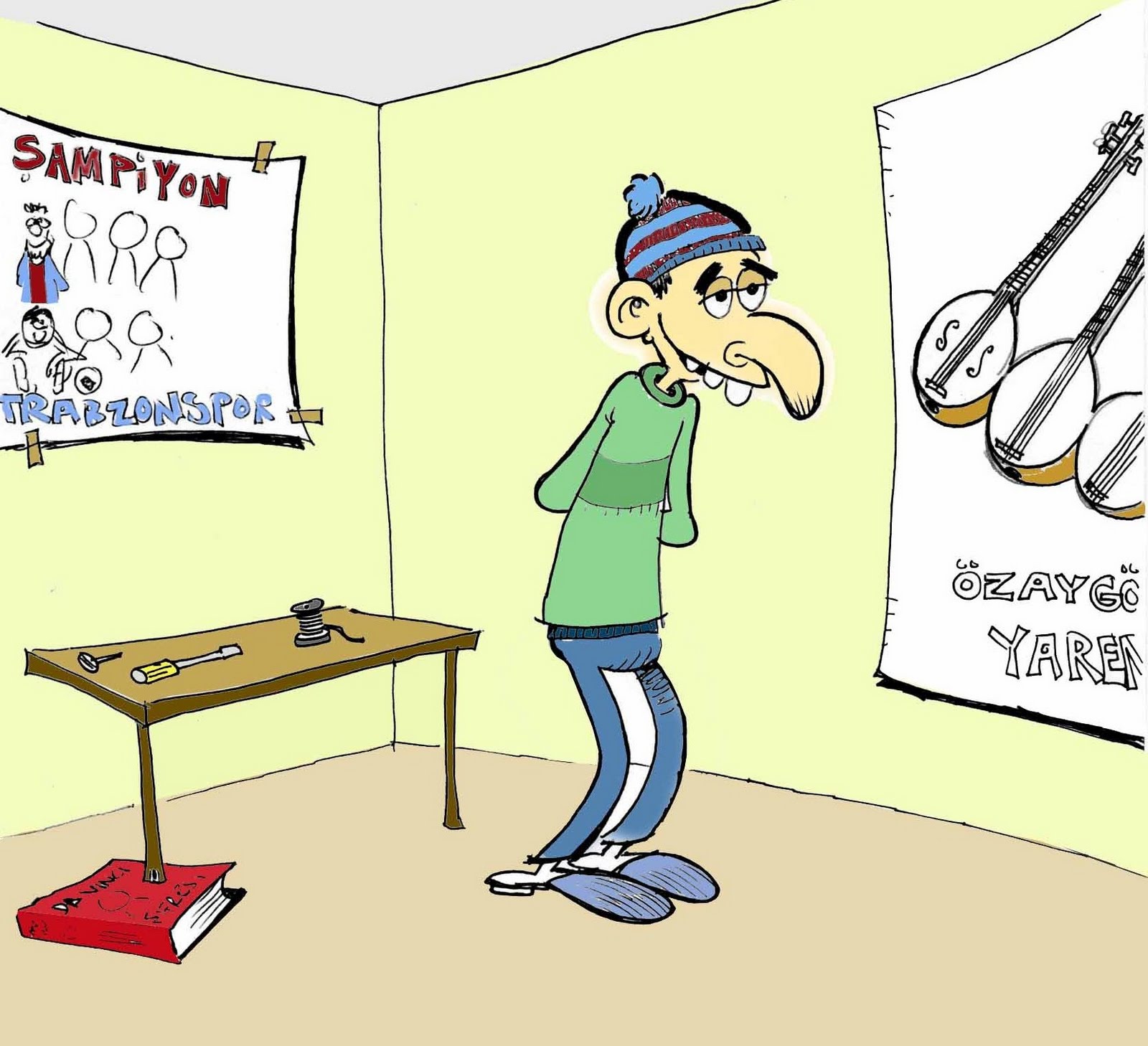
Temel

How Temel is usually depicted in cartoons – especially with a big and long nose, a well-known characteristic of the ‘Laz’ people living in the Black sea region of Turkey


Here’s just a few of them; they’re much better in Turkish as there is a lot in these jokes which is lost in translation. Hope you enjoy them anyway!

Joke 1:

Dursun has made a lot of money in the USA and tells his beloved friend Temel to join him in LA. He tells him there are so many opportunities for him to earn his living here, going even further to say he’d be rich even if he picks up the money people throw/drop on the streets. So Temel jumps on the first plane and travels to the US; and with his first step he sees a $10 note on the floor. But he decides not to take it, saying: “I’m not going to start working on the first day!“.

Joke 2:

Temel owes a lot of money to the local shops. One day he wins the lottery and the locals wait for him to pay back what he owes – and maybe more. However three months down the line, Temel still hasn’t paid anything so the shopkeepers come down to ask why that is the case. Temel tells them: “I didn’t want you guys to think money’s changed me!

Joke 3:

Temel asks a cafe owner: “Do you have cold tea?” and he gets the reply “No“, so he leaves. He keeps asking the same question for the next three days so the cafe owner thinks I’ll make him cold tea the next day. Temel comes in and asks the same question, but this time the cafe owner says “yes”. Then Temel says: “well that’s great, heat it up and bring me some tea. I’ve missed drinking tea a lot!

Joke 4:

Temel enters a multi-choice matriculation exam. He flips a coin for each question and picks the choices accordingly. An hour into the exam – when all the students have given in their papers and he’s the only one left in the room, the invigilator sees that he’s still flipping coins; and tells him there isn’t much time left and asks him whether he is about to finish. Temel answers: “I’ve finished half an hour ago, just going through my answers!”

Joke 5:

Temel and Dursun love playing football. One day when they were contemplating about the afterlife, Temel asks Dursun: “Do you think there is football in Heaven?” and Dursun answers “I don’t know but whoever goes there first, will let the other know OK?“. So they agree and a few years down the line Dursun dies and appears in Temel’s dream: “Temel, I’ve got one good and one bad news for you“. Temel asks for the good one first and Dursun answers: “There is football in Heaven!

What about the bad one?

Your name is on the team sheet this week!

Joke 6:

When they’re young, Temel and Dursun try stealing a few apples from a tree in a garden nearby. While they’re at it, the owner sees them and they start to run. The owner shouts “stop you BASTARD!”; and Dursun stops and tells Temel “he recognised me, you keep running brother!”

Joke 7:

Temel and Dursun are stopped by a tourist in Istanbul. He asks: “Hi, do you speak English?“. Temel and Dursun look at each other, not understanding what he meant. The tourist also asks: “Parlez vous Francais?” and said the same thing in many other languages. The tourist then leaves not getting an answer.

Dursun turns to Temel and says: “I think it is time we learn a foreign language“.

Temel: “What’s the point? Look he knew 5 languages but still couldn’t explain what he wanted“.

Joke 8:

Temel appears in court as he has just killed a dozen or so people at a marketplace due to his truck’s brakes failing. The judge asks: “Explain why you did this?“.

Temel: “I am very sorry; it was not intentional. My brakes failed and I had no other choice but to hit somewhere to stop my truck. I noticed that if I swerved to the right I would kill a child. If I swerved to the left, I would enter the marketplace and potentially kill dozens. So I decided to kill the child.”

Judge: “How did you then kill all these people?!

Temel: “Unfortunately the kid ran towards the marketplace

Joke 9:

Temel and Dursun go to watch a movie, which has a horse racing scene. Just as the race is about to start, Temel bets Dursun that the white horse will win – and Dursun agrees to bet on the black horse. The white horse won, so Temel also won the bet. However, after the movie Temel feels uneasy and confesses:

I watched this movie before and knew which horse was going to win.

Dursun replies: I watched the movie too.

But I wanted to bet on the underdog this time!

Joke 10:

Temel is on Who Wants to be a Millionaire. He passes the first set of ‘easy’ questions…

£4000 question: How long did the ‘Hundred Years’ War’ last?

a) 99 years b) 116 years c) 150 years d) 100 years

He asks the audience and passes on to the next question

£8000 question: Where did the ‘Panama hat’ originate?

a) Panama b) Brazil c) Chile d) Ecuador

He phones a friend and passes on to the next question

£16000 question: When do the Russians celebrate the ‘October Revolution’?

a) October b) September c) November d) January

He uses the ‘fifty-fifty option’ and passes on to the next question

£32000 question: What animal were the ‘Canary Islands’ named after?

a) Canaries b) Seals c) Cats d) Kangaroos

Temel decides to take the money…

[Scroll down]

Funny eh? Thought you were more clever than Temel? Think again!

Answers: 1) 116 years, 2) Ecuador, 3) November, 4) Seals

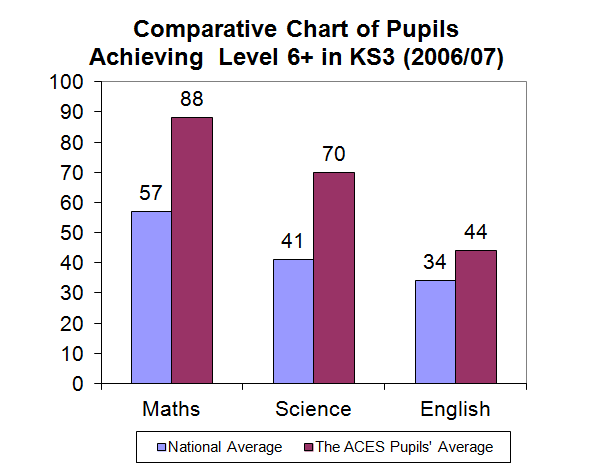
Department for Education and Skills’ (DfES) report for Children of Ethnic Minority in 2006/07 showed a bleak picture for students of ethnic minorities living in the UK – as they were all performing below the national average. However the picture was even more disturbing for Turks/Kurds because their children were the least performing out of all the groups that had a considerable size in the UK. I am hoping things have gotten better for the Turkish community since then as there have been many steps taken to stop this rot, especially by the Turks themselves. They have opened many supplementary and/or weekend schools all over the UK especially in London and Leicester where there is a considerable amount of Turkish/Kurdish migrants. In one of these weekend schools, called the Horizon supplementary school (located in Leicester), I obtained the Keystage 2 (KS2) and Keystage 3 (KS3) results of nearly 30 students (years 6 to 9) attending their classes and compared them with DfES’s findings. The results were surprising:

ks2 ks3

Overall, the Horizon school’s pupils had achieved higher in all subjects compared to the national average let alone other ethnic minority groups. The difference is greater in Maths and Science.

These results make it clear that given the opportunity, children of Turkish/Kurdish/Turkish-Cypriot background can perform as good as anyone, if not better. Therefore the Turkish/Kurdish community must carry on supporting the existing supplementary schools; and if possible improve on what they’re doing by opening more schools. This is why I’d recommend all ethnic minorities in the UK to follow the Turks’ example and support their children in achieving their academic potential. Educated children would not only be the source of good for the corresponding ethnic minorities, but also the British society as a whole.

Best wishes!


PS: To add to the comments above, the below newspaper article portrays my views in 2006 (when I had just turned 18). I do not agree entirely with it nowadays; would have worded some things differently…  🙂

Me in Leicester Mercury (August 2006)

Me in Leicester Mercury (August 2006)