Feeds:
Posts
Comments

Posts Tagged ‘bristol’

Ne en güçlü, ne de en zeki olanlar hayatta kalır… Hayatta kalanlar değişime en çok adapte olabilenlerdir.” – Charles Darwin’in söylediği iddia edilir


Cambridge Üniversitesi’ne nasıl kabul aldın?

Twitter’da gördüm sanırım: “Aynı soru sana üç defa sorulduysa bir blog yazısı yazma vakti gelmiştir”e benzer bir cümleydi. Ben de “Cambridge Üniversitesi’ne nasıl kabul aldın?” ve benzeri sorularla pek çok defa karşılaştıktan sonra birşeyler karalamaya karar verdim. Leicester Üniversitesi’nde çalışırken bunun onda biri dahi sorulmamıştı 😉

Doktora öğrencilerine, doktorayı yeni bitirenlere ve akademik kariyer düşünen gençlere yönelik uzun bir doküman hazırladım. Az da olsa ingilizce terimler kullandım ama merak eden herkes okuyabilsin diye elimden geldikçe azaltmaya çalıştım (Not: iyi derecede ingilizce bilmeyenlerin iyi üniversitelere girmesi, hasbel-kader girdiyse de oralarda tutunması zor).

Okuyacağınız herşey benim şahsi düşüncelerim ve hiçbirine katılmak zorunda değilsiniz. Eminim yazdıklarımda hatalar ve eksikler olacaktır; bunları da bana bildirirseniz dökümanı hep beraber geliştirmiş oluruz. Katkıda bulunanlara da bir şekilde değineceğim. Şimdiden teşekkürler!

Darwin’e atfedilen yukarıda paylaştığım hakikat dolu sözle bir bağlantı kuracak olursam, evet, bir akademisyen için çok akıllı/zeki olmak bir avantajdır. Ama oyunun kurallarını (örneğin ‘arkadaşlarım/hocalarımla aramı nasıl iyi tutarım?‘, ‘iyi makale nasıl yazılır?‘, ‘nasıl fon getiririm?‘i) öğrenmek ve onlara göre adapte olmak da en az o kadar önemli – özellikle akademide oldugu gibi ‘oyun’un kuralları devamlı degişiyorsa… İşin bu kısımlarına da vakit harcayın.

Aşağıdaki dökümanda “Doktora sürecinde nelere dikkat etmeliyim?”, İngiltere’de akademik kariyer opsiyonları, “CV ve ‘Personal statement’ nasıl hazırlanır?“, ‘mülakat anı, öncesi ve sonrası neler yapmalıyım?‘, tez yazarken dikkat edilecekler, makale yazarken dikkat edilecekler ve prosedür, “Hocanızla ilişkiniz nasıl olmalı?” gibi konularda bilgiler ve tavsiyelerim bulunuyor. Umarım yardımcı olur. İlgileneceğini düşündüğünüz arkadaşlarınıza da yollarsanız sevinirim.

Ek olarak ilgili video ve tweetler:

Manisa Celal Bayar Üniversitesi Biyomühendislik ve Elektronik Mühendisliği lisans öğrencilerine sunum (13 Mayıs 2020)
Brit-Iş TV’den Ergin Balabeyoğlu’na verdiğim kısa roportaj
Rafşan Çelik’le Cambridge Üniversitesinde Akademisyen Olmak ve İngiltere’de Yaşam, Kültür ve Akademik Hayat uzerine (Instagram üzerinden*) söyleşi yaptık (3:38’de başlıyor).


Ingiltere’de üniversiteler – genel kurallara uyma dışında – devletten bağımsızdır. Örneğin hepsi kendi fonunu kendi bulur, yani büyük bir şirket gibi işlerler. Fakat en büyük fon 7 senede bir devletten gelir – üniversitelerin başarı seviyesine göre. Bu da onunla ilgili bir Tweet zinciri
Kıymetli Prof. Hikmet Geçkil Hocamın da bu dokümanı tavsiye ettiğini gördüm ve mutlu oldum. Umarım faydalı olmuştur

Read Full Post »

evolution_of_intellectual_freedom_cham_phdcomics

Source URL: PhD Comics

Figuratively speaking, what is the ‘worth’ of a certain academic? Between two academics, which one has had more positive academic impact than the other? How do you rank academics? And award grants, promotion, tenure etc. to the best* ones?

I’m not going to answer these questions but would like to chip in with some food for thought and suggestions.

Well; one may say: “It’s easy! Just compare their h-index and total no of citations!

This may be an effective way to go about answering the question. Surely someone with an h-index of 30 has had more positive academic impact than someone with let’s say an h-index of 15 – and is the better candidate?

Maybe – that is if all things are equal regarding the way citations and the h-index works i.e. if both academics:

  • are in similar fields – as papers in certain fields receive more citations overall than papers in other fields,
  • are in similar stages in their careers – as comparing an early-career postdoc with an established “Prof.” wouldn’t be fair,
  • have similar numbers of first/equal-first or last author papers – as an academic with many middle-authorships can have excessively inflated h-indexes,
  • have similar number of co-authors – as it may be easier to be listed as a co-author in some fields than others and/or mean that more people will be presenting and citing the paper as their own, and
  • have a similar distribution of citations across the papers – as the h-index ignores highly influential papers and the total citations can be highly influenced by even just one of these (see figure below).

I may have missed other factors, but I think these are the main ones (please add a comment below).

mesut_erzurumluoglu_h-index_academic_2018

Calculating my h-index: Although problematic (discussed here), the h-index has become the standard metric when measuring the academic output of an academic. It is calculated by sorting the publications of an academic from most to least cited, then checking whether he/she has h papers with h citations e.g. if an academic has 10 papers with ≥10 citations but not 11 papers with ≥11 citations then their h-index will be 10. It was proposed as a way to summarise the number of publications that an academic has and their academic impact (via citations) with a single number. The above citation counts were obtained from my Google Scholar page

As of 31st July 2018, I have 14 published papers – including 5 as first/equal-first author – under my belt. I have a total citation count of 316 and an h-index of 6 (225 and 5 respectively, when excluding publications marked with an asterisk in the above figure). It is fair to say that these numbers are above average for a 29-year-old postdoc. But even I’m not content with my h-index – and many established academics are definitely right not to be. I’ll try and explain why: the figure above shows the citation distribution of my 14 publications sorted by the ‘number of times cited’ from the left (highest) to right (lowest). One can easily see that the h-index (red box) captures only a small portion of the general picture (effectively, 6 x 6 i.e. 36 citations) and ignores the peak (>6 on the y-axis) and tail (>6 on the x-axis) of the publication-citation distribution. I have also included the publication year of each paper and added an asterisk (*) against the publications where I haven’t provided much input e.g. I have done almost nothing for the Warren et al (2017) paper but it constitutes almost a third of my total citations (90/316)**. The ‘ignored peak’ contains three highly cited papers to which I have made significant contributions to and the ‘ignored tail’ contains research papers that (i) I am very proud of (e.g. Erzurumluoglu et al, 2015) or (ii) are just published – thus didn’t have the time to accumulate citations. What is entirely missing from this figure are my (i) non-peer-reviewed publications (e.g. reports, articles in general science magazines), (ii) correspondence/letters to editor (e.g. my reply to a Nature News article), (iii) blog posts where I review papers or explain concepts (e.g. journal clubs), (iv) shared code/analysis pipelines, (v) my PhD thesis with potentially important unpublished results, (vi) other things in my CV (e.g. peer-review reports, some blog posts) – which are all academia-related things I am very proud of. I have seen other people’s contributions in relation to these (e.g. Prof. Graham Coop’s blog) and thought that they were more useful than even some published papers in my field. These contributions should be incorporated into ‘academic output’ measures somehow.

It is also clear that “just compare their h-index and total no of citations!” isn’t going to be fair on academics that (i) do a lot of high-quality supervision at different levels (PhD, postdoc, masters, undergrad project – which all require different skill sets and arrangements), (ii) spend extra time to make their lectures inspiring and as educative as possible to undergrad and Masters students, (iii) present at a lot of conferences, (iv) do ‘admin work’ which benefits early-career researchers (e.g. workshops, discussion sessions), (v) do a lot of blogging to explain concepts, review papers, and offer personal views on field generally, (vi) have a lot of social media presence (e.g. to give examples from my field i.e. Genetic Epidemiology, academics such as Eric Topol, Daniel MacArthur, Sek Kathiresan take time out from their busy schedules to discuss, present and debate latest papers in their fields – which I find intellectually stimulating), (vii) give a lot of interviews (TV, online media, print media) to correct misconceptions, (viii) take part in public engagement events (incl. public talks), (ix) organise (inter-disciplinary) workshops, (x) inspire youngsters to become academics working for the benefit of humankind, (xi) publish reliable reports for the public and/or corporations to use, (x) provide pro bono consultation, (xi) take part in expert panels and try very hard to make the right decisions, (xii) engage in pro bono work, (xiii) do their best to change bad habits in the academic circles (e.g. by sharing code, advocating open access publications, standing up to unfair/bad decisions whether it affects them or not), (xiv) extensively peer-review papers, (xv) help everyone who asks for help and/or reply to emails… The list could go on but I think I’ll stop there…

I acknowledge that some of the above may indirectly help increase the h-index and total citations of an individual but I don’t think any of the above are valued as much as they should be per se by universities – and something needs to change. Academics should not be treated like ‘paper machines’ until the REF*** submission period, and then ‘cash cows’ that continually bring grant money until the next REF submission cycle starts. As a result, many academics have made ‘getting their names into as many papers as possible’ their main aim – it is especially easier for senior academics, many with a tonne of middle-authorships for which they have done virtually nothing****. This is not how science and scientists should work and universities are ultimately disrespecting the tax payers’ and donors’ money. Some of the above-mentioned factors are easier to quantify than others but thought should go into acknowledging work other than (i) published papers, (ii) grant money brought in, and maybe (iii) appearing on national TV channels.

Unless an academic publishes a ‘hot paper’ as first or corresponding author – which very few have the chance and/or luck to do – and he/she becomes very famous in their field, their rank is usually dictated by the h-index and/or total citations. In fact, many scientists who have very high h-indexes (e.g. because of many middle-author papers) put this figure at the top of their publication list to prove that they’re top scientists – and unfortunately, they contribute to the problem.

People have proposed that contributions of each author are explicitly stated on each paper but this is going to present a lot of work when analysing the academic output of tens of applicants – especially when the number of publications an individual has increases. Additionally, in papers with tens or even hundreds of authors, general statements such as “this author contributed to data analysis” are going to be assigned to many authors without explicitly stating what they did to be included as a co-author – thus the utility of this proposition could also be less than expected in reality.

It’s not going to solve all the problems, but I humbly propose that a figure such as the one above be provided by Google Scholar and/or similar bibliometric databases (e.g. SCOPUS, CrossRef, Microsoft Academic, Loop) for all academics, where the papers for which the respective academic is not the first author are marked with an asterisk. The asterisks could then be manually removed by the respective academic on publications where he/she has made significant contributions (i.e. equal-first, corresponding author, equal-last author or other prominent role) but wasn’t the first author. Metrics such as the h-index and total citations could then become better measures by giving funders/decision makers the chance to filter accordingly.

Thanks for reading. Please leave your comments below if you do not agree with anything or would like to make a suggestion.
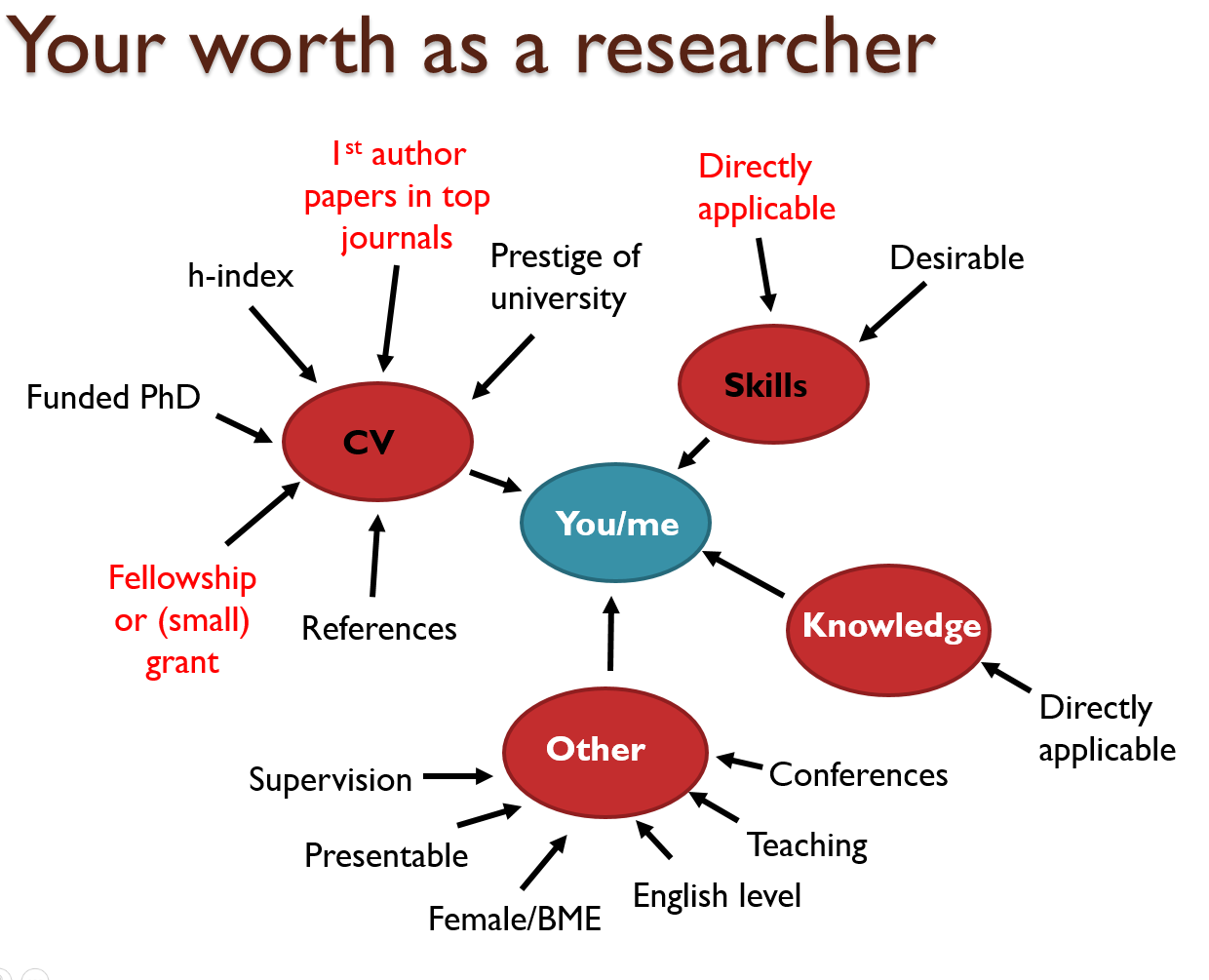
academic_worth_researcher_university_mesut_erzurumluoglu

The heuristic that I think people use when calculating the worth of an early career researcher (but generally applies to all levels): ‘CV’ and ‘Skills’ are the two main contributors, with the factors highlighted in red carrying enormous weight in determining whether someone should get the job/fellowship or not. Virtually no one cares about anything that is outside what is written here – as mentioned in the post. Directly applicable: Some technical skill that the funder/Professor thinks is essential for the job; Prestige of university: where you did your PhD and/or undergrad; Funded PhD: whether your PhD was fully funded or not; Female/BME: being female and/or of BME background – this can be an advantage or a disadvantage depending on the regulations/characteristics of the university/panel, as underrepresented groups can be subjected to both positive and negative discrimination. NB: this is a simplified version and there are many factors that affect outcomes such as “who you know” and “being at the right place at the right time“.


Added on 30/10/18: I just came across ‘No, it’s not The Incentives—it’s you‘ by Tal Yarkoni about the common malpractices in academic circles, and I think it’s well worth a read.


*Making sure there’s a gender balance and that academics from BME backgrounds are not excluded from the process – as they’ve usually had to overcome more obstacles to reach the same heights.

**I have been honest about this in my applications and put this publication under “Other Publications” in my CV.

***REF stands for the ‘Research Excellence Framework’, and is the UK’s system for assessing the quality of research in higher education institutions. The last REF cycle finished in 2014 and the next one will finish in 2021 (every 7 years). Universities start planning for this 3-4 years before the submission dates and the ones ranked high in the list will receive tens of millions of pounds from the government. For example, University of Oxford (1st) received ~£150m and University of Bristol (8th) received ~£80m.

****Sometimes it’s not their fault; people add senior authors on their papers to increase their chances of getting them accepted. It’s then human nature that they’re not going to decline authorship. It sounds nice when one’s introduced in a conference etc. as having “published >100 papers with >10,000 citations” – when in reality they’ve not made significant (if any!) contributions to most of them.


PS: I also propose that acknowledgements at the bottom of papers and PhD theses be screened in some way. I’ve had colleagues who’ve helped me out a lot when learning some concepts who then moved on and did not have the chance to be a co-author on my papers. I have acknowledged them in my PhD thesis and would love to see my comments be helpful to these colleagues in some way when they apply for postdoc jobs or fellowships. Some of them did not publish many papers and acknowledgements like these could show that they not only have the ability to be of help (e.g. statistical, computational expertise), but are also easy to work with and want to help their peers.

Read Full Post »
The University of Bristol News webpage on the 16th of August 2016. I feel privileged to have had the chance to be the face of the university in an important announcement such as this.

The University of Bristol News webpage on the 16th of August 2016. I feel privileged to have had the chance to be the face of the university in an important announcement such as this.

The University of Bristol has been ranked as 8th in the UK and has risen nine places to 57th in the world in the Academic Ranking of World Universities (ARWU) – its highest ranking in 13 years. ARWU, considered as one of the leading international league tables, assesses more than 1,200 universities every year using six measures and publishes data on the best 500.

For details, go to the University of Bristol News page (link).

The photo used in the news article was shot last year (i.e. 2015) when I was a PhD student at the University of Bristol – as part of a series of ‘photo shoot’s for the postgraduate prospectus.

mesut_erzurumluoglu_bristol_social_community_medicine

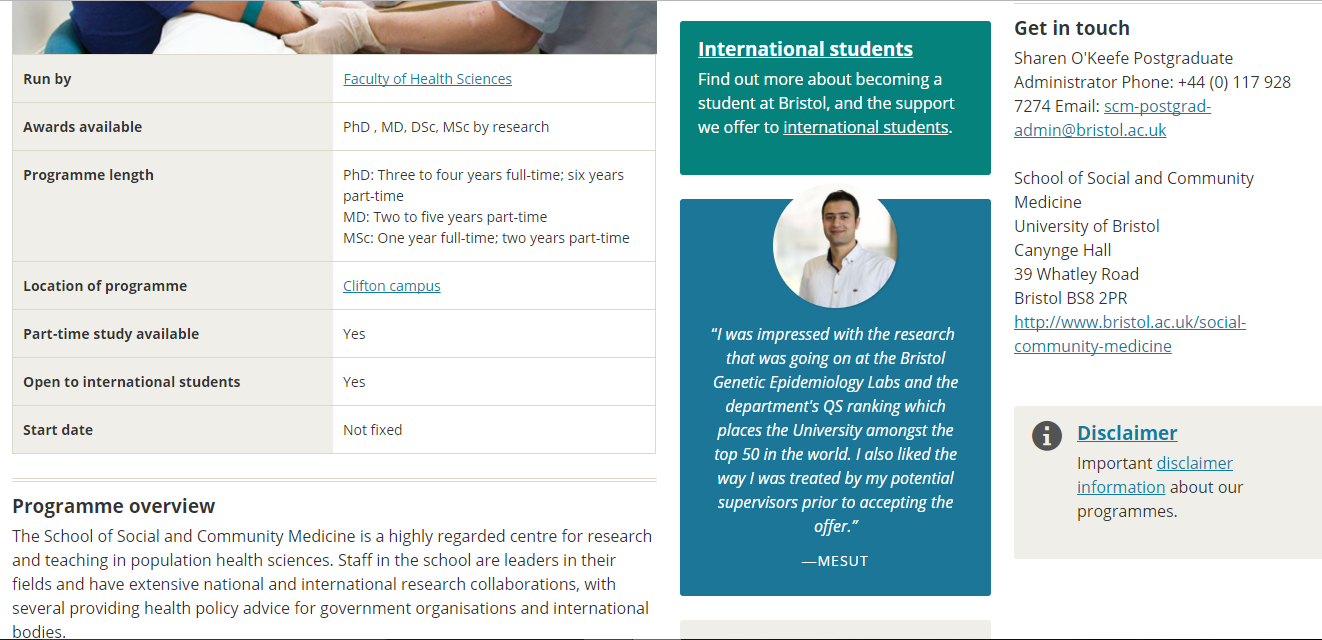
My photo also appeared on the University of Bristol Social and Community Medicine website (2017) with the caption: “I was impressed with the research that was going on at the Bristol Genetic Epidemiology Labs (aka BGEL) and the department’s QS ranking places the University amongst the top 50 in the world. I also liked the way I was treated by my potential supervisors (Dr. Santi Rodriguez, Dr. Tom Gaunt and Prof. Ian Day) prior to accepting the offer”.

PS: I previously interviewed the former Vice-Chancellor of the University of Bristol, Prof. Eric Thomas – for NoS Magazine. The PDF version can be found here

PPS: I’ve also modelled for the University of Leicester undergraduate prospectus (details can be found here) 🙂

Read Full Post »

UBU Staff League Cup 2015 winners ‘Flying Foxes’ team (Left to Right): Chris Z, Esat E, Mesut E, Guillermo B, Adam T, Askhat T. Tom R was also in the team

UBU Staff League Cup 2015 winners
‘Flying Foxes’ team (Left to Right): Chris Z, Esat E, Mesut E, Guillermo B, Adam T, Askhat T. Tom R was also in the team

‘Flying Foxes’ Team: Mesut Erzurumluoglu (Captain), Esat Erzurumluoglu, Tom G Richardson, Askhat Tleuov, Adam JW Trickey, Jie ‘Chris’ Zheng, Guillermo Fernandez Bunster

See link for full details: Mesut and Co win University of Bristol Staff League Cup 2015

Results

Group Stage:

Flying Foxes 7-1 Mighty Midgets (Mesut 3, Guillermo 2, Adam, Tom)

UoB Staff Team 1-2 Flying Foxes (Adam, Guillermo)

Phys Pharm 2-8 Flying Foxes (Mesut 3, Guillermo 2, Adam 2, Tom)

Eintracht Autopiroozeurs 1-1 Flying Foxes (Adam)

Group Standings (top three)

1st: Flying Foxes (10pts), 2nd: UoB Staff Team (9pts), 3rd: E. Autopiroozeurs (7pts)

Final: Galbani Team 2-4 Flying Foxes (Mesut, Esat, Guillermo 2)

Read Full Post »

Human mutation mesut erzurumluoglu

Primary ciliary dyskinesia (PCD) is a rare disease that affects tiny, hair-like structures (called cilia) that line the airways. Respiratory cilia carry mucus (which contains inhaled dust and bacteria) toward the throat to be coughed/sneezed out of the body (or digested). In PCD patients, these cilia do not perform their job properly thus allow bacteria and dust to stay in your airways and cause chronic respiratory diseases/infections.

humu22698-fig-0002

Cross‐sections of respiratory cilia in (A) control (non affected) and (B) CCDC151 mutated proband. Image from Alsaadi and Erzurumluoglu et al (2014,  Human Mutation)

We, at the Bristol Genetic Epidemiology Lab (BGEL, University of Bristol, UK), discovered a new Primary ciliary dyskinesia (PCD) causal gene (collaborating with colleagues from the King Saud University, Saudi Arabia).

I, on the 27th of November 2013 – whilst analysing the DNA sequencing data obtained from our participants – discovered the c.925G>T:p.[E309*] mutation in a homozygous state (i.e. two copies of the mutation) within the CCDC151 gene of one of our PCD affected participants. The CCDC151 gene was a great candidate as indicated by previous animal studies, however was not observed as a ‘causal gene’ in PCD affected individuals.

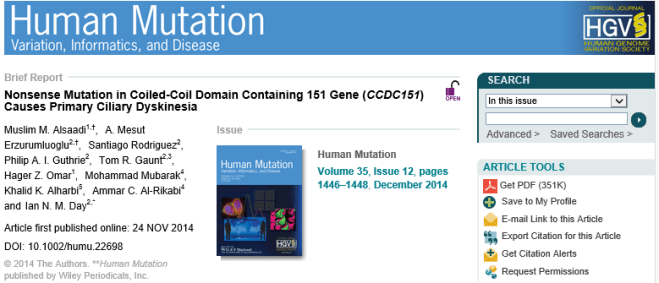
Once this mutation emerged as a clear candidate, we then followed it up by further phenotyping, and bioinformatics and wet-lab studies; and this finding was eventually published more than a year later (i.e. December 2014 issue) in the very respectable clinical genetics journal ‘Human Mutation’ (manuscript sent: 2nd Jun 2014^).

Please see the paper (Alsaadi and Erzurumluoglu et al, 2014. DOI: 10.1002/humu.22698) and the supplementary files for further details on the methods used and full list of co-authors.


Author Contributions:

AME wrote the manuscript (with guidance from SR, TRG and INMD). AME carried out in silico and wet-lab analyses. INMD and MMA led the study; and together with SR, KKA, PAIG and TRG, provided guidance throughout study and also commented on the manuscript. MMA carried out diagnosis and obtained consent from family. ACA, MM, HZO and MMA led the collection and processing of EM images for cilia. PAIG and AME performed DNA extraction, quantification and other DNA quality control procedures. All authors approved final version of manuscript.


^Now we know that another group (Hjeij et al, 2014) had submitted a paper with similar findings (albeit with additional animal models) to the journal AJHG a week before us (23rd May 2014). Although both groups identified CCDC151 to be a PCD causal gene independently, subsequent citations have all been directed to their paper – reflecting the critical importance of publishing before anyone else.

Read Full Post »

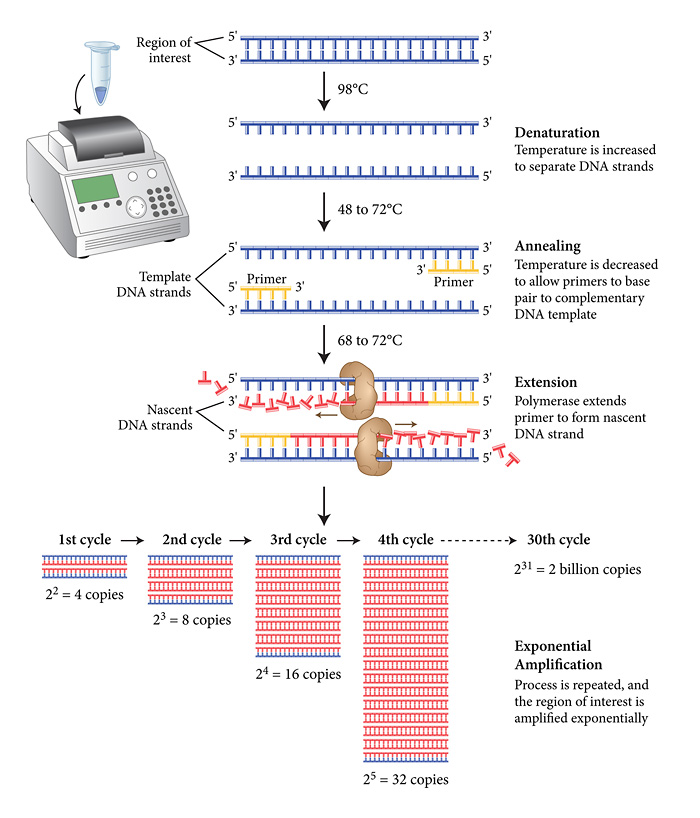
Polymerase Chain Reaction (from www.neb.com)

Schematic of the PCR (Polymerase Chain Reaction) process – a technique used to amplify a specific region of DNA. Source URL: http://www.neb.com

This is a very quick guide to designing a primer for PCR (Polymerase Chain Reaction) which will be used to amplify a region of interest. The produced amplicons can then be sent to companies such as GATC-Biotech (located in Germany) to be sequenced. I have seen many blogs with this title but none of them guide you in the way you would expect them to. So I decided to write my own to hopefully make things easier for you:

(i) To design a primer, first click on the link below:

Primer Blast

(ii) On the Primer Blast page, you will come across the ‘PCR Template’ box at the top. Enter the ‘Accession ID’ of your transcript of interest from RefSeq if you’re working with mRNA.

If you’re interested in amplifying a genomic region then use Ensembl by (i) searching for your gene of interest on the Ensembl homepage; (ii) then clicking on your gene of interest in the results; (iii) then in the ‘Gene’ view, clicking on the ‘Sequence’ in the ‘Gene-based display’ on the left; and (iv) then by copying the ‘Marked-up sequence’ in FASTA format and pasting it into the ‘PCR Template’ box.

Calculate where your variant of interest is located in the FASTA sequence (Ensembl) or in the transcript (RefSeq mRNA) you pasted and fill in ‘Forward Primer’ and ‘Reverse Primer’ accordingly. I’d advise having a flanking region of ~150bp on both sides of your variant (e.g. if your variant is located at position 500 in your FASTA sequence, then type 350 into ‘From’ in ‘Forward Primer’ and 650 into ‘To’ in ‘Reverse Primer’, leave the other two empty).

(iii) In Primer Parameters:

To get the amplicon sent and sequenced at a company, keep the PCR product size manageable (e.g. 150bp to 300bp).

(iv) If working with human genomic data, change ‘Database’ to ‘Genome (reference assembly from selected organisms)’ and select ‘Homo sapiens’ as ‘Organism’ in ‘Primer Pair Specificity Checking Parameters’.

Click ‘Advanced parameters’.

(v) Change ‘Primer Size’ in ‘Primer Parameters’ to 18 (min), 22 and 25 (max) respectively.

Change ‘Primer GC Content (%)’ to 40.0 and 60.0 respectively.

Change ‘GC Clamp’ to 1.

Change ‘Max Poly-X’ to 3.

Tick the ‘SNP handling’ box (important!).

(vi) Scroll to bottom and click ‘Show results in a new window’ before clicking  ‘Get Primers’.

(vii) Wait for results and select a couple* of primer pairs and test them in an in-silico PCR software (e.g. UCSC In-Silico PCR) – designing at least two primer pairs is important; in case one fails, the other one usually works.

(*check that the GC content of the forward and reverse primers are similar to each other for each primer pair.)

Once you’re happy with the amplicons produced in the in-silico PCR program (e.g. your variant** of interest is located towards the centre of the amplicon as desired) then check for hairpin formation (both for forward and reverse primer, separately) using a software such as OligoCalc.

(**if your gene of interest is on the reverse strand, then you would have to use software such as Reverse Complement to change the sequence of your amplicon to its complement so that it matches the Ensembl gene sequence that you’re comparing it against – where you obtained the sequence in FASTA format in step ii).

Once your primer pairs pass all these tests, order them from a company such as Eurofins.

When performing PCR, choosing the annealing temperature may not be straightforward. Although there is a formula for calculating optimum annealing temperature (Ta; see link), (for primers with no unintended targets***) I usually set it 6-7 Celsius below the melting temperature (Tm; you should have received this info from the company that you ordered the primer from) of the primer with lowest Tm. However Ta and MgCl2 gradients/titration may be needed sometimes if PCR doesn’t seem to work for both of the primers you designed earlier.

Sometimes the polymerase used may also need to be changed. So if conventional Taq polymerase doesn’t seem to work (or produces too many unwanted targets), trying a Hot Start activated polymerase (which is way more expensive) could be the answer.

(***if there are other unwanted bands in the gel, try increasing Tm as this will allow the primer to hybridize to the perfectly matching DNA sequence and not to the other unintended regions (which will hopefully be the region you wanted, if you designed the primer well)…

Hope it helps. I’m happy to answer any questions you may have. PCR is a dark art and anything can go wrong! Just need to keep trying 😉

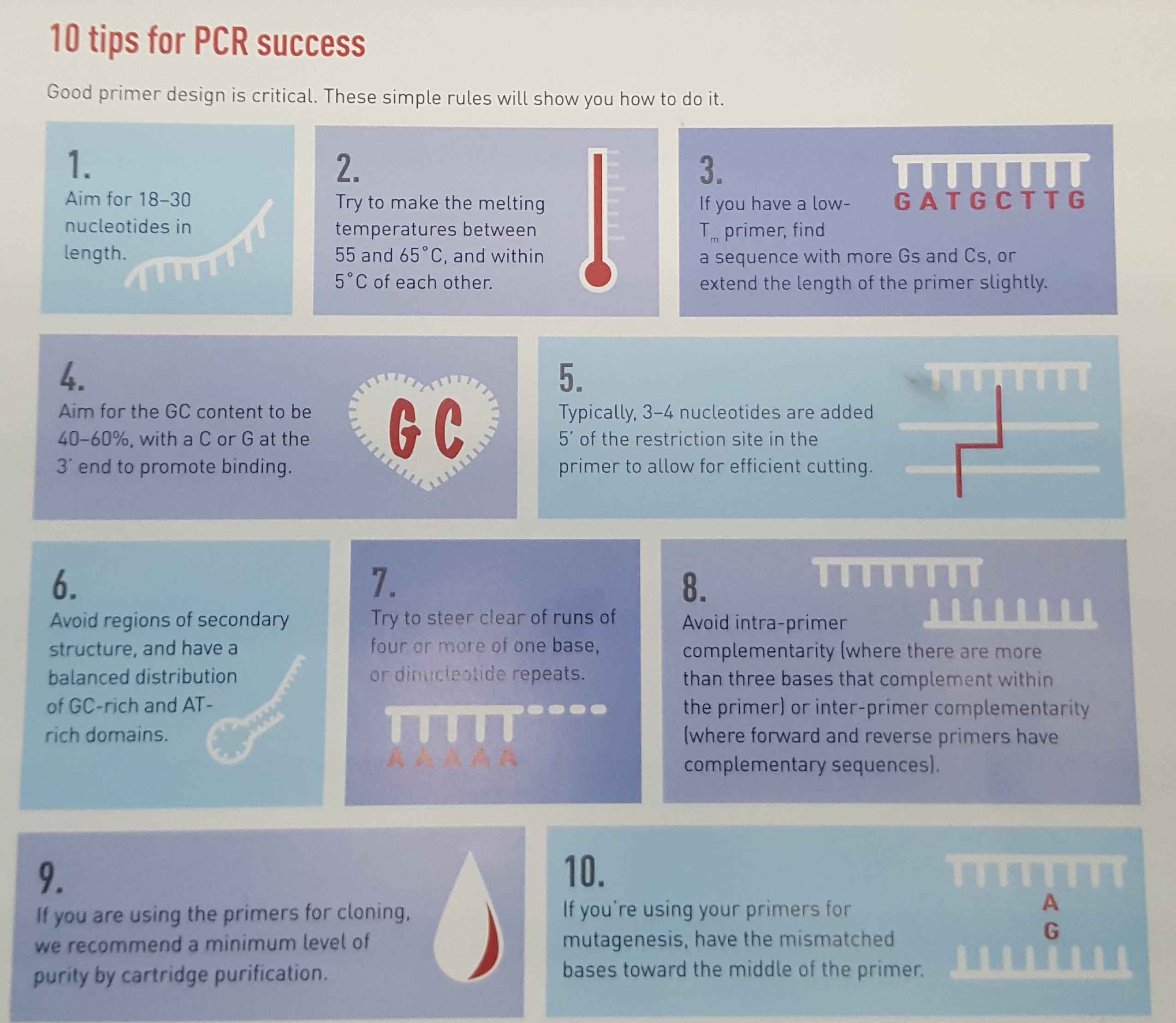
Tips for PCR primer design_Life_Technologies

10 Tips for successful PCR primer designing (by Life Technologies)

PS: I have no conflicts of interest and have no connections to either Eurofins or GATC-Biotech

References:

A. Mesut Erzurumluoglu, 2016. Population and family based studies of consanguinity: Genetic and Computational approaches. PhD thesis. University of Bristol.

Read Full Post »

Whirling Dervish

Whirling Dervishes are characteristic of Sufism. The saying below from Rumi melts many hearts as well as mine’s. We need his understanding of Islam more than ever!

The great Islamic scholar Mawlana Jalaladdin Rumi once said:

“Yesterday I was clever, so I wanted to change the world. Today I am wise, so I am changing myself”

(Not comparing myself with Rumi in any way) When I was a kid I also used to think I could and had to change the world. However after 25 years of life experience with 21 years of it as a student since the age of 4 (and counting, as a PhD student), I now feel different. It seems like my dreams have become more realistic (or maybe narrowed down, depending on how you look at it)…

So I now say:

“Yesterday, I wanted to change the world. Today, I’m (concentrating on) writing my thesis” 🙂

Read Full Post »

Korkmuyor musun?


Hayatını ‘hiҫ’lerin uğruna yasamış olmaktan?


Cocukluğunu bilgisayar başında;

Genҫligini eğlencede;

En verimli ҫağlarını dünya malı peşinde;

Yaşlılığını da hastahanelerde geҫirmiş olmaktan?


Ve bunun bir hesabı olacağından?


Korkmuyor musun?

Read Full Post »

1- Yaptigimiz isin iyi veya kotu oldugunu nereden anlariz?

“O isi yaparken Allah’a kavusmak (olmek) korkutmuyorsa o is iyidir; hayir, rahatsizlik duyuyorsaniz o is kotudur” (Reca bin Hayve)

2- Seytan namaz kilmayan (alni secdeye inmeyen) bir adama:

“Ben Hz Adem’e bir kerecik secde etmedigim icin cennet’den kovuldum; sen is her gun bes vakit namazin her secdesini terk ediyorsun… Acaba halin ne olacak?”

3- Yuzme bilmeyen cimrinin birisi denize dusmus ve etraftakiler kurtarmak icin “Ver elini” diyorlarmis, ama adam bir turlu vermemis…

Onu iyi taniyanlardan birisi “Al elimi” deyince, adam uzatmis…

4- Kanuni Sultan Suleyman merakindan, zamaninin Islam alimi (her soruya cevap vermesiyle meshur ve ayni zamanda Sut kardesi olan) Yahya efendiye Osmanli’nin sonunun nasil olacagini soran bir mektup yazmis…

Cevap olarakta Yahya efendi “Neme gerek” yazmis; Kanuni bu cevaba sasirmis ve hikmetini bizzat kendisi sormak icin yola koyulmus…

“Kardesim, neden soruma cevap vermedin?” deyince; “Cevap verdim; bir devlette haksizlik ve zulum yayilir, bunu isitip gorenler Neme gerek derlerse, o zaman o neslin yok olmasini bekle”

5- Bir inkarci, Islam alimine 3 soru sorar:
i) Allah varsa bana goster
ii) Her isi Allah yaratiyorsa neden suclu ceza gorur?
iii) Seytan atesten yaratildiysa, cehennem atesi nasil ona etki eder?

Alim yerden bir kerpic parcasi alip onun basina calar… Basi aciyan inkarci solugu hemen mahkemede aliverir ve Hakim alime sorar: Sen bunun basina vurmussun oylemi?

Alim: Bana 3 soru sordu, bende ona cevap verdim
Hakim: Nasil?
Alim: Allah varsa bana goster demisti; basinin agridigini iddia ediyorsa gostersin… Iki, herseyi Allah yaratiyorsa ben neden suclu olayim? Uc, Topraktan olusan kendisine (yine topraktan olan) kerpic nasil etki ediyor?

Sonuc: Beraat

Read Full Post »

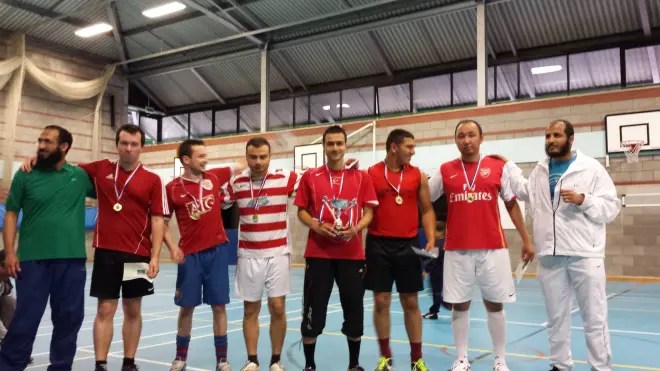
UBU Turkish Society team: Mesut Erzurumluoglu (Captain), Tom G. Richardson, Gavin Lunney, Esat Erzurumluoglu, Azad Tuncel (GK) and Askhat Tleuov


University of Bristol Student Union (UBU) Turkish Society football team has brought home the Bristol International Cup (22/06/2013). The 6-a-side football tournament was organised by the Saudi Students in Bristol (Venue: Bristol Grammar School). Individual awards were also given to Mesut Erzurumluoglu (Golden Boot) and Azad Tuncel (Best Goalkeeper)

Results were as follows:

Turkish Soc. 5-0 Chinese Soc. (Mesut 2, Askhat, Tom, Esat)

Saudi Soc. 1-3 Turkish Soc. (Esat, Mesut, Askhat)

Turkish Soc. 3-0 UWE ISoc (Mesut 3) – see video below

Kuwaiti Soc. p-p Turkish Soc. (opposition did not turn up)


Turkish Soc. was followed by UWE ISoc (in second) and Chinese Soc. (in third) in the league rankings


Source: Bristol International Cup 2013 Winners: UBU Turkish Society


Video of Final game (taken by my friend Jie ‘Chris’ Zheng):

Read Full Post »

Older Posts »