Feeds:
Posts
Comments

Posts Tagged ‘ccdc151’

I worked on rare genetic diseases during my PhD and looked for novel disease causal genes – which I was lucky enough to find1. I also became familiar with the state of rare disease therapeutics: there over 7,000 rare diseases for which only %5 have therapies2. A large majority of rare diseases are neglected by Pharma companies most probably as the market is not as big as it is for common diseases (e.g. obesity, diabetes, COPD). Thus, when I was approached by an old family friend out of the blue and told that his 11 month-old son was a spinal muscular atrophy (SMA) type 1 patient, I straight away thought “the child probably has no hope“.

I did not mention the lack of therapies for rare diseases to my friend and did some research about SMA – a severe neuromuscular disorder where many patients die before the age of two. I was surprised to see that there was an apparently effective ‘cure’: Zolgensma, a gene therapy/drug that Novartis are offering for ~$2.1 million – the world’s most expensive drug at present. Although the drug is FDA and EMA approved, the NHS does not offer the drug at the moment as it has not been reviewed by the NICE committee – which thoroughly reviews all credible drugs and advises the NHS on whether to offer it to UK patients or not.

As we saw that quite a few parents ran successful crowdfunding campaigns and got their children to have the therapy, we decided to do the same (Metehan’s Gofundme page). As the crowdfunding campaign gathered pace, I was sent a tonne of emails – including the academics listed below – asking how Novartis can charge such a price for one drug. While we understand that this is not just a quest for profits and the price reflects R&D and production costs as well as Zolgensma’s position compared to competitors such as Spinraza (Biogen) – offered by the NHS, which is thought to cost around ~£400,000 per patient (real price unknown due to undisclosed agreement3) for just the first year – we believe that Novartis should provide a breakdown of what the profit margin of Zolgensma is per patient.

While we commend Novartis and other companies for investing in rare diseases and can only hope more would follow suit, disclosing profit margins would be most ethical thing to do, which in turn can provide a room for negotiation for patients, and low and middle-income countries (LMIC).

Dr A. Mesut Erzurumluoglu, Research Associate/Genetic Epidemiologist (MRC Epidemiology Unit, University of Cambridge)

Signed by:

Dr Zeynep Hulya Gumus, Assistant Professor of Genetics and Genomic Sciences (Icahn School of Medicine, Dept. of Genetics and Genomics)

Dr Sevinc Ercan, Associate Professor of Biology (New York University, Faculty Director of Diversity, Equity and Inclusion)

Prof. Cem Say, Professor of Computer Science (Bogazici University, Dept. of Computer Science)

Short link to share this call: bit.ly/smanovartis

References

  1. Alsaadi, M.M. and Erzurumluoglu A.M. et al. Nonsense mutation in coiled-coil domain containing 151 gene (CCDC151) causes primary ciliary dyskinesia. Human Mutation 35, 1446-8 (2014). (Also see my blog post: Discovery of a new Primary ciliary dyskinesia causal gene)
  2. Tambuyzer, E. et al. Therapies for rare diseases: therapeutic modalities, progress and challenges ahead. Nature Reviews Drug Discovery 19, 93-111 (2020).
  3. National Institute For Health And Care Excellence – Final appraisal document: Nusinersen for treating spinal muscular atrophy. July 2019. URL: https://www.nice.org.uk/guidance/ta588/documents/final-appraisal-determination-document-2. Accessed: 10/09/2020

Read Full Post »

Autozplotter_mesut_erzurumluoglu

An example output from AutoZplotter using whole-exome sequencing data – used to identify the Primary ciliary dyskinesia causal gene, CCDC151, in Alsaadi and Erzurumluoglu et al, 2014 (read this paper’s story here). The green and red dots correspond to heterozygous and homozygous calls (for the alternative allele), respectively. The continuous blue lines correspond to the probability that the observed sequence of genotypes is not autozygous (e.g. close to zero means likely to be an autozygous region). LRoH: Long runs of homozygosity. NB: This image has been edited to ensure confidentiality/anonymity of the participant. Some LRoHs have been shortened or extended for this reason. If you’re thinking of using an AutoZplotter image in a paper, do not share genome-wide figures but maybe consider using chromosome-wide ones

When analysing whole-exome or whole-genome sequencing (or dense SNP chip) data obtained from consanguineous individuals with a rare Mendelian disease, the disease causal mutation usually lies within an autozygous region (characterised by long runs of homozygosity, LRoH, which are generally >5Mb). Thus checking whether any candidate genes overlap with an LRoH can substantially narrow region(s) of interest. There are several tools which can identify LRoHs such as Plink, AutoSNPa and AgilentVariantMapper. However, they all require their own formats and considerable computational knowledge; and also struggle to identify regions that are shorter than 5Mb. Thus, we wrote AutoZplotter, a user-friendly python script which plots the heterozygosity/homozygosity status of variants in a VCF file to allow for quick visualisation and manual identification of regions that have longer stretches of homozygosity than would be expected by chance.

VCF_format_v4

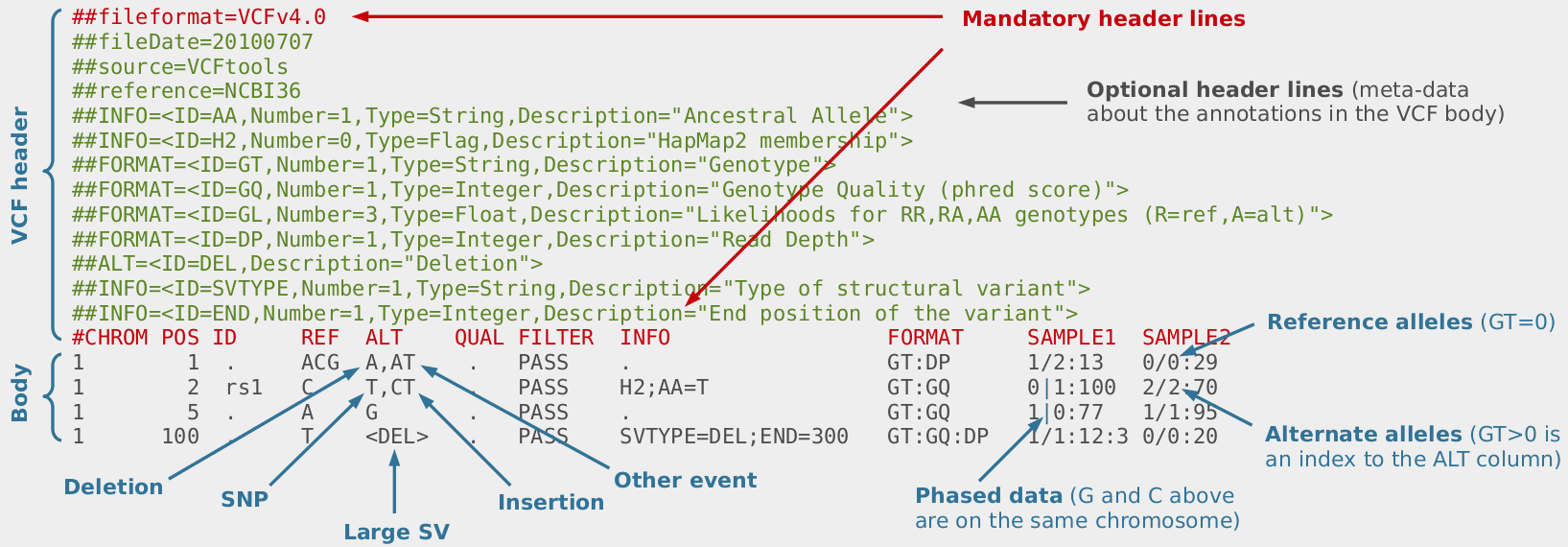
AutoZplotter accepts the VCF format – which is the standard format for storing genetic variation data from NGS platforms. Image Source URL: bioinf.comav.upv.es

The input format of AutoZplotter is VCF, thus it will be suitable for any type of genetic data (e.g. SNP array, WES, WGS) and from any species.

An older version of AutoZplotter was used in the analysis stage of Alsaadi et al (2012) and Alsaadi and Erzurumluoglu et al (2014).

To download latest version of AutoZplotter, click here (directs to ResearchGate). If you found AutoZplotter helpful in anyway, please cite Erzurumluoglu AM et al, 2015.


References:

Erzurumluoglu AM et al, 2015. Identifying Highly Penetrant Disease Causal Mutations Using Next Generation Sequencing: Guide to Whole Process. BioMed Research International. Volume 2015 (2015), Article ID 923491

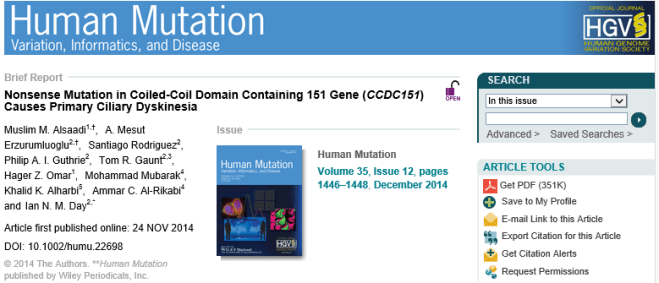
Alsaadi MM and Erzurumluoglu AM et al, 2014. Nonsense Mutation in Coiled-Coil Domain Containing 151 Gene (CCDC151) Causes Primary Ciliary Dyskinesia. Human Mutation. Volume 35, Issue 12. Pages 1446–1448

Erzurumluoglu AM et al, 2016. Importance of Genetic Studies in Consanguineous Populations for the Characterization of Novel Human Gene Functions. Volume 80, Issue 3. Pages 187–196

Erzurumluoglu AM, 2015. Population and family based studies of Consanguinity: Genetic and Computational approaches. PhD Thesis. University of Bristol

Read Full Post »

Human mutation mesut erzurumluoglu

Primary ciliary dyskinesia (PCD) is a rare disease that affects tiny, hair-like structures (called cilia) that line the airways. Respiratory cilia carry mucus (which contains inhaled dust and bacteria) toward the throat to be coughed/sneezed out of the body (or digested). In PCD patients, these cilia do not perform their job properly thus allow bacteria and dust to stay in your airways and cause chronic respiratory diseases/infections.

humu22698-fig-0002

Cross‐sections of respiratory cilia in (A) control (non affected) and (B) CCDC151 mutated proband. Image from Alsaadi and Erzurumluoglu et al (2014,  Human Mutation)

We, at the Bristol Genetic Epidemiology Lab (BGEL, University of Bristol, UK), discovered a new Primary ciliary dyskinesia (PCD) causal gene (collaborating with colleagues from the King Saud University, Saudi Arabia).

I, on the 27th of November 2013 – whilst analysing the DNA sequencing data obtained from our participants – discovered the c.925G>T:p.[E309*] mutation in a homozygous state (i.e. two copies of the mutation) within the CCDC151 gene of one of our PCD affected participants. The CCDC151 gene was a great candidate as indicated by previous animal studies, however was not observed as a ‘causal gene’ in PCD affected individuals.

Once this mutation emerged as a clear candidate, we then followed it up by further phenotyping, and bioinformatics and wet-lab studies; and this finding was eventually published more than a year later (i.e. December 2014 issue) in the very respectable clinical genetics journal ‘Human Mutation’ (manuscript sent: 2nd Jun 2014^).

Please see the paper (Alsaadi and Erzurumluoglu et al, 2014. DOI: 10.1002/humu.22698) and the supplementary files for further details on the methods used and full list of co-authors.


Author Contributions:

AME wrote the manuscript (with guidance from SR, TRG and INMD). AME carried out in silico and wet-lab analyses. INMD and MMA led the study; and together with SR, KKA, PAIG and TRG, provided guidance throughout study and also commented on the manuscript. MMA carried out diagnosis and obtained consent from family. ACA, MM, HZO and MMA led the collection and processing of EM images for cilia. PAIG and AME performed DNA extraction, quantification and other DNA quality control procedures. All authors approved final version of manuscript.


^Now we know that another group (Hjeij et al, 2014) had submitted a paper with similar findings (albeit with additional animal models) to the journal AJHG a week before us (23rd May 2014). Although both groups identified CCDC151 to be a PCD causal gene independently, subsequent citations have all been directed to their paper – reflecting the critical importance of publishing before anyone else.

Read Full Post »