Feeds:
Posts
Comments

Posts Tagged ‘haplogroup’

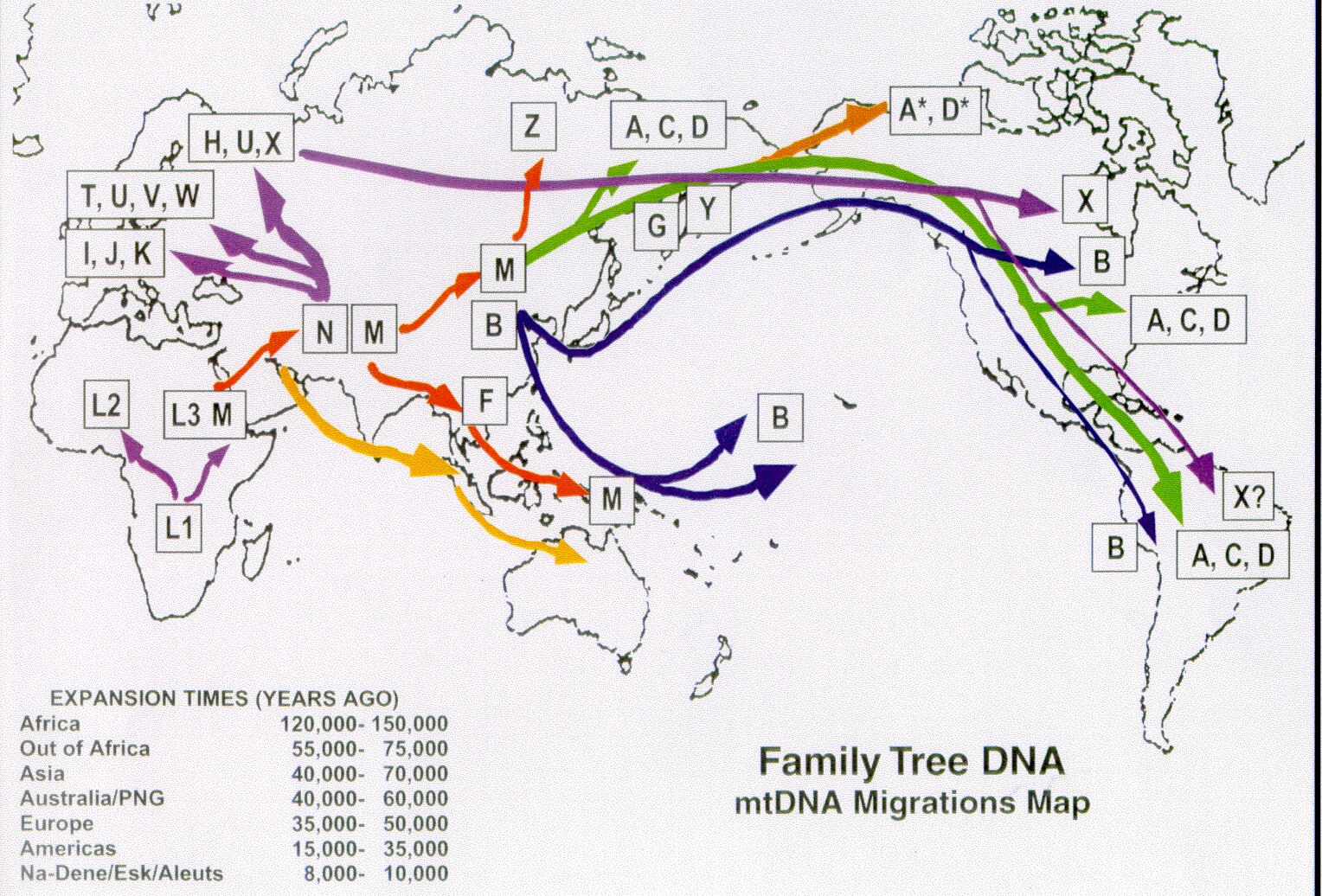
Mitochondrial DNA Migration Map

Mitochondrial DNA Migration Map

If we were to ask a question like this to the public we would probably get an equal split between yes and no. Also many reasons will be given for the explanation of the answers. A question like this is a tough and a broad one; and must be approached by a consortium of Statisticians, Psychologists and Sociologists. However genetics can also have a say on this.

To come straight to the point: Mitochondrial DNA and the non-recombining regions of the Y chromosome can be used to determine the matrilineal and the patrilineal ancestry of an individual respectively. By analysing the variants in these uniparentally inherited DNA molecules people who shared a common ancestor many generations ago can be identified; and these individuals are usually clustered in ‘haplogroups’. Also by analysing the spread and frequency of haplogroups in different regions, we can deduce migrations and special events which occurred in human history.

When the spread of Y-DNA and mitochondrial (mtDNA) haplogroups are compared, we see that mtDNA haplogroups are more spread (and are less associated with a geographic region) than Y-DNA haplogroups indicating that women (who were our ancestors) in the past seems to have married more outside of their ethnic origin compared to males. This could probably be explained by the use of women when strengthening ties with other communities and monarchies in ancient times but the same might by said for males also. So (ancestral human) genetics gives some evidence towards the answer ‘yes’. More evidence from other fields are needed of course.

From what we read from the news, women from the poor parts of the world have a tendency to marry *foreign men for money and better life standards but there isn’t much statistical information on this, so cannot say anything definitive.

I suggest that scientists from different fields (like the above mentioned ones) come together and answer broad questions such as this; otherwise the correct answer will never be arrived at by a single field of science.

For more information about the use of genetics (i.e. mitochondrial DNA and Y chromosome) when deducing maternal and paternal ancestry:

www.eupedia.com/europe/origins_haplogroups_europe.shtml

mesuturkey.wordpress.com/2012/05/24/are-europeans-turkish/


*’Foreign’ not just in terms of ethnicity but in a sense that women have to travel to another region to marry and live with these men.
Read Full Post »

DNA

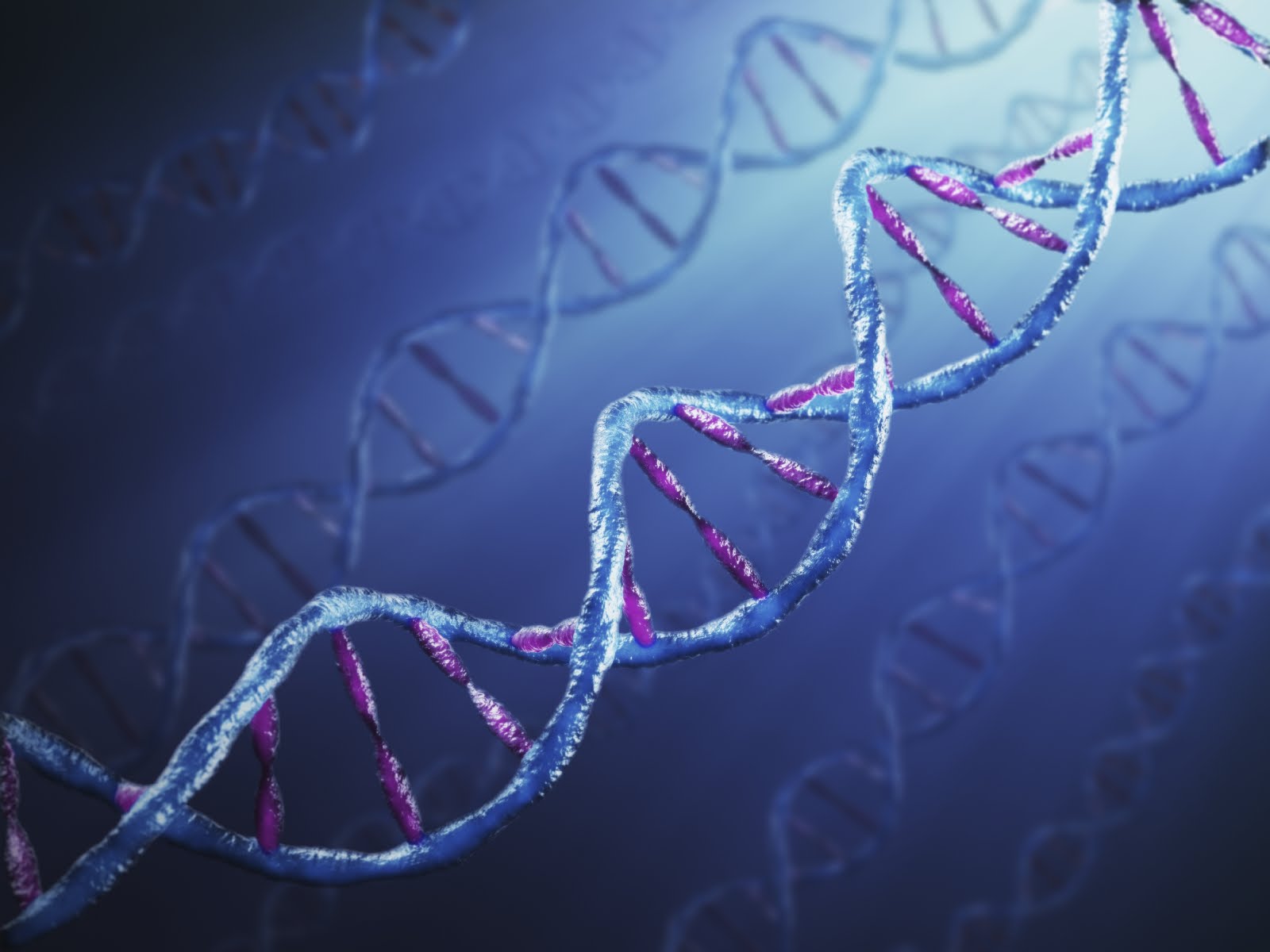
Structure of DNA – the blueprint of all organisms

Deduction of Human migrations and Ancestry through the use of Uniparentally inherited DNA

Our genome is made up of 22 pairs of autosomes and 2 sex chromosomes making up a total of 46 chromosomes. We inherit half from our mother and the other from our father. If you receive an X from both your parents, you will become a female; and if you receive a Y from your father (you will always receive an X from your mother) you will be male. This makes the Y chromosome (excluding the pseudo-autosomal regions) the only nuclear chromomosome which is uniparentally inherited (males inherit it only from their fathers and females do not have it). Because it does not have a homologous pair (like the autosomes do), recombination does not occur thus no mix up of DNA sequences occur. This is why it is unique in the way that fathers pass on the same DNA sequence to their sons without any change (except for a few spontaneous mutations). So if we could go back in time and check the DNA sequence of the Y chromosome of your grandfather 20 generations back we would see that you have the same as his (apart from minor changes). This is why information through the analysis of the DNA sequence in the non-recombining regions can be used to deduce an individual’s ancestry (Jobling and Tyler Smith, 2003).

Information from the Non-recombining regions of the Y Chromosome

The Y chromosome of many males from all world populations have been analysed and a phylogenetic tree which is rooted to Africans has been constructed (Karafet et al 2008). The same is true for the mitochondrial DNA also (van Oven and Kayser, 2008). Each branch of the tree is called a ‘haplogroup’ which is the term used to describe a group of individuals who share the same Y-DNA haplotypes (or mitochondrial haplotypes in terms of the mtDNA phylogenetic tree), thus share a common ancestor some time in history (Underhill and Kivisild 2008).

European males usually belong to one of the two major Y-DNA haplogroups: R and I (see eupedia.org)

R is by far the most prevalent accounting to over 70% of males in Europe and I accounts for just over 20% (see eupedia.com for more information). What is intriguing however is that, through the analysis of the frequencies of the haplogroups in different regions of the world, haplogroup I seems to correspond to native Europeans whereas the R haplogroup seems to have arrived from Anatolia where present day Turkey is.

To conclude, there is definitely strong evidence that most European males share a common ancestor who lived in Turkey quite a few centuries ago. Human history is an intriguing area and genetics has a lot to offer to these studies!

Same for European languages?

Same for European languages?

For more information (ordered to help understand the issue better):

– Human Genome: http://en.wikipedia.org/wiki/Human_genome

– Y chromosome: http://en.wikipedia.org/wiki/Y_chromosome

– Mitochondrial DNA: http://en.wikipedia.org/wiki/Mitochondrial_DNA

– Origins, age, spread and ethnic association of European haplogroups and subclades: http://www.eupedia.com/europe/origins_haplogroups_europe.shtml

– Underhill PA, Kivisild T. 2007. Use of y chromosome and mitochondrial DNA population structure in tracing human migrations. Annu Rev Genet. 2007;41:539-64.

– Jobling MA, Tyler-Smith C. 2003. The human Y chromosome: an evolutionary marker comes of age. Nat Rev Genet. 2003 Aug;4(8):598-612.

– Karafet TM et al. 2008. New binary polymorphisms reshape and increase resolution of the human Y chromosomal haplogroup tree. Genome Res. 2008 May;18(5):830-8. Epub  2008 Apr 2.

– van Oven M, Kayser M. 2009. Updated comprehensive phylogenetic tree of global human mitochondrial DNA variation. Hum Mutat 30(2):E386-E394. http://www.phylotree.org.

Read Full Post »