Feeds:
Posts
Comments

Posts Tagged ‘judaism’

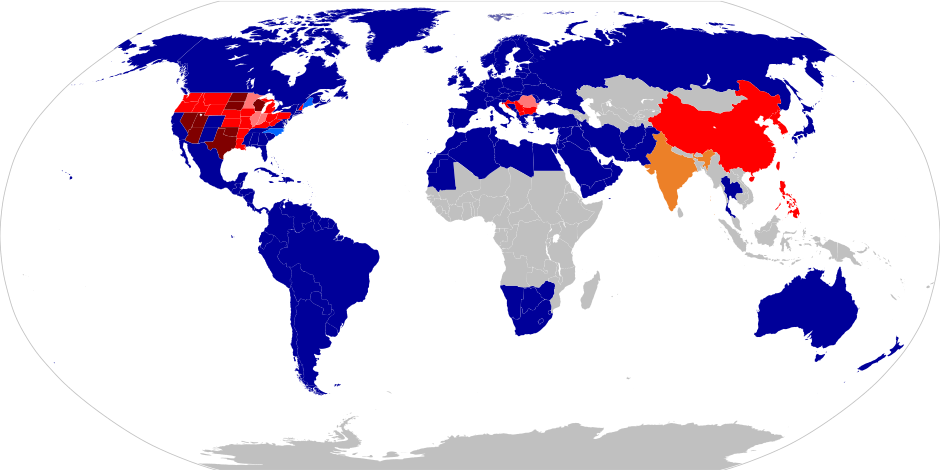
Laws regarding first-cousin marriage around the world. Navy blue: First-cousin marriage legal. Light Blue: Allowed with restrictions or exceptions. Yellow: Legality dependent on religion or culture. Red: Statute bans first-cousin marriage. Pink: Banned with exceptions. Dark Red: Criminal offense. Grey: No available data. The image has been released into the public domain by the author (URL: http://en.wikipedia.org/wiki/Cousin_marriage).

Laws regarding first-cousin marriage around the world. Navy blue: First-cousin marriage legal. Light Blue: Allowed with restrictions or exceptions. Yellow: Legality dependent on religion or culture. Red: Statute bans first-cousin marriage. Pink: Banned with exceptions. Dark Red: Criminal offense. Grey: No available data. The image has been released into the public domain by the author (URL: http://en.wikipedia.org/wiki/Cousin_marriage).

The answer is (studying) consanguinity (i.e. unions between relatives such as first-cousin marriages); and one cannot understand the complexity of the issue (and make ‘informed’ decisions) without reading the literature of these five apparently unconnected fields. It is fair to say that there is a degree of hostility towards consanguineous marriages in Western societies. However this perception is usually attained without in-depth knowledge on the genetic effects of consanguinity. In short, consanguinity per se (i.e. on its own) does not cause a disorder, but rather it increases the probability of an autosomal recessive disorder (which require two copies of the same) causal mutation to be in a homozygous state (i.e. possess two copies of the same mutation). When this happens both copies of the genes we inherited from our parents do not function properly.

Unions between individuals who are second-cousins or closer are considered ‘consanguineous’ in clinical genetics. Consanguineous families with diseases have been studied thoroughly by clinical geneticists for the last two-three decades – and this has allowed for identification of many disease causal genes. However, studying consanguineous populations as a whole rather than ‘cherry picking’ families with disease can offer much more for better understanding our genome and therefore finding new targets for preventive and curative medicine. Many genes in our genome still have unknown functions and we have merely scratched the surface in terms of their interactions. I hypothesise that assigning a function to the thousands of remaining genes will only be feasible if consanguineous populations are studied as a whole (i.e. also including families without disease to the studies) and I therefore carry out theoretical studies to estimate the sample size needed and how many genes will be completely ‘knocked-out’ if these studies were to be carried out. This approach proposes a ‘paradigm shift’ in clinical genetics.

Global prevalence of consanguineous unions. Consanguinity has deep roots in many cultures and it is impossible to interfere/intervene from the outside without first understanding why people engage in cousin marriages. Image source URL: www.consang.net/

Global prevalence of consanguineous unions. Consanguinity has deep roots in many cultures and it is impossible to interfere/intervene from the outside without first understanding why people engage in cousin marriages. Image source URL: http://www.consang.net/

Consanguineous unions occur very rarely in Western countries for a variety of sociological (e.g. cultural, negative media coverage) and statistical reasons (e.g. smaller families means fewer cousins at similar age), but the complete opposite is true in certain regions of the world where union of kin is seen as the default choice. Conservative estimates predict that approximately one-sixth of the world’s population (a figure of 1.1 billion is proposed by the Geneva International Consanguinity Workshop Report) live in highly consanguineous regions; and also another one-sixth falls into the ‘unknown’ category – reflecting the need for further research. Historically, consanguineous unions were also common amongst the elite in the UK (up to mid-19th century, including Charles Darwin), the Pharaohs and the Royal families of Europe (e.g. Habsburgs).

Views of main religions towards consanguineous marriages. NB: Where first-cousin marriages are allowed, lower levels of consanguinity are also allowed. Image Source: Copy-pasted from my own PhD thesis

The increase in the probability of a mutation being homozygous will depend on the level of relatedness between the parents. For example, approximately 6.25% of mutations are expected to be homozygous in the offspring of first cousins. This figure would be (near) 0% in the offspring of outbred individuals. Genetically, this is the main difference between union of kin and union of unrelated individuals. We all have many disease-causal mutations in our genomes (but in heterozygous state, i.e. one normal copy and one mutated copy) and different kinds of mutations are out there in all populations. However because these mutations will be very rare or are unique to you or your family, they do not get to meet their counterpart when you have offspring with an unrelated individual. Therefore the mutation’s homozygous effects are never observed. This is why rare autosomal recessive disorders are almost always seen in consanguineous offspring.

This difference in homozygosity levels is also one of the main reasons behind the necessity of studying consanguineous individuals and populations. These studies can turn unfortunate events (e.g. disorder in families) to a great use for medical sciences. Not only will identifying a disease-causal mutation help with diagnostics, they can enable scientists to understand what certain genes do and help us understand why the gene causes that disease. Rare instances can be highly informative about preventable outcomes relevant to the whole population. For example, had more notice been taken in the 1980s of the proof which familial hypercholesterolemia provided for the causal role of cholesterol in coronary heart disease (CHD), high cholesterol intake would have been better addressed for the nation a decade sooner. To provide numbers, CHD is still the UK’s biggest killer causing over 80 thousand deaths a year, thus paying more attention to information that was coming from studies of consanguineous unions could have saved thousands of lives just in this single case.

Given the advancements in genetic diagnostics (e.g. huge decreases in costs of DNA sequencing), screening for all known mutations will become feasible in the near future for everybody – and identifying disease-causal mutations will become even more useful for all of us. Our genomes are constantly being mutated and my approach will enable a much broader understanding of our genome by observing these mutations’ homozygous effects. Finally, rather than discourage (See link for an example) consanguineous marriages totally (not feasible in the foreseeable future due to many socio-economic and cultural reasons), for those willing to marry a cousin, screening for previously identified mutations will help these couples take more informed decisions.
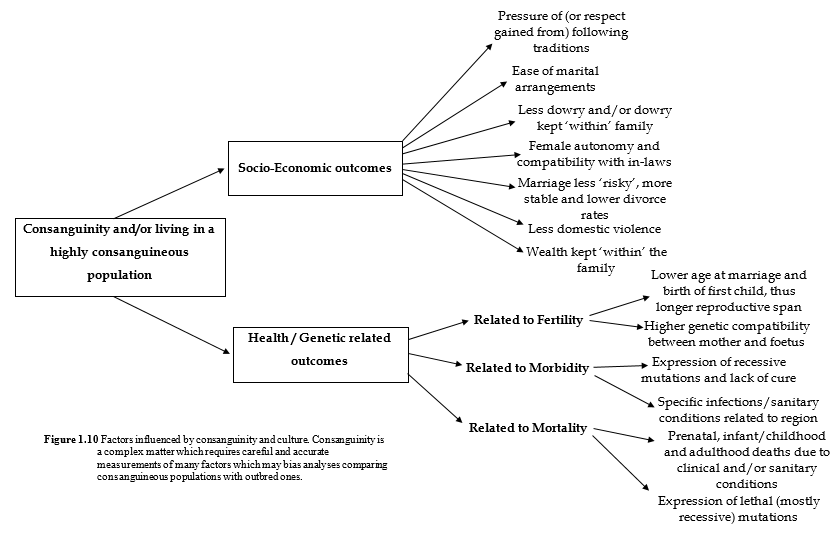
consanguinity factors culture socio-economic

Factors influenced by consanguinity and culture. Image Source: Copy-pasted from my own PhD thesis (hence the Figure 1.10)

Key reference:

A. Mesut Erzurumluoglu, 2016. Population and family based studies of consanguinity: Genetic and Computational approaches. PhD thesis. University of Bristol.

Erzurumluoglu AM et al, 2016. Importance of Genetic Studies in Consanguineous Populations for the Characterization of Novel Human Gene Functions. Annals of Human Genetics, 80: 187–196.


PS: Whilst the media is mostly responsible for portraying consanguinity the way they understand (and with more contrast added on of course), they could be forgiven as the genetic effects of consanguinity is not fully understood amongst geneticists either, especially in the field of complex trait genetics – thus the extra incentive for studying them.
Read Full Post »

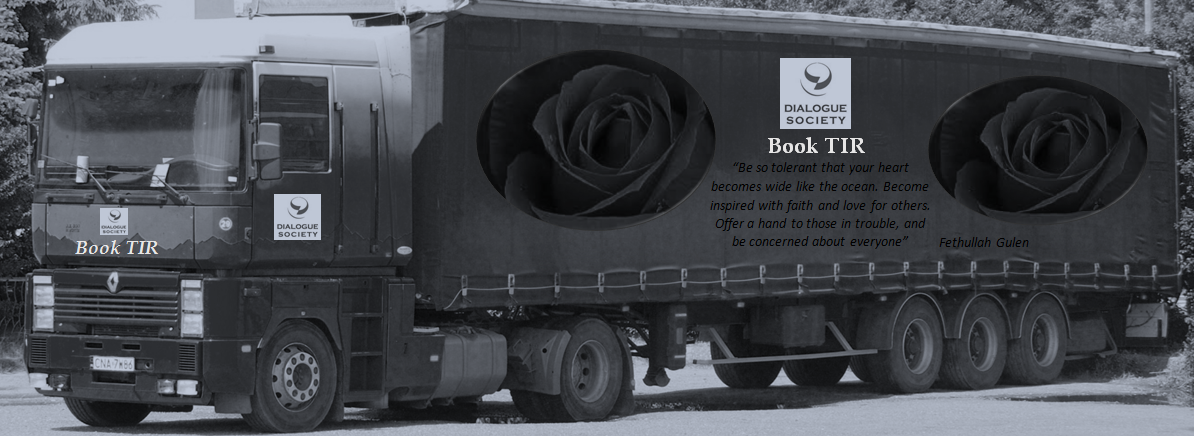
As an example: Dialogue Society Book Lorry

As an example (using my brilliant Photoshop skills): Dialogue Society Book Lorry

As there is a lot of hostility towards all religions, and especially Islam in Western Societies, it should be one of our primary objectives to inform people of  the ‘true face of Islam’ through inter-faith dialogue. I am very impressed with what organisations such as Dialogue Society are doing, but I do not think they are reaching the wider audience as they would like to. They reach out to many academics and VIPs in their respective areas/cities, but struggle to make an impact at the public level.

For this reason I would like to suggest designing a ‘Book Lorry’ (inspired from book buses) which will travel all over the UK (and can set an example to similar organisations within the UK and other countries), park their lorry in city centre (or other designated areas) and engage with the public. Interested individuals will enter from one side and leave from the other. The inside will be designed just like book busses, and people can take whatever book they would like (or pay a small fee depending on the book).

I believe this would be a great way to attract public attention (especially if the lorry is designed properly, not like the one above!); and make inter-faith dialogue more fruitful…

For extra information on the Dialogue Society, please see my Dialogue Society post…

Read Full Post »

Our eyes have been blurred with distractions
Our eyes have become blurred with distractions. We lost touch with the realities of this life.
Note: Scroll down for the English version of this post

Hayatın anlamını araştıran/sorgulayanların çoğu zaman, dinleri ve Allah’ı tamamen yalanlayanlardan olmasını anlamıyorum; gerçekten anlamıyorum!

Soylemeliyim ki hiçbir zaman bulamayacaksınız; egonuzu (nefsinizi) yenip/dizginleyip, Hakk’ın (c.c.) önünde eğilmediginiz surece! Biraz sert bir cevap gibi gelebilir ama gerçek bu. Samimiyetle O(c.c.)’nu bulmak istersek, ben Allah’ın bize ‘doğru yol’u gosterecegine inanıyorum. Buna siz de inanın!

Shakespeare, Tolstoy, Dostoyevsky, Dickens, Orwell’i okumak/anlamak için harcadıgımız zamanın onda birini Allah’ı (şimdilik varlıgına inanın ya da inanmayın) tanımaya/anlamaya harcasak da ondan sonra kararımızı versek.

Bir köpek dahi sahibini tanıyorsa, insan kendisini yaratandan geleni hayli hayli tanır. Kendi tecrübemden konuşuyorum. Kuran’a bakın; ve size (herkesinki farklı) tesir edecek öyle ayetler karşınıza çıkacak ki “işte bu kitap beni Yaratan’dan gelmiş!” dedirtecek!


Ek: İşe nasıl bir mucize ve ne kadar önemli birisi oldugunu tefekkür ederek başlayabilirsin. Ben de (beni etkileyen) bir örnekle yardımcı olmaya çalışayım: Mesela senin gibi bir insan dünya tarihinde olmadı; olmayacak! Eşsiz bir insansın! Allah seni (evet sadece seni!) yaratmak için annenle babanı tanıştırdı ve kalplerini birbirlerine ısıttı. Annenin 300 küsür yumurtasının arasında, babanın da milyarlarca spermi arasında seni yaratacak kombinasyonu seçti. Aynı şey, anne-baban ve dede-ninelerin için de gecerli… Onların anne-babası için de… Onlardan önceki nesiller içinde… Bu halkada bir tane eksik veya degişim olsaydı, sen olmayacaktın!

Ek 2: Arzu ederseniz ‘Evrim teorisi‘ (ingilizce) ve ‘hayat gayem‘le ilgili yazdıgım eski yazılarıma da göz gezdirebilirsiniz…

rumi_mevlana

People who’ve asked me “what is the meaning of life?” had one thing in common: Outright denial of all religions and (any idea of a) God

This is what I can’t understand; I really can’t!

Most of the time, any answer I gave would be thrown back at me with distaste. Sorry but – as a friend whose willing to help you – I’ll tell you what I believe and try backing them up with as much evidence (which convinces me) as possible, but it is up to you to be convinced or not. I don’t have the power to tune anybody’s heart or mind…

For me: Without religion, there’s no* meaning to life! Otherwise life just becomes: “You live because you were born; you had no choice!”

“Life was just an accident and your sperm happens to be the (un)lucky one out of the zillions that your father produced – also the same applies to your father; and his father… You just have to put up with it.”

Having no sense of meaning in life is why many people who have no belief in God and the afterlife commit suicide or waste their life (e.g. drugs, night life, gambling, games); and the one’s who don’t, live in constant fear of death – especially when they get older…

There can only be one “true” religion in the world – others will have no, some or a lot of truth in it but can’t be the “true religion”; and everybody has to make it their primary aim to find it! We spend hours reading Orwell, Shakespeare, Tolstoy, Dostoevsky’s works (rightly so! they can teach us a lot) but rarely do we look at the books which have (trying to word it as an objective person) “supposedly” been sent to us by God himself. Why aren’t we curious about them? How many of them have we read?

The true religion has to answer all reasonable philosophical questions which come to mind, whilst not contradicting scientific and historical facts… Also this doesn’t mean that we must “like” the answers that are given. Truth almost always hurts.

I believe I’ve found it and it has stood the test of time, however what convinces me may not convince you/others. Therefore everyone’s on their own conquest to find the truth and the true religion – the thing that will give our lives a meaning.

Please see my post God of Science for a few arguments on the existence of God (and the wrong belief that current scientific knowledge in genetics is incompatible with God). Happy to discuss any points…

*Read Albert Camus and other ‘existentialist’ philosophers (e.g. Sartre, Nietzsche) if you don’t believe me – they were atheists and believed that life had no meaning, so try(!) enjoying it while lasts…

Rumi-Quote-Ways-to-Jannah
There are as many ways to Paradise as there are human souls – Rumi

PS: There is a school of thought which believes that we’re made up of life, soul and body. Thus as long as we’re alive, the soul is tied to the body (via life). This can explain why we become unconscious (and ‘blackout’) when we faint. However when we die, we will not be unconscious as the ‘tie’ that is life (as we understand it) does not exist anymore. Thus the soul is free to travel (and get rid of the shackles/limitations of the body) and meet the Creator. Please read around the idea if interested. Happy to discuss…

PPS: I respect everyone’s beliefs – and lack of it. It is their own life choice at the end of the day! However it would selfish of me not to share/propagate something that I believe is to be true (i.e. belief in the existence of an omniscient and omnipotent God).

Read Full Post »