Feeds:
Posts
Comments

Posts Tagged ‘medical’

evolution_of_intellectual_freedom_cham_phdcomics

Source URL: PhD Comics

Figuratively speaking, what is the ‘worth’ of a certain academic? Between two academics, which one has had more positive academic impact than the other? How do you rank academics? And award grants, promotion, tenure etc. to the best* ones?

I’m not going to answer these questions but would like to chip in with some food for thought and suggestions.

Well; one may say: “It’s easy! Just compare their h-index and total no of citations!

This may be an effective way to go about answering the question. Surely someone with an h-index of 30 has had more positive academic impact than someone with let’s say an h-index of 15 – and is the better candidate?

Maybe – that is if all things are equal regarding the way citations and the h-index works i.e. if both academics:

  • are in similar fields – as papers in certain fields receive more citations overall than papers in other fields,
  • are in similar stages in their careers – as comparing an early-career postdoc with an established “Prof.” wouldn’t be fair,
  • have similar numbers of first/equal-first or last author papers – as an academic with many middle-authorships can have excessively inflated h-indexes,
  • have similar number of co-authors – as it may be easier to be listed as a co-author in some fields than others and/or mean that more people will be presenting and citing the paper as their own, and
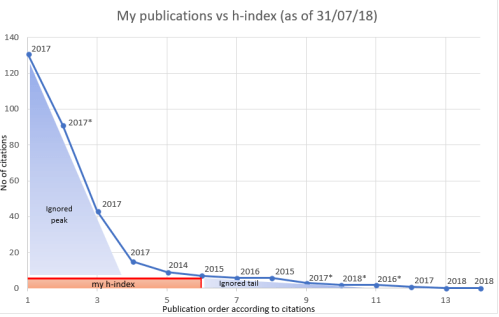
  • have a similar distribution of citations across the papers – as the h-index ignores highly influential papers and the total citations can be highly influenced by even just one of these (see figure below).

I may have missed other factors, but I think these are the main ones (please add a comment below).
mesut_erzurumluoglu_h-index_academic_2018

Calculating my h-index: Although problematic (discussed here), the h-index has become the standard metric when measuring the academic output of an academic. It is calculated by sorting the publications of an academic from most to least cited, then checking whether he/she has h papers with h citations e.g. if an academic has 10 papers with ≥10 citations but not 11 papers with ≥11 citations then their h-index will be 10. It was proposed as a way to summarise the number of publications that an academic has and their academic impact (via citations) with a single number. The above citation counts were obtained from my Google Scholar page

As of 31st July 2018, I have 14 published papers – including 5 as first/equal-first author – under my belt. I have a total citation count of 316 and an h-index of 6 (225 and 5 respectively, when excluding publications marked with an asterisk in the above figure). It is fair to say that these numbers are above average for a 29-year-old postdoc. But even I’m not content with my h-index – and many established academics are definitely right not to be. I’ll try and explain why: the figure above shows the citation distribution of my 14 publications sorted by the ‘number of times cited’ from the left (highest) to right (lowest). One can easily see that the h-index (red box) captures only a small portion of the general picture (effectively, 6 x 6 i.e. 36 citations) and ignores the peak (>6 on the y-axis) and tail (>6 on the x-axis) of the publication-citation distribution. I have also included the publication year of each paper and added an asterisk (*) against the publications where I haven’t provided much input e.g. I have done almost nothing for the Warren et al (2017) paper but it constitutes almost a third of my total citations (90/316)**. The ‘ignored peak’ contains three highly cited papers to which I have made significant contributions to and the ‘ignored tail’ contains research papers that (i) I am very proud of (e.g. Erzurumluoglu et al, 2015) or (ii) are just published – thus didn’t have the time to accumulate citations. What is entirely missing from this figure are my (i) non-peer-reviewed publications (e.g. reports, articles in general science magazines), (ii) correspondence/letters to editor (e.g. my reply to a Nature News article), (iii) blog posts where I review papers or explain concepts (e.g. journal clubs), (iv) shared code/analysis pipelines, (v) my PhD thesis with potentially important unpublished results, (vi) other things in my CV (e.g. peer-review reports, some blog posts) – which are all academia-related things I am very proud of. I have seen other people’s contributions in relation to these (e.g. Prof. Graham Coop’s blog) and thought that they were more useful than even some published papers in my field. These contributions should be incorporated into ‘academic output’ measures somehow.

It is also clear that “just compare their h-index and total no of citations!” isn’t going to be fair on academics that (i) do a lot of high-quality supervision at different levels (PhD, postdoc, masters, undergrad project – which all require different skill sets and arrangements), (ii) spend extra time to make their lectures inspiring and as educative as possible to undergrad and Masters students, (iii) present at a lot of conferences, (iv) do ‘admin work’ which benefits early-career researchers (e.g. workshops, discussion sessions), (v) do a lot of blogging to explain concepts, review papers, and offer personal views on field generally, (vi) have a lot of social media presence (e.g. to give examples from my field i.e. Genetic Epidemiology, academics such as Eric Topol, Daniel MacArthur, Sek Kathiresan take time out from their busy schedules to discuss, present and debate latest papers in their fields – which I find intellectually stimulating), (vii) give a lot of interviews (TV, online media, print media) to correct misconceptions, (viii) take part in public engagement events (incl. public talks), (ix) organise (inter-disciplinary) workshops, (x) inspire youngsters to become academics working for the benefit of humankind, (xi) publish reliable reports for the public and/or corporations to use, (x) provide pro bono consultation, (xi) take part in expert panels and try very hard to make the right decisions, (xii) engage in pro bono work, (xiii) do their best to change bad habits in the academic circles (e.g. by sharing code, advocating open access publications, standing up to unfair/bad decisions whether it affects them or not), (xiv) extensively peer-review papers, (xv) help everyone who asks for help and/or reply to emails… The list could go on but I think I’ll stop there…

I acknowledge that some of the above may indirectly help increase the h-index and total citations of an individual but I don’t think any of the above are valued as much as they should be per se by universities – and something needs to change. Academics should not be treated like ‘paper machines’ until the REF*** submission period, and then ‘cash cows’ that continually bring grant money until the next REF submission cycle starts. As a result, many academics have made ‘getting their names into as many papers as possible’ their main aim – it is especially easier for senior academics, many with a tonne of middle-authorships for which they have done virtually nothing****. This is not how science and scientists should work and universities are ultimately disrespecting the tax payers’ and donors’ money. Some of the above-mentioned factors are easier to quantify than others but thought should go into acknowledging work other than (i) published papers, (ii) grant money brought in, and maybe (iii) appearing on national TV channels.

Unless an academic publishes a ‘hot paper’ as first or corresponding author – which very few have the chance and/or luck to do – and he/she becomes very famous in their field, their rank is usually dictated by the h-index and/or total citations. In fact, many scientists who have very high h-indexes (e.g. because of many middle-author papers) put this figure at the top of their publication list to prove that they’re top scientists – and unfortunately, they contribute to the problem.

People have proposed that contributions of each author are explicitly stated on each paper but this is going to present a lot of work when analysing the academic output of tens of applicants – especially when the number of publications an individual has increases. Additionally, in papers with tens or even hundreds of authors, general statements such as “this author contributed to data analysis” are going to be assigned to many authors without explicitly stating what they did to be included as a co-author – thus the utility of this proposition could also be less than expected in reality.

It’s not going to solve all the problems, but I humbly propose that a figure such as the one above be provided by Google Scholar and/or similar bibliometric databases (e.g. SCOPUS, CrossRef, Microsoft Academic, Loop) for all academics, where the papers for which the respective academic is not the first author are marked with an asterisk. The asterisks could then be manually removed by the respective academic on publications where he/she has made significant contributions (i.e. equal-first, corresponding author, equal-last author or other prominent role) but wasn’t the first author. Metrics such as the h-index and total citations could then become better measures by giving funders/decision makers the chance to filter accordingly.

Thanks for reading. Please leave your comments below if you do not agree with anything or would like to make a suggestion.
academic_worth_researcher_university_mesut_erzurumluoglu

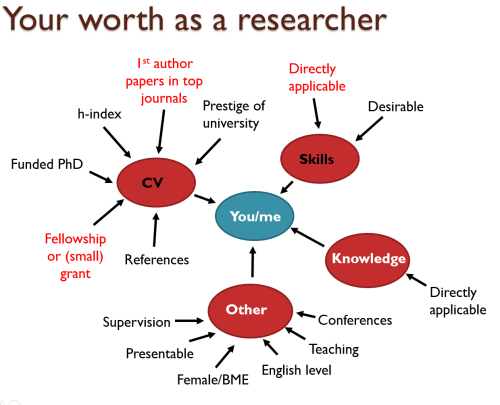
The heuristic that I think people use when calculating the worth of an early career researcher (but generally applies to all levels): ‘CV’ and ‘Skills’ are the two main contributors, with the factors highlighted in red carrying enormous weight in determining whether someone should get the job/fellowship or not. Virtually no one cares about anything that is outside what is written here – as mentioned in the post. Directly applicable: Some technical skill that the funder/Professor thinks is essential for the job; Prestige of university: where you did your PhD and/or undergrad; Funded PhD: whether your PhD was fully funded or not; Female/BME: being female and/or of BME background – this can be an advantage or a disadvantage depending on the regulations/characteristics of the university/panel, as underrepresented groups can be subjected to both positive and negative discrimination. NB: this is a simplified version and there are many factors that affect outcomes such as “who you know” and “being at the right place at the right time“.


Added on 30/10/18: I just came across ‘No, it’s not The Incentives—it’s you‘ by Tal Yarkoni about the common malpractices in academic circles, and I think it’s well worth a read.


*Making sure there’s a gender balance and that academics from BME backgrounds are not excluded from the process – as they’ve usually had to overcome more obstacles to reach the same heights.

**I have been honest about this in my applications and put this publication under “Other Publications” in my CV.

***REF stands for the ‘Research Excellence Framework’, and is the UK’s system for assessing the quality of research in higher education institutions. The last REF cycle finished in 2014 and the next one will finish in 2021 (every 7 years). Universities start planning for this 3-4 years before the submission dates and the ones ranked high in the list will receive tens of millions of pounds from the government. For example, University of Oxford (1st) received ~£150m and University of Bristol (8th) received ~£80m.

****Sometimes it’s not their fault; people add senior authors on their papers to increase their chances of getting them accepted. It’s then human nature that they’re not going to decline authorship. It sounds nice when one’s introduced in a conference etc. as having “published >100 papers with >10,000 citations” – when in reality they’ve not made significant (if any!) contributions to most of them.


PS: I also propose that acknowledgements at the bottom of papers and PhD theses be screened in some way. I’ve had colleagues who’ve helped me out a lot when learning some concepts who then moved on and did not have the chance to be a co-author on my papers. I have acknowledged them in my PhD thesis and would love to see my comments be helpful to these colleagues in some way when they apply for postdoc jobs or fellowships. Some of them did not publish many papers and acknowledgements like these could show that they not only have the ability to be of help (e.g. statistical, computational expertise), but are also easy to work with and want to help their peers.
Read Full Post »

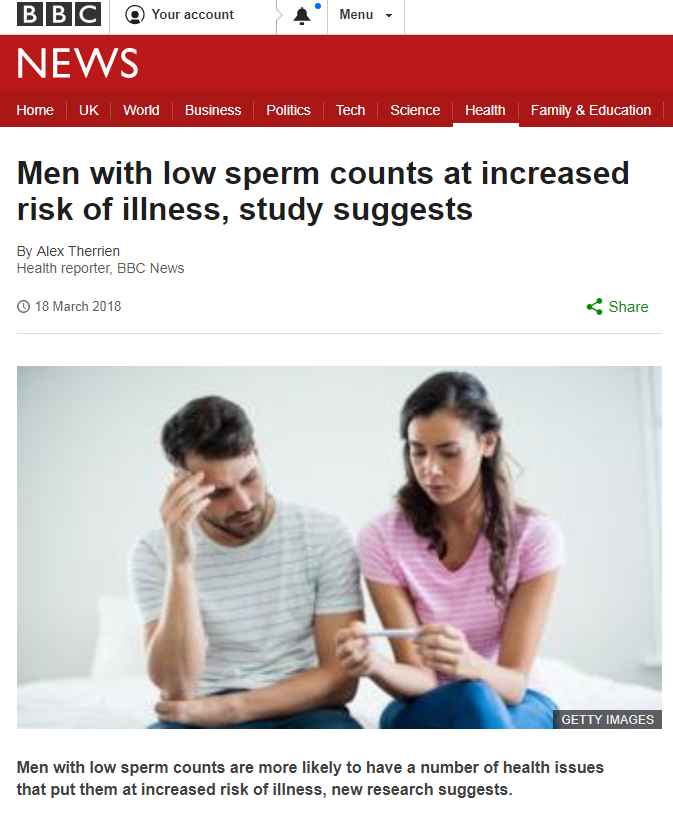
BBC_news_sperm_count

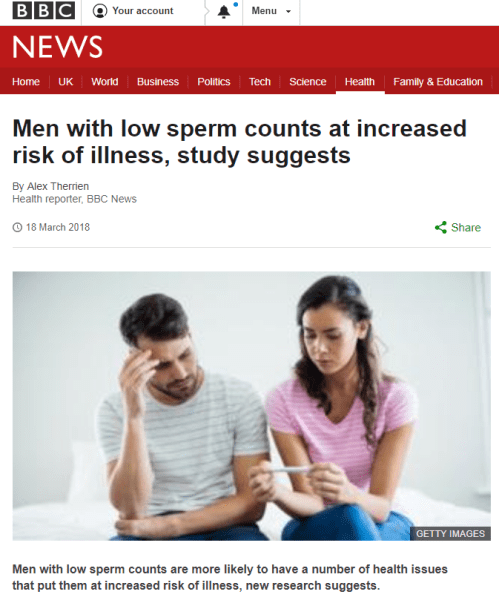
BBC news article published on the 18th March 2018. According to the article, men with low sperm counts are at a higher risk of disease/health problems. However, this is unlikely to be a causal relationship and more likely to be a spurious correlation. May even turn out to be the other way round due to “reverse causality”, a bias we encounter a lot in epidemiological studies. The following sounds more plausible (to me at least!): “Men with disease/health problems are likely to have low sperm counts” (likely cause: men with health problems tended to smoke more in general and this caused low sperm counts in those individuals).

As an enthusiastic genetic epidemiologist (keyword here: epidemiologist), I try to keep in touch with the latest developments in medicine and epidemiology. However, it is impossible to read all articles that come out as there is a lot of epidemiology and/or medicine papers published daily (in fact, too much!). For this reason, instead of reading the original academic papers (excluding papers in my specific field), I try to skim read from reputable news outlets such as the BBC, The Guardian and Medscape (mostly via Twitter). However, health news even in these respectable media outlets are full of wrong and/or oversensationalised titles: they either oversensationalise what the scientist has said or take the word of the scientist they contact – who are not infallible and can sometimes believe in their own hypotheses too much.

It wouldn’t harm us too much if the message of an astrophysics related publication is misinterpreted but we couldn’t say the same with health related news. Many people take these news articles as gospel truth and make lifestyle changes accordingly. Probably the best example for this is the Andrew Wakefield scandal in 1998 – where he claimed that the MMR vaccine caused autism and gastro-intestinal disease but later investigations showed that he had undeclared conflicts of interest and had faked most of the results (click here for a detailed article in the scandal). Many “anti-vaccination” (aka anti-vax) groups used his paper to strengthen their arguments and – although now retracted – the paper’s influence can still be felt today as many people, including my friends, do not allow their children to be vaccinated as they falsely think they might succumb to diseases like autism because of it.

The first thing we’re taught in our epidemiology course is “correlation does not mean causation.” However, a great deal of epidemiology papers published today report correlations (aka associations) without bringing in other lines of evidence to provide evidence for a causal relationship. Some of the “interesting ones” amongst these findings are then picked up by the media and we see a great deal of news articles with titles such as “coffee causes cancer” or “chocolate eaters are more successful in life”. There have been instances when I read the opposite in the same paper a couple of months later (example: wine drinking is protective/harmful for pregnant women). The problem isn’t caused only due to a lack of scientific method training on the media side, but also due to health scientists who are eager to make a name for themselves in the lay media without making sure that they have done everything they could to ensure that the message they’re giving is correct (e.g. triangulating using different methods). As a scientist who analyses a lot of genetic and phenotypic data, it is relatively easier for me to observe that the size of the data that we’re analysing has grown massively in the last 5-10 years. However, in general, we scientists haven’t been able to receive the computational and statistical training required to handle these ‘big data’. Today’s datasets are so massive that if we take the approach of “let’s analyse everything we got!”, we will find a tonne of correlations in our data whether they make sense or not.

To provide a simple example for illustrative purposes: let’s say that amongst the data we have in our hands, we also have each person’s coffee consumption and lung cancer diagnosis data. If we were to do a simple linear regression analysis between the two, we’d most probably find a positive correlation (i.e. increased coffee consumption means increased risk of lung cancer). 10 more scientists will identify the same correlation if they also get their hands on the same dataset; 3 of them will believe that the correlation is worthy of publication and submit a manuscript to a scientific journal; and one (other two are rejected) will make it past the “peer review” stage of the journal – and this will probably be picked up by a newspaper. Result: “coffee drinking causes lung cancer!”

However, there’s no causal relationship between coffee consumption and lung cancer (not that I know of anyway :D). The reason we find a positive correlation is because there is a third (confounding) factor that is associated with both of them: smoking. Since coffee drinkers smoke more in general and smoking causes lung cancer, if we do not control for smoking in our statistical model, we will find a correlation between coffee drinking and lung cancer. Unfortunately, it is not very easy to eliminate such spurious correlations, therefore health scientists must make sure they use several different methods to support their claims – and not try to publish everything they find (see “publish or perish” for an unfortunate pressure to publish more in scientific circles).

cikolata_ve_nobel_odulu

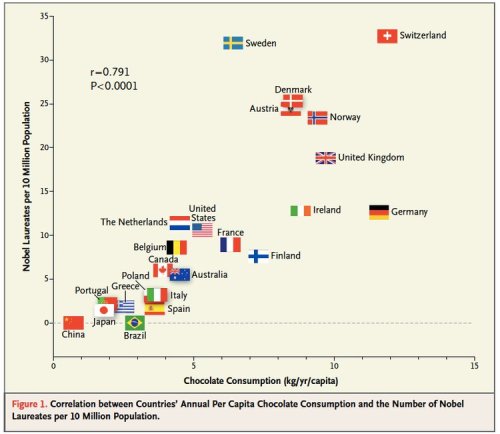
A figure showing the incredible correlation between countries’ annual per capita chocolate consumption and the number of Nobel laureates per 10 million population. Should we then give out chocolate in schools to ensure that the UK wins more Nobel prizes? However, this is likely not a causal relationship as it makes more sense that there is a (confounding) factor that is related to both of them: (most likely) GDP per capita at purchasing power parity. To view even quirkier correlations, I’d recommend this website (by Tyler Vigen). Image source: http://www.nejm.org/doi/full/10.1056/NEJMon1211064.

As a general rule, I keep repeating to friends: the more ‘interesting’ a ‘discovery’ sounds, the more likely it is to be false.

Hard to explain why I think like this but I’ll try: for a result to sound ‘interesting’ to me, it should be an unexpected finding as a result of a radical idea. There are just so many brilliant scientists today that finding unexpected things is becoming less and less likely – as almost every conceivable idea arises and is being tested in several groups around the world, especially in well researched areas such as cancer research. For this reason, the idea of a ‘discovery’ has changed from the days of Newtons and Einsteins. Today, ‘big discoveries’ (e.g. Mendel’s pea experimets, Einstein’s general relativity, Newton’s law of motion) have given way to incremental discoveries, which can be as valuable. So with each (well-designed) study, we’re getting closer and closer to cures/therapies or to a full understanding of underlying biology of diseases. There are still big discoveries made (e.g. CRISPR-Cas9 gene editing technique), but if they weren’t discovered by that respective group, they probably would have been discovered within a short space of time by another group as the discoverers built their research on a lot of other previously published papers. Before, elite scientists such as Newton and Einstein were generations ahead of their time and did most things on their own, but today, even the top scientists are probably not too ahead of a good postdoc as most science literature is out there for all to read in a timely manner (and more democratic compared to the not-so-distant past) and is advancing so fast that everyone is left behind – and we’re all dependent on each other to make discoveries. The days of lone wolves is virtually over as they will get left behind those who work in groups.

To conclude, without carefully reading the scientific paper that the newspaper article is referring to – hopefully they’ve included a link/citation at the bottom of the page! – or seeking what an impartial epidemiologist is saying about it, it’d be wise to take any health-related finding we read in newspapers with a pinch of salt as there are many things that can go wrong when looking for causal relationships – even scientists struggle to make the distinction between correlations and causal relationships.

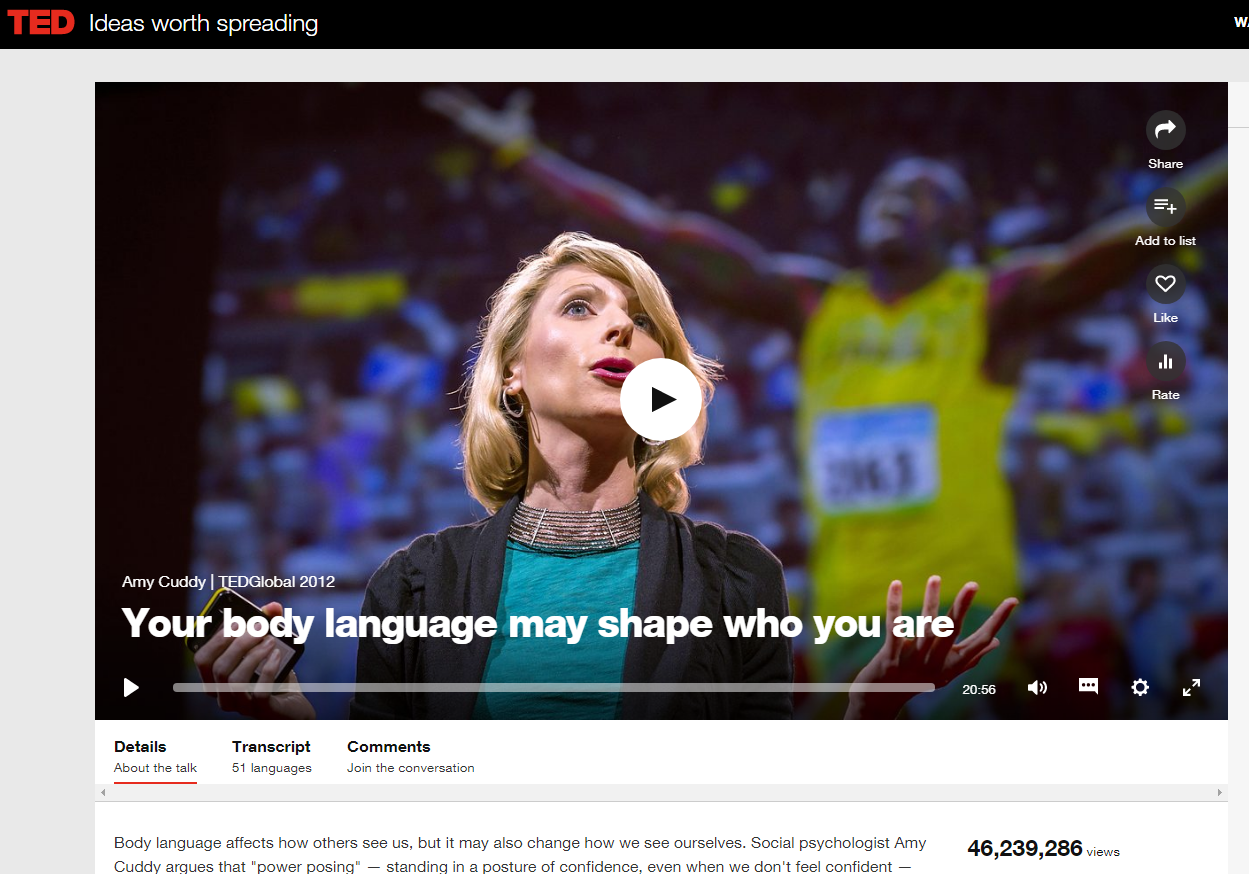
power_posing

Amy Cuddy’s very famous ‘Power posing’ talk, which was the most watched video on the TED website for some time. In short, she states that if you give powerful/dominant looking poses, this will induce hormonal changes which will make you confident and relieve stress. However, subsequent studies showed that her ‘finding’ could not be replicated and she that did not analyse her data in the manner expected of a scientist. If a respectable scientist had found such a result, they would have tried to replicate their results; at least would have followed it up with studies which bring other lines of concrete evidence. What does she do? Write a book about it by bringing in anecdotal evidence at best and give a TED talk as if it’s all proven – as becoming famous (by any means necessary) is the ultimate aim for many people; and many academics are no different. Details can be found here. TED talk URL: https://www.ted.com/talks/amy_cuddy_your_body_language_shapes_who_you_are

PS: For readers interested in reading a bit more, I’d like to add a few more sentences. We should apply the below four criteria – as much as we can – to any health news that we read:

(i) Is it evidence based? (e.g. supported by a clinical trial, different experiments) – homeopathy is a bad example in this regard as they’re not supported by clinical trials, hence the name “alternative medicine” (not saying they’re all ineffective and further research is always required but most are very likely to be);

(ii) Does it make sense epidemiologically? (e.g. the example mentioned above i.e. the correlation observed between coffee consumption and lung cancer due to smoking);

(iii) Does it make sense biologically? (e.g. if gene “X” causes eye cancer but the gene is only expressed in the pancreatic cells, then we’ve most probably found the wrong gene)

(iv) Does it make sense statistically? (e.g. was the correct data quality control protocol and statistical method used? See figure below for a data quality problem and how it can cause a spurious correlation in a simple linear regression analysis)

graph-3

Wrong use of a statistical (linear regression) model. If we were to ignore the outlier data point at the top right of the plot, it becomes easy to see that there is no correlation between the two variables on the X and Y axes. However, since this outlier data point has been left in and a linear regression model has been used, the model identifies a positive correlation between the two variables – we would not have seen that this was a spurious correlation had we not visualised the data.

PPS: I’d recommend reading “Bad Science” by Ben Goldacre and/or “How to Read a Paper – The basics of evidence based medicine” by Trisha Greenhalgh – or if you’d like to read a much better article on this subject with a bit more technical jargon, have a look this highly influential paper by Prof. John Ioannidis: Why Most Published Research Findings Are False.

References:

Wakefield et al, 1998. Ileal-lymphoid-nodular hyperplasia, non-specific colitis, and pervasive developmental disorder in children. The Lancet. URL: http://www.thelancet.com/journals/lancet/article/PIIS0140-6736%2897%2911096-0/abstract

Editorial, 2011. Wakefield’s article linking MMR vaccine and autism was fraudulent. BMJ. URL: http://www.bmj.com/content/342/bmj.c7452

Read Full Post »

BBC_news_sperm_count
18 Mart 2018’de BBC’de çıkmış bir sağlık haberi. Haberin başlığına göre “sperm sayısı düşük olan erkeklerin sağlık problemleri yaşama riski daha yüksek”. Fakat gerçekte olan büyük ihtimalle tam tersi: Sağlık problemleri yaşayan erkeklerin genel olarak sperm sayısı daha düşük. Epidemiyolojide buna “reverse causality” (ters nedensellik) diyoruz ve analizlerimizde çok sık karşılaşıyoruz.

Bir Genetik Epidemiyolog olarak (anahtar kelime: epidemiyolog) tıpla ilgili önemli gelişmeleri takip etmeye çalışıyorum. Fakat bu günlerde tıp ve epidemiyoloji alanında o kadar çok ‘buluş’ yapılıyor ki çıkan her habere yetişmek imkansız. Bu yüzden BBC, The Guardian, The Times gibi saygıdeğer haber kaynaklarına odaklanıyorum. Işin kötüsü, bu haber kanallarında dahi çıkan haberlerin çoğunun verdiği ana mesaj çoğu zaman yanlış ya da abartılı: ya analizi yapan bilim insanlarına fazla güveniyorlar ya da bilim insanlarının kendilerine söylediklerini daha sansasyonel hale getiriyorlar.

Belki astrofizik alanında yapılan bir buluş ile ilgili bir haberin doğru olup-olmaması bizi fazla etkilemez ama sağlığımızı ilgilendiren bir ‘buluş’un yanlış çıkması için aynı şeyi söyleyemeyiz. Insanlar bu haberleri okuyup, ona göre kendi hayatlarında değişimlere gidebiliyorlar. Bu tarz haberlerin belki de en etkilisi 1998’de tıp alanındaki en ünlü dergi olan The Lancet’de çıkan bir makaleyle ilgiliydi (Wakefield et al, 1998). Makaleye göre, özetle, MMR (measles, mumps, and rubella) aşısının test edildiği 12 çocuğun hepsinde de otizm, davranış bozuklukları, bağırsak problemleri gibi sorunlar ortaya çıkmıştı. Çalışma tüm dünyada haber olmuş ve MMR aşısına karşı kampanya başlatılmıştı. Bu sadece MMR aşısına değil, tüm aşılara dini (“kaderci”) ya da başka sebeplerden dolayı (“organik yaşam” savunucuları gibi) karşı çıkan grupların işini kolaylaştırdı ve bu “anti-vaxxer” (aşı karşıtı) gruplar her mecrada argümanlarını bu makaleyle güçlendirdiler. Fakat sonraki bilimsel ve adli araştırmalarla bu çalışmayı yürüten Andrew Wakefield’ın aşı karşıtı gruplardan para aldığı ve sonuçların neredeyse tamamını kendisinin uydurduğu ortaya çıktı (daha detaylı bir analiz için tıklayın). Gerçek, özellikle bilim alanında, eninde sonunda ortaya çıkıyor fakat iş işten geçmiş olabiliyor bazen. Bu makaleninin etkileri toplum nazarında bugün dahi devam ediyor ve bir sürü aile çocuklarına bu tarz korkulardan dolayı aşı (vaccination) yapılmasına izin vermiyor.

Bize epidemiyolojide öğrettikleri ilk şey: “correlation does not mean causation” (korelasyon, sebep-sonuç ilişkisi olduğu anlamına gelmez). Fakat bugünlerde tıp ve epidemiyoloji alanında ‘buluş’ adı altında bir sürü korelasyon (correlation) yayınlanıyor. Bunların arasında ilginç ve çok okunacak olanları gazeteciler yakalıyor ve “kahve içmek kansere yol açıyor”, “çikolata yiyenler daha başarılı” ve benzeri başlıklı haberler yayınlıyorlar. Birkaç gün sonra tam tersi bir haber okuduğumuz da oluyor (“kahve içmek kanseri engelliyor!” gibi). Bu tarz haberlerin yayılmasında gazetecilerin suçu olduğu gibi, bilim insanlarının da suçu var. Sıkıntı şu: bilim insanlarının elindeki datalar son 5-10 yılda inanılmaz bir hızla büyüdü ama bilim insanları dahi genel olarak bu büyümeye data analizi açısından yetişemedi. Datalar çok büyük olduğundan, hipotezsiz, data analizi ve “causal inference” (nedensel çıkarım) uzmanlığınız olmadan “dur şunu da analiz edeyim!” dediğiniz zaman, istemediğiniz kadar korelasyon buluyorsunuz.

Örnek olarak: diyelim ki datanızdaki tonlarca verinin arasında kişilerin kahve içme oranı ve akciğer kanseri teşhisi de var. Eğer basit bir istatistiki korelasyon (örneğin: linear regression) analizi yapacak olursak, büyük ihtimalle ikisi arasında anlamlı bir korelasyon bulacağız. Bu korelasyonu sadece siz değil, benzer dataya bakan 10 kişi daha bulacak; bunlardan belki 3’ü bu korelasyonun gerçek olduğuna inanacak ve bir makale yazacak; 1’i de makaleyi gönderilen derginin “peer review” (birkaç bilim insanı tarafından değerlendirme) aşamasından geçirip, yayınlayacak – ve büyük bir ihtimalle ilginç bir ‘buluş’ olarak her yerde haber olacak: “kahve içmek akciğer kanserine yol açıyor!

Gerçekte ise kahve içmeyle akciğer kanseri arasında hiçbir sebep-sonuç ilişkisi yok. Bulduğumuz korelasyonun sebebi bu ikisiyle de – yani kahve içmek ve akciger kanseriyle – bağlantılı üçüncü bir (confounding) faktörün olması: sigara içmek. Kahve içenler genelde daha fazla sigara içiyorlar ve sigara içmek de akciğer kanserine sebep olduğu için, eğer istatistiki modelimize kişinin sigara içme oranını da eklemezsek, kahve içmeyle akciğer kanseri arasında istatistiki olarak güçlü bir korelasyon buluruz. Maalesef bu tarz sebep-sonuç ilişkisi göstermeyen korelasyonların önüne geçmek ve elimine etmek kolay değil; bu yüzden bilim insanlarının daha dikkatli olması ve yaptıkları her “buluş”u başka bilimsel yöntemlerle desteklemeden yayınlamaması gerekiyor.

cikolata_ve_nobel_odulu
Figür, ülkelerdeki çikolata tüketim oranıyla ülkenin toplamda kazandığı Nobel ödülü sayıları arasındaki inanılmaz korelasyonu gösteriyor. O zaman bu “buluş”a bakıp, Türkiye’deki herkese çikolata yedirmeye başlamak lazım – malum ülke olarak sadece iki Nobel ödülümüz var. Fakat bu korelasyonun (büyük ihtimalle) muhtemel en büyük sebebi, çikolata tüketimiyle, Nobel ödülü sayılarını etkileyen üçüncü bir faktörün olması: GDP per capita at purchasing power parity (satın alma paritesi). Bulunan daha ilginç korelasyonlara bakmak için tıklayın. Image source: http://www.nejm.org/doi/full/10.1056/NEJMon1211064.

Konuyu daha fazla uzatmadan genel bir prensip olarak şunu rahatlıkla söyleyebilirim: bir buluş kulağa ne kadar ilginç ve sansasyonel geliyorsa, yanlış olma ihtimali de o derece yüksektir.

Biraz zor olacak ama neden böyle düşündüğümü kısaca izah etmem gerekirse: bir buluşun bana ‘ilginç’ gelmesi için, o buluşun o konuda bilinenlerden çok farklı birşey olması lazım. Böyle bir buluş yapmak günümüzde bir hayli zor çünkü artık bilim insanı sayısı eskiden olduğu gibi az değil; artık binlerce bilim insanı bir konu üzerinde çalışıyor olabilir (örnek: kanser). Artık her tür fikir/hipotez, birçok grupta aynı anda ortaya çıkabiliyor ve test ediliyor. Bundan dolayı birkaç haftada bir ‘buluş’ yapılıyor denebilir – ama eskiye nazaran alanını on yıllarca ileri taşıyan değil, ‘inkremental’ buluşlar bunlar. Belki son ufak adımı bir grup/insan diğerlerinden önce atıyor ve bu yüzden alanlarında ‘büyük buluşu yapan kişi/grup’ diye anılıyorlar. Oysa belki 3-5 ay sonra başka bir grup büyük ihtimalle aynı buluşu yapacaktı. Eskiden Newton ya da Einstein gibi elit bilim insanları zamanlarının çok ilerisinde olabiliyorlardı, çünkü etrafta fazla bilim insanı yoktu ve bilim bu kadar hızlı ilerlemiyordu.

Son olarak, bu tarz haberleri okurken biraz ihtiyatlı olmakta fayda var ve bu çalışmalara bakıp hayatımızda değişiklikler yapmadan önce, eğer anlıyorsak, araştırma metotlarına bakmamız lazım – ya da epidemiyolojiden ve “causal inference”dan iyi anlayan (yani doğru soruları sorabilen) birisine danışmamız lazım.

power_posing
Amy Cuddy’nin “power posing” konuşması, en çok izlenen TED talk. Kısaca, “eğer güçlü görünen pozlar verirseniz, kendinize güveniniz artar” diyor bu konuşmasında. Fakat sonraki bilimsel analizler bunun doğru olmadığını ve Amy Cuddy’nin analiz metotlarının bir bilim ınsanından beklenmeyecek kadar zayıf olduğunu gösteriyor. Detaylar için tıklayın. TED talk source: https://www.ted.com/talks/amy_cuddy_your_body_language_shapes_who_you_are

PS (post-script/dipnot): Konuyla ilgilenenler için ekstradan bir-iki paragraf daha karalayayım istedim. Sağlık alanında yapılan bir buluş (i) delil/deney bazlı (evidence-based) ve (ii) epidemiyolojik, istatistiki ve biyolojik olarak mantıklı olmalı. Bir ‘buluş’la ilgili haberi okuduktan sonra “ya evet, mantıklı” demeden önce elimizden geldiğince “bu 4 konuda tatmin edici mi?” diye sorgulamamız lazım. Kriterlere örnek vermek gerekirse:

  • “Evidence-based” dedik. Bunlara en güzel karşıt örnekler “homeopati/alternatif tıp” olarak adlandırdığımız “ilaç/kürler”. Bunların hepsini toptancı bir yaklaşımla “kesinlikle etkisiz” diye çöpe atmamak lazım fakat çoğu alternatif tıp savunucusunun “belge” olarak sunduğu şeyler kulaktan dolma bilgiler: “Kaynımın şu hastalığı vardı; şu Hoca bir bitki karışımı verdi ve hastalığı geçti” gibi. (Bilinmeyen bir sebepten dolayı) bir kişinin hastalığı geçiyor, 10 kişininki geçmiyor; ve sadece bu hastalığı geçen kişininki kulaktan kulağa yayılıyor, reklamı yapılıyor. Bilim insanlarının daha bilmediği/araştırması gereken çok şey var fakat bir ilaç “klinik deneme”den (clinical trial) geçmeden önce onun efektif olduğunu, yani gerçekten de bir çare olduğunu belgelemek çok zor.
  • “Epidemiyolojik olarak mantıklı olmalı” dedik: Yukarıda bahsettiğim kahve, sigara ve akciger kanseri örneğinden tonlarca var hayatta. Kendimize, “bu korelasyona sebep olabilecek 3.ncü bir faktör var mı?” diye sormalıyız.
  • “Biyolojik olarak mantıklı olmalı” dedik: “X geni gırtlak kanseri yapıyor” diye bir haber/makale okudunuz ama bu “X” geni sadece ayağımızdaki bazı hücrelerde aktifse, büyük ihtimalle yanlış bir haber/sonuç.
  • “Istatistiki olarak mantıklı olmalı” dedik: Çok basit bir örnek olarak aşağıdaki figüre bakınız. Basit bir linear regression analiziyle bu iki veri arasında bir korelasyon buluruz. Fakat datayı visualise/plot ettiğimiz zaman, aslında korelasyon çıkmasının sebebinin en üstteki “outlier”dan (aykırı gözlemden) dolayı olduğunu görebiliyoruz. Burada bir data “temizleme” problemi ve yanlış bir istatistiki modelin kullanıldığını görebiliyoruz. Böyle bir plot çizmesek, bu korelasyonun yanlış olduğunu göremezdik.
graph-3
Yanlış bir linear regression (doğrusal regresyon) metot kullanımı. Kendi başına en uçta duran noktayı görmezden gelirsek, X ve Y eksenindeki veriler arasında hiçbir korelasyonun olmadığını çok rahat bir şekilde görüyoruz. Fakat o problemli veri silinmediğinden ve yanlış bir şekilde linear regression metodu kullanıldığından, aralarında sanki pozitif bir korelasyon varmış gibi bir çizgi çizilmiş.

Referanslar:

Wakefield et al, 1998. Ileal-lymphoid-nodular hyperplasia, non-specific colitis, and pervasive developmental disorder in children. Lancet. URL: http://www.thelancet.com/journals/lancet/article/PIIS0140-6736%2897%2911096-0/abstract

Editorial, 2011. Wakefield’s article linking MMR vaccine and autism was fraudulent. BMJ. URL: http://www.bmj.com/content/342/bmj.c7452

Read Full Post »

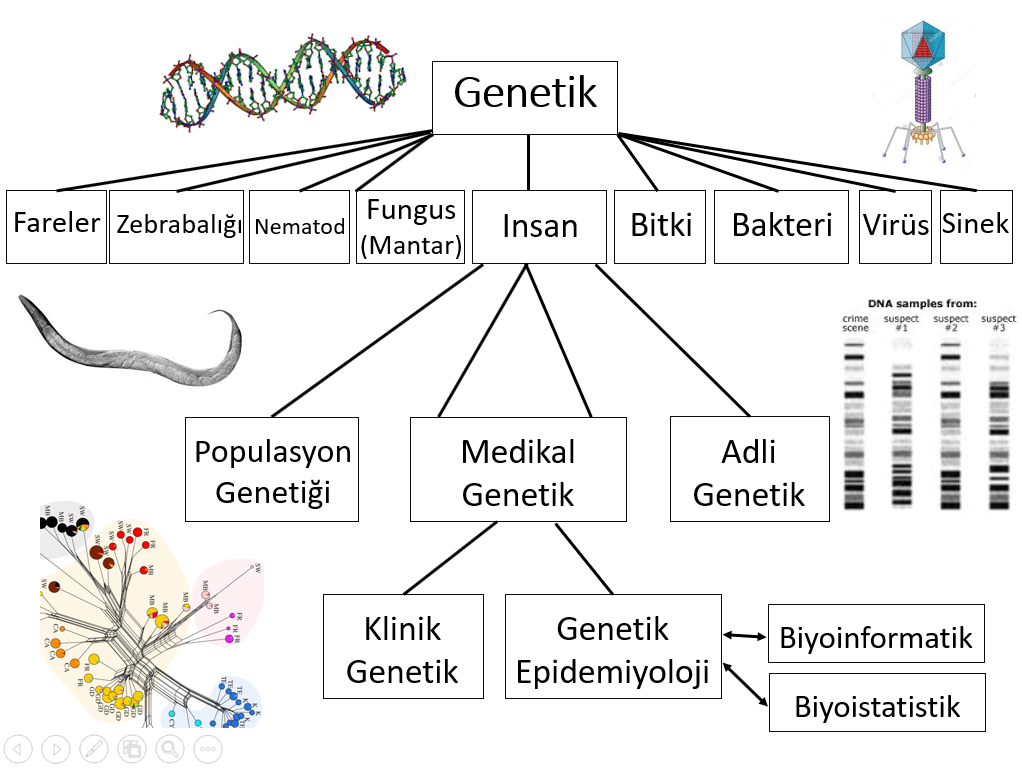
Genetik_epidemiyoloji_alani_mesut_erzurumluoglu

Genetik alanının genel olarak alt-dalları. 15-20 yıl önceki “Genetik”le şimdiki genetik çok farklı ve bir sürü alt-dala ayrıldı. Belki de son 10-15 yılda ortaya çıkan Genetik Epidemiyoloji alanında çalışan ve bütün günü bilgisayar başında geçen bir araştırmacı olarak ben de “genetikçi”yim, tüm günü laboratuvarda geçen ve fare genetiği üzerine çalışan bir araştırmacı da. Not: Yazının genetikle ilgili bölümüne geçmek isterseniz direk “Bu girişten sonra asıl meselemiz olan “genetiğin reklamına” dönecek olursak…” diye başlayan kısma geçin.

Türk (ve Britanyalı) bir bilim insanı olarak halkımızın bilimle fazla ilgilenmemesine çok kızıyorum. Hatta akademisyenlerin/araştırmacıların dahi fen bilimleri ve/ya da sosyal bilimlerden çok siyasetle içli-dişli olması beni çıldırtıyor ve ülkem adına ümidimi kaybediyorum. Fakat kendi kendime “bir bilim insanı olarak bunun değişmesi için neler yapıyorum?” diye düşündüğümde haftada bir gün birkaç Türk gence özel fen/matematik/ingilizce dersi vermenin ve sağda-solda gençlere verdiğim konuşmaların dışında fazla birşey aklıma gelmiyor. Bunun üzerine “belki bir-iki kişi okur/çocuklarıyla paylaşır” düşüncesiyle bilimin her türlüsünün, özellikle de genetiğin reklamını yapan bir blog yazısı yazmaya karar verdim. Genel olarak bilim üretmenin önemi üzerine fikirlerimi sunduktan sonra, kendi alanım olan Genetik/Genetik Epidemiyoloji’ye doğru bir geçiş yapacağım. Kendim de nispeten genç ve daha yolun başında olduğum için (yaş 30) sözlerim daha çok lisans öğrencisi ve üniversite-öncesi yaşlardaki arkadaşlara yönelik olacak; hızlıca yazdığımdan daha olgun okurlarım için çiğ bir yazı olarak görünebilir. Ayrıca, istediğimden uzun bir yazı oldu maalesef. Isterseniz sonraki iki paragrafı okumadan direk “Bu girişten sonra asıl meselemiz olan “genetiğin reklamına” dönecek olursak…” diye başlayan kısma geçin.

Belki sıkıcı, yavan ve klişelerle dolu olacak ama önemli gördüğüm bir girişle başlayayım: Tüm gün siyaset, futbol/dizi ve komplo teorileri hakkında konuşan milletlerin, tüm insanlığı geçtim, kendi ülkelerine dahi bir fayda sunmaları imkansız. Bu milletler bir süre ülkenin kendi yeraltı/üstü kaynaklarından faydalanıp, onları tükettikten sonra, her alanda dışa bağımlı olmak zorunda kalırlar. Maalesef, Türkiye de bu konuda epey bir yol kaydetmiş durumda: Teknoloji, tıp ve diğer önemli bilim alanları adına çok birşey üretmediğimizden dolayı, hemen hemen her ilaç, teknoloji ve sistem/bilgiyi dışarıdan ithal ediyoruz. Haliyle belki 5 liraya üretilen elektronik eşya/sistem/ilacı 100 liraya satın alıyoruz. Ayrıca, o kadar para harcamamıza rağmen, “know-how”, yani bir işi düzgün bir şekilde yapabilme ve daha da geliştirebilme özelliğini de kazanamıyoruz. İşler böyle gittiği sürece de ilelebet fahiş fiyatlar ödemek zorunda kalacağız. Devlet insanına ve bilime (research & development) yatırım yapmadığından, ülkenin ekonomik olarak alım gücü zayıfladığı an, büyük krizler kapıdan içeri girecek ve normalden de daha büyük tavizler vermeden, bir sürü maddi-manevi sıkıntı çekilmeden ve on yıllar kaybedilmeden aşılamayacak. Özellikle biriken borçlarla gelecek nesillerin emekleri ve imkanları çalınacak. Bilimin önemine en güzel örnek iki tane dünya savaşı geçirip, ikisinde de düşman tarafından dümdüz edilmiş Almanya’nın nispeten kısa bir sürede kendine gelmesi ve şu anda dunyanın en büyük teknoloji, ilaç ve bilim üreten ülkesi olması – çünkü (dünyanın her yerinden gelmiş) bilim insanlarını baş üstünde tutan bir millet. Tüm dünya ekonomik krizle boğuşsa dahi, kendi başına ayakta kalabilecek belki de tek ülke. Bilim insanlarına atalarının yaptığı hataları analiz ettirdikten sonra, aynı hataları tekrarlamadan yollarına devam etmişler. Hem sosyal olarak, hem de teknolojik olarak gelişmişler. “Bizim atalarımız hata yapmaz” bağnazlığından kurtulup (örnek: Kemalisti de, Islamcısı da, Ulkücüsü de tiksindirici şekilde geri kafalı bu konuda), bu savaşları çıkaran ve ülkeyi her türlü krize sokan nesillere ise lanet okuyorlar. Almanya o günlerde olanlardan dolayı hala bazı ülkelere tazminat ödüyor. Biz de ise başımıza ülke olarak gelen olaylar bilimsel olarak araştırılmadığından tarih hep tekerrür ediyor – hep aynı hatalar, aynı krizler…

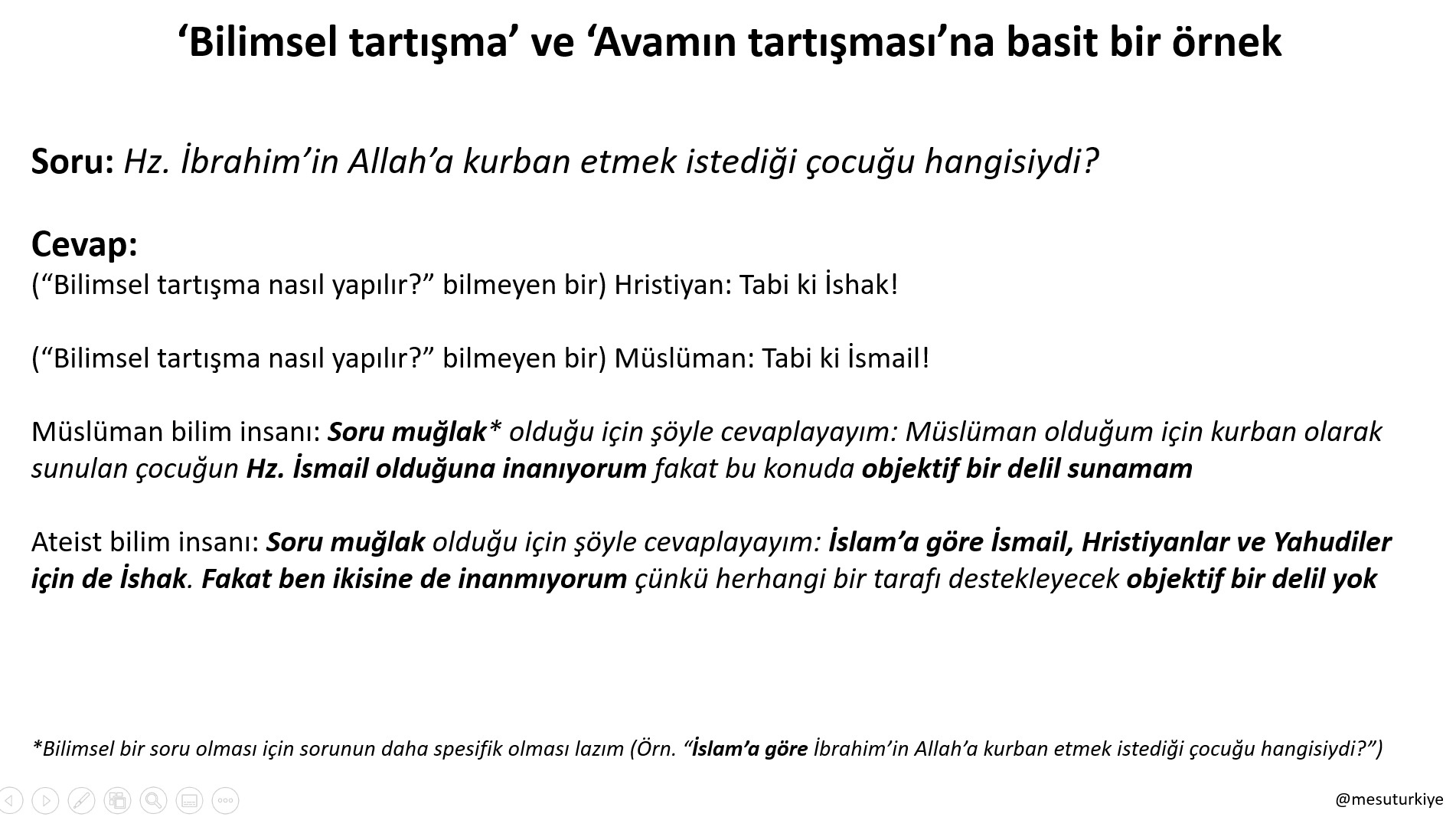
bilim_avam_din_mesut_erzurumluoglu

‘Bilimsel tartışma’ ve ‘Avamın tartışması’na basit bir örnek. “Bilimsel tartışma nasıl yapılır?” bilmeyen bir insanın hayata bakışıyla, bilmeyen arasındaki farkı az/çok ortaya koyuyor…

Bunları yazmamın sebebi ise eğer bilim insanı olmanın çok da önemli olmadığını düşünüyorsan, yanıldığını hatırlatmak içindir – her ne kadar da arkadaşlarının hepsi futbolcu olmak istese ya da etrafındaki insanlar tüm gün futbol/dizi hakkında konuşsa da… Bana göre bilim insanları dünyanın en çok ihtiyacı olduğu grup. Büyüdüğünde bakarsın: değerin Türkiye’de anlaşılmazsa, Amerika, Almanya, Ingiltere gibi dünyanın en gelişmiş ülkelerindeki gruplar değerini bilecektir. Gelişmiş dünyada her zaman iş bulabilecek bir insan olacaksın. Hele bir de her akademik grubun ihtiyacı olan bir yeteneğe sahipsen (fen bilimleri için genel bir örnek: ‘big data’ analiz/data science, sağlam istatistik bilgisi). Bu fırsatı başka hiçbir iş alanında kolay kolay bulamazsın. Ayrıca dünyaya ve hayata karşı bakışın ise çoğu insandan daha farklı ve kapsamlı olacak. Bu ise bana göre bir insanda paha biçilmez bir özellik. Hayatta sadece bilim insanlarının gördügü düzen ve desenler var ve bunların en azından bir kısmını görmeden ömür tüketmek çok büyük bir kayıp. Bu konuyu önceden paylaştığım Entelektüeller neden sevilmezler?, Din, bilim ve bilim adamları ve Duya duya gına geldi arkadaş gibi yazılarıma havale ediyorum. Özetle, ileride bir “bilim insanı” olmanızı tavsiye ediyorum.

dna-ve-genetik-kod-konu-anlatimi-8-sinif-fen5-1

Bir insanda 50-100 trilyon (100,000,000,000,000) hücre var (bunların %90’ı bakteri) ve inanılmaz bir şekilde, bir ignenin ucundan bile onlarca kat küçük olan (insan) hücrelerinin her birinin içinde yaklaşık 2 metre uzunluğunda DNA bulunuyor. Image source: fenogretmeni.net

Bu girişten sonra asıl meselemiz olan “genetiğin reklamına” dönecek olursak: ben çocukken genetik “geleceğin mesleği”ydi. İşin garibi şu anda da geleceğin meslekleri arasında yer alıyor. Fakat ufak bir farkla: ben çocukken, “çocukken” dediğim de daha 15 sene öncesi, genetik alanı çok genel olarak “insan genetiği/klinik genetik”, “model organizma ve hayvan/bitki genetiği” ve “adli genetik” olarak üçe ayrılıyordu ve çoğunlukla genetik denince akla beyaz önlüklü, laboratuvarda çalışan ve ufak tüplerde bazı sıvılar karıştırıp bunları değişik jellere yerleştiren insanlar akla geliyordu. Şimdi ise laboratuvarda çalışan insanlar hala olsa da, artık genel olarak laboratuvardaki işler kolaylaştığından, beyinden daha çok el mahareti önemli hale geldi ve tabir-i caizse, bu tarz “ayak işlerini” çoğunlukla akademisyen/araştırmacı olmayan “teknisyen”ler yapıyor. Akademisyenler/araştırmacılar ise asıl beyin gerektiren işlerle uğraşıyorlar ve her işlerini artık bilgisayarda hallediyorlar. Örneğin ben DNA fingerprinting’in (DNA parmak izinin) bulunduğu Leicester Üniversitesi’nde Kronik Obstrüktif Akciğer Hastalığı (KOAH) üzerine çalışan bir Genetik Epidemiyologum ve kariyerim boyunca, doktora projemin ufak bir bölümü dışında hiç laboratuvarda çalışmadım – laboratuvarda çalışmayı da hiç sevmedim. Şu anda bir araştırma görevlisi (Postdoctoral Research Associate) olarak günlük işim yüzbinlerce insanın genetik (kişi başı milyonlarca mutasyona/genetik varyanta tekabül ediyor) ve (kişinin yaş, cinsiyet, sigara içip-içmediği gibi) fenotipik datasını “süper bilgisayar”ları kullanarak istatistiki olarak analiz etmek. Bu sayede insanları KOAH’a meyilli hale getiren genleri ve varyantları tespit etmeye ve bulduğumuz genlerin arasından biri “bir KOAH ilacına netice verir mi?” diye araştırmaya çalışıyoruz. Ayrıca yaptığımız analizlerden ne çıkacağı belli olmadığı için her sabah işe kalktığımda “ya Hu yine mi iş?” diye iç geçirmiyorum. Bir buluş yaptığımız zaman ileride insanlara bir ilaç olarak dönebileceğini düşünmek ise insanı manevi olarak mutlu ediyor. Genetik Epidemiyoloji alanı, diger alanlar gibi, çok hızlı ilerlediğinden belki her hafta ses getiren bir makale çıkıyor ve onları okuyunca insanın içi açılıyor ve geleceğe dair bazı hastalıkların tamamen tedavi edilebilmesi adına umudu artıyor.

mesut_erzurumluoglu_circos_plot_manhattan_gwas_lung_function

Bir ‘Circos’ çizimi (Circos plot). Teknik detaylara fazla girmeden, bu çizimde genomumuzda hangi bölgelerin KOAH tanısı için kullanılan FEV1, FVC ve FEV1/FVC’yle istatistiki olarak korelasyon gösterdigini görebiliyoruz. Çizimde bulunan her nokta – milyonlarca var – DNA’mızda bir varyanta tekabül ediyor ve noktalar yüksekse, orada bulunan genlere (isimleri dış dairede) sonraki araştırmalarımızda öncelik veriyoruz.

Bunları anlatmamın sebebi ise, diyelimki, lisede notların iyi ve üniversitede genetiği kazanma hakkı kazandın ama “kariyer olarak genetiği sevecek misin?” tam bilmiyorsun. Şimdiden sana seveceğini söyleyebilirim. Çünkü ilk figürde de göreceğin gibi genetik o kadar büyük bir alana dönüştüki Avrupa ve Amerika’da artık birçok üniversitenin Genetik departmanı Biyoloji departmanından ayrı. “Saf genetik” diye bir alan artık yok denebilir – çünkü genetiğin bir sürü birbirinden çok uzak alt-dalı (sub-field) oluştu. Bu yüzden ben de “genetikçiyim” dediğimde aslında işin kolayına kaçıyorum demektir. Genetik alanını bilen birisi bana “tamam da; genetikte hangi alandasın?” diye sorar çünkü başka bir “genetikçi”yle çok farklı konuları çalışıyor, çok farklı teknikler kullanıyor olabiliriz. Bu yüzden genetiği seçtikten sonra kendi kendine düşünmeli ve şimdi sıralayacağım alt-dallardan birine doğru ilerlemelisin:

  1. Eğer, daha çok çocuk yaştayken ortaya çıkan, Kistik fibroz (Cystic fibrosis) ve Akdeniz atesi (Mediterranean fever) gibi 100% genetik hastalıklar üzerine çalışmalar yürütmek istersen Klinik Genetik* (Clinical Genetics) alanını düşünebilirsin;
  2. Benim şimdi yaptığım gibi kanser, diyabet, obezite, KOAH gibi daha kompleks (hem genetik, hem sigara/alkol/hava kirliliği gibi çevresel etkenlerin önemli olduğu) hastalıkları çalışmak ve potansiyel olarak milyonlarca insanın hayatına katkı sağlama fikri hoşuna gidiyorsa Genetik Epidemiyoloji;
  3. CSI (Crime Scene Investigation) dizisindeki gibi cinayetlerin çözümünde yer almak istiyorsan Adli genetik (Forensic genetics);
  4. İnsanlık tarihini etkileyen eski caglardaki büyük savaşlar, göçler gibi olayları genetik ve tarihsel olarak çalışmak istiyorsan Popülasyon genetiği (Population genetics);
  5. İnsanlar üzerinde genetik deneylere izin verilmediği için insanlardaki bazı gen/protein/biological pathway’lerin üzerine çalışmak adına (insana genetik olarak en cok benzeyen hayvanlar olan) maymun, (fizyolojik olarak insanlara çok benzedikleri ve maymunlar üzerinde calışmaya nazaran daha ucuz ve etiksel oldukları için) fare/sıçan (murine), yuvarlak kurt (nematode), sirkesineği (Drosophila melanogaster) ya da zebrabalığı (developmental biology/gelişim biyolojisi) genetiği;
  6. Bakteriler ve menenjit gibi bakteriyel enfeksiyonları çalışma adına Bakteri genetiği (Bacterial genetics);
  7. Virüsler ve grip virüsü gibi virüslerle ilgili enfeksiyonlarını çalışma adına Virüs genetiği (Viral genetics);
  8. Mantarlar ve kandidiaz gibi enfeksiyonları çalışma adına Mantar genetiği (Fungal genetics);
  9. Bitkiler üzerine çalışmak ve/ya da insan nüfusu arttığı için ileride yemek bulmanın problem olmaması adına bitkilerin verimliliğini arttırmak istiyorsan Bitki genetiği (Plant genetics);
  10. Eski canlılar üzerine çalışmalar yürütmek istersen Paleogenetik (Palaeogenomics);
  11. Canlıların evrimi üzerine çalışmak istersen (ilk figürde olmayan) Evrimsel genetik (Evolutionary genetics)
  12. Çok büyük genetik dataların en iyi şekilde analiz edilmesini ve anlaşılmasını kolaylaştırmak istersen Biyoistatistik (Biostatistics) ya da
  13. Biyoenformatik (Bioinformatics)

alanlarında çalışabilirsin. Ayrıca, yeni dönemde (büyük ihtimalle bu sistemi bulanlara Nobel kazandıracak) CRISPR-Cas9 tekniğiyle insan genlerini dahi editlemeye/düzenlemeye başlayacaklar ve bir sürü hastalığı meydana getiren mutasyonları insanların genomlarından silecekler. Klonlamadan, kök hücre teknolojilerinden, gen terapilerinden, epigenetikten vs. hiç bahsetmedim bile. Yukarıda bahsettiğim her alt-dalda inanılmaz gelişmeler oluyor ve bu yüzden bana göre genetik alanı içinde her tür insanın beğeneceği bir alt-alan bulunabilir. Bulamıyorsan, iyi araştırmıyorsun demektir.

Bu yazımda “genetikçi” (aslında genetik epidemiyolog) olduğum için genetiğin alt-dalları üzerine detaylar verdim ve reklamını yaptım ama yukarıda söylediklerim artık birçok sosyal bilim ve fen bilimi için de geçerli**. Fakat büyük devletler genetik ve biyokimya alanına çok büyük paralar akıttığı için iş ve çalışacak proje bulma sıkıntısı çekmeyeceksiniz.

Umarım biraz fedakarlık yapıp, bilim insanı olmaya karar verirsiniz; çünkü halkımızın siyasetin kısır döngüsünden kurtulmasını bana göre ancak bilim insanları ve entelektüeller sağlayabilir. Ama binde birlerden yüzde birlere çıkması ve onlara karşı bakış açısının değişmesi ve önemlerinin artması lazım. Tabi genetik alanına girmeye karar verirseniz ekstradan mutlu olurum. Umuyorumki fikir dünyanızın gelişmesiyle doğrudan etrafınızdaki insanlara ve öğrencilerinize; yazdığınız kaliteli makalelerle ise tüm insanlığa faydanız dokunacak.

Gelecek sorulara vs. göre bu tarz yazıları yazmaya devam etmek istiyorum. Okuduğunuz için teşekkür ederim.

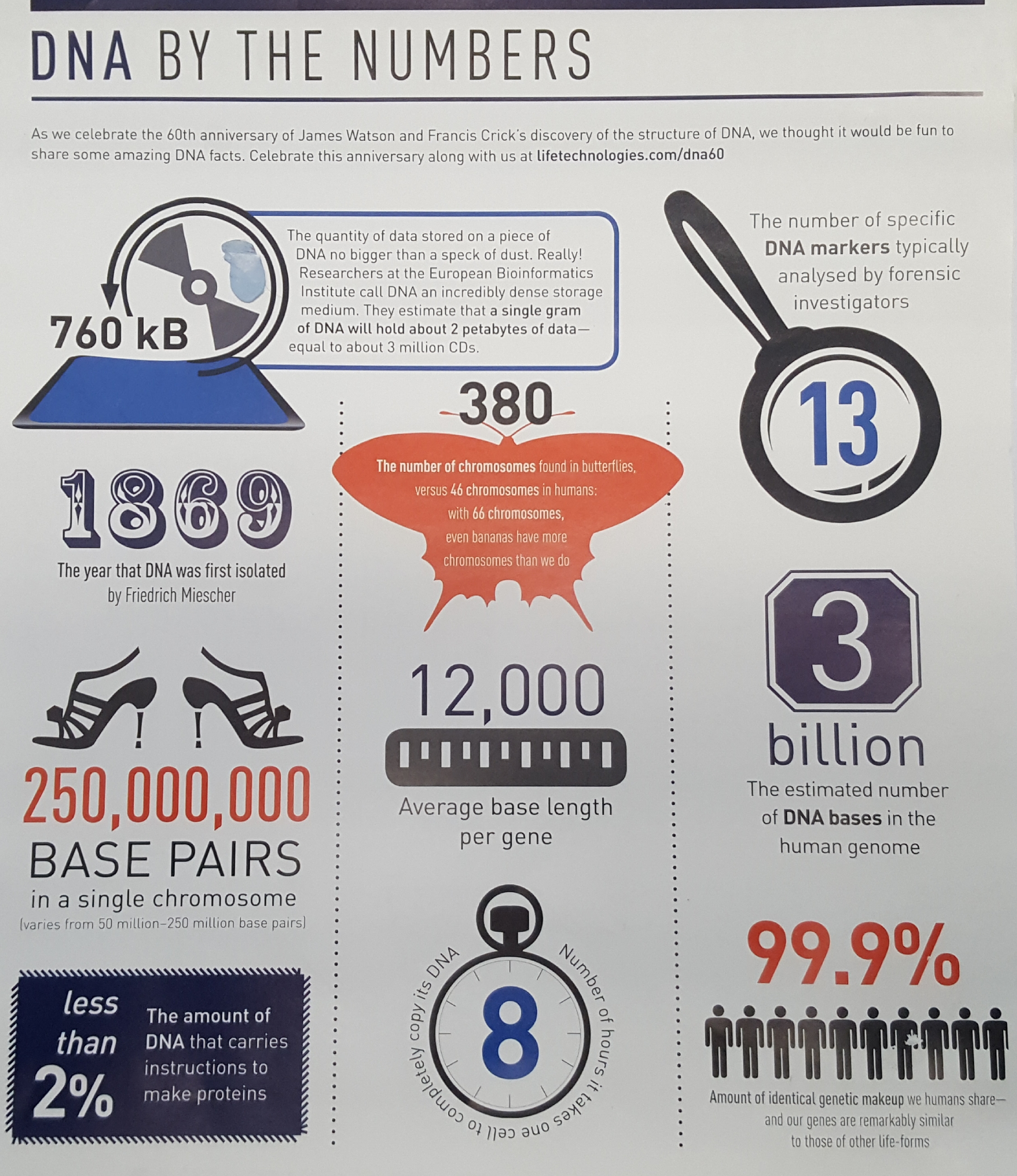
DNA by the numbers_Life_Technologies

DNA’yla ilgili ilginç anektodlar (‘DNA by the numbers’ by Life Technologies)

*Doktoramda Suudi Arabistan’daki akraba evlilikleri üzerine çalışmıştım ve yaptığım çalışmalar daha çok Klinik genetik alanına katkı sağlamıştı. Şimdi ise Genetik Epidemiyoji alanındayım. Makalelerime Google Scholar hesabımdan bakabilirsiniz.

**Biyoloji, Bilgisayar mühendisliği, Kimya, Fizik ve Matematik’le ilgili (ingilizce) videolar için tıklayınız.

epidemic-emerging_threats_nature_hiv_ebola

Epidemik haline gelebilecek hastalıklar. Bunların herhangi birine çare buldugumuz vakit, milyonlarca insanın hayatını kurtarmış olacagız. (‘Emerging Threats’ graphic by Nature. Source URL: http://www.nature.com/news/how-to-beat-the-next-ebola-1.18114)

PS: Genetik Epidemiyoloji alanında grup olarak yaptığımız araştırmaları özetleyen bir (ingilizce) yazım için tıklayın: Searching for “Breathtaking” genes. Literally! (Jun 2016)

Read Full Post »

The Fountain Magazine - Issue 99

The Fountain Magazine – Issue 99

There is a great deal of suspicion about consanguineous unions in the world. Whether this suspicion relies on health issues or not, we still have to be aware of possible genetic effects of consanguinity on heritable disorders and socio-cultural impacts.

Consanguinity itself does not make an individual “sick,” but it affects the probability of an autosomal recessive disorder (which requires two copies of the same mutation) if there is such a mutation which runs within the family (with the word “if” emphasized). Consanguinity should be regarded as a complex issue due to socio-economic factors and health concerns.

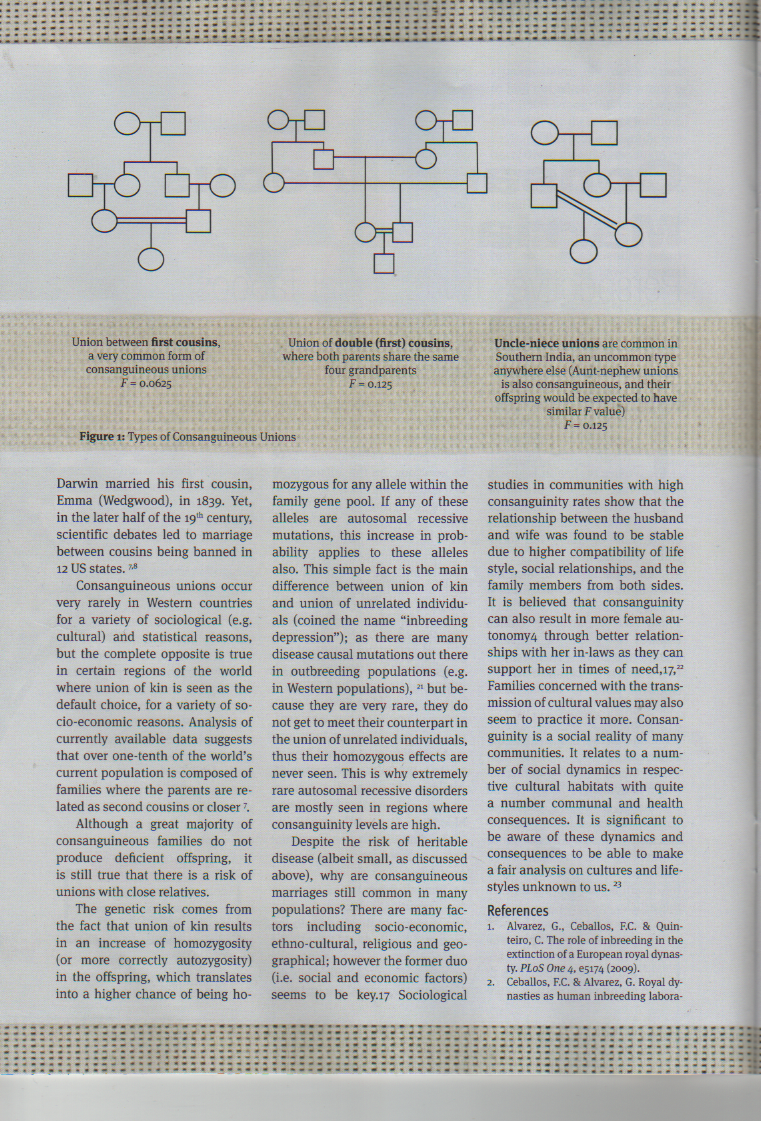
In clinical genetics, unions between individuals who are second cousins or closer are considered “consanguineous” (inbreeding coefficient, F=0.0156). Incestuous unions (e.g. brother-sister, father-daughter) will not be included in the description of consanguinity in this article, and are obviously outlawed in every society and faith.

Speaking from a statistical geneticist’s perspective, consanguinity affects the probabilities of certain genotypes occurring in offspring.

Full article in Issue #99 (Page 1)

Full article in Issue #99 (Page 1)

Full article in Issue #99 (Page 2)

Full article in Issue #99 (Page 2)

Full article in Issue #99 (Page 3)

Full article in Issue #99 (Page 3)

For original online version, please click: The Fountain Magazine, Issue 99 – Consanguineous Marriages: Perspectives from Social Taboos, Religion, and Science. (*some parts about the religious and historical aspects of consanguinity were censored. If you’re interested in the original version, contact me…)


Additional references:

A. Mesut Erzurumluoglu, 2016. Population and family based studies of consanguinity: Genetic and Computational approaches. PhD thesis. University of Bristol.

Erzurumluoglu AM et al, 2016. Importance of Genetic Studies in Consanguineous Populations for the Characterization of Novel Human Gene Functions. Annals of Human Genetics, 80: 187–196.


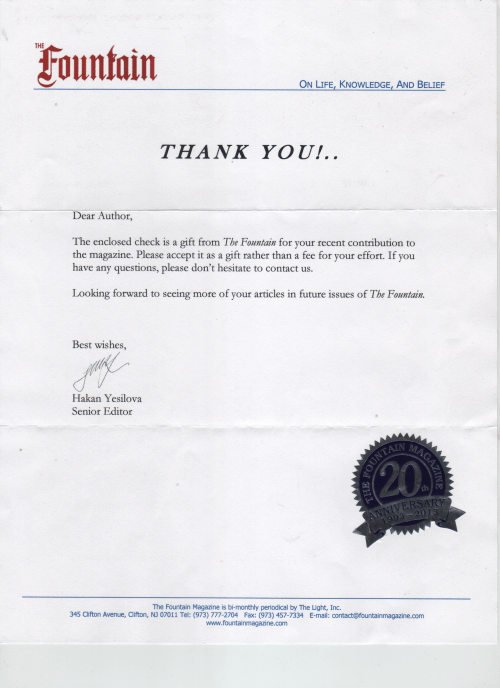
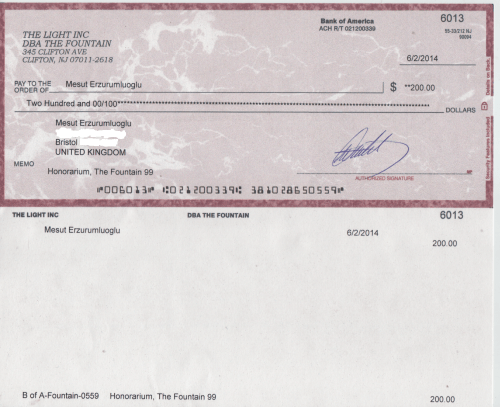
PS: Although I did not ask for anything, it was very kind of The Fountain magazine editor to send me an honorarium letter (and a cheque)…

The Fountain magazine Honorarium letter

The Fountain magazine Honorarium letter

The Fountain magazine honorarium cheque

The Fountain magazine Honorarium cheque

Read Full Post »