Feeds:
Posts
Comments

Posts Tagged ‘rumi’


This blog post first appeared on the Leicester Connect webpage (a platform for University of Leicester Alumni) on the 20th March 2020


Out of all the inspirational quotes on the internet, an old Sufi saying is the one that touches me the most:

“There are as many paths to God as there are souls on Earth.”

Although it is mostly used in a religious (mostly Islamic) setting, for me it carries truths that tower above this narrow meaning. It especially reminds me that we all start from different steps of the ladder, face different challenges along the way, and ultimately end up where we are because of the way we respond to those challenges, the doors that are open to us and the people we meet along the way – with the latter two we mostly cannot control.

I was kindly asked if I could write a blog post after being awarded the Future Leader Award at the 2020 Alumni Awards. I am grateful and honoured to have received the award but also acknowledge that there were at least two more people (my fellow finalists) who deserved it as much as me – if not more.

I would like to start by saying – from my experience in life and academia – that there are no objective criteria which separates those “who made it” versus those who just fell short. I got to meet plenty of people and interview panels who I felt judged me using very narrow and subjective criteria and ignored every other quality I had. It’s always nice to get the job or funding you applied for, however I never dwelled on the outcome if I did my preparation right. I would strongly recommend this approach.

Free yourself from the need for appreciation

Many academics suffer from a condition called Impostor Syndrome – simply put, doubting one’s own accomplishments and constantly fearing being exposed as a “fraud”. I can’t say I ever had it because I always thought of myself as successful in my own way and never sought confirmation from anyone. Although striving to improve myself all the time, I was happy with “just trying to do the right things” – irrespective of the outcome.

I base this belief on the fact that the people who judge us do not know the full story about us. Maybe if they did, they would look at us differently. For example, someone who is born to a middle-class English family will not be able to judge how much of a success it is for an immigrant to learn advanced-level English from scratch, get citizenship and compete for the same positions. Someone who has not had any serious health issues will not be able to comprehend what success is for a disabled person. How about a person who has managed to stay away from crime in a neighbourhood full of ignorance, hate and violence? None of these are mentioned in a CV and no one finds these people and offers them an MBE… or a job. However, this doesn’t change the fact that these people are inspirational and successful. I can only wish more people would realise this and stop treating subjective decisions about themselves or others as objective truths.

I feel privileged to be living in the UK which is a relatively meritocratic country and has a higher quality of life index compared to most. However, this also means that the competition is fiercer for “top jobs” and can mean those from underprivileged backgrounds are affected severely. One must realise this early on and respond to the challenge. The good news is that there are plenty of people out there who are willing to help and share their knowledge and experience when approached.

Believe in yourself but get help. Make friends!

I had to overcome many financial, emotional and visa issues during my undergraduate years which undoubtedly affected my performance. When I somehow graduated from the University of Leicester with a 2.1 in BSc Genetics in 2011, I did not listen to the people who thought I would not be able to make the cut in academia and started applying for PhDs. Before applying, I read all the blogs and papers that were out there about “selling yourself well” and making your CV stand out. I always did my research before taking an important step. Thankfully, I must have been at the right place at the right time as I was very fortunate to be offered a fully-funded studentship at the University of Bristol – I remember even my interview not going that well. The scholarship freed me from the shackles of financial distress as I was embarking on an academic career.

Again, doing my thorough background reading, I quickly realised that the field of Genetic Epidemiology – the field I now found myself in – required a solid foundation in medical statistics, epidemiology, bioinformatics, and programming as well as human genetics. I realised and accepted my limited expertise in these fields and got to work. I got all the help and knowledge I need from my supervisors, friends, online courses, blogs and research papers. I made sure I spent at least 2-3 hours a day on improving myself on top of working on my specific PhD project. Not keeping to myself, I was also supportive and sincere with my “PhD friends” who were on the same boat as me. I’m still close with many of my supervisors/teachers and friends. I couldn’t have achieved what I’ve achieved without their help.

Ultimate success: happiness and self-respect

In this fast-paced world, especially in academia, we continually forget that family and friends are worth more than any academic success. Although my academic papers are important to me – and I can only hope they’ll be useful to someone, somewhere, somehow – I do not spend much time thinking about my papers or PhD thesis. But I’m always longing to spend more time with my family and friends and the fact that I have them is the success of my life.

I want to finish by saying that I was very fortunate to get to where I am and achieve many milestones in the process, but it could have all turned out very differently, very easily. Yes, I tried to do the right things, but many things were out of my control. But as long as I had my friends and family, I’d like to think I would have been happy wherever I ended up.

I wrote all of these to convince you of one thing: do not let others – even senior people – define what success is for you as they do not know you and how you got to where you are. Just keep doing the rights things and, with the help and support of your loved ones, you’ll eventually get through everything in life.

Feel free to contact me!

I blog – in English and Turkish – about my research and other academia and culture-related things…

E.g. a post that may be of interest: An Academic Career in the UK

Download

If you’d like to download the blog post as it appeared on the Leicester Connect website, click the ‘Download’ button below:
Read Full Post »

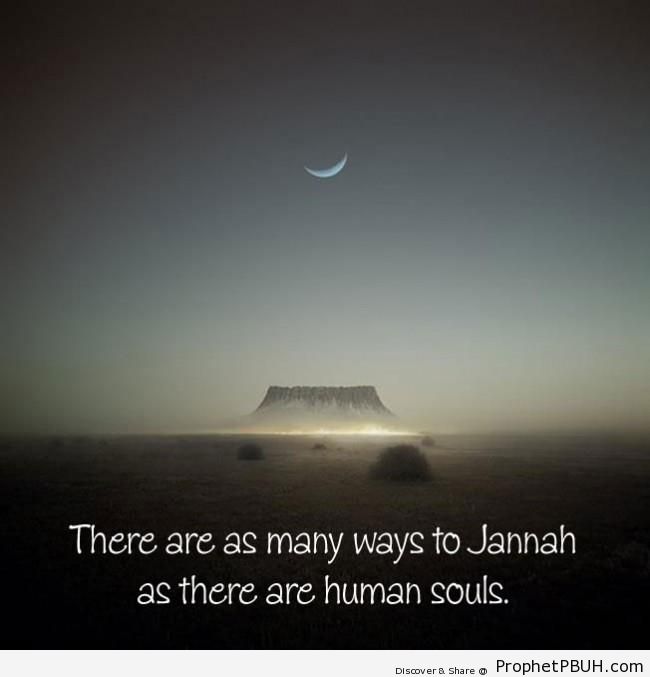
There are as many ways to Paradise as there are human souls - Rumi

There are as many ways to Paradise as there are human souls – Rumi

“Does God/Allah have an ego issue?” was one of the questions asked by a Muslim girl (judging by the headscarf she wore) to a well-known (judging by the YouTube hits) and knowledgeable Muslim sheikh at a gathering in Bristol (UK). However, to my surprise he did not have an answer and dodged the question. I presume because he had never come across such a controversial question before – especially from a Muslim.

I realised more clearly there that we (and I mean all of us!) wrongly take for granted and assume that everybody in our vicinity/close circle has the same amount of faith as we do. We also pretend that everyone will find the answers to their questions without anyone actually answering them – and therefore make no effort to gauge the theological/philosophical issues that exist within our communities.

Unfortunately we Muslims (generally speaking) do not have the same ‘free spirit’ as Westerners when it comes to asking controversial questions*. We think too much about what others would think and the reaction we would get, and maybe rightly so (as it would probably get us into trouble in the “backward” and corrupt countries that most of us are from)… However, virtually all of us harbour such questions** but mostly those who are born and bred in Western countries have the desire to seek answers and the guts to ask them to a scholar and/or in front of the public. However “why this is?” is another topic for us to ponder upon – and maybe for researchers to empirically analyse.

I believe that Islamic philosophy*** has to be resurrected from its ashes by today’s knowledgeable Muslim scholars to start contributing not just to the Muslim intellect, but to the World’s way of thinking (just as it was in the ‘Golden age’ of Islamic civilisations which lay the foundations for the ‘enlightenment’ in the West). For tough questions to be adequately approached, collaborations from many fields are required, which is the main missing ingredient in the ‘Islamic’ world at present… It is quite a shame as Islam lay its foundations on the brotherhood and unbreakable bonds between the Muhajir and the Ansar. But today, the ‘Muslim’ world is a mess! All hates all!

I am glad to say however that there are signs of change with some great movements (advocating dialogue, tolerance and peace) being initiated in the Muslim world. Hope they will bear fruits soon as we are fed up of living in a world full of killing, violence and bloodshed (some supposedly being done in the name of religion)!

Getting back to the question at the start, I have thought on this issue a bit and believe the answer should have been along the lines of: “Whatever I say, it is not going to convince everyone as the real answer lies within ourselves, not in any book or scholar. However the answer is a definite NO. God does not have an ego issue. It is we who do!”

“God has created us, given us everything that we have (from our parents to our intellect); and sent us to this Earth to test us for a tiny amount of time (in the grand scheme of things). However we have paid him back with disobedience, disloyalty, negligence to his message, ignorance to his messengers who were the greatest and most kind of mankind (list can go on)… But He (The Most Merciful, The Most Gracious) is willing to forgive each and every one of us if we wholeheartedly ask for His forgiveness. He will then grant us with Paradise (forever) for the little bit of good that we did in His name (in that finite time period that we call ‘life’).”

So to say that he has an “ego issue” after all the things that he has done for us, reflects the enormous “ego issue” that we have within ourselves. I am not a scholar (wish I was!) therefore I cannot give comprehensive answers, but all I can say is that there is need for us to return back to the basics and start teaching the true essence of Islam to people, starting within our own communities (i.e. Muslim).

* Just Google search the same question, and you will see that the it has been asked repeatedly by people of other faiths or no faith, but it is quite hard to find a similar one in an ‘Islamic’ website

** Being a Muslim does not change the fact that you are still a human being like any other – with ‘human’ problems

*** I do not mean the philosophical/theological thinking done by Ibn Taymiyyah or Omar Khayyam (whose ideas are totally against the teachings of the Prophet (s.a.v) and the Qur’an) but similar to ones carried out by (Sufi) intellectuals/scholars such as Rumi, Bayazid Bastami, Al-Ghazali and Ibn Arabi. A more recent example is Said Nursi, who is a scholar of the 20th century. His ‘Risale-i Nur‘ collection is considered one of – if not the – greatest Islamic exegesis (tafsir) by many; and thus should be read by all interested in deepening their understanding of the Qur’an, the Prophet (PbuH) and Islam as a whole.


PS: I do not like preaching my beliefs (although I do try and give answers if I am asked) as I believe everyone’s on their own journey to find the truth about God, life and the hereafter. We may all arrive at the same conclusion through (sometimes totally) different means…

Read Full Post »

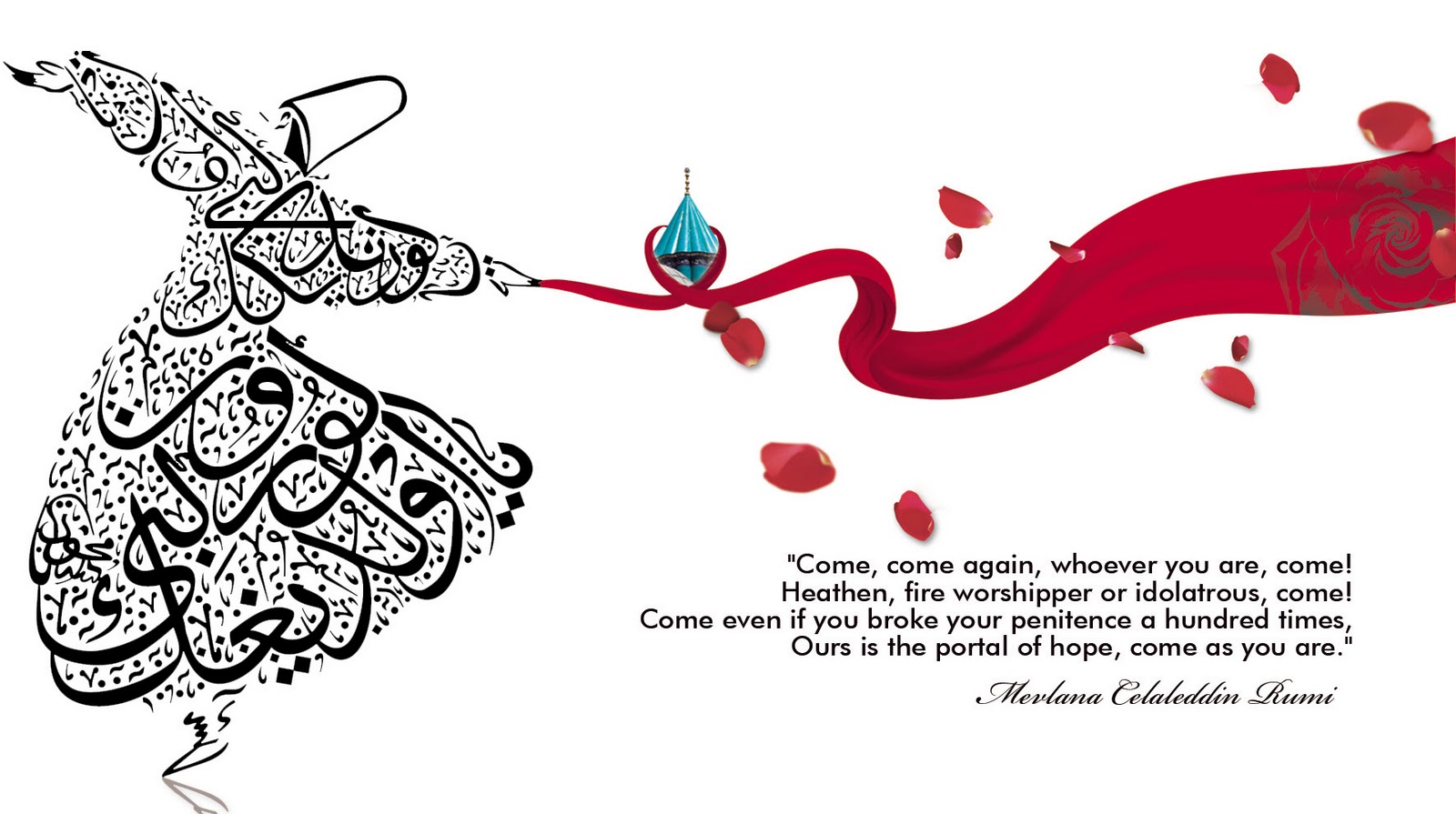
Whirling Dervish

Whirling Dervishes are characteristic of Sufism. The saying below from Rumi melts many hearts as well as mine’s. We need his understanding of Islam more than ever!

The great Islamic scholar Mawlana Jalaladdin Rumi once said:

“Yesterday I was clever, so I wanted to change the world. Today I am wise, so I am changing myself”

(Not comparing myself with Rumi in any way) When I was a kid I also used to think I could and had to change the world. However after 25 years of life experience with 21 years of it as a student since the age of 4 (and counting, as a PhD student), I now feel different. It seems like my dreams have become more realistic (or maybe narrowed down, depending on how you look at it)…

So I now say:

“Yesterday, I wanted to change the world. Today, I’m (concentrating on) writing my thesis” 🙂

Read Full Post »

1- Yaptigimiz isin iyi veya kotu oldugunu nereden anlariz?

“O isi yaparken Allah’a kavusmak (olmek) korkutmuyorsa o is iyidir; hayir, rahatsizlik duyuyorsaniz o is kotudur” (Reca bin Hayve)

2- Seytan namaz kilmayan (alni secdeye inmeyen) bir adama:

“Ben Hz Adem’e bir kerecik secde etmedigim icin cennet’den kovuldum; sen is her gun bes vakit namazin her secdesini terk ediyorsun… Acaba halin ne olacak?”

3- Yuzme bilmeyen cimrinin birisi denize dusmus ve etraftakiler kurtarmak icin “Ver elini” diyorlarmis, ama adam bir turlu vermemis…

Onu iyi taniyanlardan birisi “Al elimi” deyince, adam uzatmis…

4- Kanuni Sultan Suleyman merakindan, zamaninin Islam alimi (her soruya cevap vermesiyle meshur ve ayni zamanda Sut kardesi olan) Yahya efendiye Osmanli’nin sonunun nasil olacagini soran bir mektup yazmis…

Cevap olarakta Yahya efendi “Neme gerek” yazmis; Kanuni bu cevaba sasirmis ve hikmetini bizzat kendisi sormak icin yola koyulmus…

“Kardesim, neden soruma cevap vermedin?” deyince; “Cevap verdim; bir devlette haksizlik ve zulum yayilir, bunu isitip gorenler Neme gerek derlerse, o zaman o neslin yok olmasini bekle”

5- Bir inkarci, Islam alimine 3 soru sorar:
i) Allah varsa bana goster
ii) Her isi Allah yaratiyorsa neden suclu ceza gorur?
iii) Seytan atesten yaratildiysa, cehennem atesi nasil ona etki eder?

Alim yerden bir kerpic parcasi alip onun basina calar… Basi aciyan inkarci solugu hemen mahkemede aliverir ve Hakim alime sorar: Sen bunun basina vurmussun oylemi?

Alim: Bana 3 soru sordu, bende ona cevap verdim
Hakim: Nasil?
Alim: Allah varsa bana goster demisti; basinin agridigini iddia ediyorsa gostersin… Iki, herseyi Allah yaratiyorsa ben neden suclu olayim? Uc, Topraktan olusan kendisine (yine topraktan olan) kerpic nasil etki ediyor?

Sonuc: Beraat

Read Full Post »

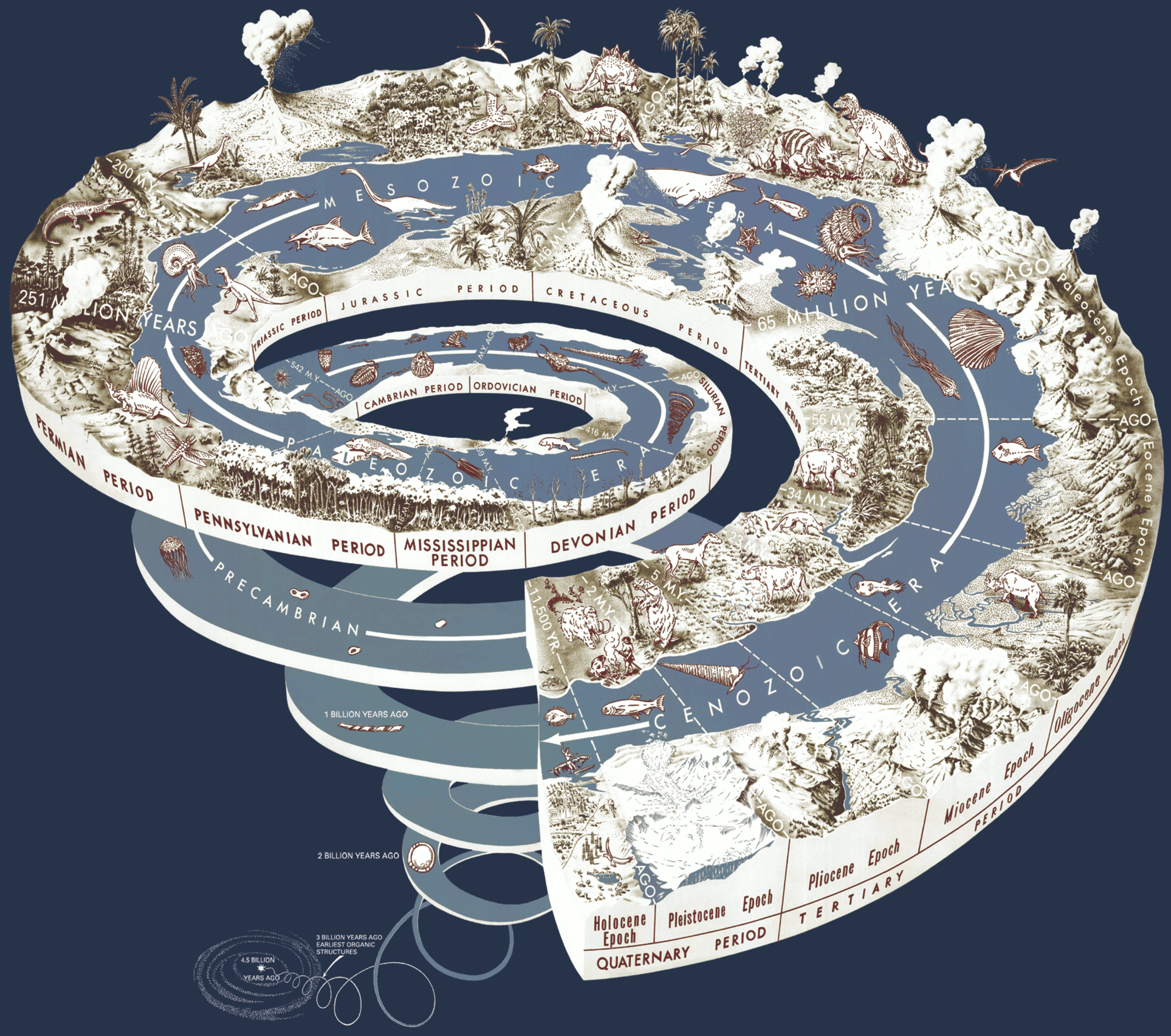
Visual representation of the history of life on Earth as a spiral. Source URL: http://en.wikipedia.org/wiki/Timeline_of_the_evolutionary_history_of_life

Visual representation of the history of life on Earth as a spiral. Source URL: http://en.wikipedia.org/wiki/Timeline_of_the_evolutionary_history_of_life

For over fourteen centuries, the Holy Quran and the Hadiths (sayings) of our beloved Prophet (PbuH) has brought light into the lives of billions of people. Their magical (in the sense of breath taking) narration, timeless advice/warnings, and miraculous scientific correctness has put no doubt in Muslims’ mind that the Quran is a revelation from Almighty God (Allah) and Prophet Muhammad is the (final) messenger of God. The Bedouin Arabs of the pre-Islamic era (called the ‘Jahiliyah’ period in the Muslim world, meaning the era of ignorance and darkness) – who would bury their daughters alive due to the ‘shame’ they may bring in their adulthood, have become Master Mathematicians, Astronomers, Architects, Philosophers in a matter of a few centuries…

Islam’s enlightening effect did not only affect the Arabs but also the Turks who would embrace Islam in the 10th century and go on to found the Ottoman State (not an ’empire’) in 1299. The Ottomans would become ‘Super-power’ of the world for the large part of the six centuries they have been in existence. The Turks were known for their strength, brutality and anarchic nature before Islam. This barbaric population would then become a symbol of tolerance in the way that they allowed Christians and Jews to live alongside Muslims without any fear of harm and under the protection of the law – even when they had the strength to wipe them off the face of the Earth, just like the Roman Empire did. They did not do this because it would be against the peace advising religion they believed in.

Al Jazaari

Al Jazaari

So what has gone wrong? Why did the Muslims become what they have become today? From the days of Salahaddin Ayyubi, Sultan Mehmet ‘The Conqueror’, Sultan Suleiman ‘The Magnificent’, Halid bin Walid, Omar bin Hattab – leaders who were well ahead of their time, to the dictators we see in the Muslim world today and the near past. It is a broad question but to answer it simply, it is because the Muslims have forgotten what the Quran and the Prophet had advised them: Try to understand yourself and the things Allah has created; this way Muslims would always keep their faith alive while also making discoveries that would help mankind. A Muslim should always find a way to improve their Imaan (faith) and spread the love of Islam not just for his relatives but for the whole of creation…

Between the 9th and 14th centuries, just two centuries after Islam was founded in Arabia, Muslims were renowned as masters of a variety of scientific and sociological fields. Arabic had become the language of knowledge and every scientist of the era would learn it to communicate with their colleagues in their respective fields. Islamic city of Baghdad (present day Iraq) was the ‘home of knowledge’ and scientific literature from all over the world would be made available in the Arabic language in the ’House of Wisdom’ to visiting scientists along with many observatories and libraries. They would all try to understand the Creator through studying his creation. That is why they have made many discoveries as well as improving many of the theories of the past scholars of Greek, Indian and Chinese background.

This enthusiasm to understand the natural world among the Muslim ‘ummah‘ (community as a whole) seems to be lost for the good part of the last two centuries. This has coincided with the decline of the Ottoman Empire which is indicative of a need of a new leader in the Muslim world just like the Caliphs aforementioned.  However, even though the performance of Muslims stalled in the natural sciences, the Holy Quran still shines like a star even with the latest scientific discoveries, standing the ‘age of science’ – the era we’re living in. Only the fact of not containing errors is a miracle on its own. Though, it is sad to see that it is not Muslims who are contributing to the findings of these important scientific facts. It has become common practice for Muslims to say that ‘the Quran had that fact in it all along’ straight after a discovery is made by Western (non-Muslim) scientists. This is why we have let the Quran and the Prophet down. If that fact was in the Quran all along why didn’t we discover it well before others have done so? This is why Muslims scientists should make it a priority to reunite and ask for scholars of all areas to come forward and build consortia where they would study the Quran, the Hadith and the other Islamic literature (such as the Masnawi of Mawlana Jalalladdin Rumi, Risalei Nur of Bediuzzaman Said Nursi) extensively and then come up with hypotheses which they could test…

A few questions that pops up in one’s mind:

1- It would be a breakthrough to find Prophet Noah’s Ark where the Quran has told it had landed (Mount Judi? Something to think for historians, geologists, archaeologists etc.)…

2- They could see if the evidence is still there about the Moon splitting in half (for astronomers, historians)…

3- Try to find out why milk-brother/sisters are considered real brother/sisters in Islam (something for biologists maybe)?

4- The fire Prophet Abraham was thrown into, what happened to it? Could the fish swimming in ‘Balikli Gol’ in Urfa (Turkey) be different than others (maybe for zoologist and geneticists)?

5- What is different about the ‘Hajarul Aswad’ (black) stone in Kaaba (for chemists)?

6- Solid proof about ‘Haman’ being the chief advisor and/or architect of Pharaoh at Prophet Moses’ time (for Egyptologists, archaeologists and ancient historians)? Although Maurice Bucaille has done some terrific research in to this, more is needed…

7- What is miraculous about the location and the configuration/structure of the Kaaba?

8- When and where did Prophet Adam live?

9- What is God trying to tell us with all the fossils – why has he created and then allowed them to become extinct (whether they are dinosaur fossils, trilobite fossils or human-like creatures)?

10- Who was Dhul-Qarnayn?

11- Why were certain animals’ names mentioned in the Qur’an in the context that they are in (click here)?

12- Trying to understand the mind of God using the timescales and types of creation e.g. approx. 10 billion years after the creation of the universe, the Earth is formed. Then half a billion years later the first life forms emerge (i.e. single celled organisms such as the first prokaryotes). Humans come into the scene only 100-200 thousand years ago (something for Islamic philosophers to discuss with scientists?)

and many more questions waiting to answered not just in life sciences but also social sciences; but by who? Muslims? or other scientists?

The above might have been a one-off miracle by Allah but we also know that this is a ‘cause and effect’ world thus Allah may have left clues about them somewhere if we look close enough to the right places. And also to bear in mind: Surely these questions cannot be answered by a single scientist but by a consortium of scientists from many backgrounds.

It is not all doom and gloom for the Muslim world as there are many distinguished Muslim medical and social scientists out there and I believe we must acknowledge their achievements by rewarding them accordingly, maybe through starting a competition just like the Nobel Prize within the Islamic world (with the winners being decided by scientists from all over the world so that it does not lose it’s credibility). This would surely breathe new life into the scientific world and increase the enthusiasm within Muslims…

Many aspects of the Quran and the Hadith remain undiscovered and it is up to us find these jewels, and  we cannot afford to wait for non-Muslims to do it for us. Muslim leaders of the world could fund projects and such consortiums as aforementioned which would once again gain the attraction of the Muslim world, encourage them to learn about Science and inspire future generations to become great scientists. We cannot carry on living in ignorance while science keeps improving. We have to contribute to it like our ancestors have been doing in the past; and more importantly, because The Creator wants us to!

Read Full Post »