Feeds:
Posts
Comments

Posts Tagged ‘science’

A farmer and his son had a beloved stallion who helped the family earn a living. One day, the horse ran away and their neighbours exclaimed, “Your horse ran away, what terrible luck!”

The farmer replied, “Maybe.”

A few days later, the horse returned home, leading a few wild mares back to the farm as well. The neighbours shouted out, “Your horse has returned, and brought several horses home with him. What great luck!”

The farmer replied, “Maybe.”

Later that week, the farmer’s son was trying to break one of the mares and she threw him to the ground, breaking his leg. The villagers cried, “Your son broke his leg, what terrible luck!”

The farmer replied, “Maybe.”

A few weeks later, soldiers from the national army marched through town, recruiting all the able-bodied boys for the army. They did not take the farmer’s son, still recovering from his injury. Friends shouted, “Your boy is spared, what tremendous luck!”

To which the farmer replied, “Maybe.”

IMPORTANT NOTE: EVERYTHING I WROTE BELOW ARE MY OPINIONS AND REFLECT MY EXPERIENCE IN ACADEMIA (IN THE UK) – AT THE TIME OF WRITING. THEREFORE, THEY PROBABLY WILL NOT APPLY TO YOU. ALSO, PLEASE READ FROM START TO FINISH (INCL. FOOTNOTES) BEFORE POSTING COMMENTS.

Very soon, I’ll be moving to the ‘Human Genetics’ team of Boehringer Ingelheim Pharma (BI; Biberach R&D Centre in South Germany) as a ‘Senior Scientist’. I therefore wanted to look back at my time in academia and share my suggestion and concerns with other PhD students and early-career researchers (ECRs). Any criticism mentioned here is aimed at UK-based (research-intensive) academic institutions and “the system” – and not at any of my past supervisors/colleagues. The below are also going to be views that I have shared in some of my blog posts (e.g. Calculating the worth of an academic; Guide to an academic career in the UK; Bring back the ‘philosophy’ in ‘Natural philosophy’; What is success? YOU know better!) and with my colleagues throughout the years – and not something that I am just mentioning after securing a dream (will elaborate below on why I called it a ‘dream’) job at BI. (NB: See ‘Addendum (23/12/21)’ section, reflecting on my first 4-5 months at BI’s Human Genetics team)

To do my time in academia justice, I’ll get the good things out of the way first: I’ve been doing research for >10 years in UK-based academic institutions – first as a PhD student (Univ. of Bristol 2012-2015), then as a (Sn.) Postdoctoral Research Associate (2015-19 Univ. of Leicester; 2019-2021 Univ. of Cambridge) – and enjoyed almost every second of my time here. I met many world-class scientists but also great personalities whose memories and the things I learned from them will remain with me for the rest of my life. I was lucky to have had supervisors who also gave me the space and time to develop myself and I’d like to think I took good advantage of this. I also got to (i) publish quite a few papers I will always be proud about and (ii) travel to the US and many countries in Europe thanks to funding provided for academic conferences and, needless to say, none of them would have been possible without (4-year PhD) funding from the Medical Research Council (MRC UK) or support of my PhD/postdoc supervisors and colleagues. My time in the beautiful cities of Leicester (see: Life in Leicester), Bristol, and Cambridge was enjoyable too! I therefore would recommend any prospective scientist/researcher to spend at least some time as a ‘Postdoc’ in a research intensive UK-based university.

On top of all this, if you were to ask me 5 years ago, I would have said “I see myself staying in academia for the rest of my life” as I viewed my job as being paid for doing a ‘hobby’ – which was doing research, constantly learning, and rubbing shoulders with brilliant scientists. However, things started to change when I became a father towards the end of 2018, and I slowly began to have a change of heart about working in academia due to the well-known problems of fixed-term contracts/lack of permanent job opportunities, relatively poor* salaries compared to the private sector, and the many hurdles (incl. high workload) you need to overcome if you want to move a tiny bit up the ladder. The only thing keeping me going was my ideals of producing impactful science, my colleagues, and the possibility of pursuing my own ideas (and having PhD students). No one needs my acknowledgement to learn that there is ‘cutting-edge’ and potentially very impactful science being done at universities but the meaning of ‘impact’ for me changed during the COVID-19 pandemic when I was sat at home working on projects which I felt didn’t have much immediate impact and probably will not have much impact in the future either – and if they did, I probably would not be involved in the process as an ECR. On top of this, many of the (mostly COVID-19, and academia-related) analyses I was sharing on my Twitter page and blog were being read by tens of thousands. I was also heavily involved with the crowdfunding campaign of a one-year-old spinal muscular atrophy (type-1) patient (see tweet and news article). And these were both eye-opening and thought provoking! So the problems that I ignored or brushed under the carpet when I was a single, very early-career researcher were suddenly too big to ignore, and enduring through fixed-term jobs, relatively low pay packages* and a steep hierarchy (i.e. much more ‘status’ oriented than ideal) was just not worth it.
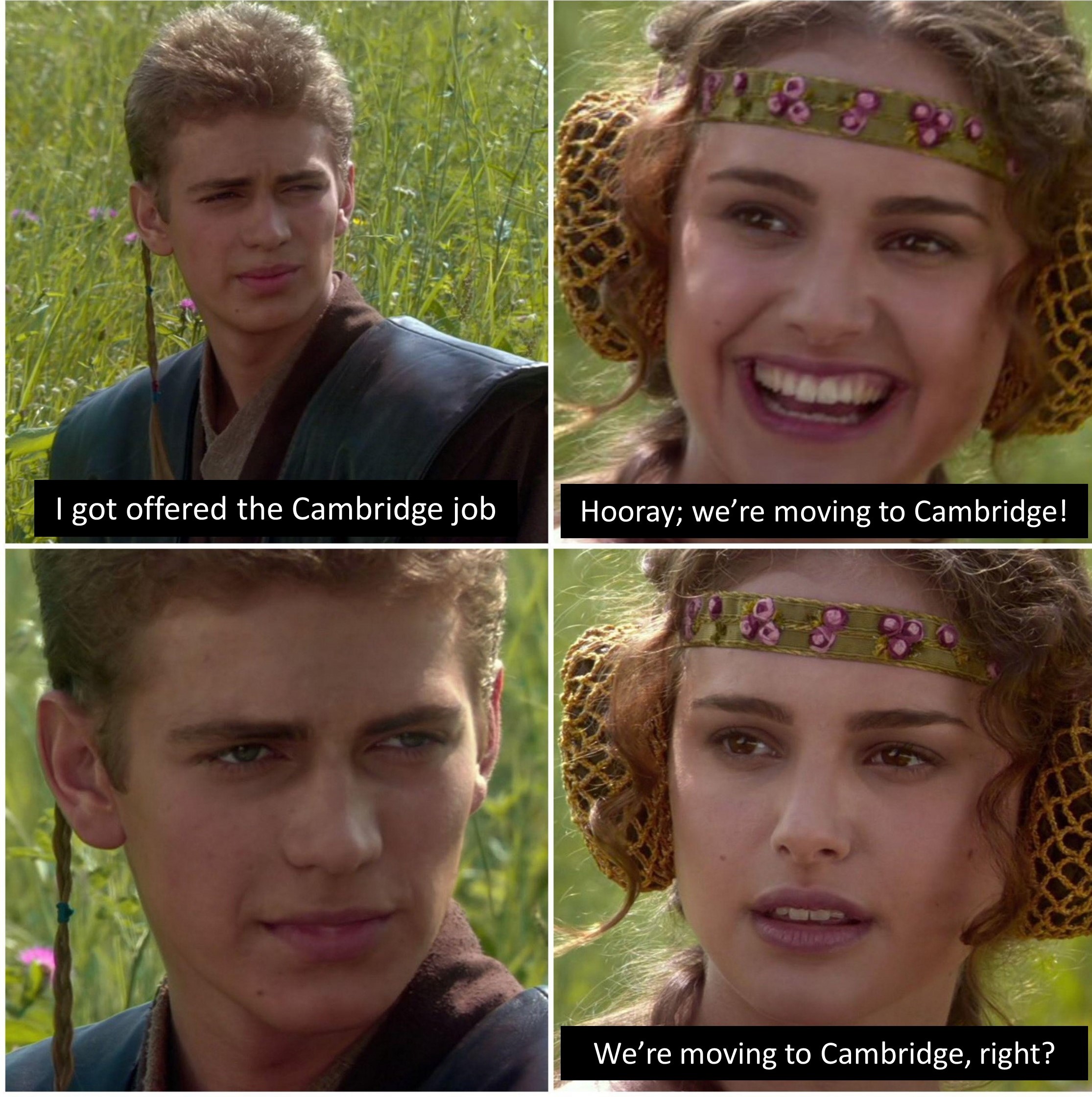
One of my biggest disappointments was not being able to move to Cambridge with my family because (i) Cambridge is very expensive relative to Leicester, and (ii) Univ. of Cambridge doesn’t pay their ECRs accordingly – mind you, I was being paid the equivalent of a (starting) ‘Lecturer’ post at the University’s pay scales (Point 49; see ‘Single Salary Spine’), so many of my colleagues were being paid less than myself.


There was also the issue of not having enough ‘independence’ as an ECR to work on different projects that excited me. As a ‘postdoc’, my priority had to be my supervisor’s projects/ideas. If I wanted to pursue my own projects, I had to bring my own salary via fellowship/grant applications – even those would have to be tailored towards the priorities of the funding bodies. Applying for grants/fellowships is not something I like or I’m trained for but I did try… I submitted three (one grant and two fellowship) applications and made it to the interview/final stage every time, however they were all ultimately rejected mostly because I “was not an expert on that respective disease” or “was too ambitious/couldn’t do all these in 3 (or 5) years”. I guess I also laid all my cards on the table and didn’t hide the fact that I was a proud ‘generalist’** and was never going to be a specialist as I am just too curious (and unwilling) to be working on a single disease or method. In addition to these, I had also co-applied (with a Lecturer colleague in the Arts dept. where we had to submit quite a few documents and a short video) for a very small grant (of ~£6000) to organise a conference to discuss the problems of asylum seekers/refugees in the UK, but it was rejected for strange reasons. I acknowledge that there is an element of luck involved and on another day with another panel, I may have been awarded but these rejections were also eye openers. (NB: I believe the ‘all-or-nothing’ nature of fellowship/grant applications should be revised as a colossal amount of researchers’ time and effort – and therefore taxpayers’ money – is being wasted)

But – in line with the story (of the Chinese farmer) I shared at the start – I am now happy that they didn’t work out as it probably would have meant I stayed in academia for longer (i.e. until the end of my fellowship period). I always took the ‘doing my best and not worrying about the outcome‘ approach and this has proven to be a good strategy for me so far.
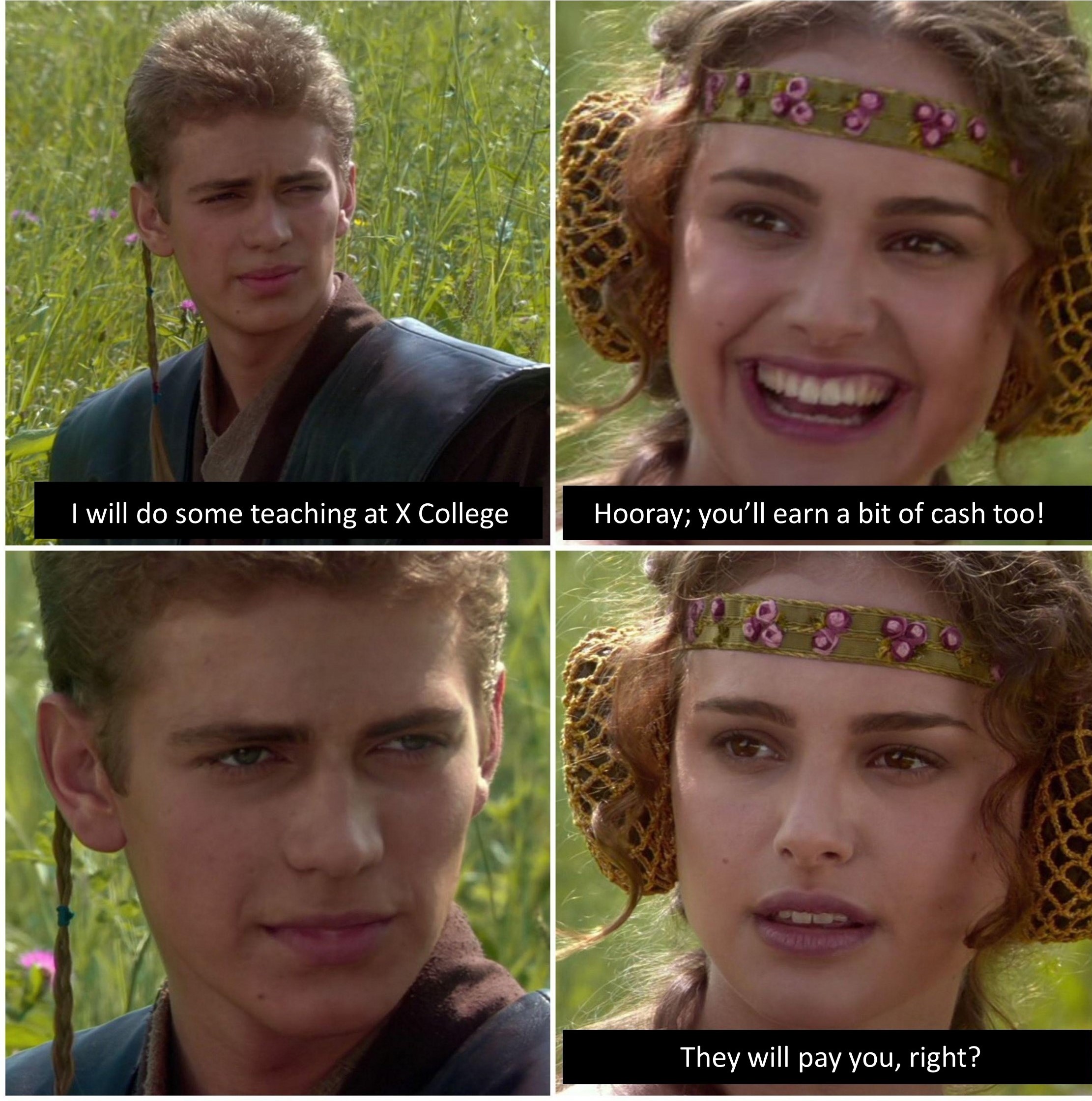
Although unhappy with the way ‘the system’ took advantage of ECRs, I did try and “play by rules” to ramp up my CV and network by applying to become a ‘Non-stipendiary Junior Research Fellow’ at one of the colleges of the Univ. of Cambridge to increase my chances of securing a permanent lecturer post at a high-calibre university. Although I enjoy teaching and think I am good at explaining concepts, the main reason for applying was to add more teaching experience in my CV and secondly, to be more involved with the community of students and ECRs in Cambridge – which I did not have a chance to do much, mostly as I and my wife decided not to move to Cambridge from Leicester for the reasons mentioned above (underneath the first figure). I made a solid application and got to the interview stage. I thought the interview panel would be delighted to see someone like me who has a relatively good academic CV for an ECR (see my CV) but also does sports, has his own podcast, who tried to be active on social media (I had more followers than the college on Twitter – although they’re very active), who writes highly read blogs (some of my blog posts are read and shared by tens of thousands), led many student groups (incl. the President of Turkish Society at the Univ. of Bristol and Leicester) etc. to join their ‘guild’ but I was very surprised to receive a rejection email a couple of weeks later. I was going to work there for free, but it seems like they didn’t value my skills at all and that there were at least 5 other people who they thought were going to contribute to the College’s environment more than me. This was another eye-opener: Academia is full of (highly talented) ECRs who are just happy to do things for free for the sake of adding stuff to their CV and I realised I was about to do the same. I remember thinking “I dodged a bullet there” – I decided it just wasn’t worth fighting/competing over these things. I knew now that I had to explore options outside of academia more assertively as I could see clearer that universities and the senior members who helped build this system were just taking advantage of ECRs’ idealism and ambitions but also desperation. (BTW: I find it astonishing that non-stipendiary fellowships in Cambridge are even a thing. They state that they don’t expect much from their fellows but they clearly do)

I then shared a 1-page CV in certain job recruitment sites to see what was out there for me and I was surprised to see how valuable* some of my transferable skills were to businesses in different sectors. I had many interviews and pre-interview chats with agents and potential employers (incl. Pharma, other private sectors, and public sector) in the last 6 months but only one ticked all the boxes for me: this ‘Senior scientist’ role at the Human Genetics team of BI – who valued my versatility and expertise in various fields***. Thus, I took time out to fully concentrate on the process and prepared well. I had to go through five interview stages, including an hour-long presentation to a group of experts from different fields, before I was offered the post. Throughout the process I also saw that many of my prospective colleagues at BI had seen the abovementioned problems earlier than I did and made the move. They were all very happy, with many working, and hoping to stay, in the company for a long time. I should also mention I had a Lecturer job lined up at the Univ. of Manchester**** too but the opportunity to work for BI’s ‘Human Genetics’ team was too good to refuse.

I didn’t mean this post to be this long so I’ll stop here. To sum up, I am proud of the things I’ve achieved and the friends I’ve made along the way – and if I was to go back, I wouldn’t change anything – but I believe it is the right time for me to leave academia. I think I’ve been a good servant to the groups I worked in and tried to give all I could. Simultaneously, I grew a lot as a scientist but also as a person – and this was almost all down to the environment we were provided at the universities I worked in. But having reached this stage in my life and career, I now think that (UK) universities don’t treat us (i.e. ECRs) in the right way and provide us with the necessary tools or the empathy to take the next step. I don’t see this changing in the near future either because of the fierce job market. Universities are somehow getting away with it – at least for now. This is not to say other sectors are too different in general but I would strongly recommend exploring the job market outside of academia. You may stumble on a recruiter like BI and a post like the one I have been offered, which matches my skill set and ambitions but also pay well so I can live a decent life with my family – without having to live tens of miles away from my office.

Let me re-iterate before I finish: What I wrote above will most probably not apply to you as I (i) am a UK-based academic/researcher, (ii) am an early-career researcher in a field which also has a strong computational/programming and statistics component – so I have a lot of easy-to-sell transferable skills to the Pharma companies/private sector, (iii) am a ‘generalist’** rather than a ‘specialist’ – so I’m a person major funding bodies currently aren’t really too keen on, (iv) don’t have rich parents or much savings, and am married (to a PhD student) and have a son to look after – and thus, salary*****, living in a decent house/neighbourhood and spending time with my family is an important issue, and (v) am an impatient idealist, who wants to see his research have impact – and as soon as possible. I am also in a position that I can make a move to another country with my family.


Footnotes:

*Contractor jobs usually offer much better pay packages than permanent jobs in the ‘data science’ field e.g. as soon I as put my CV on the market as a ‘health data scientist’, I got contacted by a lot of agents who could find me short-term (3-12 months mainly) contracts with very good pay packages. Just to give one example of the salaries offered, there was one agent who in an apologetic tone said: “I know this is not very good for someone like you but we currently offer £400 a day to our contractors but I can push it to £450 for you.”this is ~3x the daily rate of my salary at the Univ. of Cambridge!

**I’ve always been involved in top groups and ‘cutting-edge’ projects so the jump from academia to Pharma in terms of research quality is not going to be too steep but the possibility of being directly involved in the process of a drug target that we identify go through the stages and maybe even become a drug that’s served to patients is not there for a (32 year old) ECR in academia – maybe, when I’m 45-50 years old. I also like the “skin in the game” and “all in the same boat” mentality in many Pharma/BI posts, which I do not see in academia. The current system incentivises people to be very individualistic in academia; and the repetitive and long process of publishing (at least partially) ‘rushed’ papers to lay claim to a potential discovery are things that have always bothered me. I don’t see how I can further improve myself personally and as a scientist as I don’t think my skills were anywhere near fully appreciated there – the system almost solely cares about publishing more and more papers, and bringing in funding. I have many ‘junior’ and ‘senior’ friends/colleagues who have made the transition from academia to Pharma (incl. Roche, NovoNordisk, GSK, AZ, Pfizer) and virtually all of them are happy to have moved on.

***As you can also see from my Google Scholar profile (and CV), I have worked on different diseases/traits and concepts/methods within the fields of medical genetics (e.g. rare diseases such as primary ciliary dyskinesia and Papillon-Lefevre syndrome), genetic epidemiology (e.g. common diseases such as type-2 diabetes and chronic obstructive pulmonary disease, and related traits such as smoking behaviour and blood pressure), (pure) epidemiology (COVID-19 studies), population genetics (Y-DNA & mtDNA haplogroup studies), and statistical genetics (e.g. LD Hub, HAPRAP) – and this is generally not seen as a ‘good sign’ (even when I’ve published papers in some of the most respectable journals in the respective fields as first/equal-first/prominent author) by some ‘senior academics’ (who review your grant/fellowship applications, and papers submitted to respectable journals) as many have spent their entire careers on a single disease, and sometimes on a single/few genes. It doesn’t mean they are right, but they usually make the final decision – and some like to act as gate keepers.

****I applied to the Univ. of Manchester post in case I would not get the BI job but also because it was a nice opportunity to work at a top university/department with high quality students and great scientists. They were also happy to pay me at the higher end of the ‘Lecturer’ salary scale. I believe I would have been a good lecturer and colleague but I just did not see myself in (UK) academia in its current state.

*****Although I – with my wife and son – was living in a nice neighbourhood and house in Leicester (renting of course!), due to my son’s expenses incl. a private nanny for a couple of days a week as my wife was also busy like me (small matter of writing her PhD thesis!), we were basically living paycheck to paycheck – and that was hard. When there were unexpected expenses, we used my wife’s (small amount of) savings, then asked my brother to help out financially – and that was hard too. It was almost impossible to fully concentrate on my research as I was always on the lookout for investment opportunities using the small amount of money I had on the side. At one point, I even contemplated doing casual work to earn a bit of cash on the side. Needless to say, I am very disappointed with the pay packages in academia – at least a stratified approach according to field, (transferable) skillset, and marriage/child status/other circumstances should be considered in my opinion. I also think, universities should at least provide guidance on solid investment (incl. mortgage) opportunities to their ECRs, so they can potentially earn or save a bit more. I can’t say much about my salary but it is a senior and permanent post, and my pay package also includes many of the perks of academia (e.g. >30 days of paid annual leave, flexible working hours, conference/travel allowance).


Couple of tweets – in addition to the blog posts I shared above – where I complain openly about the state of (UK-based) academia:

1- I don’t know how “no/limited feedback” has been normalised in academia:

2- I think science communication is as important as the papers we publish:

3- Publishing papers for the sake of publishing and inflating h-indexes:


Addendum (23/12/21) Reflecting on my first 4 months at BI’s Human Genetics team:

I was going to write a piece later but decided to add to this post now as I have been/am being invited to many ‘academia v industry/pharma‘ workshops/talks and saw that there is a lot of interest in this subject. I cannot properly respond to all emails or accept all invitations, thus would like to direct people here when needed…

A quick summary of what I’m doing: I’m a ‘Senior Scientist’ in the relatively newly established Human Genetics team of BI – and we’re located at the International Research Centre in the beautiful city of Biberach an der Riss in South Germany. As the Human Genetics team, we’re currently building analysis pipelines to make use of the huge amount of human genetics, proteomics and transcriptomics data that’s available to (in)validate the company’s portfolio of drugs (see below video for details).

A short primer on how I spend my days in the Human Genetics team of Boehringer Ingelheim: Leveraging human genetics data to guide drug target validation – Mesut Erzurumluoglu (Respiration/Solunum conference on 31/10/21)

If I say a few words about BI – which I didn’t know before I joined: BI one of the largest family-owned companies in the world with >20 billion euros revenue per year and >50k employees all around the world of which >8k are researchers (largest R&D centre is in Biberach an der Riss, where we’re also located) – so the company and the Boehringer/Von Baumbach family value R&D a lot. Some family members also attend research days organised within the company – which I find very encouraging as an employee but also a scientist at heart!

The other exciting thing for me is that the company’s currently going through a phase of massive expansion in ‘data driven drug target validation’, so the Comp. Bio/Human Genetics department is getting a lot of investment and are going to hire a lot of people in the near future – and I’m very happy to be involved in this process too.

To get back to my views of ‘working for BI v in academia’, I’ve made a summary table below which compares my experience as a Senior Scientist in BI and my time as an ECR/(Sn.) Postdoc/(Prospective) Lecturer in UK academia. I’ve highlighted in bold where I think one side better was than the other for me.

I believe the above rows are self-explanatory except maybe the bottom 4 rows – so I will provide some details here: (i) I feel like we’re ‘all in the same boat’ in my current team as we – as a group – have certain targets that we need to hit, so any success/breakthrough by any of the team members alleviates the pressure on all of us. This is also true of any success within the company. (ii) Re the next point/row, I just want to give one example: I have seen many papers be published in very high-impact journals by ‘top names’, which would not have made it past the ‘top names’ themselves (as reviewers) had the paper been written by some other group. Most of us also don’t have any editor friends who we can write to so that our ‘desk rejection’ at a high-impact journals is reviewed. The struggle for funding is even worse and I think life’s too short to be spending months on a fellowship or grant application, which is usually rejected for non-research related reasons (e.g. competition, timelines, priorities). (iii) We’re not allowed to work on Sundays at BI, and emails sent to others on Saturdays and after work hours is genuinely discouraged. (iv) Last row: We’re encouraged to produce good science and analysis pipelines by the senior management at BI rather than be in competition with colleagues to be the ‘first’ at something. In contrast, many papers in academia will be published in high-impact journals and be cited by others because they were the ‘first’ and not because they did a good job of strengthening their finding(s) via different lines of evidence. They do not lose anything if this ‘new and shiny’ finding turns out to be just a meaningless correlation 5-6 years down the line (i.e. there’s no “skin in the game”; even worse, they will have collected their grants and awards by then).

I also want to mention that career progression in UK academia is too slow for my liking (see below figure). I do not want to be treated as an ECR and living ‘paycheck to paycheck’ until I’m 50 – again, I feel like life is too short for this. This is why I wanted to move to a group where I would be respected more but also earning more – so that I can provide a good life for my family whilst fully concentrating on my/the team’s ‘cutting-edge’ research.
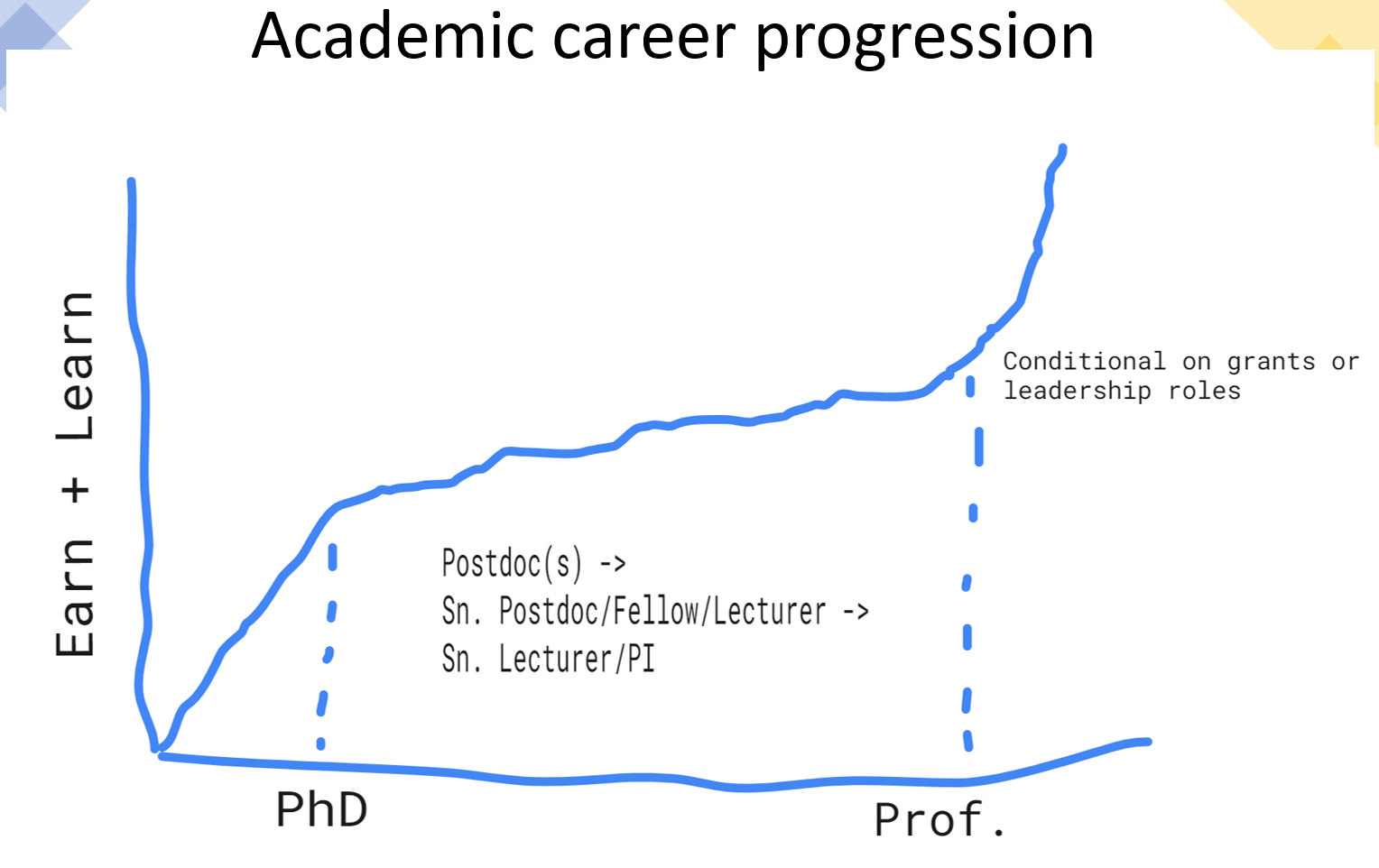
I always judged my ‘value’ at a place by adding how much I was earning and learning there. I was very happy during my PhD and first few years as a postdoc as I was learning a lot (from top scientists, attending conferences, giving talks, being provided the time to explore) and had a good salary/scholarship for a person who is single and <30 years of age. Unfortunately, for me, the increase in this regard was just not steep enough after this period. This feeling didn’t change much even after I secured a Lecturer post at the Univ. of Manchester – I just could not beg funders and apply for grants every year until I die. At BI, in addition to a very good salary, I’m also learning a lot from the different groups we are interacting with (e.g. wet-lab researchers/CRISPR screens, drug target research in different disease areas such as respiratory, immunology, oncology, and cardio-metabolic diseases) whilst also taking part in ‘cutting-edge’ research. There are also internal funds to explore your own ideas and a separate programme called ‘Research Beyond Borders’, which is dedicated to looking into other diseases which do not fit the main programmes.

To finish, I again re-iterate that it would be wise for a talented postdoc with data science and statistical skills to have a look around while they’re still comfortable in their current post (i.e. still have >12 months contract). If you have experience working with clinical and genetic data, then Pharma and Biotech companies would also be very interested in you.

I hope this post is of help, but feel free to contact me if you have specific questions that are not answered here.


Addendum (23/12/23) Reflecting on my first ~2.5 years at BI’s Human Genetics team:

Still happy. Family’s happy here. South Germany is very good for families: Very safe. My son’s kindergarten is great; Biberach and surrounding area is great. So much to see and learn.

Happy with the research I’m doing, things I’ve learned/learning, and my impact in the drug target development process at BI.

Also check out our preprint on structural variants – a valuable resource, openly shared with the research community (Note: I had encouraged Boris Noyvert to join our team and now we’ve published this preprint together):

Noyvert B, Erzurumluoglu AM, Drichel D, Omland S, Andlauer TFM et al. 2023. Imputation of structural variants using a multi-ancestry long-read sequencing panel enables identification of disease associations: https://www.medrxiv.org/content/10.1101/2023.12.20.23300308v1

Tweetorial:

Read Full Post »

It is not the strongest of the species that survives, nor the most intelligent that survives. It is the one that is most adaptable to change – attributed to Charles Darwin

“How did you get accepted to Cambridge?”

I saw a tweet a while ago which said something along the lines of: “If you’ve been asked the same question three times, you need to write a blog post about it”. I get asked about how I got my current postdoc job at the University of Cambridge all the time. Therefore, I decided to write this document to provide a bit of a backstory as I did many things over the years which – with a bit of luck – contributed to this ‘achievement’.

It is a long document but hopefully it will be worth reading in full for all foreign PhD students, new Postdocs and undergraduates who want an introduction to the world of academia in the UK. I wish I could write it in other languages (for a Turkish version click here) to make it as easy as I can for you, but I strived to use as less jargon as possible. Although there is some UK-specific information in there, the document is mostly filled with general guidance that will be applicable to not just foreign students or those who want to study in the UK, but all PhD students and new Postdocs.

I can only hope that there are no errors and every section is complete and fully understandable but please do contact me for clarifications, suggestions and/or criticism. I thank you in advance!

To make a connection between academia in the UK and the quote attributed to Darwin above, I would say being very clever/intelligent is definitely an advantage in academia but it is not the be-all and end-all. Learning to adapt with the changing landscape (e.g. sought-after skills, priorities of funders and PIs), keeping a good relationship with your colleagues and supervisors, and being able to sell yourself is as, if not more important. Those who pay attention to this side of academia usually make things easier for themselves.

I hope the below document helps you reach the places you want to reach:

Good luck in your career!


I included this tweet here because Ed was one of my lecturers when I was a first year undergraduate student at the University of Leicester (2007)
I was kindly asked to send in a short video for the 2022 Univ. of Leicester Annual Alumni Dinner

Read Full Post »

Many of today’s scientists (incl. myself a lot of the time) have probably lost touch with some of the central tenets of being a scientist – instead titles, number of published papers and grant money brought in becoming more important than the societal impact of their publications and how much they contributed to human knowledge. A shoddy paper published in Nature/Science/Cell (especially if cited/talked about a lot) carries far more weight than a solid paper in a less glamorous journal. An academic who brings in grant money – doesn’t matter if he/she wastes it on shoddy or average research – is far more important (i.e. they will be promoted and bring in further funding easier as they already brought in some before) than one who chooses to concentrate on producing solid research but struggles to bring in money e.g. due to a lack of funding in their specific field or publishing papers in non-glamorous journals due to ‘non-exciting’ results as they didn’t add a spin to their conclusions (click here for other examples). Some of the papers published in prestigious journals in my field would not have been accepted if the senior authors of the same papers were the reviewers – many seem to apply a less stringent criteria to their own papers. The relationship between editors and some senior scientists is also opaque which is ultimately damaging to science. Image source: naturalphilosophy.org

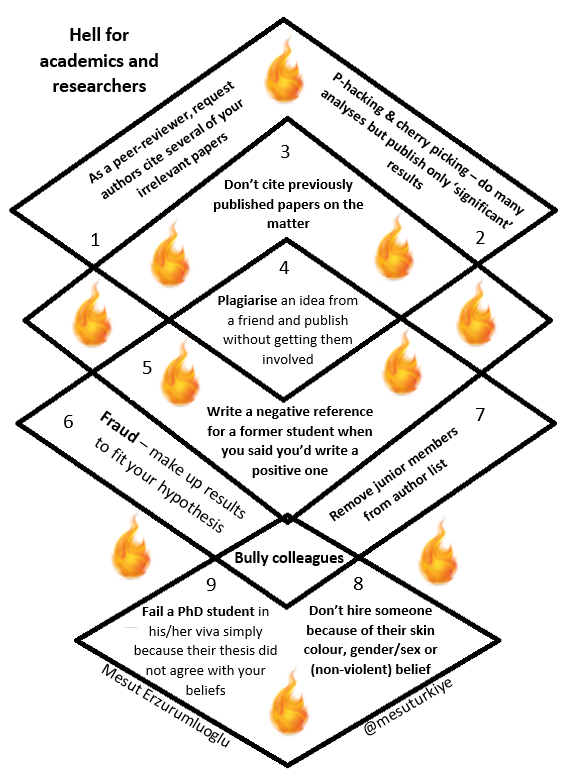
Hell for academics and researchers (NB: The list is loosely ordered and is not an exhaustive one). Of course, inspired by Dante’s Nine levels/layers/circles of Hell

A few months ago, I spent almost a week trying to replicate a published “causal” association which had received >500 citations in the last 5 years. My aim was to provide a better effect estimate and to do this, I used two different datasets, one with similar and another with a larger sample size. However, both of my analyses returned null results (i.e. no effect of exposure on outcome). Positive controls were carried out to make sure the analysis pipeline was working correctly. Ultimately, I moved on to other ‘more interesting’ projects as there was no point spending time writing a paper that was probably going to end up in a ‘not-so-prestigious’ journal and never going to get >500 citations or be weighted heavily when I apply for grants/fellowships.

Consequently, inadvertently I contributed to publication bias on this issue – and no other analyses on the subject matter were published since the original publication, so I am sure others have found similar results and chose not to publish.

State of academia (very generally speaking): Really talented and successful people working like slaves for unimportant academic titles and average salaries. What’s worse is that the job market is so fierce that most are perfectly happy(!) to just get on with their ‘jobs and do what they’ve always been doing (Note: this is my first attempt at drawing using Paint 🙂 )

However, I have changed my mind about publishing null/negative results after encountering Russell, Wittgenstein and others’ long debates on proving ‘negative’ truths/facts (and in a nutshell, how hard it is to prove negatives – which should make it especially important to publish conclusive null findings). These giants of philosophy thought it was an important issue and spent years structuring their ideas but here I am, not seeing my conclusive null results worthy of publication. I (and the others who found similar results) should have at least published a preprint to right a wrong – and this sentiment doesn’t just apply to the scientific literature. I also think academics should spend some time on social media to issue corrections to common misconceptions in the general public.

This also got me thinking about my university education: I was not taught any philosophy other than bioethics during my undergraduate course in biological sciences (specialising in Genetics in the final year). I am now more convinced than ever that ‘relevant’ philosophy (e.g. importance of publishing all results, taking a step back and revisiting what ‘knowledge’ is and how to attain ‘truth’, how to construct an argument1, critical thinking/logical fallacies, what is an academic’s intellectual responsibility?) should be embedded and mandatory in all ‘natural science’ courses. This way, I believe future scientists and journal editors would appreciate the importance of publishing negative/null results more and allow well-done experiments to be published in ‘prestigious’ journals more. This way, hopefully, less published research findings are going to be false2.

References/Further reading:

  1. Think Again I: How to Understand Arguments (Coursera MOOC)
  2. Ioannidis JPA. Why Most Published Research Findings Are False. PLoS Med. 2(8): e124 (2015)
  3. How Life Sciences Actually Work: Findings of a Year-Long Investigation (Blog post)
  4. An interesting Quora discussion: Why do some intelligent people lose all interest in academia?
  5. Calculating the ‘worth’ of an academic (Blog post)
A gross generalisation but unfortunately there is some truth behind this table – and it’s not even a comprehensive list (e.g. gatekeepers, cherry picking of results). Incentives need to change asap – and more idealists are needed in academic circles!

*the title comes from the fact that today’s natural scientists would have been called ‘natural philosophers’ back in the day

Read Full Post »

Ne en güçlü, ne de en zeki olanlar hayatta kalır… Hayatta kalanlar değişime en çok adapte olabilenlerdir.” – Charles Darwin’in söylediği iddia edilir


Cambridge Üniversitesi’ne nasıl kabul aldın?

Twitter’da gördüm sanırım: “Aynı soru sana üç defa sorulduysa bir blog yazısı yazma vakti gelmiştir”e benzer bir cümleydi. Ben de “Cambridge Üniversitesi’ne nasıl kabul aldın?” ve benzeri sorularla pek çok defa karşılaştıktan sonra birşeyler karalamaya karar verdim. Leicester Üniversitesi’nde çalışırken bunun onda biri dahi sorulmamıştı 😉

Doktora öğrencilerine, doktorayı yeni bitirenlere ve akademik kariyer düşünen gençlere yönelik uzun bir doküman hazırladım. Az da olsa ingilizce terimler kullandım ama merak eden herkes okuyabilsin diye elimden geldikçe azaltmaya çalıştım (Not: iyi derecede ingilizce bilmeyenlerin iyi üniversitelere girmesi, hasbel-kader girdiyse de oralarda tutunması zor).

Okuyacağınız herşey benim şahsi düşüncelerim ve hiçbirine katılmak zorunda değilsiniz. Eminim yazdıklarımda hatalar ve eksikler olacaktır; bunları da bana bildirirseniz dökümanı hep beraber geliştirmiş oluruz. Katkıda bulunanlara da bir şekilde değineceğim. Şimdiden teşekkürler!

Darwin’e atfedilen yukarıda paylaştığım hakikat dolu sözle bir bağlantı kuracak olursam, evet, bir akademisyen için çok akıllı/zeki olmak bir avantajdır. Ama oyunun kurallarını (örneğin ‘arkadaşlarım/hocalarımla aramı nasıl iyi tutarım?‘, ‘iyi makale nasıl yazılır?‘, ‘nasıl fon getiririm?‘i) öğrenmek ve onlara göre adapte olmak da en az o kadar önemli – özellikle akademide oldugu gibi ‘oyun’un kuralları devamlı degişiyorsa… İşin bu kısımlarına da vakit harcayın.

Aşağıdaki dökümanda “Doktora sürecinde nelere dikkat etmeliyim?”, İngiltere’de akademik kariyer opsiyonları, “CV ve ‘Personal statement’ nasıl hazırlanır?“, ‘mülakat anı, öncesi ve sonrası neler yapmalıyım?‘, tez yazarken dikkat edilecekler, makale yazarken dikkat edilecekler ve prosedür, “Hocanızla ilişkiniz nasıl olmalı?” gibi konularda bilgiler ve tavsiyelerim bulunuyor. Umarım yardımcı olur. İlgileneceğini düşündüğünüz arkadaşlarınıza da yollarsanız sevinirim.

Ek olarak ilgili video ve tweetler:

Manisa Celal Bayar Üniversitesi Biyomühendislik ve Elektronik Mühendisliği lisans öğrencilerine sunum (13 Mayıs 2020)
Brit-Iş TV’den Ergin Balabeyoğlu’na verdiğim kısa roportaj
Rafşan Çelik’le Cambridge Üniversitesinde Akademisyen Olmak ve İngiltere’de Yaşam, Kültür ve Akademik Hayat uzerine (Instagram üzerinden*) söyleşi yaptık (3:38’de başlıyor).


Ingiltere’de üniversiteler – genel kurallara uyma dışında – devletten bağımsızdır. Örneğin hepsi kendi fonunu kendi bulur, yani büyük bir şirket gibi işlerler. Fakat en büyük fon 7 senede bir devletten gelir – üniversitelerin başarı seviyesine göre. Bu da onunla ilgili bir Tweet zinciri
Kıymetli Prof. Hikmet Geçkil Hocamın da bu dokümanı tavsiye ettiğini gördüm ve mutlu oldum. Umarım faydalı olmuştur

Read Full Post »

evolution_of_intellectual_freedom_cham_phdcomics

Source URL: PhD Comics

Figuratively speaking, what is the ‘worth’ of a certain academic? Between two academics, which one has had more positive academic impact than the other? How do you rank academics? And award grants, promotion, tenure etc. to the best* ones?

I’m not going to answer these questions but would like to chip in with some food for thought and suggestions.

Well; one may say: “It’s easy! Just compare their h-index and total no of citations!

This may be an effective way to go about answering the question. Surely someone with an h-index of 30 has had more positive academic impact than someone with let’s say an h-index of 15 – and is the better candidate?

Maybe – that is if all things are equal regarding the way citations and the h-index works i.e. if both academics:

  • are in similar fields – as papers in certain fields receive more citations overall than papers in other fields,
  • are in similar stages in their careers – as comparing an early-career postdoc with an established “Prof.” wouldn’t be fair,
  • have similar numbers of first/equal-first or last author papers – as an academic with many middle-authorships can have excessively inflated h-indexes,
  • have similar number of co-authors – as it may be easier to be listed as a co-author in some fields than others and/or mean that more people will be presenting and citing the paper as their own, and
  • have a similar distribution of citations across the papers – as the h-index ignores highly influential papers and the total citations can be highly influenced by even just one of these (see figure below).

I may have missed other factors, but I think these are the main ones (please add a comment below).

mesut_erzurumluoglu_h-index_academic_2018

Calculating my h-index: Although problematic (discussed here), the h-index has become the standard metric when measuring the academic output of an academic. It is calculated by sorting the publications of an academic from most to least cited, then checking whether he/she has h papers with h citations e.g. if an academic has 10 papers with ≥10 citations but not 11 papers with ≥11 citations then their h-index will be 10. It was proposed as a way to summarise the number of publications that an academic has and their academic impact (via citations) with a single number. The above citation counts were obtained from my Google Scholar page

As of 31st July 2018, I have 14 published papers – including 5 as first/equal-first author – under my belt. I have a total citation count of 316 and an h-index of 6 (225 and 5 respectively, when excluding publications marked with an asterisk in the above figure). It is fair to say that these numbers are above average for a 29-year-old postdoc. But even I’m not content with my h-index – and many established academics are definitely right not to be. I’ll try and explain why: the figure above shows the citation distribution of my 14 publications sorted by the ‘number of times cited’ from the left (highest) to right (lowest). One can easily see that the h-index (red box) captures only a small portion of the general picture (effectively, 6 x 6 i.e. 36 citations) and ignores the peak (>6 on the y-axis) and tail (>6 on the x-axis) of the publication-citation distribution. I have also included the publication year of each paper and added an asterisk (*) against the publications where I haven’t provided much input e.g. I have done almost nothing for the Warren et al (2017) paper but it constitutes almost a third of my total citations (90/316)**. The ‘ignored peak’ contains three highly cited papers to which I have made significant contributions to and the ‘ignored tail’ contains research papers that (i) I am very proud of (e.g. Erzurumluoglu et al, 2015) or (ii) are just published – thus didn’t have the time to accumulate citations. What is entirely missing from this figure are my (i) non-peer-reviewed publications (e.g. reports, articles in general science magazines), (ii) correspondence/letters to editor (e.g. my reply to a Nature News article), (iii) blog posts where I review papers or explain concepts (e.g. journal clubs), (iv) shared code/analysis pipelines, (v) my PhD thesis with potentially important unpublished results, (vi) other things in my CV (e.g. peer-review reports, some blog posts) – which are all academia-related things I am very proud of. I have seen other people’s contributions in relation to these (e.g. Prof. Graham Coop’s blog) and thought that they were more useful than even some published papers in my field. These contributions should be incorporated into ‘academic output’ measures somehow.

It is also clear that “just compare their h-index and total no of citations!” isn’t going to be fair on academics that (i) do a lot of high-quality supervision at different levels (PhD, postdoc, masters, undergrad project – which all require different skill sets and arrangements), (ii) spend extra time to make their lectures inspiring and as educative as possible to undergrad and Masters students, (iii) present at a lot of conferences, (iv) do ‘admin work’ which benefits early-career researchers (e.g. workshops, discussion sessions), (v) do a lot of blogging to explain concepts, review papers, and offer personal views on field generally, (vi) have a lot of social media presence (e.g. to give examples from my field i.e. Genetic Epidemiology, academics such as Eric Topol, Daniel MacArthur, Sek Kathiresan take time out from their busy schedules to discuss, present and debate latest papers in their fields – which I find intellectually stimulating), (vii) give a lot of interviews (TV, online media, print media) to correct misconceptions, (viii) take part in public engagement events (incl. public talks), (ix) organise (inter-disciplinary) workshops, (x) inspire youngsters to become academics working for the benefit of humankind, (xi) publish reliable reports for the public and/or corporations to use, (x) provide pro bono consultation, (xi) take part in expert panels and try very hard to make the right decisions, (xii) engage in pro bono work, (xiii) do their best to change bad habits in the academic circles (e.g. by sharing code, advocating open access publications, standing up to unfair/bad decisions whether it affects them or not), (xiv) extensively peer-review papers, (xv) help everyone who asks for help and/or reply to emails… The list could go on but I think I’ll stop there…

I acknowledge that some of the above may indirectly help increase the h-index and total citations of an individual but I don’t think any of the above are valued as much as they should be per se by universities – and something needs to change. Academics should not be treated like ‘paper machines’ until the REF*** submission period, and then ‘cash cows’ that continually bring grant money until the next REF submission cycle starts. As a result, many academics have made ‘getting their names into as many papers as possible’ their main aim – it is especially easier for senior academics, many with a tonne of middle-authorships for which they have done virtually nothing****. This is not how science and scientists should work and universities are ultimately disrespecting the tax payers’ and donors’ money. Some of the above-mentioned factors are easier to quantify than others but thought should go into acknowledging work other than (i) published papers, (ii) grant money brought in, and maybe (iii) appearing on national TV channels.

Unless an academic publishes a ‘hot paper’ as first or corresponding author – which very few have the chance and/or luck to do – and he/she becomes very famous in their field, their rank is usually dictated by the h-index and/or total citations. In fact, many scientists who have very high h-indexes (e.g. because of many middle-author papers) put this figure at the top of their publication list to prove that they’re top scientists – and unfortunately, they contribute to the problem.

People have proposed that contributions of each author are explicitly stated on each paper but this is going to present a lot of work when analysing the academic output of tens of applicants – especially when the number of publications an individual has increases. Additionally, in papers with tens or even hundreds of authors, general statements such as “this author contributed to data analysis” are going to be assigned to many authors without explicitly stating what they did to be included as a co-author – thus the utility of this proposition could also be less than expected in reality.

It’s not going to solve all the problems, but I humbly propose that a figure such as the one above be provided by Google Scholar and/or similar bibliometric databases (e.g. SCOPUS, CrossRef, Microsoft Academic, Loop) for all academics, where the papers for which the respective academic is not the first author are marked with an asterisk. The asterisks could then be manually removed by the respective academic on publications where he/she has made significant contributions (i.e. equal-first, corresponding author, equal-last author or other prominent role) but wasn’t the first author. Metrics such as the h-index and total citations could then become better measures by giving funders/decision makers the chance to filter accordingly.

Thanks for reading. Please leave your comments below if you do not agree with anything or would like to make a suggestion.

academic_worth_researcher_university_mesut_erzurumluoglu

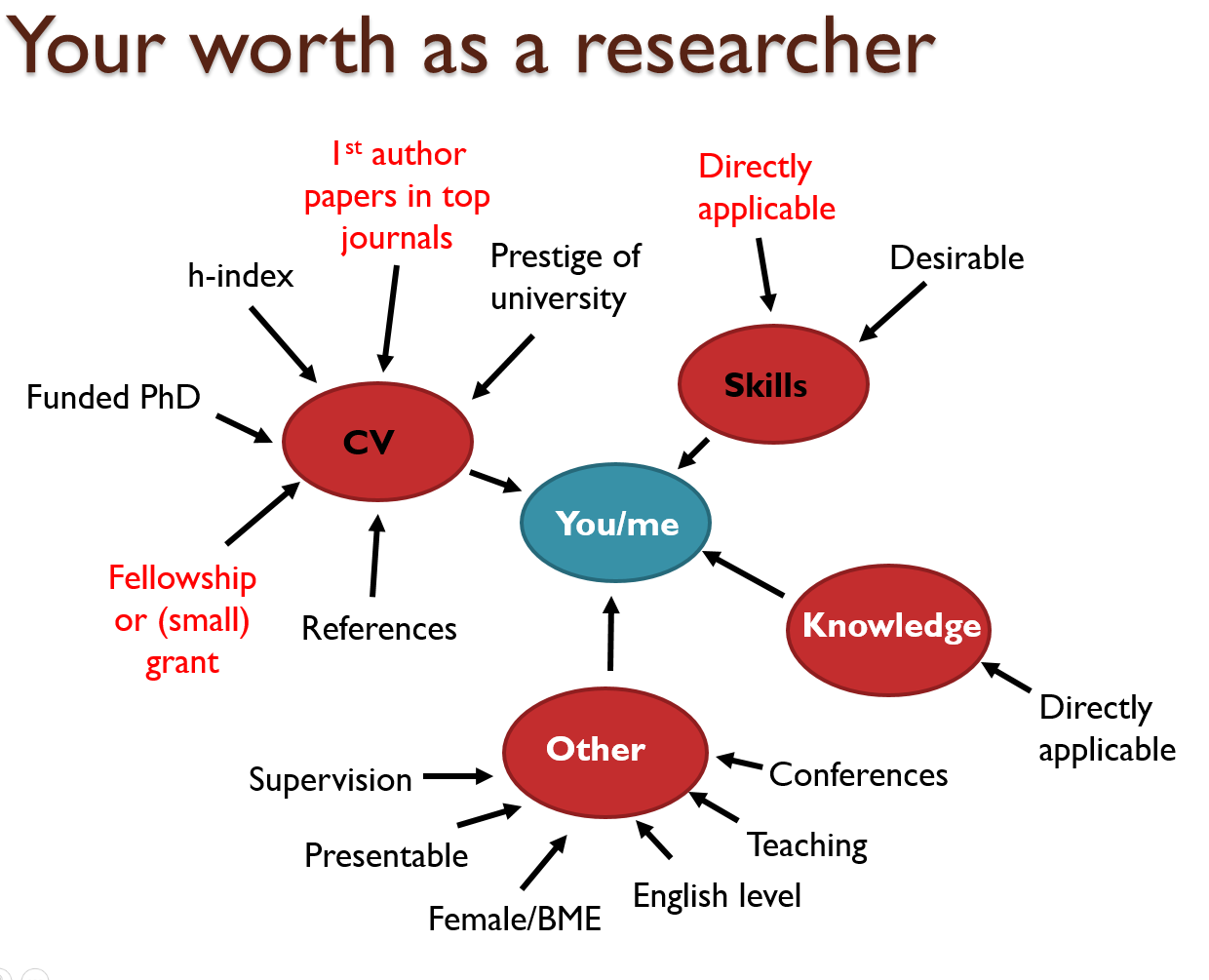
The heuristic that I think people use when calculating the worth of an early career researcher (but generally applies to all levels): ‘CV’ and ‘Skills’ are the two main contributors, with the factors highlighted in red carrying enormous weight in determining whether someone should get the job/fellowship or not. Virtually no one cares about anything that is outside what is written here – as mentioned in the post. Directly applicable: Some technical skill that the funder/Professor thinks is essential for the job; Prestige of university: where you did your PhD and/or undergrad; Funded PhD: whether your PhD was fully funded or not; Female/BME: being female and/or of BME background – this can be an advantage or a disadvantage depending on the regulations/characteristics of the university/panel, as underrepresented groups can be subjected to both positive and negative discrimination. NB: this is a simplified version and there are many factors that affect outcomes such as “who you know” and “being at the right place at the right time“.


Added on 30/10/18: I just came across ‘No, it’s not The Incentives—it’s you‘ by Tal Yarkoni about the common malpractices in academic circles, and I think it’s well worth a read.


*Making sure there’s a gender balance and that academics from BME backgrounds are not excluded from the process – as they’ve usually had to overcome more obstacles to reach the same heights.

**I have been honest about this in my applications and put this publication under “Other Publications” in my CV.

***REF stands for the ‘Research Excellence Framework’, and is the UK’s system for assessing the quality of research in higher education institutions. The last REF cycle finished in 2014 and the next one will finish in 2021 (every 7 years). Universities start planning for this 3-4 years before the submission dates and the ones ranked high in the list will receive tens of millions of pounds from the government. For example, University of Oxford (1st) received ~£150m and University of Bristol (8th) received ~£80m.

****Sometimes it’s not their fault; people add senior authors on their papers to increase their chances of getting them accepted. It’s then human nature that they’re not going to decline authorship. It sounds nice when one’s introduced in a conference etc. as having “published >100 papers with >10,000 citations” – when in reality they’ve not made significant (if any!) contributions to most of them.


PS: I also propose that acknowledgements at the bottom of papers and PhD theses be screened in some way. I’ve had colleagues who’ve helped me out a lot when learning some concepts who then moved on and did not have the chance to be a co-author on my papers. I have acknowledged them in my PhD thesis and would love to see my comments be helpful to these colleagues in some way when they apply for postdoc jobs or fellowships. Some of them did not publish many papers and acknowledgements like these could show that they not only have the ability to be of help (e.g. statistical, computational expertise), but are also easy to work with and want to help their peers.

Read Full Post »

BBC_news_sperm_count

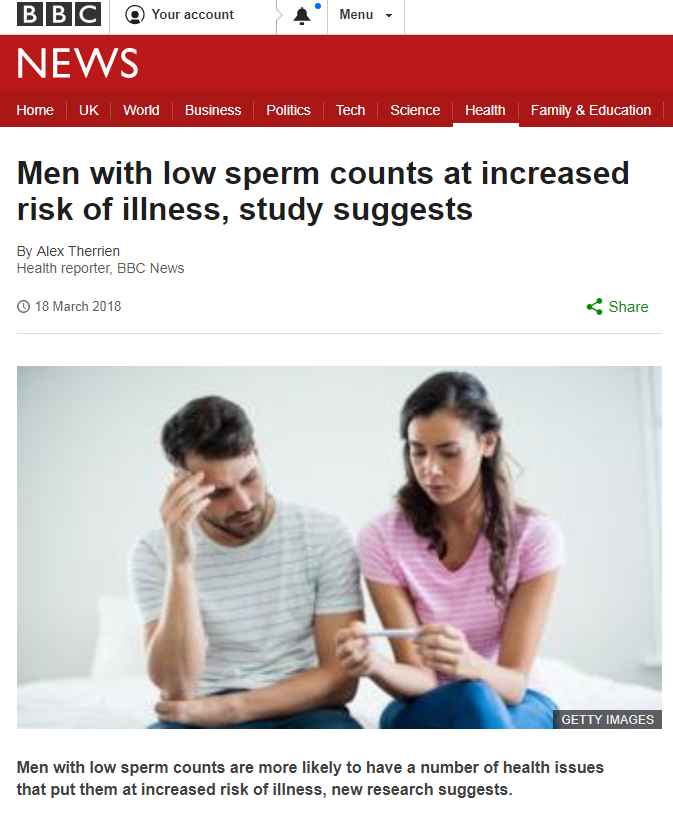
BBC news article published on the 18th March 2018. According to the article, men with low sperm counts are at a higher risk of disease/health problems. However, this is unlikely to be a causal relationship and more likely to be a spurious correlation. May even turn out to be the other way round due to “reverse causality”, a bias we encounter a lot in epidemiological studies. The following sounds more plausible (to me at least!): “Men with disease/health problems are likely to have low sperm counts” (likely cause: men with health problems tended to smoke more in general and this caused low sperm counts in those individuals).

As an enthusiastic genetic epidemiologist (keyword here: epidemiologist), I try to keep in touch with the latest developments in medicine and epidemiology. However, it is impossible to read all articles that come out as there is a lot of epidemiology and/or medicine papers published daily (in fact, too much!). For this reason, instead of reading the original academic papers (excluding papers in my specific field), I try to skim read from reputable news outlets such as the BBC, The Guardian and Medscape (mostly via Twitter). However, health news even in these respectable media outlets are full of wrong and/or oversensationalised titles: they either oversensationalise what the scientist has said or take the word of the scientist they contact – who are not infallible and can sometimes believe in their own hypotheses too much.

It wouldn’t harm us too much if the message of an astrophysics related publication is misinterpreted but we couldn’t say the same with health related news. Many people take these news articles as gospel truth and make lifestyle changes accordingly. Probably the best example for this is the Andrew Wakefield scandal in 1998 – where he claimed that the MMR vaccine caused autism and gastro-intestinal disease but later investigations showed that he had undeclared conflicts of interest and had faked most of the results (click here for a detailed article in the scandal). Many “anti-vaccination” (aka anti-vax) groups used his paper to strengthen their arguments and – although now retracted – the paper’s influence can still be felt today as many people, including my friends, do not allow their children to be vaccinated as they falsely think they might succumb to diseases like autism because of it.

The first thing we’re taught in our epidemiology course is “correlation does not mean causation.” However, a great deal of epidemiology papers published today report correlations (aka associations) without bringing in other lines of evidence to provide evidence for a causal relationship. Some of the “interesting ones” amongst these findings are then picked up by the media and we see a great deal of news articles with titles such as “coffee causes cancer” or “chocolate eaters are more successful in life”. There have been instances when I read the opposite in the same paper a couple of months later (example: wine drinking is protective/harmful for pregnant women). The problem isn’t caused only due to a lack of scientific method training on the media side, but also due to health scientists who are eager to make a name for themselves in the lay media without making sure that they have done everything they could to ensure that the message they’re giving is correct (e.g. triangulating using different methods). As a scientist who analyses a lot of genetic and phenotypic data, it is relatively easier for me to observe that the size of the data that we’re analysing has grown massively in the last 5-10 years. However, in general, we scientists haven’t been able to receive the computational and statistical training required to handle these ‘big data’. Today’s datasets are so massive that if we take the approach of “let’s analyse everything we got!”, we will find a tonne of correlations in our data whether they make sense or not.

To provide a simple example for illustrative purposes: let’s say that amongst the data we have in our hands, we also have each person’s coffee consumption and lung cancer diagnosis data. If we were to do a simple linear regression analysis between the two, we’d most probably find a positive correlation (i.e. increased coffee consumption means increased risk of lung cancer). 10 more scientists will identify the same correlation if they also get their hands on the same dataset; 3 of them will believe that the correlation is worthy of publication and submit a manuscript to a scientific journal; and one (other two are rejected) will make it past the “peer review” stage of the journal – and this will probably be picked up by a newspaper. Result: “coffee drinking causes lung cancer!”

However, there’s no causal relationship between coffee consumption and lung cancer (not that I know of anyway :D). The reason we find a positive correlation is because there is a third (confounding) factor that is associated with both of them: smoking. Since coffee drinkers smoke more in general and smoking causes lung cancer, if we do not control for smoking in our statistical model, we will find a correlation between coffee drinking and lung cancer. Unfortunately, it is not very easy to eliminate such spurious correlations, therefore health scientists must make sure they use several different methods to support their claims – and not try to publish everything they find (see “publish or perish” for an unfortunate pressure to publish more in scientific circles).

cikolata_ve_nobel_odulu

A figure showing the incredible correlation between countries’ annual per capita chocolate consumption and the number of Nobel laureates per 10 million population. Should we then give out chocolate in schools to ensure that the UK wins more Nobel prizes? However, this is likely not a causal relationship as it makes more sense that there is a (confounding) factor that is related to both of them: (most likely) GDP per capita at purchasing power parity. To view even quirkier correlations, I’d recommend this website (by Tyler Vigen). Image source: http://www.nejm.org/doi/full/10.1056/NEJMon1211064.

As a general rule, I keep repeating to friends: the more ‘interesting’ a ‘discovery’ sounds, the more likely it is to be false.

Hard to explain why I think like this but I’ll try: for a result to sound ‘interesting’ to me, it should be an unexpected finding as a result of a radical idea. There are just so many brilliant scientists today that finding unexpected things is becoming less and less likely – as almost every conceivable idea arises and is being tested in several groups around the world, especially in well researched areas such as cancer research. For this reason, the idea of a ‘discovery’ has changed from the days of Newtons and Einsteins. Today, ‘big discoveries’ (e.g. Mendel’s pea experimets, Einstein’s general relativity, Newton’s law of motion) have given way to incremental discoveries, which can be as valuable. So with each (well-designed) study, we’re getting closer and closer to cures/therapies or to a full understanding of underlying biology of diseases. There are still big discoveries made (e.g. CRISPR-Cas9 gene editing technique), but if they weren’t discovered by that respective group, they probably would have been discovered within a short space of time by another group as the discoverers built their research on a lot of other previously published papers. Before, elite scientists such as Newton and Einstein were generations ahead of their time and did most things on their own, but today, even the top scientists are probably not too ahead of a good postdoc as most science literature is out there for all to read in a timely manner (and more democratic compared to the not-so-distant past) and is advancing so fast that everyone is left behind – and we’re all dependent on each other to make discoveries. The days of lone wolves is virtually over as they will get left behind those who work in groups.

To conclude, without carefully reading the scientific paper that the newspaper article is referring to – hopefully they’ve included a link/citation at the bottom of the page! – or seeking what an impartial epidemiologist is saying about it, it’d be wise to take any health-related finding we read in newspapers with a pinch of salt as there are many things that can go wrong when looking for causal relationships – even scientists struggle to make the distinction between correlations and causal relationships.

power_posing

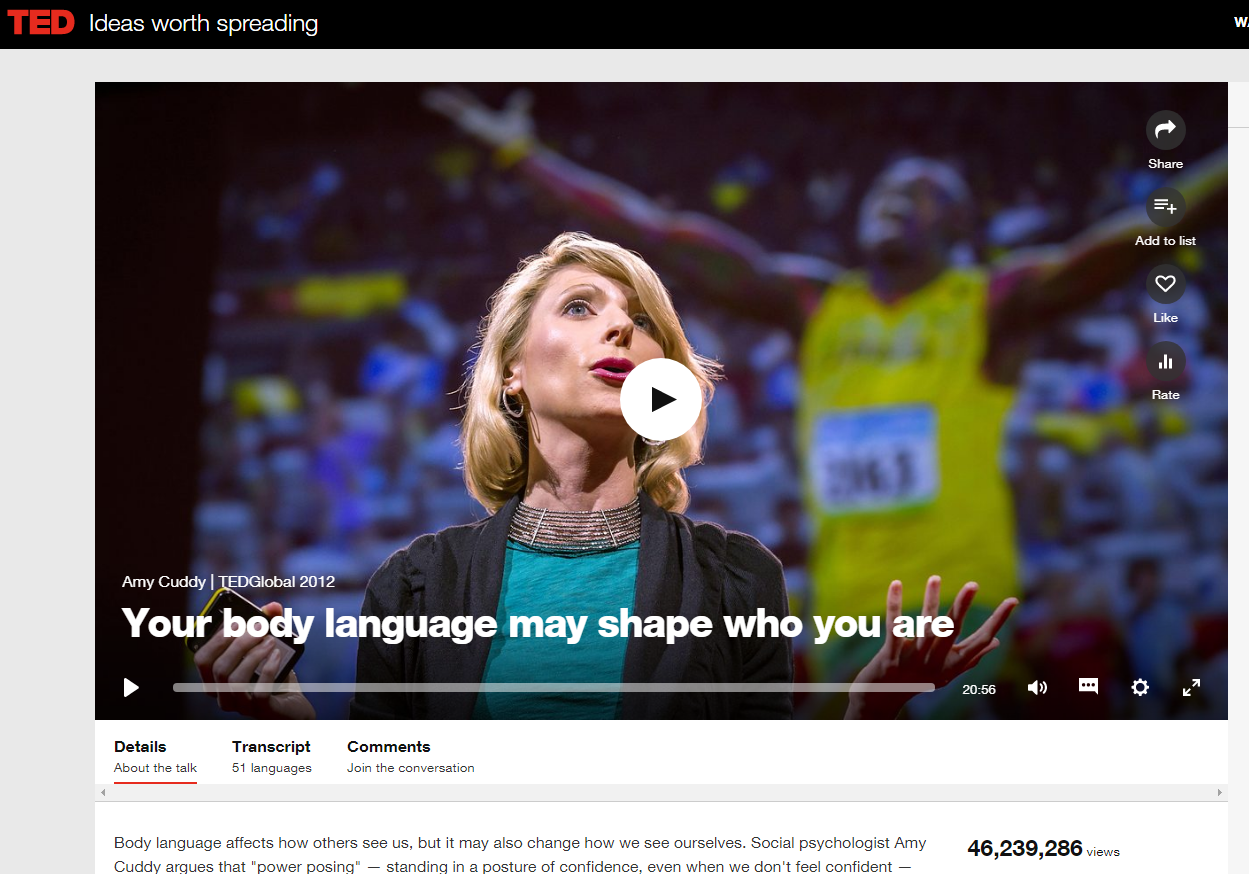
Amy Cuddy’s very famous ‘Power posing’ talk, which was the most watched video on the TED website for some time. In short, she states that if you give powerful/dominant looking poses, this will induce hormonal changes which will make you confident and relieve stress. However, subsequent studies showed that her ‘finding’ could not be replicated and she that did not analyse her data in the manner expected of a scientist. If a respectable scientist had found such a result, they would have tried to replicate their results; at least would have followed it up with studies which bring other lines of concrete evidence. What does she do? Write a book about it by bringing in anecdotal evidence at best and give a TED talk as if it’s all proven – as becoming famous (by any means necessary) is the ultimate aim for many people; and many academics are no different. Details can be found here. TED talk URL: https://www.ted.com/talks/amy_cuddy_your_body_language_shapes_who_you_are

PS: For readers interested in reading a bit more, I’d like to add a few more sentences. We should apply the below four criteria – as much as we can – to any health news that we read:

(i) Is it evidence based? (e.g. supported by a clinical trial, different experiments) – homeopathy is a bad example in this regard as they’re not supported by clinical trials, hence the name “alternative medicine” (not saying they’re all ineffective and further research is always required but most are very likely to be);

(ii) Does it make sense epidemiologically? (e.g. the example mentioned above i.e. the correlation observed between coffee consumption and lung cancer due to smoking);

(iii) Does it make sense biologically? (e.g. if gene “X” causes eye cancer but the gene is only expressed in the pancreatic cells, then we’ve most probably found the wrong gene)

(iv) Does it make sense statistically? (e.g. was the correct data quality control protocol and statistical method used? See figure below for a data quality problem and how it can cause a spurious correlation in a simple linear regression analysis)

graph-3

Wrong use of a statistical (linear regression) model. If we were to ignore the outlier data point at the top right of the plot, it becomes easy to see that there is no correlation between the two variables on the X and Y axes. However, since this outlier data point has been left in and a linear regression model has been used, the model identifies a positive correlation between the two variables – we would not have seen that this was a spurious correlation had we not visualised the data.

PPS: I’d recommend reading “Bad Science” by Ben Goldacre and/or “How to Read a Paper – The basics of evidence based medicine” by Trisha Greenhalgh – or if you’d like to read a much better article on this subject with a bit more technical jargon, have a look this highly influential paper by Prof. John Ioannidis: Why Most Published Research Findings Are False.

References:

Wakefield et al, 1998. Ileal-lymphoid-nodular hyperplasia, non-specific colitis, and pervasive developmental disorder in children. The Lancet. URL: http://www.thelancet.com/journals/lancet/article/PIIS0140-6736%2897%2911096-0/abstract

Editorial, 2011. Wakefield’s article linking MMR vaccine and autism was fraudulent. BMJ. URL: http://www.bmj.com/content/342/bmj.c7452

Read Full Post »

PDF versiyonu için tıklayın:

Önemli not (13/04/20): Evrim teorisine inanan, daha doğrusu, çok kuvvetli delillerin olduğunu gören/ögrenen/bilen, bir müslüman (ilgilenenler için ‘Neden ve nasıl bir müslümanım?’ bölümü en altta) ve bilim insanı olarak bu yazıyı Şubat 2018’de (bugün yazsam biraz farklı bir dil kullanırdım ama) evrime ve evrim teorisine inanmayan müslümanlar için paylaştım. Fazla genetik terim kullanmadan, herşeyi kendimce basitleştirdim (önerilere açığım)… Teknik bilgi ve detay isteyenler en yeni evrimsel biyoloji kitap ve makalelerini okumalı. İngilizce bilenler zaten benim yazımdan ziyade direkt Richard Dawkins’in ‘The Greatest Show on Earth: The Evidence for Evolution’ kitabını okusun.

Baştan sona (dipnotlar da dahil) okumayanlar lütfen cevap yazmasın çünkü özellikle giriş kısmı fazla basitleştirildiğinden yanlış anlaşılabilir.


02_EVOW_END
Tree of life’ (Hayat ağacı) – karşılaştırmalı DNA analizi yapılarak oluşturulmuş bir figür. İnsanlar (Homo sapiens) ‘Opisthokonts/Animals’ grubunun içinde, çünkü genomumuz ve hücrelerimiz en çok onlarınkine benziyor. Hatta bize genetik olarak en yakın türlerden biri olan şempanzelerle genetik dizilişlerimiz çok yüksek oranda benzerlik gösteriyor ve bizdeki genlerin >%90′ının aşağı-yukarı aynısı onlarda da var. Ayrıca virüsten bakteriye, bitkilerden insana kadar her canlının aynı genetik malzeme/aparat/kod olan DNA’yı kullanıyor olması hala kafamın almadığı birşey ve bu – tek bir Yaratıcının olduğuna inancımı güçlendirmekle beraber – her canlının evrimsel bir ‘aile’nin bir bireyi olduğunu da kanıtlıyor (Image source URL: evolution-textbook.org)

Nerede okudum hatırlamıyorum fakat “bir soru sana üç kez sorulduysa artık blog yazısı yazma vakti gelmiştir” gibi birşey okumuştum birkaç ay önce. Hoşuma gitmişti ve “ben de zamanım oldukça böyle yapmaya çalışacağım” diye kendi kendime karar vermiştim.

Genetik mezunu olduğum ve şimdiki araştırmalarımda da insan genetiğiyle* ilgilendiğim için neredeyse her tanıştığım (özellikle islami camiadan) insan bana evrimden bahsediyor ve fikrimi soruyor. Belki de 30-40 defa aşağı-yukarı aynı şeyleri söyledim son birkaç sene içinde. Birçoğu cevabımı beğenmeyip bir daha yanıma yaklaşmadı ama olsun 😊 Önemli değil. Insanlara kendimi beğendirmeye çalışmayı yıllar önce bıraktım. Insanların da biraz başka fikirlere açık olması, “benim bildiklerim de belki yanlış olabilir” diyebilmesi lazım ama neyse; konumuz bu değil…

Evrim teorisi ve İslam dini/Tanrı inancı konusunda söylenecek çok şey olsa da kısaca fikirlerimi buraya dökmek istiyorum. Önce bilim dunyasındaki gözlemlerimi sıralayacağım, sonra da kendi fikirlerimi ekleyeceğim:

Gözlemlerime göre Avrupa’da biyoloji ve fizikle ilgilenen bilim insanları arasında evrim teorisine hiç inanmayanların sayısı belki de binde bir. Bunların hemen hemen hepsi evrim teorisini çok mantıklı buluyor ve (benim gibi) aralarında Tanrı’ya inananları dahi Tanrı’nın ilk canlıyı yarattıktan sonra diğer milyonlarca türü evrim mekanizmasını kullanarak yaratmış olabileceğine inanıyorlar. Evrim teorisini mantıklı bulmalarının sebebi ise “İslami” kesimden birçok kez duyduğum “vicdanlarında doğruyu biliyorlar ama nefislerine yenilmişler” gibi saçma-sapan bir sebepten dolayı değil, farklı metotlarla elde edilmiş tonlarca datayı analiz ettikten sonra (bir ’empiricist’ olarak) teorinin doğruluğuna gerçekten inanmalarıdır.

Bilimsel bir teoriyi yıkmanın yolları belli – yine bilimle. Ve korkmayın sizden, benden daha akıllı insanlar da bu teoriyi yıkmak ya da geliştirmek adına her tür soruyu sordular ve deneyi yaptılar. Fakat Evrim teorisi bu bilimsel ‘saldırılardan’ daha da güçlü çıktı.


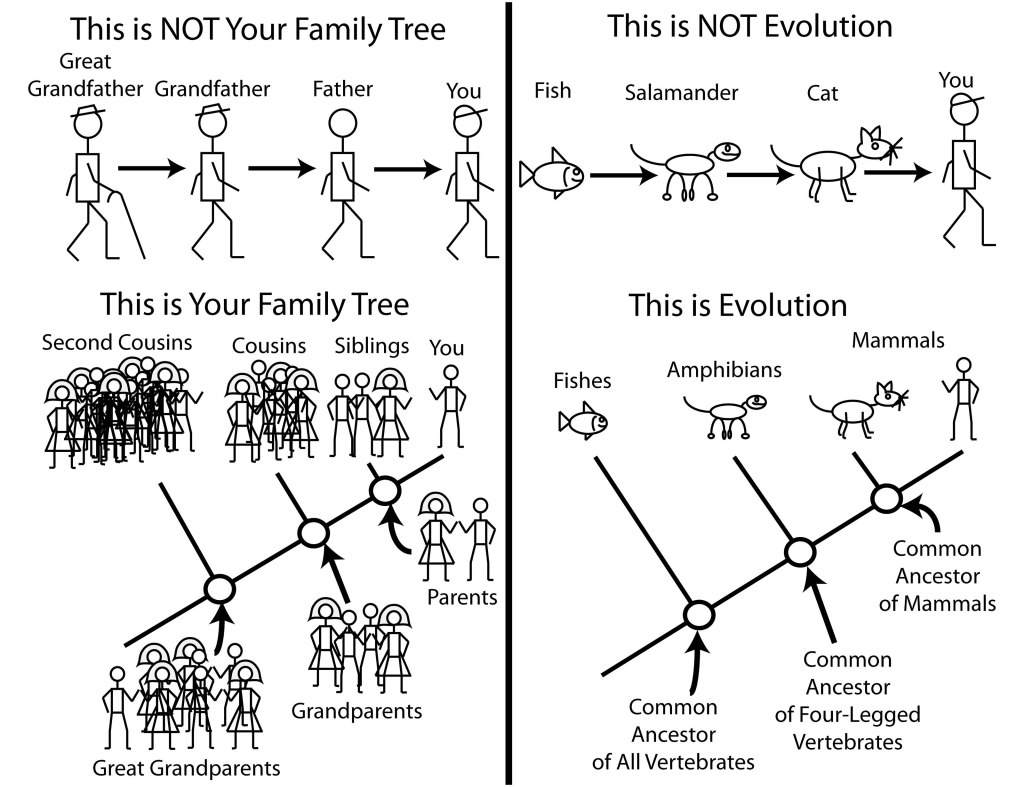
Basit bir şekilde ‘Evrim’ nedir (sağ-alttaki)? Ne değildir (sağüstteki)? Bütün canlılarla – maymunlarla da – akrabayız ama maymundan gelmedik! Figurde de görüldüğü gibi evrim teorisine göre ortak bir atamız vardı (Source: matthewbonnan.wordpress.com).
(Not: ‘Harun Yahya’ grubunun ‘Atlas of Creation/Yaratılış atlası’ adlı bir kitabı vardı ve daha 20’nci sayfada fecaat bir evrimsel ‘ara form’ tanımı vardı orada – tabi yanlış olduğunu genetik okuduktan sonra anladım: evrim varsa, sözde bir denizyıldızı başka bir balık türüne dönüşmeliydi. Ondan esinlenerek ekledim bu figürü çünkü gençken benim de tüm bilim insanlarına karşı güvenimi sarstı bu tarz kitaplar)

Bu konudaki fikirlerime gelince; öncelikle bilim öğrendikçe bize çocukluktan dayatılan (8., 9. ve 10. yüzyıldan kalma ortodoks Sünni) din anlayışının hayat ve hakikatin karşısında bayağı basit kaldığını daha net görüyor insan. Basit bir örnek olarak: itikadi olarak Ehl-i Sünnet mezheplerden biri sayılan Eşariliğin ilk ortaya çıktığı 10. yüzyıl Irak’ına gelecekten bir (müslüman) bilim insanı gelip “Hocam aslında doğmadan çocuğun cinsiyetini öğrenebiliriz, çünkü Y-kromozomu belirliyor bir çocuğun erkek ya da kız olacağını (Allah’ın yarattığı bir mekanizma bu!)” dese ve buna karşılık “sus kafir! sadece Allah bilir ve belirler herşeyi!” cevabı verilse (ve sonra da “itikadi bozuk!” ya da “fitne yayıyor!” diye taşlansa) herhalde şaşırmayız birçoğumuz. Başka (basit ve yukarıdakinden farklı) bir örnek de ‘dünyanın ve içindekilerinin sadece bizim için yaratılmış olması’. ‘Dünya’ (biyolojik manada) kesinlikle sadece ‘bizim için’ yaratılmamış, biz dünyaya adapte olmuşuz: oksijenin az olduğu dönemde dünyada insan yoktu mesela (sonradan ortaya çıktık); ormanda iki gece yalnız kalsak bizi parçalayacak veya zehirleyecek hayvan ve böcek dolu etraf – bakteri/virus/mantar türlerini saymaya bile gerek yok; kulaklarımız bile ses dalgalarını toplayabilmek için çanak anten şeklinde; örnekleri uzatmaya gerek yok… Demek istediğim, o dönemlerde (mezhep imamları gibi) ameli ve itikadi mezhepleri/sistemleri ortaya atan/geliştiren insanlar çok değerli olsalar da bugün artık ‘mızrak çuvala sığmaz oldu’. Bilimin bulduğu-bulacağı şeylere gözümüzü kapatarak bir yere varamayız – bu mantık nihai olarak Allah’ı ve sünnetini daha iyi anlamamıza engel olacaktır.

Evrim teorisi de (ortodoks Sünni) din anlayışımızı temelden sarsan buluşlardan birisi. Bilmeyenler için biraz açıklamaya çalışacağım bu blog yazımda: öncelikle “mikro” evrimin (tırnak içerisinde yazıyorum çünkü ‘mikro/makro’ diye bir ayrım yapılmıyor bilim çevrelerinde – ama insanlar böyle ikiye ayırınca daha iyi anlıyorlar) gözle dahi görülebilen bir olgu olduğunu söyleyerek başlamak istiyorum. Görsek de görmesek de (görmek istemesek de) her tür genetik olarak evrilir ve nihai olarak yaşadığı ortama adapte olur – adapte olmak zorunda yoksa tür zamanla yok olur. Basit bir örnek olarak insanlarda cilt rengi kullanılabilir: Siyahi insanlar nasıl yaşadıkları ortamlara (Afrika’nın güneşine) adapte olmuşlarsa, beyaz insanlar da kendi (az güneşli) ortamlarına adapte olmuşlardır. Bu basit şekliyle evrimdir. Örnek olsun diye: ilk atamız (bizim inancımıza göre Hz. Adem**) belki de siyahiydi. Fakat zamanla (belki binlerce sene sonra) soyundan gelen insanların genlerinde doğuştan cilt renklerini değiştiren mütasyonlar oluştu ve on binlerce yıllık zamandan sonra bembeyaz, simsiyah ve arası tonlarda insanlar ortaya çıkıverdi dünyanın dört bir yanında (detay). Fakat bu tarz evrim illa başka türlere yol açacak anlamına gelmez. Bu örnekte olduğu gibi siyahisi de, beyazı da (ve arası tonlardakiler de) insan. Başka bir örnek olarak geçen senenin grip aşısının bu sene işe yaramamasının sebebi de ‘mıkro’ evrim (mekanizma: Antigenic drift).

İlk Darwin’in bilimsel bir çerçeveye oturttuğu, sonraki 150 yılda daha da geliştirilen ve güçlenen ‘Evrim teorisi’ ise bu ve buna benzer gözlemleri kullanıp işi birkaç adım öteye taşıyor (“mikro” evrimden “makro” evrime). Çok basitleştirerek (avamca; ‘doğal seleksiyon’, ‘mütasyon’, ‘genetik kayma’, ‘gen akışı’ gibi teknik terimlere girmeden) söylersem, diyorki “nispeten böyle kısa zaman dilimlerinde (binlerce senede) bile evrim kendisini gösterebiliyorsa, milyonlarca (hatta milyarlarca) senede başka türlerin ortaya çıkmasına da sebep olabilir. Öyleyse ilk yaşam formlarının ortaya çıktığı ~3.5 milyar sene öncesinden başlayıp bugünlere doğru gelen hızlandırılmış bir film izleyebilsek, şu anda gözlemlediğimiz her canlı türünün o (bakteri gibi tek hücreli) tek atadan evrimleşerek meydana geldigini görecegiz.” Bu hipotezi desteklemek için sadece bir örnek verecek olursam: Bir kara parçası olarak ~88 milyon sene önce Hindistan altkıtasından fiziki olarak ayrılan Madagaskar adasında bulunan on binden fazla bitki türünün %90‘ından fazlasının dünyanın başka hiçbir yerinde bulunmamasının sebebi (“makro”) evrimdir – yani uzun zaman (milyonlarca yıl) boyunca genetik karışım olmadığı için Madagaskar’a adapte olan bambaşka türler oluşmuş.

Şimdi gördügümüz ya da çoktan yok olmuş milyonlarca tür arasındaki ilişkilerin tartışmaya açık spesifik tarafları olsa da – ki elinize düzgün bir evrimsel biyoloji (evolutionary biology) kitabı/makalesi alsanız bunları sıralarlar – bilimsel bir şekilde evrim teorisine toptan karşı çıkmak imkansız hale gelmiştir. Hatta bir adım öteye gidersem, evrim teorisine artık hakikat gözüyle bakan bilim insanı sayısı böyle bakmayandan kat kat daha fazla (“aslında simülasyonda yaşıyoruz” vs. diyenleri de katıyorum bu ikinci gruba). Batıda üst düzey bilim insanlarıyla hemdem olmamışlar için yazıyorum: Bu insanların çoğu inanılmaz akıllı ve açık görüşlü insanlar – hiçbiri laf olsun diye ‘evrimci’ olmuyor. Yazdıkları makaleleri anlamaya kalksak çoğumuzun ilk paragrafta başı ağrır. Fakat genellersem “Orta Doğulular” (ya da müslümanlar) olarak komplo teorilerini çok seviyoruz ve çok kaliteli insanları dahi karalamayı ve aşağı çekmeyi becerebiliyoruz. İnternette bir sürü komplo teorisi yayan sitelerde görebileceğiniz gibi “aslında Tanrı’nın var olduğunu biliyorlar ama ruhlarını Şeytan’a satmışlar; ondan evrim teorisini insanlara pompalıyorlar” tarzı palavralara inanan çok maalesef.

Bilim insanları ellerindeki bulgulara göre evrim teorisine inanıyorlar ve bu teoriyi bir “bilimsel model” olarak kullanıyorlar. Ayrıca Darwin’in 1859’da ilk defa ortaya attığı ‘Evrim teorisi’ de zamanla tabir-i caizse ‘evrilmiştir’ ve bugüne kadar yapılan genetik, paleontolojik, biyokimyasal çalışmalarla bambaşka bir hal almıştır. Yani ‘Harun Yahya’ ve benzeri sözdebilimci/bilim düşmanı grupların sık yaptıgı gibi “Darwin yerle bir edildi!” deyip bunu “evrim teorisi yerle bir edildi!” anlamına getirenlere kanmayın. İngilizler atalarına büyük saygı gösterirler ve Darwin’in ~150 sene önce söylediği birçok şeyin şimdi yanlış olduğu bilinse de, müthiş bir bilim adamı ve biyolojinin her alanına katkısı çok büyük olduğundan, sonraki bilim insanları saygılarından birçok önemli buluşu hala Darwin’e atfeder. Bu yüzden evrimsel genetik alanındaki gelişmeleri fazla takip edemeyen birisine de evrim teorisi sanki hala Darwin’in söylediği versiyonuyla kalmış gibi görünebilir. Evrim teorisi her zamankinden daha güçlü ve neredeyse yıkılmaz (bilimsel) surlar arkasında. Evrim teorisinin yanlış çıkması bilim tarihinin açık ara farkla en büyük şoku olur – bunun için binlerce makalenin yalan/yanlış cıkması gerekir ki böyle birşey imkansız, çünkü bu araştırmaları yapan sadece bir insan ya da grup degil; onlarca farklı ülkeden, yüzlerce farklı alandan (genetik, paleontoloji, veri bilimi, biyokimya) uzman yayınlıyor bu makaleleri.


Evrimi tam anlamayanların en büyük hatalarından biri de türlerin devamlı daha da kompleksleşmesi ve “mükemmelleşmesi” gerektigidir. Böyle birşey yok. Sadece bir örnek olarak Pandalarla ilgili bu (ingilizce) videoyu izleyin. Sadece Panda bile bizim “mükemmellik” anlayışımızla Allah’ın “mükemmellik” anlayışının çok farklı oldugunu gösteriyor. Panda da farklı bir “sanat” ama düz bir insan olarak baktıgımızda (haşa!) hataları çok: tüm gün bambu yiyor ama doğru düzgün sindiremiyor bile. Bu yüzden tüm gün yemek yemek ve kaka yapmak zorunda. Fazla enerjisi olmadığı için de yemek yemenin dışında günlerini uykuda geçiriyorlar.

Ben de yaklaşık on senedir genetik alanındayım ve genetikle ilgili okuduğum akademik makale/kitap sayısı bini geçmiştir. 18 yaşında, Türk insanının birçoğu gibi, evrime kesinlikle inanmayan birisi olarak çıktığım bu yolda, şimdi otuzuna dayanmış ama evrim teorisinin (çok çok yüksek ihtimalle: %99.999…) doğru olduğuna inanan birisi olarak devam ediyorum. Bunları söylerken de beş vakit namazını kılan ve Allah’ın varlığına tüm kalbiyle inanan birisi olarak söylüyorum. Bu konuda degiştigimi de söylemekten hiç gocunmuyorum. Banal olacak ama insan devamlı öğrenmeli ve inançlarını yeni bilgiler doğrultusunda sorgulamalı. Ama insanların çoğu “benim inançlarım doğru çıkmalı!” gözlügüyle bakıyor olaylara ve yanlış olma ihtimalini dahi düşünmek istemiyor – çünkü “bugüne kadar bildiklerim (büyük ihtimalle) yanlışmış” deme cesareti çok az insanda var. Benim öyle bir derdim yok; olmadı.

Evrim teorisi konusunda neden böyle düşündüğümün sebeplerini de kısaca sayarsam: Birincisi, Allah bizi (bilimle, fosillerle vs.) kandırmaya çalışmaz. Ikincisi, ne Kuran’da ne de hadiste, ilk insanların (Hz. Adem ve Havva’nın) yaratılışıyla ilgili mahiyetini tam olarak bilmediğimiz detaylar bulunsa da, insandan önceki canlılarla ilgili neredeyse hiçbir şey yok. Popülasyon genetiği alanındaki araştırmalara göre (modern) insanlar son 150-200 bin senedir bu dünyadalar. İlk canlıların ~3.5 milyar sene önce ortaya çıktığı göz önünde bulundurulursa, insanların dünyada bulunma süreleri bazı türlere nispeten çok kısadır. Eskiden olup da şimdi aramızda bulunmayan bir sürü canlının fosili bulundu (dinazorlar, trilobitler, Neandertallar gibi) – ve eldeki milyonlarca fosile bakıldığında, en geçmiş zamandan şimdiye doğru bir film şeridi gibi canlıları izleyebilsek, ilk canlıların gittikçe daha türlü hale geldiğini ve çogunun kompleksleştiklerini göreceğiz***. Din konusunda uzman değilim fakat bununla ilgili de hiçbir ayet veya hadise rastlamadım (yani “Allah milyarlarca sene önce tek hücreli canlıları yarattı; sonra şunları; sonra da dinazorları…” gibi. Bilen varsa yazsın lütfen). Bütün bunları ve evrim teorisini destekleyen bulguları**** birleştirince Allah’ın bildiğimiz-bilmediğimiz tüm canlı türlerini evrimi kullanarak yaratmış olduğuna inananlardanım.

Benim bir bilim insanı olarak amacım hakikati araştırmaktır – her insanın da böyle olması lazım ama çoğumuz bir şeye inandık mı hakikate dahi gözümüzü kapatıyoruz. Bilime gözünü kapatan, Allah’ın en önemli eserlerinden biri olan ‘kainat kitabı’na da gözünü kapatmıştır. Bilim insanlarının yaptığı gibi sorgulamadan, araştırmadan, diğer uzmanların sordukları sorular üzerine samimane kafa yormadan “benim dediğim doğru!” diyen her insan tam anlamıyla zırcahildir, kibir abidesidir – ve kibir Allah’ın en sevmediği hasletlerden biridir. Allah (kibirsiz) sorgulayan insanları sever; insan sadece sorgulayarak ‘tahkiki iman’a ulaşır.

Ben öğrendiklerim ışığında artık şu noktadayım: Allah tüm türleri (species) evrimle yaratmışsa da şaşırmam; (çok gizemli bir şekilde) direkt yaratmışsa da. Ama (“eviren”in O olduğunu varsayarsak) birinci senaryonun ikincisine nazaran çok daha güzel; akla ve Sünnetullah’a da daha uygun olduğu kanaatindeyim*****. Çünkü ~14 milyar sene önce kainat yaratılıp, bundan ~10 milyar sene sonra dünyadaki ilk canlıya hayat “üflendikten” ve (DNA, metabolizma, algılama gibi) gerekli biyolojik mekanizmalar verildikten sonra evrimle herşey yine Allah’ın akıl sır erdiremediğimiz yüce planı ve koyduğu kurallar içinde/sebep-sonuç dairesinde işlemeye devam ediyor.


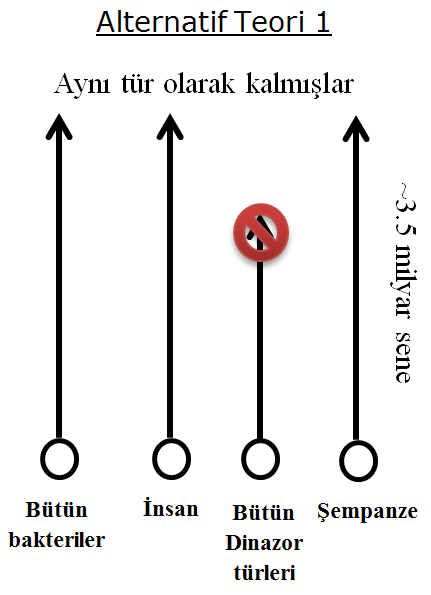
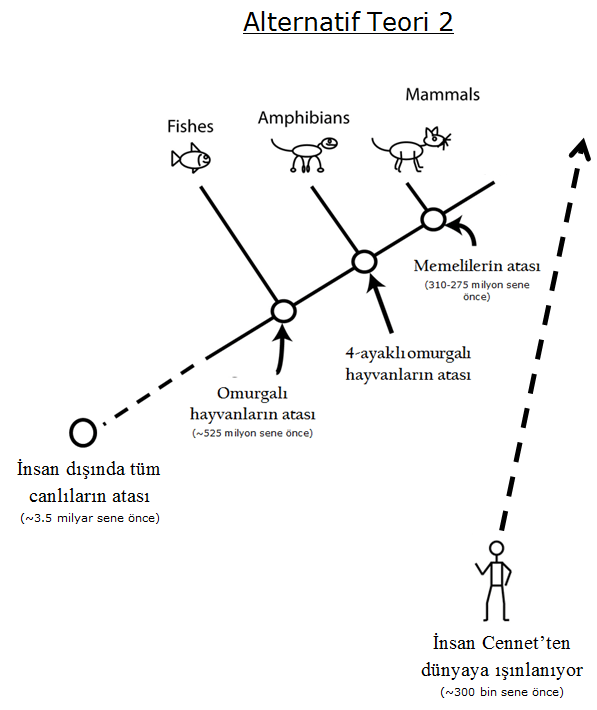
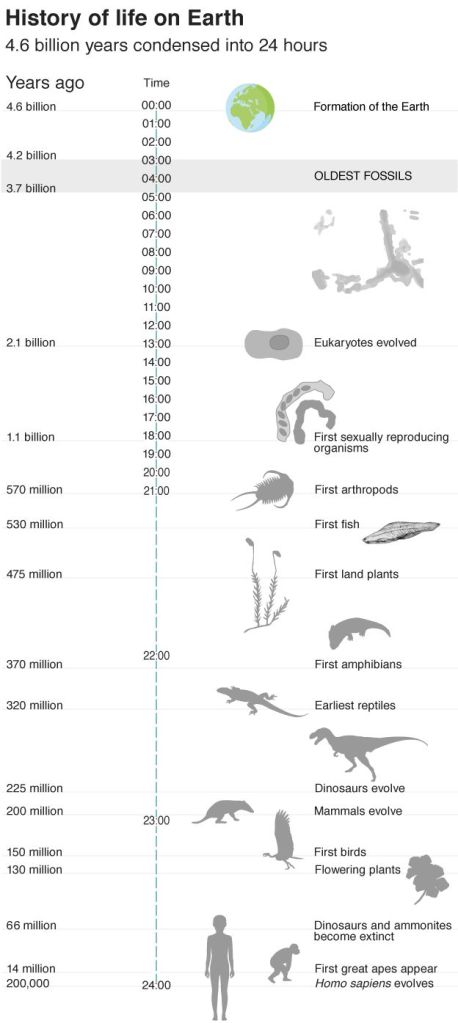
Evrim teorisine inanmıyorsanız alternatif teorinizin ne olduğunu düşünmeniz lazım. Bana göre en fazla iki alternatif teoriniz olabilir: Alternatif teori 1: Tüm türler dünyanın yaşamaya elverişli hale gelmesinden, yani ~3.5 milyar yıldan beri varlar ve aynı kalmışlar. Örneğin şempanzeler, tüm dinazor türleri, insan, tüm bakteri turleri, tüm bitki türleri vs. hep vardı ve aynı kaldılar. Fakat bu ‘teori’yi yapılan araştırmalar ve bulunan fosiller desteklemiyor. Görünen, bugünkü türlerin çoğunun sonradan ortaya çıktığıdır – özellikle de çok hücreli canlıların (bkz: canlı türlerinin ortaya çıkma kronolojisi – aşagıda). Alternatif teori 2: Evrim sadece diğer canlı türleri için vardı ve insan çok (çok!) sonradan dünyaya ‘ışınlandı’. Bu ‘teori’nin de sorunu, ana yazımda da belirttiğim gibi, DNAmızın birçok hayvan ve canlıyla çok yüksek benzerlikler göstermesi. Ayrıca modern insana benzer, Neandertaller ve Denisovalılar gibi çok yakın insan türlerinden aldıgımız DNA da cabası – atalarımız Afrika’dan çıktıktan sonra onlarla çiftleşmiş ve bugün Afrikalıların dışında neredeyse her millette %1-2 arası Neandertal ve Denisovalı DNAsı var. İnsan biyolojik, fizyolojik ve genetik olarak diğer canlılardan çok farklı bir yaratık olsaydı, bu tarz çiftleşmeler imkansız olmalıydı – ama değiliz!

Uzadı… Kısaca özetlemek gerekirse söylemek istediğim haddini bilen ve gerçeğin peşinde olan bir insan, bilim insanlarının saf olmadığını, çoğumuzdan daha akıllı olduklarını, (bundan bahsetmek bile utanç verici ama) komplo teoricilerin bize anlattığı gibi “aslında biliyorlar ama Şeytan’a hizmet ediyorlar” gibi bir durumun olmadığını bilmesi gerekir. Bilim modellerle ilerler ve biyoloji alanında şu andaki en iyi ‘bilimsel model’ de evrim teorisidir. Ben dahi evrim teorisini kullanarak ilk defa ya da az görülen mutasyonların proteinler üzerindeki etkilerini tahmin etmeye çalışıyorum ve kullandığım algoritmaların başarı oranı %80’lerin üzerinde.

Umarım kendimi anlatabilmişimdir. Bu konu/hamur daha çok su götürür; bu yüzden burada bırakıyorum. Bu arada insanların evrime inanıp-inanmaması beni çok ilgilendirmiyor – yazıyı entelektüel bir sorumluluk olarak gordügüm için yazdım – fakat evrim teorisi düşmanlıgı insanları bilim insanı düşmanlığına, sonra da tamamen bilim karşıtı olmaya doğru ittiğini gözümle gördüm kaç defa (ben de gençken kısmen bu gruptaydım). Böyle insanlar sonra aşı karşıtı, ve ya homeopati ve ‘düz dünya’ gibi saçmalıkların savunucusu oluyorlar. Bunu engellemek için ben de kendi çapımda bana düşeni yapmak istedim******.

Belki ilginç gelmiştir ama yazımda ateizm’den hiç bahsetmedim. Çünkü evrim teorisiyle ateizm farklı şeyler. Ateizm, tanrının olmadığına dair bir inanış, evrim teorisi ise – yukarıda bahsettiğim gibi “tüm canlıların ilk atası”nın ortaya çıkmasından sonra – şu anda dünyada bulunan milyarlarca türün neden ve nasıl ortaya çıktığını açıklamaya çalışan bilimsel bir teori/model/mekanizmadır. Her evrim teorisine inanan ateist değildir çünkü evrim teorisinin dogru olup-olmamasının Allah’ın varlığıyla bir alakası yoktur – aynı dünyanın küre olup-olmamasının da bir alakası olmaması gibi*******. Ayrıca, ateizm evrim teorisinden önce de vardı. Yarın birgün (sanmıyorum ama) evrim teorisi yanlış çıkarsa – örneğin 3.5 milyar senelik bir hayvan fosili bulunursa – ateizm yine var olacak – çünkü ateistlerin Tanrı’nın varlığına inanmamalarının en önemli sebepleri bilimselden ziyade felsefidir (birkaç örnek: neden bu kadar çok kötülük/hastalık/şiddet var? Tanrı varsa, neden saklanıyor? dinler/dindarlarda bulunan bazı hurafeler; mutlak kadir, ezeli ve ebedi bir Tanrı anlayışını “mantıksız” bulmaları). Evet; bugün ateistlerin çoğu evrim teorisine inanıyor ve bunu inanışlarını desteklemek için kullanıyorlar gibi görünüyor ama hepsi değil. Örneğin Çin’de neredeyse ülkenin tamamı ateist/Budist ama evrim teorisini gerçekten anlayanların sayısı nispeten çok azdır. Ateistlerin bakış açısını çok önemli bir ateistin perspektifinden öğrenmek isterseniz Prof. Richard Dawkins’in ‘God Delusion’ kitabını tavsiye ederim. Müslümanlar olarak bizlerin Allah’ın varlığına dair kullandığı her argümana (kendilerine göre) mantıklı cevapları var ama hepsi tartışmalı tabi.

Son olarak, benim müslüman olarak kalmamın sebebi bilim değil, Efendimiz (Sav)’in hayatı ve Kuran-ı Kerim’dir. Bugünün (her dinden) dindarlarının paçozluk ve cehaletini görünce, Efendimiz’i doğru bir şekilde tanımayan bir insanın ateist veya din düşmanı olmasını da kesinlikle yadırgamıyorum.

Okuduğunuz için teşekkür ederim. Yorumlarınızı bekliyorum…


Dipnotlar

*Şu anda Leicester Üniversitesinde (İngiltere) bir Genetik Epidemiyolog olarak çalışıyorum ve grup olarak insanlarda akciger fonksiyonunu ve kronik obstrüktif akciger hastalığını (KOAH) genetik olarak araştırıyoruz. Elimize yüzbinlerce insanın genetik ve fenotipik (yaş, cinsiyet, sigara içiyor mu?) datası geçiyor ve bu bilgileri “süper bilgisayarlar” aracılığıyla istatistiki modellere tabi tutarak (“fit” ederek) hangi genlerin iyi bir akciğer fonksiyonu veya KOAH için önemli olabileceğini bulmaya çalışıyoruz. Umuyoruz ki yaptığımız buluşlar ileride insanlara faydalı bir ilaçla sonuçlansın. Detaylari bu iki yazimda okuyabilirsiniz: Bir bilim ve genetik reklamı & Searching for “Breathtaking” genes. Literally!

**Allah, (150-200 bin sene önce dünyada yaşayan) Homo sapiens‘lerin (modern insanların) arasından ikisine Hz. Adem ve Havva’nın ruhunu ‘üflemiş’ olabilir. Bu benim için şaşırtıcı olmaz. Çünkü, objektif olarak karşılaştırdığımızda, modern insanları Neandertaller (Homo neanderthalensis) ve Denisovalılar (Denisova hominins) gibi diğer insan türlerinden, ve şempanze gibi genetik olarak yakın hayvanlardan ayıran faktörün genler ve biyolojiden çok aradaki ilim farkı olduğunu görüyoruz. Meleklerin Allah’a “Orada bozgunculuk yapacak ve kan dökecek birisini mi yaratacaksın?” sözü bu şekilde de manidar oluyor – çünkü modern insana (Homo sapiens) benzer yaratıklar da birbirlerinin kanını dökmüşlerdi.

***Dünyada yaşadığı bilinen canlı türlerinin tarih cetveline (timeline) bakabilirsiniz: https://en.wikipedia.org/wiki/Timeline_of_the_evolutionary_history_of_life

****İngilizce bilenlere Richard Dawkins’in “The Greatest Show on Earth: The Evidence for Evolution” kitabını ve yukarıdaki “What is the evidence for evolution?” videosunu tavsiye ederim.

*****Allah bir insanı bile yaratmaya karar verdiğinde o insanı dünyaya ‘ışınlamıyor’. Anne rahminde ~9 ay geçiriyor; sonrasında da belki 20-25 yaşına kadar kendi başına bir ‘birey’ olmuyor o insan. Herşey bir süreç sonucunda yaratılıyor.

******Uydurma bir senaryo çizmek istiyorum: Örneğin, 1920’lerde yaşıyoruz… Bilim fazla ilerlememiş ve büyük bir veba salgını var. Milyonlarca insan ölüyor ve bütün imamlar hutbelerinde: “Bu işlediğiniz günahlardan dolayı Allah’ın bize gönderdiği bir beladır; çekeceksiniz başka çaresi yok!” diyor. Bir bilim insanı da çıkıp “Hayır; benim gözlemlerime göre büyük ihtimal bunun sebebi farelerden bulaşan gözle göremediğimiz birşey. Araştırmam lazım!” dese ve karşılıgında da “Ne demek yani; Allah göndermedi mi bunu? Bu adam Allah’a şirk koşan sapık bir kafirdir!” damgası yese kaçımız – “kafir” damgası yeme ve toplumdan dışlanma pahasına – o bilim insanının tarafında yer alırdık? Evrim’deki gibi ortada herkesin gözle dahi görebildiği birşey var: veba hastalığı. Fakat mekanizma olarak biri “Allah istedi; oldu“, diğeri ise “(Allah istedi/istemiş olabilir – bunu objektif olarak bilemem/kanıtlayamam – fakat) bunun biyolojik sebebi bir bakteridir” diyor.

*******Fakat ‘din anlayışımız’la bir alakası vardır. Eğer din anlayışın “dünya düzdür” diyorsa, tonlarca somut bilimsel delille küre olduğu ıspatlanmış dünyanın küre olup-olmadığını değil, din anlayışını gözden geçirmen/sorgulaman lazım.

Eldeki bulgulara göre, canlı türlerinin ortaya çıkma kronolojisi (Source: bbc.co.uk)

PS: Yıllar önce evrim teorisi ve ateizmle ilgili görüşlerimi 2009’da önce Leicester Üniversitesi öğrencilerinin hazırladığı bir gazetede, sonra da (daha uzun bir şekilde) “God of Science” adlı yazımda paylaşmıştım. O günler ateizm’le ilgili söylediklerimin çoğuna hala katılsam da, evrim teorisi konusunda tamamen değişmişim 🙂 Bunu da gururla söylüyorum. Maalesef sorgulayanların sevilmediği, dogmatik bir milletiz. Hakikatin peşinde koşmanın ve bilimin önemini anlarsak, Allah’ı daha iyi tanıyacağımızı düşünüyorum.

PPS: Yazıyı paylaştığım günün (bugün 12 Şubat’ın) dünyada “Darwin günü” olması da ayrı bir tesadüf/tevafuk.


Ek 1 (18/05/2019): Konuyla ilgili bir Twitter zinciri (thread)


Ek 2 (03/12/19): Evrim Ağacı’ndan konuyla ilgili eğitici bir video

Ek 3 (30/04/20): Makale tavsiyesi

Evrim teorisini anlatma konusunda başarılı bulduğum bir video daha

KısacaNeden ve nasıl bir müslümanım?’ (ama >%10 da agnostiğim) (Not: önem sırasına göre sıralanmadı)

1- (Tek) Tanrının varlığını (biliyormuş gibi) ‘hissediyor’ olmam

Özellikle baba olduktan sonra bu duygu çok arttı. Oğlumun geçtiği her aşamayı izledim ve bir insanın/canlının nasıl açıklanamaz bir mucize olduğunu gözlerimle gördüm.

(Not: Bu sebep bazen – karşılaştığım olaylar sonrasında az ya da çok – sarsılıyor ama hala önemli bir sebep benim için)

2- İslam dininin özünde çok güzel ve (alternatiflerine göre) özel bir din olması: a) Öncelikle, senin bir yaratıcın var; ona karşı mütevazı ol (Allah’a şirk koşma!) – herşeyi ondan iste (aciz bir mahluk olduğun için de mütevazı ol). b) Kısa ömrünüzde güzel işler yapmaya çalışın; sorumluluk sahibi olun (emri bil maruf, nehyi anil munker); imtihan dünyasındasın: yaptıklarından da yapmadıklarından da sorguya çekileceksin. c) Kesinlikle başkalarının hakkına girme; Allah affedicidir ama her kuluna (fakir-zengin, ünlü-ünsüz farketmiyor) çok değer veriyor – bu yüzden kendi hakkını affetse bile onların hakkını senden alacak. d) Sorgulamaya (tahkiki iman taklidi imandan daha efdal) ve ilim/bilim öğrenmeye (Kıyamet günü, âlimlerin mürekkebi şehitlerin kanından ağır gelir – Hadis) teşvik ediyor. e) Allah’ın “esma-ül hüsnası” (Halim, Rahman, Rahim, Selam gibi) sadece iyilik, sevgi ve affetme temelli değil, (Adil, Kahhar, Kabıd gibi) adalet, zorluk ve ceza temelli isimlerden de oluşuyor. Ayrıca, Batın ve Hakim isimleri de evren ve hayatın – bazı kısımları hoşumuza gitse de gitmese de – neden böyle gizemli, hatta anlaşılmaz ve hakikatinin araştırmaya değer olduğunun bir emaresi…

3- Kuran’daki bazı – bana göre direkt ilahi olduğu belli olan – ayetler: Peygamberi eleştiren/ikaz eden ayetler; “Kulları içinde ancak âlimler, Allah’ı gerektiği tarzda tazim ederler” (Fatir, 28); “İnsan, emek ve gayretinin neticesinden başka şey elde edemez” (Necm, 39); “O, insanı bir damladan yarattı. Fakat bir de bakarsın ki Rabbine apaçık bir hasım oluvermiş!” (Nahl, 4); “Allah size, emanetleri/işi ehline vermenizi ve insanlar arasında hükmettiğinizde adaletle hüküm vermenizi emreder” (Nisa, 58); “O insana kalemle yazmayı öğretendir” (Alak, 4) gibi ayetler…

4- Birçok duygusal ya da mantıksal sebep: örneğin, a) İslam’ın yok olmamış ya da Afrika’da birkaç kabilenin inandığı bir din olmaması önemli; b) önceki büyük dinleri ve peygamberleri tasdikliyor (ya da tamamen yalanlamıyor) olması – onların da “ileride gelecek bir peygambere” işaret etmesi (örnek); c) İslamı, Hz. Muhammed gibi doğruluğu (örneğin – Duha suresinde de bahsedildiği üzere – bir süre vahiylerin kesilmesini hiçbir menfi sebeple açıklayamam) ve adaletiyle bilinen ve davasına tüm kalbiyle inanmış bir peygamberin (örneğin, günde en az 5 vakit namaz ve her yıl en az bir ay oruç tutmayı hiçbir menfi sebeple açıklayamam), Hz. Ali, Hz. Ömer, Hz. Hamza, Hz. Halid bin Velid gibi ‘kimseye eyvallahı olmayan’, zamanının çok önünde ve (kendi alanlarında) başarılı figürlerin temsil etmesi de inancımın güçlenmesine katkıda bulunuyor. d) Ayrıca, Hz. Muhammed’in ‘veda hutbesi’ni verdikten ve Kuran tamamlandıktan kısa bir süre sonra vefat etmesi de önemli bir delil benim için.

5- Ateizm’in temeli olan Materyalizm’in – bana göre – bazı olguları hiçbir zaman açıklayamayacak olması: Örneğin felsefede ‘Emergent properties’ (ortaya çıkan yeni özellikler) diye bilinen olgu – mesela Hamlet, Savaş ve Barış, Karamazov Kardeşler gibi şaheserlerin yazılmasını hangi fizik kuralı ile açıklayabilirsiniz? Futbolun kuralları nereden geldi? Ortada ‘kreatif’ (ve bana göre Doğa bilimleriyle hiçbir zaman anlayamayacağımız) birşey var. İnsan şuurunun – her ne kadar fiziki alemle (beyin aracılığıyla) bağlantısı olsa da – hiçbir zaman nöroloji, kimya, algoritmalarla vs. tamamen açıklanamayacağına (ve kontrol edilemeyeceğine) inanıyorum. Yani Determinizm’e inanmıyorum; bir yöne meyilli olsak da özgür bir irademizin olduğuna inanıyorum. Ayrıca, şuurun – mahiyetini anlamadığım bir şekilde – ‘tanrısal/metafiziksel’ bir olgu olduğuna inanıyorum.

6- Herkes söylediği için artık banal oldu fakat (bizim ilmimize kıyasen, fizik, matematik, biyoloji, kimya bilgisi) sonsuz bir ilim sahibi bir zaatın anca bu kainatı yaratabileceğine inanıyorum. Bu da Islam’daki (herşeyi bilen, herşeye kadir) ‘Allah’ (‘The God’) tanımına uyuyor.

Fakat gördüğünüz gibi yukarıda saydığım nedenlerin bazıları duygusal, bazıları da mantıksal – ama hiçbiri bilimsel değil! Bunu da kabul ediyorum; agnostik kısmım da buradan geliyor. Kafamdaki birçok sorunun** cevabını bilmiyorum; çok araştırdım; sordum; bildiğini iddia edenlerin de bilmediğini üzülerek gördüm. Şunu da belirtmem lazım: insan hayatın gizemleri karşısında bazen sadece ‘bakakalıyor’. Her zaman yeni şeyler öğreniyor, gözlemliyor ve hayretler içerisinde kalıyorum. Aklımın almadığı konularda haddimi bilip, susuyorum – asla kesin konuşmamaya dikkat ediyorum ama sorgulamaya ve araştırmaya devam ediyorum.

Ayrıca – yazının başında da belirttiğim gibi – eskiden kalma İslam anlayışının da yeni bilgiler karşısında yetersiz kaldığını görüyorum*. ‘Yeni’ fikirlere ve – daha da önemlisi – cesur ilim/bilim insanlarına ihtiyaç olduğunu düşünüyorum.

Varoluşsal sancılar çekiyorum bazı geceleri – özellikle ölüm ve sonrası kafamı çok kurcalıyor. Vefat edenlerden hiçbir bilgi/geri dönüş al(a)mamamız da canımı çok sıkıyor. Orneğin, rahmetli veya başka sevdiklerimiz/saydıklarımız ne yapıyor acaba? Hiç ‘somut’ (?!) bilgisi olan var mı?
Son birkaç haftada rahmetli dedemi, Isaac Newton, Cem Karaca, Barış Manço, Sokrat, Muhammad Ali, Robin Williams, Steve Irwin (liste uzun…) gibi farklı insanları da düşündüm – belki saatlerce… Görüşmelerim ve kişisel araştırmalarım sonuçsuz kaldı – tatmin edici birşey çıkmadı. Ondan bir de buradan yazmak istedim – ulaşanlara şimdiden teşekkürler

Dipnot (Kısaca neden müslümanım?)

*İslam, bugünkü (ve belki de son 600-700 yıldır) yaşandığı haliyle (kadınlara, gayrimüslimlere, azınlıklara, bilim ve felsefeye bakışıyla) evrensel bir din değil. Fakat bazı ayetlerin bile sonradan neshedildiğini göz önünde bulundurursak, fanatikler/bağnazlar tarafından sık kullanılan birçok (sahih) hadisin de sonraki hadis/sünnetlerle neshedildiğine inanıyorum. Bu yüzden bir hadis ya da ayeti kullanıp, evrensel değerlere ya da bugünkü bilime ters argümanlar üretenlere:

1- “Bu ayetin sebeb-i nüzulü neydi?” ya da “bu hadis söylendiği dönemdeki/esnadaki şartlar/kontekst neydi?”, ve

2- “O ayet/hadisten sonra bu ayet/hadisle çelişen başka bir ayet/hadis indi mi?”

diye soruyorum. Cevap veremeyenleri de kâle almıyorum…

Özellikle veda hutbesi benim için birçok konuda mihenk taşıdır, çünkü, Efendimizin (sav) en son sözlerindendir ve bugün için bile (cinsiyet ve ırk eşitliği, sosyal ve hukuki adalet, barış içinde yaşama gibi konularda) evrensel mesajlarla doludur.

Fakat şunu da unutmamak lazım: Peygamber dahi ‘zamanının çocuğuydu‘; bu yüzden insanlığın ondan alacağı çok önemli ahlaki, sosyal ve siyasi ders ve ilhamlar olsa da genetik/moleküler biyoloji, paleontoloji, kuantum fizik, kimya, astronomi, elektronik, programlama gibi alanlardaki bilimsel ve teknolojik gelişmelere “Kur’an ve Peygamber bu konularda fazla birşey söylemedi” diye göz kapamak veya önemsememek büyük bir cehalet ve insana verilen potansiyele ihanettir.

**Bazı örnekler: ‘Kader’ nedir? ‘Özgür’ irademiz var mı? Cevap ‘hayır’sa, imtihanın mantığı nedir? Cevap evetse, psikolojik sorunları olan veya (demanslı insanlar gibi) beyninde hasar oluşan insanları nasıl açıklarız? Çocuk ölümleri? Elektrik, insulin, internet, evrim teorisi (ve fosiller), quantum fiziği, aşılar (liste uzun…) gibi çok büyük buluşları peygamberlerin yapmaması ya da tartışmamasındaki hikmet nedir?

Read Full Post »

This is a response* to the News Feature “The Turkish paradox: Can scientists thrive in a state of emergency?” (Nature 542, 286-288; 2017), which appeared in the scientific journal Nature.

First, I thank Alison Abbott (the author of the article)** for bringing the problems of Turkey and Turkish scientists to the fore. However, I have found some parts of this article to be factually insufficient. As a Turkish scientist working abroad, I contend that the country’s government is using its former political ally, the Gülen movement, as a scapegoat to cover up their own injustices and incompetence, and remain unaccountable.

It is obvious that this is a well-intentioned piece and the issue was covered due to concern for science and the safety of scientists in Turkey. But, some of the statements in the article require either a reference and/or that they state whose opinions they are. Just one example:

TÜBİTAK had been deeply infiltrated by the religious organization known as the Gülen movement, which is believed to have orchestrated the coup attempt. Over the past few decades, these followers of exiled preacher Fethullah Gülen had established themselves in Turkey’s military, judiciary and government offices, as well as in universities.

For me, the use of “infiltrating” and “believed to have orchestrated the coup attempt” are unfortunate. From what I’ve seen, the accused are ordinary Turkish citizens who happen variously to sympathise with none, little, some or most of Gülen’s teachings and – whatever you think of Gülen – have every right to work in any workplace in Turkey. Also “believed” means (at least should mean) nothing in the eyes of the law without concrete evidence.

There are other statements which I do not even want to get into:

Scientists generally agree that removing Gülenists from the system was necessary, and not just because of the coup attempt. ”

Which scientists agree with this? How do you determine that someone is a “Gülenist”? Is sympathising with some of Gülen’s teaching/ideas a crime?

So, the main question here is: where/whom/what is the reliable sources for this article? The individuals who stated these views do not have any additional information other than what they are being exposed to on pro-government media outlets and unfortunately have acted as a mouthpiece for the government’s propaganda. Over eight months has passed since the “15 July coup attempt” (intentionally put in inverted commas, as what happened that day was too strange an event to be called an ordinary “coup attempt”), and sceptics like me are still waiting for an independent investigation*** into what went on that day and whom was really to blame. Consequently, we are also waiting for concrete evidence linking Gülen, and more importantly, the tens of thousands of people (including thousands of academics, journalists and judges; see http://turkeypurge.com/ for comprehensive figures) whom the government have unconstitutionally sacked and/or jailed, to the “coup attempt”. Additionally, Gülen has repeatedly denied the accusations and – whatever you think of Gülen and/or his followers – the burden of proof is on the accusers (i.e. the Turkish government and the President).

I’d like to bring some context to the story: the Gülen movement has/had millions of followers in Turkey (and in over 160 countries around the world) and is well-known to have an emphasis on education, inter-faith tolerance and dialogue. Before our President (Erdogan) started closing schools, ordering the burning of books and purging/jailing academics whom he labelled as Gülen-“FETÖ”-related (anyone who does not fully support him will be included under this term; it’s only a matter of time!), almost everyone (and I mean everyone; many seculars and the religious) in Turkey wanted their children to attend their schools as they were well-known for bringing the best out of them – academically and ethic/morally. It is then a statistical inevitability that these people will be over-represented in most settings. They did not ‘infiltrate’, but rather deserved to be where they were. Also for the same reasons, almost everyone in Turkey is at least vaguely associated with the Gülen movement (e.g. via a friend, colleague, child’s attendance to a “Gülen-inspired” tuition centre); sometimes without knowing, as many Gulen-inspired people did not declare it publicly. Therefore it is possible to indict/imprison anyone, including President Erdogan himself, if being associated with the movement was a crime. And that is exactly what the government is doing, except that this criteria is only being used against anyone who is a non-loyalist and with a bit of influence; hence the numbers, reaching almost a hundred thousand imprisoned and/or dismissed from their posts.

Needless to say, if some of them have committed crimes for the benefit of Gülen, themselves and/or the movement, (after due process) it should be those individuals who pay the price and not the whole group. However, so far it seems like President Erdogan is not interested in finding criminals, but rather acting in a revanchist manner and destroying anyone who poses a threat to his one-man rule – starting first with the big fish; and choosing the Gülen movement as a scapegoat for the coup attempt was a masterstroke, as many groups in Turkey will find it believable. If Gülen orchestrated this coup attempt, he would have betrayed everything he ever stood for for the last five decades or so and, more importantly, his followers who didn’t know anything about a coup attempt and definitely would not support such an abhorrent event – in fact there is clear evidence that this was the case as even soldiers/generals who were dismissed/imprisoned as “Gülenists” had not taken part in the coup attempt. These just didn’t make sense, and were the main reasons why I chose to wait for an independent investigation to learn the full story (which has not happened, causing me to think that the government are intentionally hiding the truth) – before I can denounce him. Still waiting…

Finally, unfortunately, many academics in Turkey (especially the silence of secular academics was disappointing to say the least!) have stood quite when innocent people/academics/journalists/lawyers/teachers were being jailed/sacked for laughable charges (e.g. for downloading an app called “Bylock”; having an account in a legal bank called “Bank Asya”, owned by a “Gülen-inspired” group; contributing to charities such as “Kimse Yok mu?” which are led mostly by “Gülen-inspired” people). Now it is their turn unfortunately and no one is left to defend them or let their voices be heard in Turkey – as “Gülen-inspired” media (e.g. Zaman, Samanyolu TV****, Bugün), before they were all closed down, had great influence and allowed representatives of different ideologies/political parties to voice their opinions in their channels/newspapers/journals.


Addition to post (25/03/17): Over the last week or so, there were important statements made by: (i) the chief of the BND (German national intelligence agency) Bruno Kahl and (ii) the chair of the (US) House Intel committee Devin Nunes, essentially proclaiming that there was no concrete evidence linking Gülen and/or the Gülen movement to the “coup attempt”. These were then followed by a comprehensive report by the (UK) Foreign Affairs Committee, making similar points. These are significant statements contradicting the Turkish government’s rhetoric, thus the best way to clear themselves of any accusations (e.g. of faking a coup and making the most of it to silence opposition) is to allow an independent organisation to carry out an investigation into what happened on the 15th of July and the preceding days.


*This piece is a longer version of the (~200 word) Correspondence I have sent to the editors – which they have gracefully accepted (titled: Listen to the accused Turkish scientists). For an enhanced pdf version of the article, click here.

**I also thank Celeste Biever (Chief news editor at Nature) for giving me the opportunity to write and publish a response

***To make matters even more suspicious for sceptics like me, a shambolic/tragicomical investigation was carried out by the “15 Temmuz Darbe Girişimini Araştırma Komisyonu” (a committee comprising of 15 Turkish MPs; 9 from AKP, 4 from CHP, 1 from MHP and 1 from HDP), which concluded without quizzing any of: (i) the Chief of the General Staff, Hulusi Akar, (ii) Director of Turkish Intelligence, Hakan Fidan, (iii) Zekai Aksakallı, the general who allegedly stopped the coup plotters (iv) the Prime Minister, Binali Yildırım, (v) the President, Recep Tayyip Erdogan – although, at least the former three, should have been the first ones to be interrogated.

****I have not even watched Samanyolu TV (or Samanyolu Haber TV, their news channel) once since ~2014 but I know, although there was clear bias for people with similar beliefs to them (i.e. religious, moderate, and sympathises with Gülen’s teaching), people from most ‘sides’ – if not all – were being welcomed on their shows. Zaman (newspaper) and Bugün TV were different though: They really did have people of all beliefs/political parties/ethnicities feature frequently on their columns/shows/programmes.


PS: I declare that I do not have any financial conflicts of interest. I also do not contribute to or attend any Gülen-related activities since 2016. I wrote to Nature as I thought it was my intellectual responsibility to provide my views on the matter. I saw that the Turkish government were getting away with murder by using the “FETÖ” card on everything and anything – and many people were buying into it because they were a very convenient scapegoat.

References:

Abbott A. 2017. The Turkish paradox: Can scientists thrive in a state of emergency? Nature. URL: https://www.nature.com/news/the-turkish-paradox-can-scientists-thrive-in-a-state-of-emergency-1.21475

Erzurumluoglu AM. 2017. Politics: Listen to accused Turkish scientists. Nature. URL: https://www.nature.com/articles/543491c

Read Full Post »

bileve_qt_paper_3_lung_function_traits_concentric_circos

Breathtaking genes: A ‘Circos’ plot depicting how chronic obstructive pulmonary disease (COPD) has become a global concern – the 3rd biggest killer, defined by poor lung function. Our work shows that many parts of our DNA play a role in our lung health. Peaks in red are newly discovered regions, and the blue ones were previously identified by other groups. Millions of genetic variants from tens of thousands of individuals were analysed in this study. The identified genes will help us understand why some of us have better lung function, and lead to the identification of drug targets of potential relevance to COPD.

A press release was issued by the University of Leicester Press Office on 6 February 2017 about a study that I was also heavily involved in (please click on links below for details):

Breakthrough advance offers the potential to defuse a ‘ticking timebomb’ for serious lung disease, including for over 1 billion smokers worldwide (source: World lung health study allows scientists to predict your chance of developing deadly disease — University of Leicester)”

COPD_smoking_nat_genet_lung_function_gwas_wain

The study has received a lot of attention from the media, with articles appearing in large media outlets such as BBC News, The Independent and MSN News. If you’re interested in the details, please read the paper published in Nature Genetics.

If interested in reading about the area of Genetic Epidemiology itself, please have a look at my (previously published) blog post about the matter: Searching for “Breath taking” genes. Literally!

Details on Circos plot* (above): FEV1: Forced expiratory lung volume in 1 second; FVC: Forced lung volume capacity; FEV1/FVC: the ratio of the two measurements. Labels in the outer circle show the name of the nearest gene to the newly identified (red) variants. X-axis: Genomic position of variant in genome (chromosome number in the outer circle), Y-axis: Statistical significance of variant in this study (higher the peak the greater the significance).

*The figure is a more artistic version of Figure 1 (Manhattan plot) in the above mentioned academic paper. It did not make it into the final manuscript published in Nature Genetics (6th Feb 2017) as it was found to be “confusing” by one of the reviewers – and the editor agreed. 😦 However, the plot was shortlisted (title: Breathtaking genes) and displayed in the Images of Research exhibition (9th Feb 2017) organised by the University of Leicester. 😉


My role in the Wain et al paper mentioned above: I led the ‘functional follow-up’ of the identified associated variants (e.g. mining eQTL datasets, biological pathway analyses, identify druggable genes, pleiotropy, protein-protein interactions) and appropriately visualise the GWAS results (various Manhattan and Circos plots). I was part of the core bioinformatics team of three in Leicester – alongside Dr. Nick Shrine and Dr. Maria Soler-Artigas.


References:

Wain LV et al., Published online 6th Feb 2017. Genome-wide association analyses for lung function and chronic obstructive pulmonary disease identify new loci and potential druggable targets. Nature Genetics. URL: https://www.nature.com/articles/ng.3787

Read Full Post »

635818446043317487-1207666941_Malala-Quote-10_10-Twitter

It was my dream…
My dream as a child…

That when I grow up,
I would help solve the mysteries of the universe;
Inspire youngsters to become selfless individuals;
Discover that Syrian kid who would cure cancer;
Help that Gazan who would bring peace to the world;
And stand side-by-side with the African to make hunger a thing of the past…

But I’ve lost contact;
And my dreams, side-tracked…

Then my conscience says:
Yes! Seize the day!
But, in another way…
Yes! You only live once!
That’s life!
Doesn’t care about what one wants…

Then again – though some choose to leave a legacy,
Most, like me, will be lost in their vanity…

Read Full Post »

Older Posts »