Feeds:
Posts
Comments

Posts Tagged ‘turkey’

This is a response* to the News Feature “The Turkish paradox: Can scientists thrive in a state of emergency?” (Nature 542, 286-288; 2017), which appeared in the scientific journal Nature.

First, I thank Alison Abbott (the author of the article)** for bringing the problems of Turkey and Turkish scientists to the fore. However, I have found some parts of this article to be factually insufficient. As a Turkish scientist working abroad, I contend that the country’s government is using its former political ally, the Gülen movement, as a scapegoat to cover up their own injustices and incompetence, and remain unaccountable.

It is obvious that this is a well-intentioned piece and the issue was covered due to concern for science and the safety of scientists in Turkey. But, some of the statements in the article require either a reference and/or that they state whose opinions they are. Just one example:

TÜBİTAK had been deeply infiltrated by the religious organization known as the Gülen movement, which is believed to have orchestrated the coup attempt. Over the past few decades, these followers of exiled preacher Fethullah Gülen had established themselves in Turkey’s military, judiciary and government offices, as well as in universities.

For me, the use of “infiltrating” and “believed to have orchestrated the coup attempt” are unfortunate. From what I’ve seen, the accused are ordinary Turkish citizens who happen variously to sympathise with none, little, some or most of Gülen’s teachings and – whatever you think of Gülen – have every right to work in any workplace in Turkey. Also “believed” means (at least should mean) nothing in the eyes of the law without concrete evidence.

There are other statements which I do not even want to get into:

Scientists generally agree that removing Gülenists from the system was necessary, and not just because of the coup attempt. ”

Which scientists agree with this? How do you determine that someone is a “Gülenist”? Is sympathising with some of Gülen’s teaching/ideas a crime?

So, the main question here is: where/whom/what is the reliable sources for this article? The individuals who stated these views do not have any additional information other than what they are being exposed to on pro-government media outlets and unfortunately have acted as a mouthpiece for the government’s propaganda. Over eight months has passed since the “15 July coup attempt” (intentionally put in inverted commas, as what happened that day was too strange an event to be called an ordinary “coup attempt”), and sceptics like me are still waiting for an independent investigation*** into what went on that day and whom was really to blame. Consequently, we are also waiting for concrete evidence linking Gülen, and more importantly, the tens of thousands of people (including thousands of academics, journalists and judges; see http://turkeypurge.com/ for comprehensive figures) whom the government have unconstitutionally sacked and/or jailed, to the “coup attempt”. Additionally, Gülen has repeatedly denied the accusations and – whatever you think of Gülen and/or his followers – the burden of proof is on the accusers (i.e. the Turkish government and the President).

I’d like to bring some context to the story: the Gülen movement has/had millions of followers in Turkey (and in over 160 countries around the world) and is well-known to have an emphasis on education, inter-faith tolerance and dialogue. Before our President (Erdogan) started closing schools, ordering the burning of books and purging/jailing academics whom he labelled as Gülen-“FETÖ”-related (anyone who does not fully support him will be included under this term; it’s only a matter of time!), almost everyone (and I mean everyone; many seculars and the religious) in Turkey wanted their children to attend their schools as they were well-known for bringing the best out of them – academically and ethic/morally. It is then a statistical inevitability that these people will be over-represented in most settings. They did not ‘infiltrate’, but rather deserved to be where they were. Also for the same reasons, almost everyone in Turkey is at least vaguely associated with the Gülen movement (e.g. via a friend, colleague, child’s attendance to a “Gülen-inspired” tuition centre); sometimes without knowing, as many Gulen-inspired people did not declare it publicly. Therefore it is possible to indict/imprison anyone, including President Erdogan himself, if being associated with the movement was a crime. And that is exactly what the government is doing, except that this criteria is only being used against anyone who is a non-loyalist and with a bit of influence; hence the numbers, reaching almost a hundred thousand imprisoned and/or dismissed from their posts.

Needless to say, if some of them have committed crimes for the benefit of Gülen, themselves and/or the movement, (after due process) it should be those individuals who pay the price and not the whole group. However, so far it seems like President Erdogan is not interested in finding criminals, but rather acting in a revanchist manner and destroying anyone who poses a threat to his one-man rule – starting first with the big fish; and choosing the Gülen movement as a scapegoat for the coup attempt was a masterstroke, as many groups in Turkey will find it believable. If Gülen orchestrated this coup attempt, he would have betrayed everything he ever stood for for the last five decades or so and, more importantly, his followers who didn’t know anything about a coup attempt and definitely would not support such an abhorrent event – in fact there is clear evidence that this was the case as even soldiers/generals who were dismissed/imprisoned as “Gülenists” had not taken part in the coup attempt. These just didn’t make sense, and were the main reasons why I chose to wait for an independent investigation to learn the full story (which has not happened, causing me to think that the government are intentionally hiding the truth) – before I can denounce him. Still waiting…

Finally, unfortunately, many academics in Turkey (especially the silence of secular academics was disappointing to say the least!) have stood quite when innocent people/academics/journalists/lawyers/teachers were being jailed/sacked for laughable charges (e.g. for downloading an app called “Bylock”; having an account in a legal bank called “Bank Asya”, owned by a “Gülen-inspired” group; contributing to charities such as “Kimse Yok mu?” which are led mostly by “Gülen-inspired” people). Now it is their turn unfortunately and no one is left to defend them or let their voices be heard in Turkey – as “Gülen-inspired” media (e.g. Zaman, Samanyolu TV****, Bugün), before they were all closed down, had great influence and allowed representatives of different ideologies/political parties to voice their opinions in their channels/newspapers/journals.


Addition to post (25/03/17): Over the last week or so, there were important statements made by: (i) the chief of the BND (German national intelligence agency) Bruno Kahl and (ii) the chair of the (US) House Intel committee Devin Nunes, essentially proclaiming that there was no concrete evidence linking Gülen and/or the Gülen movement to the “coup attempt”. These were then followed by a comprehensive report by the (UK) Foreign Affairs Committee, making similar points. These are significant statements contradicting the Turkish government’s rhetoric, thus the best way to clear themselves of any accusations (e.g. of faking a coup and making the most of it to silence opposition) is to allow an independent organisation to carry out an investigation into what happened on the 15th of July and the preceding days.


*This piece is a longer version of the (~200 word) Correspondence I have sent to the editors – which they have gracefully accepted (titled: Listen to the accused Turkish scientists). For an enhanced pdf version of the article, click here.

**I also thank Celeste Biever (Chief news editor at Nature) for giving me the opportunity to write and publish a response

***To make matters even more suspicious for sceptics like me, a shambolic/tragicomical investigation was carried out by the “15 Temmuz Darbe Girişimini Araştırma Komisyonu” (a committee comprising of 15 Turkish MPs; 9 from AKP, 4 from CHP, 1 from MHP and 1 from HDP), which concluded without quizzing any of: (i) the Chief of the General Staff, Hulusi Akar, (ii) Director of Turkish Intelligence, Hakan Fidan, (iii) Zekai Aksakallı, the general who allegedly stopped the coup plotters (iv) the Prime Minister, Binali Yildırım, (v) the President, Recep Tayyip Erdogan – although, at least the former three, should have been the first ones to be interrogated.

****I have not even watched Samanyolu TV (or Samanyolu Haber TV, their news channel) once since ~2014 but I know, although there was clear bias for people with similar beliefs to them (i.e. religious, moderate, and sympathises with Gülen’s teaching), people from most ‘sides’ – if not all – were being welcomed on their shows. Zaman (newspaper) and Bugün TV were different though: They really did have people of all beliefs/political parties/ethnicities feature frequently on their columns/shows/programmes.


PS: I declare that I do not have any financial conflicts of interest. I also do not contribute to or attend any Gülen-related activities since 2016. I wrote to Nature as I thought it was my intellectual responsibility to provide my views on the matter. I saw that the Turkish government were getting away with murder by using the “FETÖ” card on everything and anything – and many people were buying into it because they were a very convenient scapegoat.

References:

Abbott A. 2017. The Turkish paradox: Can scientists thrive in a state of emergency? Nature. URL: https://www.nature.com/news/the-turkish-paradox-can-scientists-thrive-in-a-state-of-emergency-1.21475

Erzurumluoglu AM. 2017. Politics: Listen to accused Turkish scientists. Nature. URL: https://www.nature.com/articles/543491c
Read Full Post »

UoL TSoc Logo 2016

University of Leicester Turkish Society 2016 logo – Not used for financial gains (all our events are ‘not-for-profit’). However, it will be changed soon as it is an infringement of the University’s own logo (we did not realise at the time the logo was designed).

I am extremely proud to have had the chance to lead the University of Leicester Turkish Society for the 2016 season; and am grateful to the following committee members for their excellent work in organising some great events – especially our annual ‘Turkish Day’ event at the Queens Hall (University of Leicester):

President: A. Mesut Erzurumluoglu
Vice-President: Kevser Sevim
Secretary: Halil Ibrahim Egilmez
Treasurer: Turkan Ozkent
Event coordinator: Ufuk Barmanpek and Yasemin Alpdogan
IT Manager: Muhammet Ziya Komşul

More information about the Turkish Society can be found at the below links:

Website   Facebook   Twitter

Also feel free to contact us at leturkishsociety@gmail.com for any questions/enquiries. Thanks for your continued support!

8th Annual Turkish Day flyer

Our flyer for the 8th Annual Turkish Day (5th May 2016) event – which hundreds of students attended

University of Leicester Turkish Society Turkish Day 2016 (1)

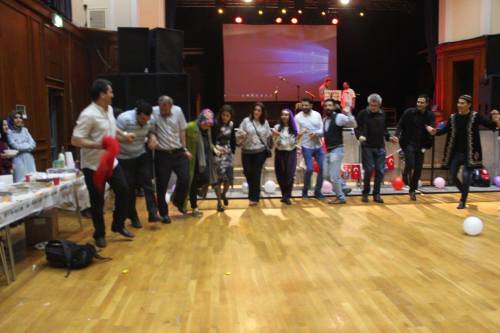
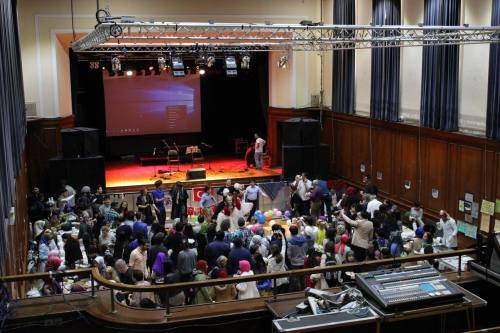
Annual Turkish Day 2016 (05/05/16) – organised by the University of Leicester Turkish Society

University of Leicester Turkish Society Turkish Day 2016 (2)

Annual Turkish Day 2016 (05/05/16) – organised by the University of Leicester Turkish Society

Freshers Fair 2016 26-27-09-16 (4)

Freshers Fair 2016 (26/09/16) – Organised by the University of Leicester Student Union

Read Full Post »

King and his Jester jokes are also a common theme in Turkish caricatures

King and Jester jokes/stories are also a common theme in Turkish caricatures. In this example, the jester’s provoking/fooling the king by saying: “you can defeat your enemies blindfolded”.

Turkish sense of humour – just as with most cultures – has been shaped by past events and influential figures. However we Turks do not like to make fun of ourselves (e.g. like the English), therefore we create (semi*)fictional characters and make fun of them. We take ourselves too seriously…

However we still managed to obtain a great sense of humour with all sorts of jokes/funny stories. They include stories/jokes from religious figures such as Nasreddin Hodja, naive and funny figures such as Temel and Dursun, and stingy but funny figures (e.g. People of Kayseri are famous for being successful businessmen but also for being tight with money, therefore these types of jokes are attributed to them).

We also generally – for some reason – hold this belief that a joke should make you think as well as make you laugh, therefore a lot of our jokes have a moral story behind it. Although I am not against the ‘make you think’ part, I believe that the primary aim of a joke is to make you laugh and relax the mind, therefore the focus should be on being funny. Sometimes the primary goal has been forgotten, therefore we have many jokes which do not even make you smile, let alone make you laugh 🙂

You can find English translations of Temel and Dursun jokes, and Nasreddin Hodja stories all over the internet. Google them, or you may wish to click the hyperlinks for some chosen examples…


Less known (in English) are the ‘People of Kayseri’ jokes. A couple of examples are below:

Father and Son

Son asks his father: “Could you lend me 50 lire dad?”

Father replies: “40 lire? What do you need 30 lire for? Isn’t 20 enough? Here’s 10.”

And he takes out a 5 lira note and gives it to his son.

The son goes: “I needed 5 lira anyway…”

Father: “You naughty boy! Nearly had me if I hadn’t given you fake money”

On his death bed

A man from Kayseri is on his death bed. He asks: “My dear wife, are you here?”

Wife: “Yes, right next to you”

Man: “My sons Mehmet and Ahmet, are you here?”

Mehmet and Ahmet: “Yes, father”

Man: “My beautiful daughter Fatma?”

Fatma: “Yes, my dear father”

The man gets up rapidly and shouts furiously: “If you’re all here, who’s looking after the shop!?”


* I say “semi” because it is not hard to see that we have living Temels and Dursuns scattered around the streets. Turkey is a fun place with a plethora of funny (or tragicomic) characters which you can easily observe in daily life. Sometimes as you’re walking to work, you yourself are involved in or come across a few jokes/funny events 🙂

An example would be: You might ask where “so and so café” is. You shouldn’t surprised if you get a reply like: “I don’t know, where is it?”; or “Are you blind? Can’t you see it’s right there!” (I wouldn’t have asked if I’d seen it!)

Read Full Post »

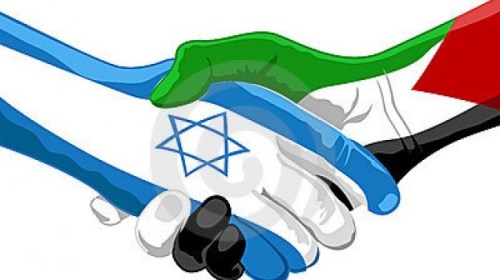
Peace is the only way forward! (Image from www.israellycool.com)

Peace is the only way forward – for both sides! (source URL: www.israellycool.com)

A few hate-driven Palestinians (or whoever they are) fire rockets to Israel aiming to kill their citizens. Israel has the right to find and punish them (and only them!). However, what Israel does is go out and kill civilians (including many children and women) in return by using weapons of mass destruction. Now tell me what the difference is between Israel (a state) and those few brainless radicals. I really can’t see the difference in the way they act. Surely a state has to act differently than a bunch of terrorists! We must be against anyone, any group and any state who kills civilians! It doesn’t matter who they are or what they claim to represent! Terrorism (and killing civilians) has no religion or ideology!

Graffiti in Bristol, UK - Palestinian people deserve freedom and independence just like Israel does

Graffiti in Bristol, UK – Palestinian people deserve freedom, peace and independence just like Israel

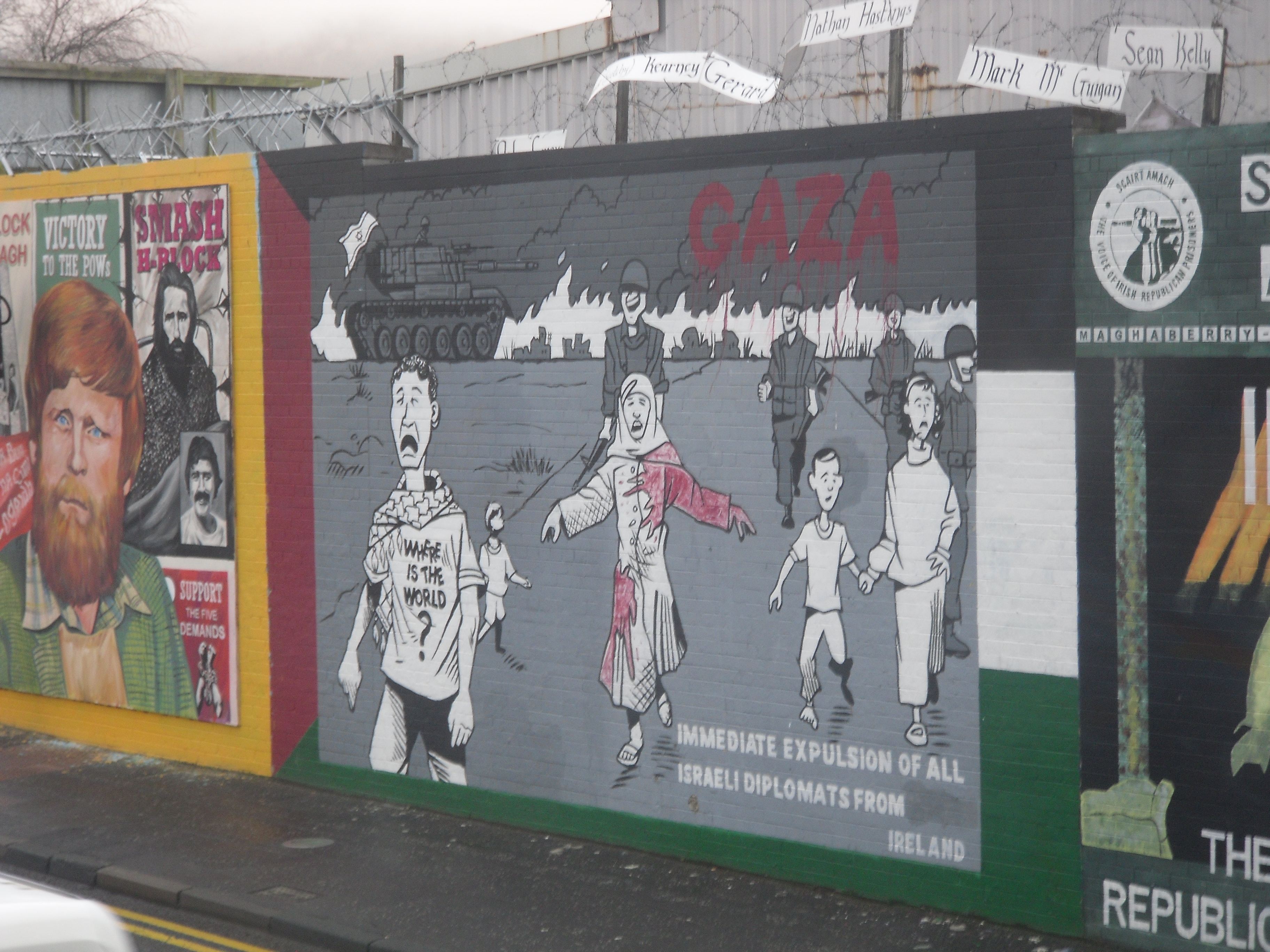
Belfast International Peace Murals

Belfast International Peace Murals

Both sides must take a long hard look at themselves. As long as these atrocities carry on (on both sides) and we keep turning a blind eye, there’ll never be peace in the Middle East; and therefore the World. For peace to ever become sustainable, inter-faith and inter-cultural dialogue is a must! People must learn and agree to disagree! I do not want to see one more life ending prematurely due to terrorism (by radical groups or by states) – on both the Palestinian and the Israeli side; or any other side! One life is one too many!

The greatest way to avenge your enemy is by learning to forgive” – Quote from the documentary

Read Full Post »

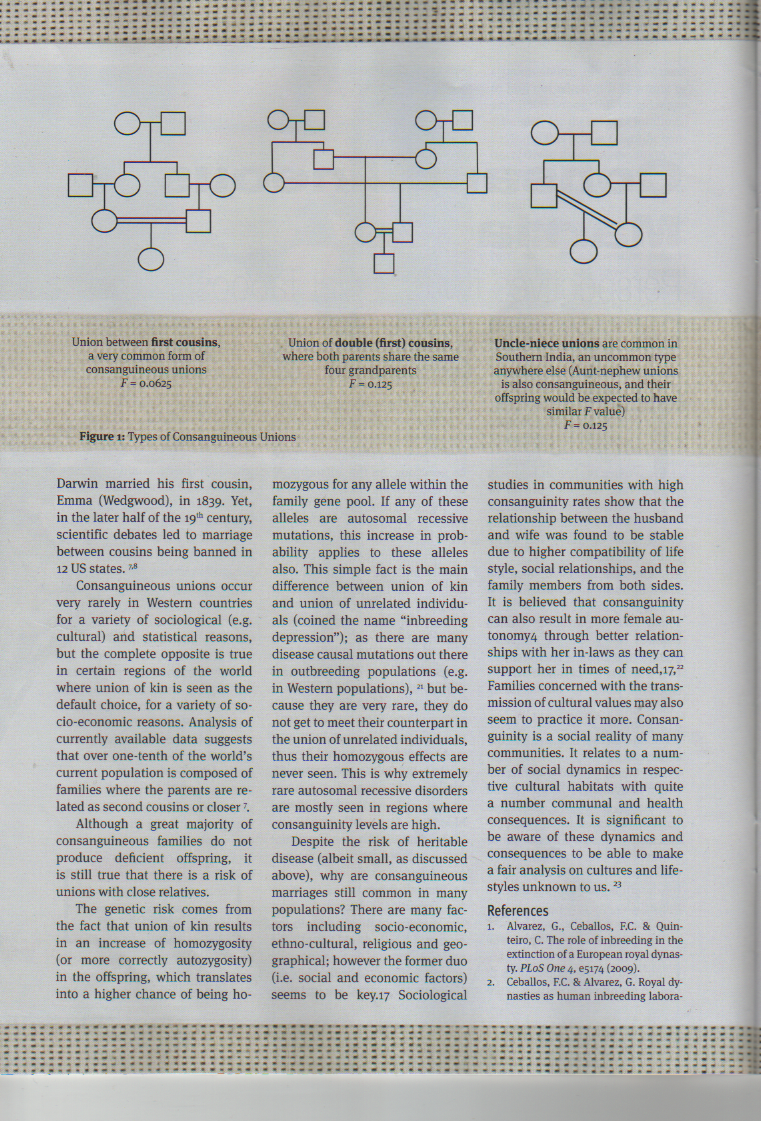
The Fountain Magazine - Issue 99

The Fountain Magazine – Issue 99

There is a great deal of suspicion about consanguineous unions in the world. Whether this suspicion relies on health issues or not, we still have to be aware of possible genetic effects of consanguinity on heritable disorders and socio-cultural impacts.

Consanguinity itself does not make an individual “sick,” but it affects the probability of an autosomal recessive disorder (which requires two copies of the same mutation) if there is such a mutation which runs within the family (with the word “if” emphasized). Consanguinity should be regarded as a complex issue due to socio-economic factors and health concerns.

In clinical genetics, unions between individuals who are second cousins or closer are considered “consanguineous” (inbreeding coefficient, F=0.0156). Incestuous unions (e.g. brother-sister, father-daughter) will not be included in the description of consanguinity in this article, and are obviously outlawed in every society and faith.

Speaking from a statistical geneticist’s perspective, consanguinity affects the probabilities of certain genotypes occurring in offspring.

Full article in Issue #99 (Page 1)

Full article in Issue #99 (Page 1)

Full article in Issue #99 (Page 2)

Full article in Issue #99 (Page 2)

Full article in Issue #99 (Page 3)

Full article in Issue #99 (Page 3)

For original online version, please click: The Fountain Magazine, Issue 99 – Consanguineous Marriages: Perspectives from Social Taboos, Religion, and Science. (*some parts about the religious and historical aspects of consanguinity were censored. If you’re interested in the original version, contact me…)


Additional references:

A. Mesut Erzurumluoglu, 2016. Population and family based studies of consanguinity: Genetic and Computational approaches. PhD thesis. University of Bristol.

Erzurumluoglu AM et al, 2016. Importance of Genetic Studies in Consanguineous Populations for the Characterization of Novel Human Gene Functions. Annals of Human Genetics, 80: 187–196.


PS: Although I did not ask for anything, it was very kind of The Fountain magazine editor to send me an honorarium letter (and a cheque)…

The Fountain magazine Honorarium letter

The Fountain magazine Honorarium letter

The Fountain magazine honorarium cheque

The Fountain magazine Honorarium cheque

Read Full Post »

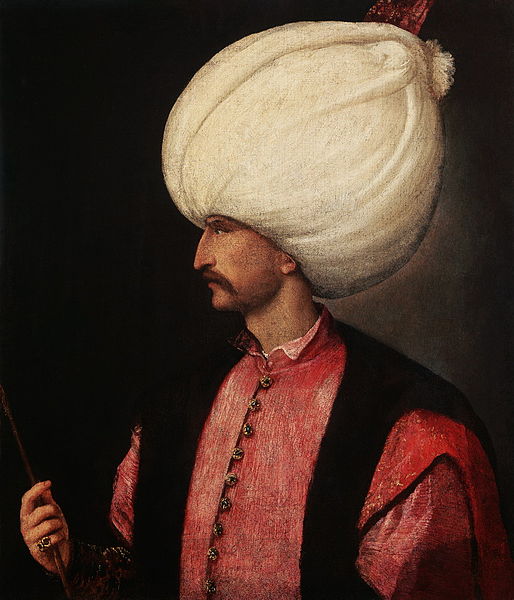
Sultan Suleiman 'The Magnificent'

Sultan Suleiman ‘The Magnificent’

This is a conversation which is known to be have happened between Yahya efendi (a well-known Islamic scholar of the time; ‘Efendi’ means ‘respected master’ in Turkish) and Sultan Suleiman ‘The Magnificent’ (Ottoman sultan):


During Sultan Suleiman’s reign, the Ottomans were undoubtedly ‘the superpower’ at the time. However he was also curious about the future of the state (I do not like calling the Ottomans an ’empire’ so I will keep calling them ‘state’) and wonders whether the Ottomans will also decline just like all the other great civilisations, states and/or empires before it.

He always asked scholars for their opinions if he had a question, so he took the matters to Yahya efendi through his messengers. Some time later he received an answer through his messenger and it was very short:

Oh Sultan, “I don’t care” is the answer

The Sultan was shocked. However he knew that Yahya efendi was a man of wisdom, so he travelled to his place to learn the meaning of his answer.

Brother, please do take my question seriously. I am curious about the answer.

Another short answer from Yahya efendi:

Oh my Sultan. How can I ignore you? I did give you an answer. And it was “I don’t care”

However the Sultan still couldn’t make sense of his answers.

I still don’t understand

Well my Sultan. Whenever corruption, oppression/cruelty and thievery runs loose within a society; and the ones who see it turn a blind eye towards them and say “I don’t care”, this will be end of that state and society.


Great lessons to be learnt from the past… I hope the politicians in our countries take notice; if they ‘care’ that is!

Turkcesi icin buraya tiklayin

Read Full Post »

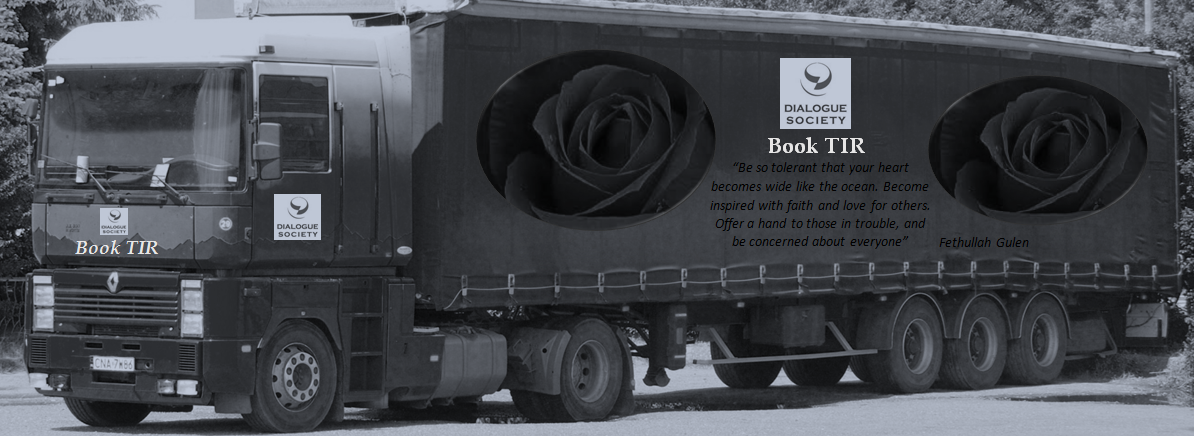
As an example: Dialogue Society Book Lorry

As an example (using my brilliant Photoshop skills): Dialogue Society Book Lorry

As there is a lot of hostility towards all religions, and especially Islam in Western Societies, it should be one of our primary objectives to inform people of  the ‘true face of Islam’ through inter-faith dialogue. I am very impressed with what organisations such as Dialogue Society are doing, but I do not think they are reaching the wider audience as they would like to. They reach out to many academics and VIPs in their respective areas/cities, but struggle to make an impact at the public level.

For this reason I would like to suggest designing a ‘Book Lorry’ (inspired from book buses) which will travel all over the UK (and can set an example to similar organisations within the UK and other countries), park their lorry in city centre (or other designated areas) and engage with the public. Interested individuals will enter from one side and leave from the other. The inside will be designed just like book busses, and people can take whatever book they would like (or pay a small fee depending on the book).

I believe this would be a great way to attract public attention (especially if the lorry is designed properly, not like the one above!); and make inter-faith dialogue more fruitful…

For extra information on the Dialogue Society, please see my Dialogue Society post…

Read Full Post »

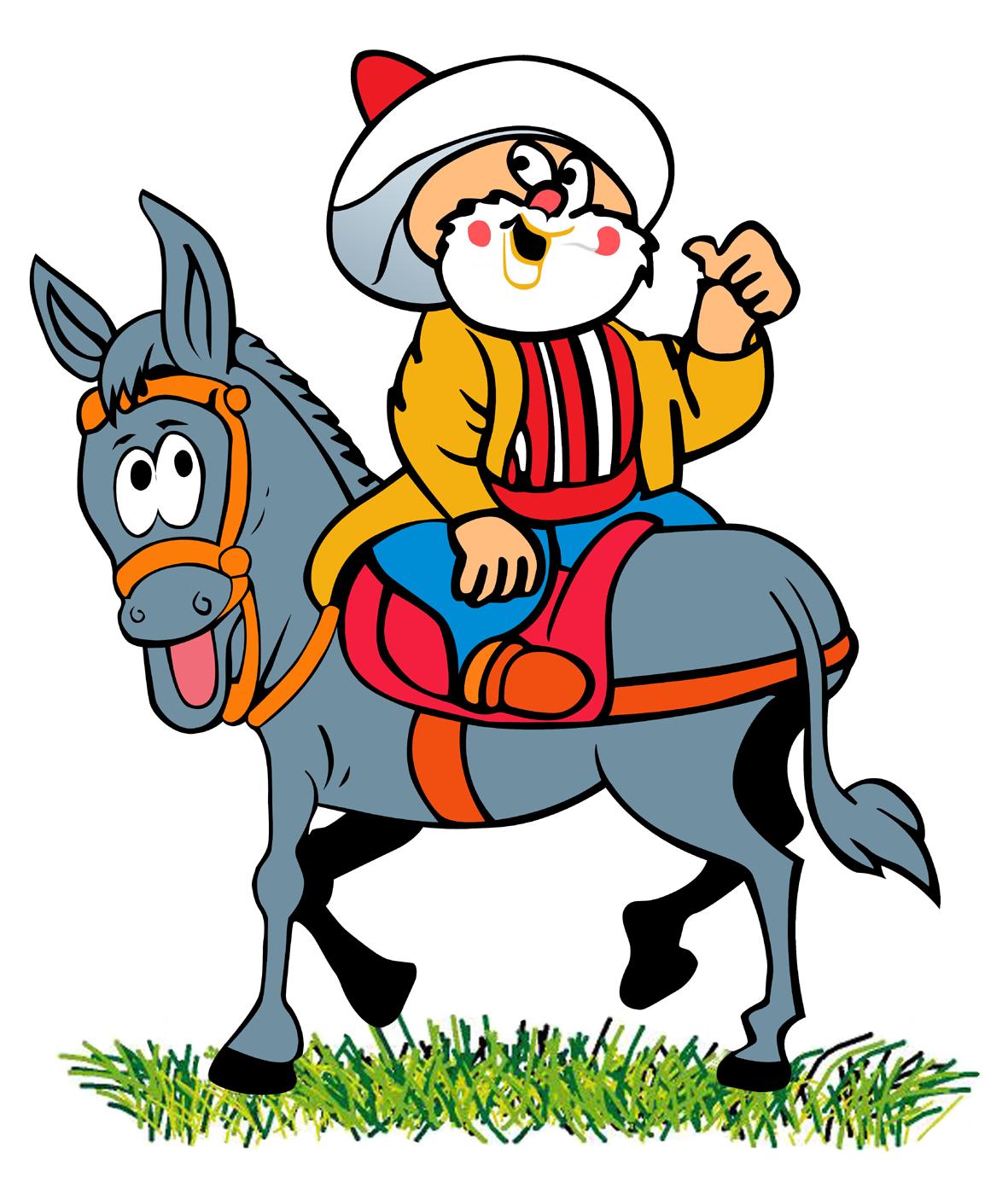
Nasreddin Hodja's Famous Caricature - Sitting backwards on his Donkey

Nasreddin Hodja’s Famous Caricature – Sitting backwards on his Donkey, telling the people who questioned why this was the case: “I do not want to be seen as a person who’s following the same path as a donkey”

Nasreddin Hoca (read Hodja, which means ‘scholar’ or ‘teacher’ in Turkish) is a popular historical (13th century) figure and an imam known for his wit, wisdom and courage. By means of humour, he wanted to bring the vices that were widespread in the community (e.g. backbiting/slander, stealing, corruption) to the attention of the people  -which he was very successful in doing. Therefore many of his quotes/experiences were passed down the ages. However, as time passed, many stories which fit the characteristics mentioned above, whether it belongs to him or not, were associated with him. Click for a selection of his stories in English: (i) Tales of the Turkish Trickster* (ii) Other stories attributed to him. Click for Wikipedia page.


* I disagree with the word ‘trickster’ in title but the website itself is very good…


PS: We need more of his kind today… Especially in the ‘Muslim’ world!


A peek at some of his stories that I translated:

The cauldron that died

Nasreddin Hodja, needing a large pot to cook a stew, borrowed his neighbor’s copper cauldron (a large pot), then returned it in a timely manner the next day.

What is this?” asked his neighbor upon, examining the returned cauldron. “There is a small pot inside my cauldron.

Oh!” responded the Hodja. “I forgot to tell you. While the cauldron was in my care, it gave birth to a little one. Because you’re the owner of the mother cauldron, it is only right that you should keep its baby. And in any event, it would not be right to separate the child from its mother at such a young age.

The neighbor, thinking that the Hodja had gone quite mad, did not argue. The neighbor had a nice little pot and he was happy with the outcome.

Some time later the Hodja asked to borrow the cauldron again.

Why not?Perhaps there will be another little pot inside when he returns it.” thought the neighbour to himself.

But this time the Hodja did not return the cauldron. After many days had passed, the neighbor went to the Hodja and asked for the return of the borrowed cauldron.

My dear friend!” replied the Hodja. “I forgot to tell you but I have bad news. Your cauldron has died.”

What are you saying?” shouted the neighbor. “A cauldron does not live, and it cannot die. Return it to me at once!

“I’m sorry!” answered the Hodja. “But this is the same cauldron that gave birth to a child, a child that is still in your possession. If a cauldron can give birth, then it also can die.”

And the neighbor had no answer to this. He never again saw his cauldron again 🙂


Moral of the story: There are many things that we can take from this story but the main one is that we shouldn’t lie our way into tricking others for our personal gain as it can come back to haunt us.


Eat, my coat, Eat!

The Hodja was invited to a banquet. Not wanting to be pretentious, he wore his everyday clothes – only to discover that everyone ignored him, including the host. So he went back home and put on his fanciest coat, and then returned. Now he was greeted cordially by everyone and invited to sit down and eat and drink.

When the soup was served to him he dunked the sleeve of his stylish coat into the bowl and said, “Eat, my coat, eat!

The startled host asked the Hodja to explain his strange behavior.

When I arrived here wearing my other clothes,” explained the Hodja, “no one offered me anything to eat or drink. But when I returned wearing this fine coat, I was immediately offered the best of everything, so I can only assume that it was the coat and not myself who was invited to your banquet.”


Moral of the story: He powerfully presents that it’s the person that should be valued and not the fancy things that one owns.


Walnuts and Pumpkins

Nasreddin Hodja was lying in the shade of a walnut tree. His body was at rest, but, befitting his calling as an imam and scholar, his mind did not relax. He started contemplating; looking up into the mighty tree, he considered the greatness and wisdom of Allah/God.

Allah is great and is most wise” said the Hodja, “but was it indeed wise that such a great tree as this be created to bear only tiny walnuts as fruit? Behold the stout stem and strong limbs! They could easily carry the pumpkins that grow from spindly vines in the fields, vines that cannot bear the weight of their own fruit. Should not walnuts grow on weakly vines and pumpkins on sturdy trees?
After a while the Hodja dozed off, only to be awakened by a walnut that fell from the tree, striking him on his forehead.

Allah be praised!” he exclaimed, seeing what had happened. “If the world had been created according to my meager wisdom, it would have been a pumpkin that fell from the tree and hit me on the head. It would have killed me for sure! Allah is great! Allah is most wise!


Moral of the story: We shouldn’t question the wisdom of God/Allah – or things/phenomenon that we cannot fully grasp.


The battle of wits

In old times wise men would travel around the country, extensively searching for facts or ideas to support their newly-formed theories. Three such men one day arrived in Aksehir, and calling on the governor, asked him to summon the most learned man of the district to be present at the market place the next day – so that they would see whether they could profit from his wisdom. As the most wise man of Aksehir, Nasreddin Hodja was duly informed and the next day he was there and ready for, what proved to be, a battle of wits. Quite a crowd had gathered for the occasion.

Before holding discussions with him, they wanted to test his wit. One of the wise men stepped forward and asked the following question to Hodja:
Could you tell us the exact location of the centre of the world?
Yes, I can,” replied the Hoca. “It is just under the left hind leg of my donkey.
Well, maybe! But do you have any proof?
If you doubt my word, you are welcome to measure and see.

There was nothing more to be said, so the first wise man withdrew.

Let me ask you this,” said the second learned man, stepping forward.
Can you tell us how many stars there are in the heavens?
As many as the hairs on my donkey’s back,” was the ready reply.
What proof have you in support of this statement?
If you doubt my word, you are welcome to count them all and find out.
Come now, Hodja!” said the second learned man. “How can anyone count the hairs on your donkey’s back?
Well, when it comes to that, how can anyone count the stars in the skies?
This silenced the second wise man, upon whose withdrawal the third one stepped forward.

Since you seem so well acquainted with your donkey,” said the third man sarcastically.
Can you tell us how many hairs there are on the tail of the beast?
Certainly,” replied the Hoca, “as many as the hairs in your beard.”
And how can you prove that?
Very easily, if you have no objection. I will pull one hair from your beard, and you will pull one out of my donkey’s tail. If both do not finish at the same time, then I will admit that I have been mistaken.”
Needless to say the third wise man had no desire to try the experiment, they realised the greatness of Hodja.


Moral of the story: As we say in Turkey, “akıl akıldan üstündür” which means (with a lot lost in translation): Two heads are better than one. There’s always someone out there whose wisdom is useful. We should always search for them to make better decisions.

Read Full Post »

Websites which should be checked every now and then…

For Everyone…

Coursera Online Courses:

https://www.coursera.org/#courses

Stanford University Online Courses:

https://class.stanford.edu/courses/

TED Talks:

http://www.ted.com/talks

Busuu Language Courses:

http://www.busuu.com/enc/

NOS (Network of Students) Events:

http://www.networkofstudents.org/events.html

LCSS (London Centre for Social Studies) Events:

http://www.socialstudies.org.uk/events

ABTA (Association of British Turkish Academics) Events:

http://abtanet.org.uk/Events/

Dialogue Society Events:

http://www.dialoguesociety.org/

Turkish Review Magazine:

http://www.turkishreview.org/

British Museum Events:

http://www.britishmuseum.org/

Science Magazine ‘How To’ Series:

http://sciencecareers.sciencemag.org/tools_tips/how_to_series

The National Archives – Education

http://www.nationalarchives.gov.uk/education/default.htm

BBC Languages – Turkish:

http://www.bbc.co.uk/languages/other/turkish/guide/

LTR (London Turkish Radio):

http://www.londonturkishradio.co.uk/


For the Bristol (UK) based…

‘What’s On’ by University of Bristol:

http://bristol.ac.uk/events/

UBU (University of Bristol Students Union) Events:

http://www.ubu.org.uk/events/

BoB (Best of Bristol) Lectures:

http://www.boblectures.org.uk/

University of Bristol – Botanic Garden Events:

http://www.bristol.ac.uk/botanic-garden/events/

UWE Lecture Series:

http://info.uwe.ac.uk/events/eventlisting.aspx?categoryID=78

Read Full Post »

Network of Students Logo

Network of Students Logo

Well done to NoS for going the extra mile this month (May 2013) by publishing a magazine for students, when they were already organising many educative and interesting events. A PDF version of the magazine can be found on the NoS and the University of Bristol Turkish Society website…

Who are Network of Students (NoS)?

They are a non-profit organisation which aims to organise socio-economic and cultural events and activities for university students all over the United Kingdom. Their purpose is to increase the key skills and help the development of university students by providing informative and enlightening meetings, seminars and networking events as well as organising social and sports activities.

NoS’s events can be found here

Read Full Post »

« Newer Posts - Older Posts »