by Dr A. Mesut Erzurumluoğlu | Principal Bioinformatician at Bicycle Therapeutics (formerly at Boehringer Ingelheim, and Univs. of Cambridge, Leicester & Bristol) – blogging since 2006. All views mine unless stated otherwise
“To be a ‘great’ in any game, you must first understand what you’re capable of and what your weakness/strengths are. Then you must analyse your opponents to see what they’re capable of; and likewise, what their strength and weaknesses are. Then a decision must be made about how to approach the game. Making your decision is going to be complicated by deducing how much your opponent knows you and how this knowledge is going to affect their tactics. Also another major factor in deciding how to approach the game is going to be ‘how much is on stake’. If the game is massive then you may be a little more cautious whereas in a more comfortable position (where not too much is at stake) you may be determined to show what you’re truly capable of and go out all guns firing.
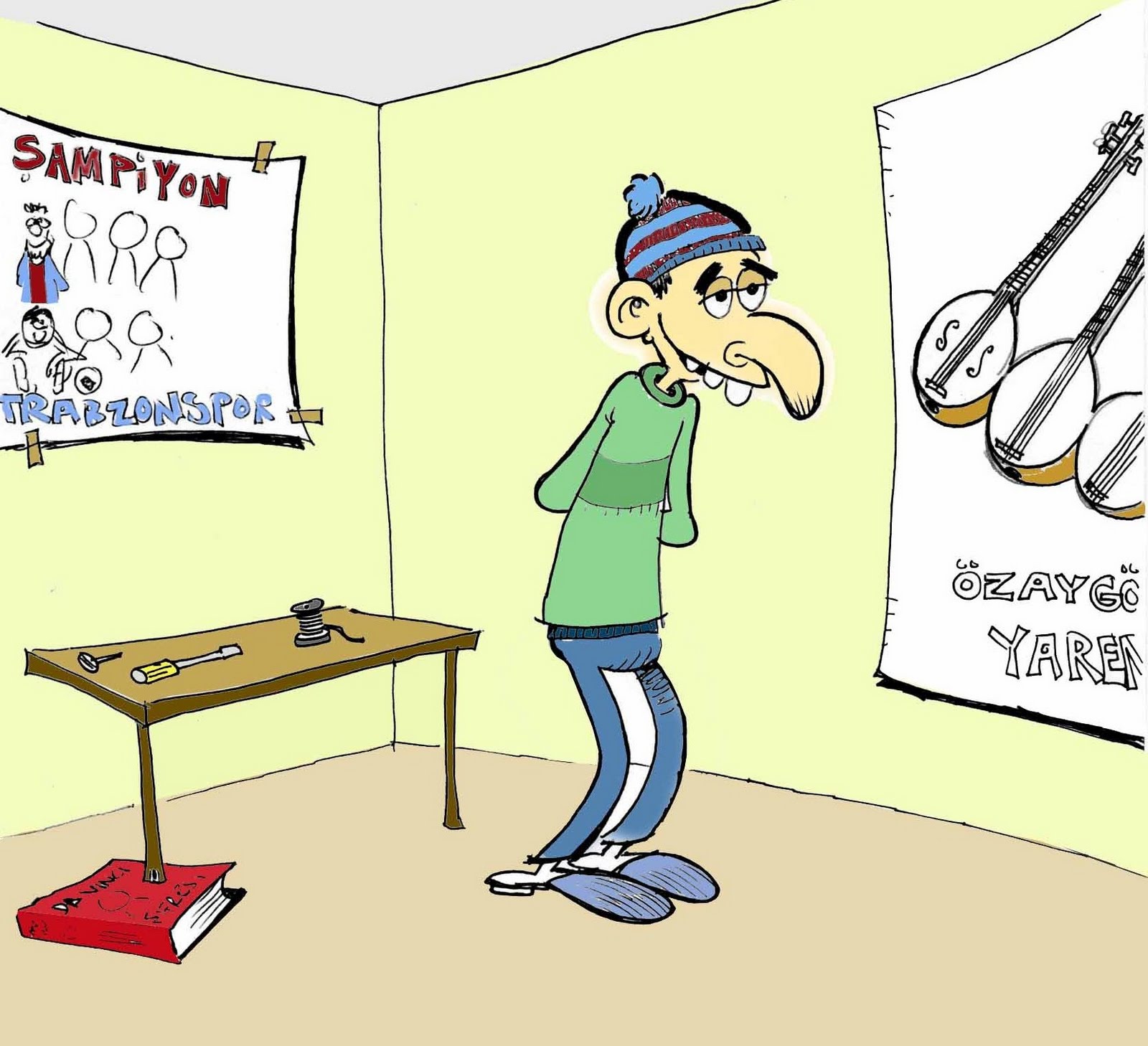
Temel and Dursun are (semi!) fictional characters, originated in the Black sea region of Turkey known for their humour, wit and craziness (this last attribute is sometimes replaced by naivity) all at the same time; therefore many jokes have been told about them which fit their characteristics. For more info on Turkish sense of humour, click here.
How Temel is usually depicted in cartoons – especially with a big and long nose, a well-known characteristic of the ‘Laz’ people living in the Black sea region of Turkey
Here’s just a few of them; they’re much better in Turkish as there is a lot in these jokes which is lost in translation. Hope you enjoy them anyway!
Joke 1:
Dursun has made a lot of money in the USA and tells his beloved friend Temel to join him in LA. He tells him there are so many opportunities for him to earn his living here, going even further to say he’d be rich even if he picks up the money people throw/drop on the streets. So Temel jumps on the first plane and travels to the US; and with his first step he sees a $10 note on the floor. But he decides not to take it, saying: “I’m not going to start working on the first day!“.
Joke 2:
Temel owes a lot of money to the local shops. One day he wins the lottery and the locals wait for him to pay back what he owes – and maybe more. However three months down the line, Temel still hasn’t paid anything so the shopkeepers come down to ask why that is the case. Temel tells them: “I didn’t want you guys to think money’s changed me!“
Joke 3:
Temel asks a cafe owner: “Do you have cold tea?” and he gets the reply “No“, so he leaves. He keeps asking the same question for the next three days so the cafe owner thinks I’ll make him cold tea the next day. Temel comes in and asks the same question, but this time the cafe owner says “yes”. Then Temel says: “well that’s great, heat it up and bring me some tea. I’ve missed drinking tea a lot!“
Joke 4:
Temel enters a multi-choice matriculation exam. He flips a coin for each question and picks the choices accordingly. An hour into the exam – when all the students have given in their papers and he’s the only one left in the room, the invigilator sees that he’s still flipping coins; and tells him there isn’t much time left and asks him whether he is about to finish. Temel answers: “I’ve finished half an hour ago, just going through my answers!”
Joke 5:
Temel and Dursun love playing football. One day when they were contemplating about the afterlife, Temel asks Dursun: “Do you think there is football in Heaven?” and Dursun answers “I don’t know but whoever goes there first, will let the other know OK?“. So they agree and a few years down the line Dursun dies and appears in Temel’s dream: “Temel, I’ve got one good and one bad news for you“. Temel asks for the good one first and Dursun answers: “There is football in Heaven!“
“What about the bad one?“
“Your name is on the team sheet this week!“
Joke 6:
When they’re young, Temel and Dursun try stealing a few apples from a tree in a garden nearby. While they’re at it, the owner sees them and they start to run. The owner shouts “stop you BASTARD!”; and Dursun stops and tells Temel “he recognised me, you keep running brother!”
Joke 7:
Temel and Dursun are stopped by a tourist in Istanbul. He asks: “Hi, do you speak English?“. Temel and Dursun look at each other, not understanding what he meant. The tourist also asks: “Parlez vous Francais?” and said the same thing in many other languages. The tourist then leaves not getting an answer.
Dursun turns to Temel and says: “I think it is time we learn a foreign language“.
Temel: “What’s the point? Look he knew 5 languages but still couldn’t explain what he wanted“.
Joke 8:
Temel appears in court as he has just killed a dozen or so people at a marketplace due to his truck’s brakes failing. The judge asks: “Explain why you did this?“.
Temel: “I am very sorry; it was not intentional. My brakes failed and I had no other choice but to hit somewhere to stop my truck.I noticed that if I swerved to the right I would kill a child. If I swerved to the left, I would enter the marketplace and potentially kill dozens. So I decided to kill the child.”
Judge: “How did you then kill all these people?!“
Temel: “Unfortunately the kid ran towards the marketplace“
Joke 9:
Temel and Dursun go to watch a movie, which has a horse racing scene. Just as the race is about to start, Temel bets Dursun that the white horse will win – and Dursun agrees to bet on the black horse. The white horse won, so Temel also won the bet. However, after the movie Temel feels uneasy and confesses:
I watched this movie before and knew which horse was going to win.
Dursun replies: I watched the movie too.
But I wanted to bet on the underdog this time!
Joke 10:
Temel is on Who Wants to be a Millionaire. He passes the first set of ‘easy’ questions…
£4000 question: How long did the ‘Hundred Years’ War’ last?
a) 99 years b) 116 years c) 150 years d) 100 years
He asks the audience and passes on to the next question
£8000 question: Where did the ‘Panama hat’ originate?
a) Panama b) Brazil c) Chile d) Ecuador
He phones a friend and passes on to the next question
£16000 question: When do the Russians celebrate the ‘October Revolution’?
a) October b) September c) November d) January
He uses the ‘fifty-fifty option’ and passes on to the next question
£32000 question: What animal were the ‘Canary Islands’ named after?
a) Canaries b) Seals c) Cats d) Kangaroos
Temel decides to take the money…
[Scroll down]
Funny eh? Thought you were more clever than Temel? Think again!
Ingiltere’de (ingiliz) arkadaşlarım bana ‘Secret Santa’ (Gizli Noel Baba) adındaki faaliyetlerine katılmamı istediler. Yapılan şey ise bir kagıda adını yazıyorsun ve diger katılan kişilerinde isminin bulundugu bir kutuya atıyorsun. Sonra cekilişte kimin ismi sana cıkarsa, ona gizlice hediye alıyorsun ve o kişi hediyenin kimin tarafından alındıgını bilmiyor (soylemek yasak!). Hediyeler arasında bir ayrım olmasın diye de en baştan kac liralık limit oldugu belirleniyor (mesela 10 sterlin).
Fikir cok guzel ama ruhu yok; insanlara ogretebilecegi cok şey var ama etkisiz. Neden bu isin ‘bizce’ versiyonunu yapmayalım diye duşundum; ve boyle birşeyi kendi aramızda neden mesela ‘Gizli Zeyneller’ olarak yapmayalım? Bu sayede tanışmamıza, birbirimizle hediyeleşmeyi teşvik etmemize ve yaptıgımız iyilikleri gizli tutmamız gerektigini daha iyi anlamamıza vesile olur. Eminim daha cok Zeynel Abidin (r.a.) gibi insanların yetişmesine de vesile olur…
Zeynel-Abidin (r.a.)’la ilgili…
Zeynelabidin (r.a.), Hz. Hüseyin’in (ra) oğlu ve Hz. Ali’nin (ra) torunudur. Fakir ve kimsesizlere yardım konusunda büyük bir gayret gösterirdi. Çok sayıda fakire yardım ettiği halde, ihlas düsturu gereği bunu hiç kimseye fark ettirmezdi. Gece karanlığında sırtında un taşıyarak bunu muhtaçlara yetiştirirdi. Sürekli bu işi yaptığı halde hiç kimse bilemedi. Ancak, vefatından sonra cenazesi yıkanıp sırtındaki nasırlaşmış yerle karşılaşılınca durum öğrenilebildi.
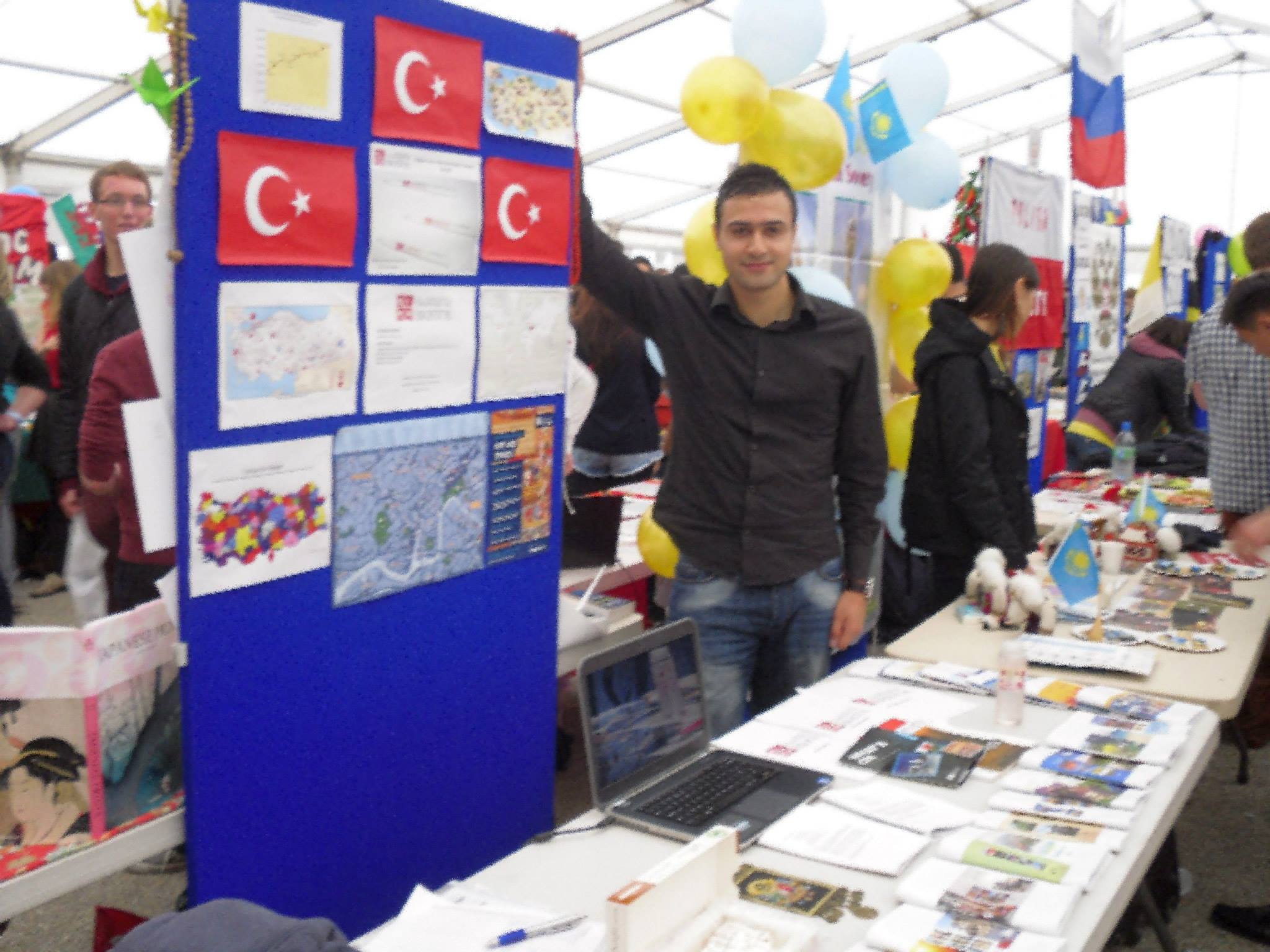
Thanks to the help of many friends and Bristolians, we have now founded the Turkish Society at the University of Bristol. Please visit our website (www.ubu.org.uk/activities/societies/BristolTSoc/) or Facebook (University of Bristol – Turkish Society) group page for our upcoming events and many more!
I went through these three websites below and made a list of the books worth reading… Also audible.co.uk gives a free audible ebook to whoever signs up…
Order of books not important… Also I do not mean these are the only books worth reading (I have not put religious books in here, but knowledge in world religions is a must I think!)…
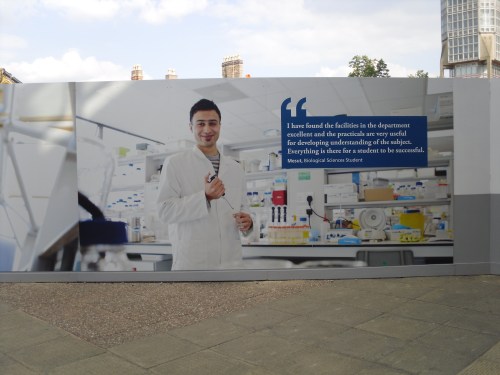
My Poster in front of David Wilson Library, University of Leicester, UK
The above lab photo was printed on a large billboard just in front of the David Wilson Library (during the refurbishment/renovations) at the University of Leicester (UoL) in 2011, and then in 2013. The photo was also used in the Biological Sciences sections of the 2011/12, 2012/13 and 2013/14 UoL undergraduate prospectuses – although I was a PhD student at the University of Bristol since January 2012. I was in the third (out of four) year of my PhD course but was still in the UoL prospectus as an ‘undergraduate’ 🙂
Me in University of Leicester Prospectus 2012/13
The university also included my views in the online version of the University of Leicester Biological Sciences prospectus and in a ‘Time management’ lecture:
Univ. of Leicester – Biological Sciences webpageApocryphal quote attributed to me: “It wasn’t that challenging, if you’re organised” was used in a ‘Time Management’ lecture (2016) given at the University of Leicester (by Dr. Alex Patel -see her comment below). Photo by Yasemin Alpdogan.
Muslim scholars’ contribution to Life, Earth and Social sciences is usually overlooked today due to the ‘Golden age’ of the Islamic world coinciding with the ‘Dark Ages’ of Europe. This leads to an understanding within the general public that Muslims did not contribute to Science at all; sadly this conception is also shared by many Muslims. So if today’s Muslims share the wrong belief that their ancestors have achieved nothing in the past, how can they themselves then go on and become successful in the present and future?
Logo of ‘1001 Inventions of Muslims’ exhibition
Due to the curious nature of mankind, it was not easy to ignore the celestial bodies of different sizes and colours which appeared in the sky during the day and night for ancient civilisations and mankind have been in awe of these shiny things throughout history and tried their utmost to understand the vastness of space and the infinitely looking numbers of celestial bodies which were visible to the human eye. They tried to comprehend what they were doing there and what purpose(s) were they serving. Especially the movements, positioning and the resulting effects of the sun, the moon and nearby stars were intensively observed to make sense of seasons, Earth’s movements and mark the passing of days, months and years.
Following the decline of the Roman Empire, Europe entered a period called the ‘Dark Ages’ by Western scholars to emphasize the cultural and economic decline that occurred in the continent. However it is usually misunderstood by the public as an age of stand-still in terms of science, economy and health issues which encapsulated all the world populations – which of course was not the case. What was supposedly a Dark Age for Europe was when there were significant improvements and discoveries in Astronomy, Mathematics and Medical sciences just a few thousand kilometers away in the Middle East, where Arab (and/or Arabic speaking) scholars were using what the Ancient Greek and Far East scholars had observed in the past to build upon and find new things which would transform the life standards of mankind and increase the understanding of the natural world.
As far as Astronomy (not forgetting other areas such as mathematics and biology) was concerned, Arab (and/or Arabic speaking) astronomers of the era were regarded as the masters of the field. Their achievements – which are usually overlooked by today’s academics, and not surprisingly, by the public, have played a crucial role in the development of this enthralling science which existed since humankind set foot on earth.
Ancient Greek scientists had observed that the North Star (which is named Polaris by modern scientists today) appeared lower in the sky as a person traveled to the South and thus made suggestions that the Earth could be spherical. Muslim scholars, inspired by the Quran and the teachings of the Prophet, set on a journey to understand the natural world to get to know the creations of the Creator better started to research the literature produced by past scholars. Only a few centuries after the founding of Islam (in 610 AD), the Bedouin Arabs of the past became the great thinkers of the time and Arabic became the ‘Language of Science’ and most world renowned scholars of the time knew or learnt Arabic to be able communicate with the best of the best of their time in the ‘House of Wisdom’ in Baghdad. Nearly all available literature in the Sanskrit and Greek languages which contained a wealth of information about many sciences including Astronomy and mathematics, such as the one aforementioned about the North Star, would be translated into Arabic and made available in many libraries (especially at the House of Wisdom) across the Islamic empire (The Abbasid Caliphate was the Islamic state of the time). The available information would then be discussed amongst the greatest scholars of the time. Also the rulers (called ‘Caliphs’ in the Muslim World) were usually interested in natural sciences and this would mean a lot of encouragement to scholars in term of high salaries, bonuses and higher social status amongst the public.
However, Astronomy stood out from other sciences in Islamic states because it was related to the worshiping of God, Allah. Muslims have the obligation of facing the Kaaba during the daily prayers and doing that requires the pinpointing of the direction of Mecca from any location. It went as far as mosques employing professional astronomers (called muwaqqits), who helped Muslims pray to the right direction and at the right time during the day. Muwaqqits were also important when determining the start of the month of Ramadan and certain religious dates such as the Hajj period and how to get there through the shortest possible route.
Baghdad (capital of present day Iraq) became the centre for scientists in the 9th century and many libraries and observatories were present. The Caliph would have his own dedicated group of mathematicians, geographers and medical scientists who would analyse past literature and find new cures, calculate distances and how long it would take to a certain place. Naturally, this encouragement of scientists bared its fruits and in the 11th century. Abu Rayhan al- Biruni made remarkable conclusions by mentioning that planets were possibly moving elliptical orbits rather than circular ones. Muslim scholars even made calculations about the Earths circumference by walking in the Syrian desert until they realised that the North Star had moved by one degree according to their vision and then calculated the value of 37369 km which was correct by over 90% (True figure is just over 40000 km). They even started to challenge theories which had held on for centuries using the Quran as a platform to build upon. One example of this occurred thorugh Fakhr al-Din al-Razi, who lived between 1149–1209, rejected the Aristotelian and Avicennian notion of the Earth’s centrality within the universe in his book Matalib (Volume 4), but instead argued that there are “a million worlds (alfa alfi ‘awalim) beyond this world such that each one of those worlds be bigger and more massive than this world as well as having the like of what this world has.” To support his argument, he even cited the Qur’anic verse (Surat-ul Fatiha, verse 1), “All praise belongs to God, Lord of the Worlds,” emphasizing the term “Worlds”; thus making other scientists think outside the box and let them know what he thinks about the Earth being the center of the universe (and indicating also the possibility of multiple universes might have existed, again which was in contrast with the common views of that age).
Another example of a Muslim genius in the era was Khawaja Muḥammad ibn Muḥammad ibn Ḥasan Ṭūsī (more commonly known as Nasireddin) who lived from 1201 to 1274 and born in the city of Tus, Khorasan (in Iran) who has about 150 works in a variety of fields including Astronomy, Biology and Mathematics. He was very influential when convincing the Mongol ruler Hulagu Khan (another ruthless leader, one of the grandsons of Genghis Khan) to build an observatory for establishing accurate astronomical tables for better astrological predictions. He was the first to publish a work on Trigonometry independent of astronomy and geometry effectively establishing it as a separate field. He provided proof for the ‘law of sines’ for plane and spherical triangle (which was used by Copernicus also) is still taught today to Mathematics students. There could be an encyclopedia of books written just about him and his works. But how many people know the name of this true great let alone his works?
Sophisticated (and expensive) instruments from astrolabes to quadrants, sextants to sundials were made available for use by the state to any researcher with credibility. Astrolabes – which were succeeded by sextants afterwards, have been labelled as the most important astronomical device before the telescope. They came very close to solving the inconsistencies found in Claudius Ptolemaeus’ model (which has become nearly synonymous with the superseded Geocentric model) and couldn’t find the ultimate correct answer due to uncharacteristically not being able to start without any assumptions in this occasion (due to wrong evidence from past literature being shown as facts) and by making the wrong assumption that the Earth lay at the centre of planetary orbits.
In a period dismissed by most scientists today as the ‘Dark Ages’ where supposedly nothing blossomed in terms of intellectual and academic purposes, there were near miraculous discoveries in the Islamic world and the Middle East. But it is more saddening to see that even the Muslims do not know and/or acknowledge the achievements of their ancestors such as Al-Biruni, Ibn Sina (known as Avicenna in the West), Ibn Rushd (aka Averroes), Al Khwarizmi (who is called the father of Algebra), Abu Al-Qasim Al-Zahrawi (aka Albucasis – most renowned surgeon of his time), Al-Kindi, Ibn Khaldun (famous historian and philosopher – best known for his book ‘Muqaddimah’) etc. The list can go on forever so while even when most of the Muslim world does not recognise the abovementioned names, no one can blame the non-Muslims for doing the same (these comments are general and does exclude the few distinguished and objective academicians of today and the past). The new generation of Muslims must be encouraged to learn from their ancestors, acknowledge the things they have achieved and combine it with today’s knowledge and make it their ultimate goal to understand the physical world just like they did in order to understand the creation (and the Creator) and carry on being in awe of the things he has created. The early Islamic states have paid enormous attention to natural and life-sciences as did the Ottomans and thus were the global forces (in terms of knowledge, economy and political power) of their times. Isn’t it time Muslims did the same?
A few Famous Quotes Inspiring Muslims to Seek knowledge and Contribute to Sciences
“Travel through the lands (Earth) and try to understand (observe) how He began creation.” [Holy Quran, The Spider, 29:20]
“Have those who disbelieved not considered that the heavens (sky) and the Earth/land were a joined entity, and We separated them; and made every living thing from water?” [Holy Quran, The Prophets, 21:30]
“Whomever teaches me a word, I will be his/her slave for 40 years” [Fourth Caliphate of Islam: Ali bin Abu Talib]
“Be a teacher, or a student, or a listener, or one who encourages seeking knowledge; but never be the fifth, or you will be perished” [Prophet Muhammad]
“(Useful) Knowledge is like a Muslim’s lost property. They must seek to find it!” [Prophet Muhammad]
“The death of an Alim (scholar) is the death of the Alam (world/universe/creation).” [Prophet Muhammad]
References (and Further Reading)
Adi Setia (2004). “Fakhr Al-Din Al-Razi on Physics and the Nature of the Physical World: A Preliminary Survey”. Islam & Science, Winter 2004. findarticles.com/p/articles/mi_m0QYQ/is_2_2/ai_n9532826/
Berggren, J. Lennart (2007). “Mathematics in Medieval Islam”. The Mathematics of Egypt, Mesopotamia, China, India, and Islam: A Sourcebook. Princeton University Press. ISBN 978-0-691-11485-9.
David A. King (1993). Astronomy in the Service of Islam. Aldershot, U.K. Variorum
George Saliba (1994), A History of Arabic Astronomy: Planetary Theories During the Golden Age of Islam, p. 233–234, 240. New York University Press, ISBN 0-8147-8023-7
John David North (2008). Cosmos: An Illustrated History of Astronomy and Cosmology. University of Chicago Press. ISBN: 0226594416
Jonathan Lyons (2009). The House of Wisdom. Bloomsbury. ISBN 1596914599.
Ragep, F. Jamil (2001). “Freeing Astronomy from Philosophy: An Aspect of Islamic Influence on Science”. Osiris, 2nd Series 16 (Science in Theistic Contexts: Cognitive Dimensions), pp49–71. doi:10.1086/649338.
PS: Terrorist groups have unfortunately blackened the name and the beautiful face of Islam. We must take a stand against all oppressors: whether they are carried out by radical groups such as the Al-Qaeda or ISIS, or by states (e.g. Chinese oppression on Uyghur Turks, Israel’s oppression on Palestinians) – through diplomacy, boycotts, and/or military intervention (without causing any more civilian casualties, final option!).
We must realise that every ideology-belief-religion (e.g. Fascism, Marxism, Christianity, Social Darwinism) has been – and some are still being (e.g. Capitalism, Tribalism) – used to suit a political agenda of a few rulers/elite class (whether we realise it or not). These (mentally, spiritually) corrupted individuals/groups have caused nothing but oppression and/or death to millions. Unfortunately the same agenda has now been put into play via the use of wrong interpretations of Islam (e.g. Wahhabism) to spur on uneducated, alienated and ‘lost’ youth to join the ranks of these supposedly “Islamic” terrorist groups. There is no terrorism in Islam. As the highly respectable scholar Fethullah Gulen put it: “A Muslim cannot be a terrorist and a terrorist cannot be a Muslim!”
PPS: We must stop calling the science carried out by Muslims in the golden ages as “Islamic Science”. Science is an objective field which belongs to nobody, it belongs to all of us. There is no Islamic, Christian or Jewish Science.
We must also stop saying Muslims do not contribute to science today. That is not true. You will see a Muslim scientist in almost all (large scale) labs and/or projects in virtually all areas of science. However, the problem is that our ‘brains’ are not valued in our ‘not-so-Islamic-but-Islamic-in-name’ countries thus we serve countries which provide us a platform to concentrate on our research. These are the Western countries! Thus (rightly so!) these countries also get all the credit…
For over fourteen centuries, the Holy Quran and the Hadiths (sayings) of our beloved Prophet (PbuH) has brought light into the lives of billions of people. Their magical (in the sense of breath taking) narration, timeless advice/warnings, and miraculous scientific correctness has put no doubt in Muslims’ mind that the Quran is a revelation from Almighty God (Allah) and Prophet Muhammad is the (final) messenger of God. The Bedouin Arabs of the pre-Islamic era (called the ‘Jahiliyah’ period in the Muslim world, meaning the era of ignorance and darkness) – who would bury their daughters alive due to the ‘shame’ they may bring in their adulthood, have become Master Mathematicians, Astronomers, Architects, Philosophers in a matter of a few centuries…
Islam’s enlightening effect did not only affect the Arabs but also the Turks who would embrace Islam in the 10th century and go on to found the Ottoman State (not an ’empire’) in 1299. The Ottomans would become ‘Super-power’ of the world for the large part of the six centuries they have been in existence. The Turks were known for their strength, brutality and anarchic nature before Islam. This barbaric population would then become a symbol of tolerance in the way that they allowed Christians and Jews to live alongside Muslims without any fear of harm and under the protection of the law – even when they had the strength to wipe them off the face of the Earth, just like the Roman Empire did. They did not do this because it would be against the peace advising religion they believed in.
Al Jazaari
So what has gone wrong? Why did the Muslims become what they have become today? From the days of Salahaddin Ayyubi, Sultan Mehmet ‘The Conqueror’, Sultan Suleiman ‘The Magnificent’, Halid bin Walid, Omar bin Hattab – leaders who were well ahead of their time, to the dictators we see in the Muslim world today and the near past. It is a broad question but to answer it simply, it is because the Muslims have forgotten what the Quran and the Prophet had advised them: Try to understand yourself and the things Allah has created; this way Muslims would always keep their faith alive while also making discoveries that would help mankind. A Muslim should always find a way to improve their Imaan (faith) and spread the love of Islam not just for his relatives but for the whole of creation…
Between the 9th and 14th centuries, just two centuries after Islam was founded in Arabia, Muslims were renowned as masters of a variety of scientific and sociological fields. Arabic had become the language of knowledge and every scientist of the era would learn it to communicate with their colleagues in their respective fields. Islamic city of Baghdad (present day Iraq) was the ‘home of knowledge’ and scientific literature from all over the world would be made available in the Arabic language in the ’House of Wisdom’ to visiting scientists along with many observatories and libraries. They would all try to understand the Creator through studying his creation. That is why they have made many discoveries as well as improving many of the theories of the past scholars of Greek, Indian and Chinese background.
This enthusiasm to understand the natural world among the Muslim ‘ummah‘ (community as a whole) seems to be lost for the good part of the last two centuries. This has coincided with the decline of the Ottoman Empire which is indicative of a need of a new leader in the Muslim world just like the Caliphs aforementioned. However, even though the performance of Muslims stalled in the natural sciences, the Holy Quran still shines like a star even with the latest scientific discoveries, standing the ‘age of science’ – the era we’re living in. Only the fact of not containing errors is a miracle on its own. Though, it is sad to see that it is not Muslims who are contributing to the findings of these important scientific facts. It has become common practice for Muslims to say that ‘the Quran had that fact in it all along’ straight after a discovery is made by Western (non-Muslim) scientists. This is why we have let the Quran and the Prophet down. If that fact was in the Quran all along why didn’t we discover it well before others have done so? This is why Muslims scientists should make it a priority to reunite and ask for scholars of all areas to come forward and build consortia where they would study the Quran, the Hadith and the other Islamic literature (such as the Masnawi of Mawlana Jalalladdin Rumi, Risalei Nur of Bediuzzaman Said Nursi) extensively and then come up with hypotheses which they could test…
A few questions that pops up in one’s mind:
1- It would be a breakthrough to find Prophet Noah’s Ark where the Quran has told it had landed (Mount Judi? Something to think for historians, geologists, archaeologists etc.)…
2- They could see if the evidence is still there about the Moon splitting in half (for astronomers, historians)…
3- Try to find out why milk-brother/sisters are considered real brother/sisters in Islam (something for biologists maybe)?
4- The fire Prophet Abraham was thrown into, what happened to it? Could the fish swimming in ‘Balikli Gol’ in Urfa (Turkey) be different than others (maybe for zoologist and geneticists)?
5- What is different about the ‘Hajarul Aswad’ (black) stone in Kaaba (for chemists)?
6- Solid proof about ‘Haman’ being the chief advisor and/or architect of Pharaoh at Prophet Moses’ time (for Egyptologists, archaeologists and ancient historians)? Although Maurice Bucaille has done some terrific research in to this, more is needed…
7- What is miraculous about the location and the configuration/structure of the Kaaba?
8- When and where did Prophet Adam live?
9- What is God trying to tell us with all the fossils – why has he created and then allowed them to become extinct (whether they are dinosaur fossils, trilobite fossils or human-like creatures)?
10- Who was Dhul-Qarnayn?
11- Why were certain animals’ names mentioned in the Qur’an in the context that they are in (click here)?
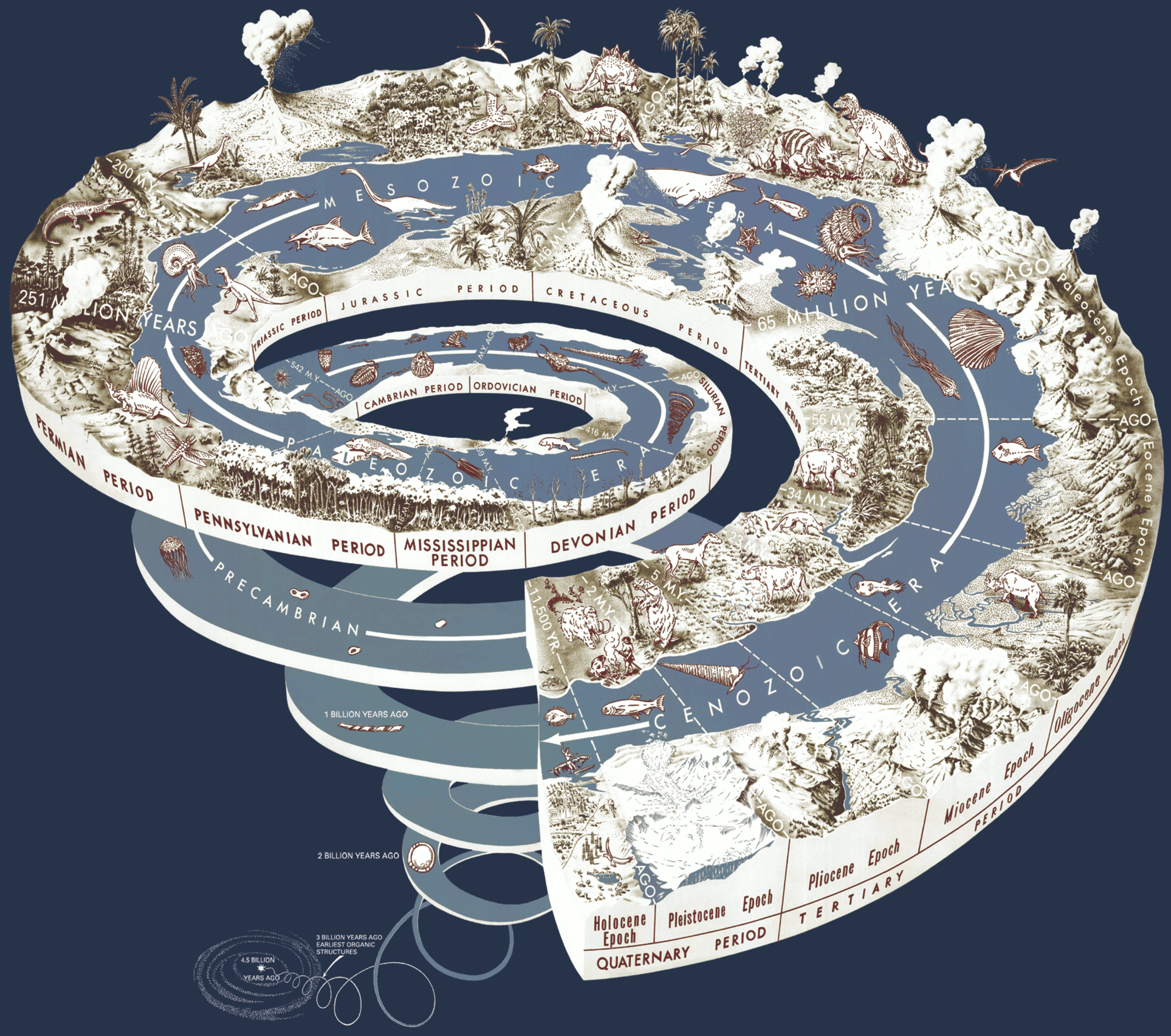
12- Trying to understand the mind of God using the timescales and types of creation e.g. approx. 10 billion years after the creation of the universe, the Earth is formed. Then half a billion years later the first life forms emerge (i.e. single celled organisms such as the first prokaryotes). Humans come into the scene only 100-200 thousand years ago (something for Islamic philosophers to discuss with scientists?)
and many more questions waiting to answered not just in life sciences but also social sciences; but by who? Muslims? or other scientists?
The above might have been a one-off miracle by Allah but we also know that this is a ‘cause and effect’ world thus Allah may have left clues about them somewhere if we look close enough to the right places. And also to bear in mind: Surely these questions cannot be answered by a single scientist but by a consortium of scientists from many backgrounds.
It is not all doom and gloom for the Muslim world as there are many distinguished Muslim medical and social scientists out there and I believe we must acknowledge their achievements by rewarding them accordingly, maybe through starting a competition just like the Nobel Prize within the Islamic world (with the winners being decided by scientists from all over the world so that it does not lose it’s credibility). This would surely breathe new life into the scientific world and increase the enthusiasm within Muslims…
Many aspects of the Quran and the Hadith remain undiscovered and it is up to us find these jewels, and we cannot afford to wait for non-Muslims to do it for us. Muslim leaders of the world could fund projects and such consortiums as aforementioned which would once again gain the attraction of the Muslim world, encourage them to learn about Science and inspire future generations to become great scientists. We cannot carry on living in ignorance while science keeps improving. We have to contribute to it like our ancestors have been doing in the past; and more importantly, because The Creator wants us to!
Deduction of Human migrations and Ancestry through the use of Uniparentally inherited DNA
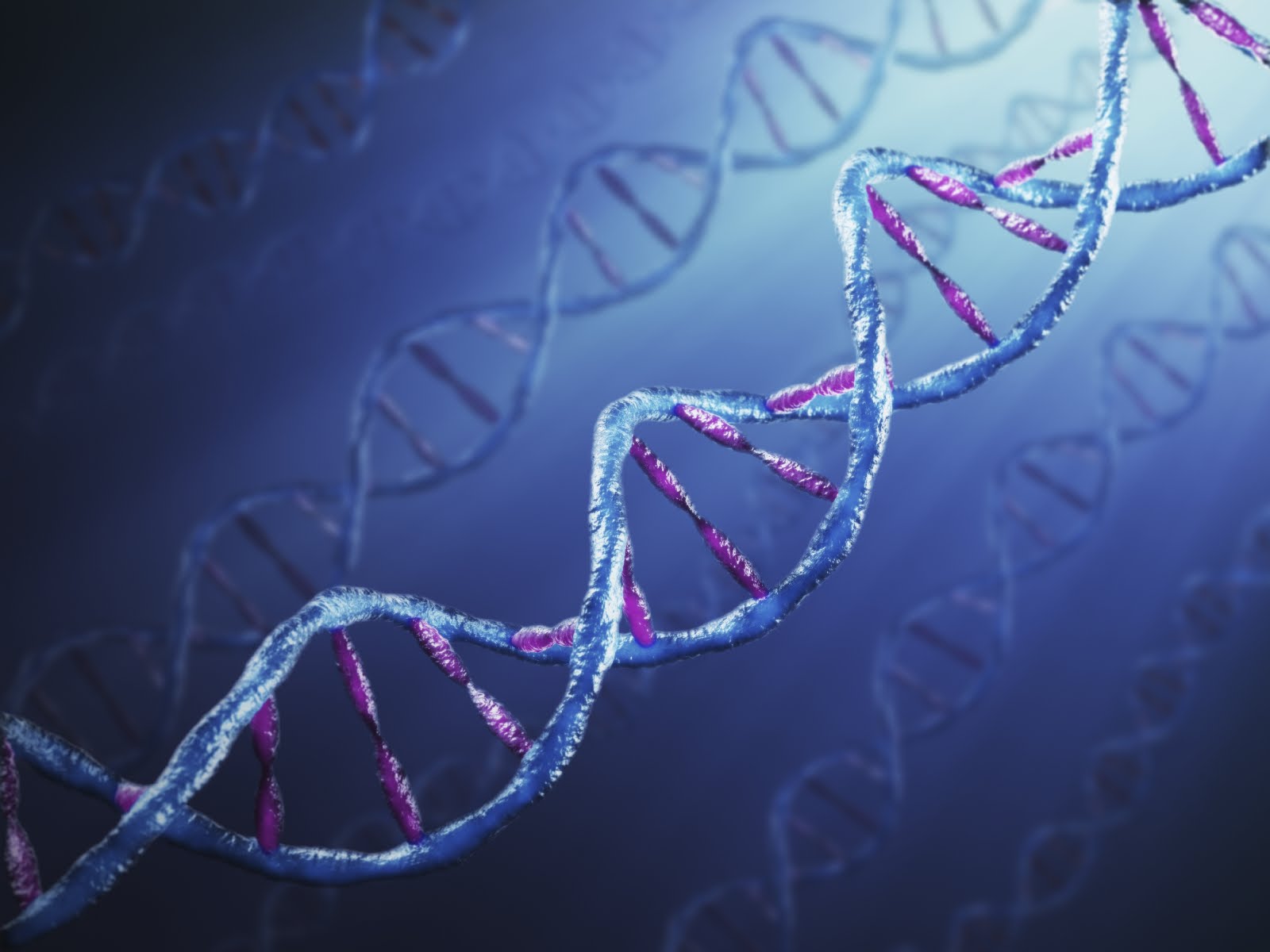
Our genome is made up of 22 pairs of autosomes and 2 sex chromosomes making up a total of 46 chromosomes. We inherit half from our mother and the other from our father. If you receive an X from both your parents, you will become a female; and if you receive a Y from your father (you will always receive an X from your mother) you will be male. This makes the Y chromosome (excluding the pseudo-autosomal regions) the only nuclear chromomosome which is uniparentally inherited (males inherit it only from their fathers and females do not have it). Because it does not have a homologous pair (like the autosomes do), recombination does not occur thus no mix up of DNA sequences occur. This is why it is unique in the way that fathers pass on the same DNA sequence to their sons without any change (except for a few spontaneous mutations). So if we could go back in time and check the DNA sequence of the Y chromosome of your grandfather 20 generations back we would see that you have the same as his (apart from minor changes). This is why information through the analysis of the DNA sequence in the non-recombining regions can be used to deduce an individual’s ancestry (Jobling and Tyler Smith, 2003).
Information from the Non-recombining regions of the Y Chromosome
The Y chromosome of many males from all world populations have been analysed and a phylogenetic tree which is rooted to Africans has been constructed (Karafet et al 2008). The same is true for the mitochondrial DNA also (van Oven and Kayser, 2008). Each branch of the tree is called a ‘haplogroup’ which is the term used to describe a group of individuals who share the same Y-DNA haplotypes (or mitochondrial haplotypes in terms of the mtDNA phylogenetic tree), thus share a common ancestor some time in history (Underhill and Kivisild 2008).
European males usually belong to one of the two major Y-DNA haplogroups: R and I (seeeupedia.org)
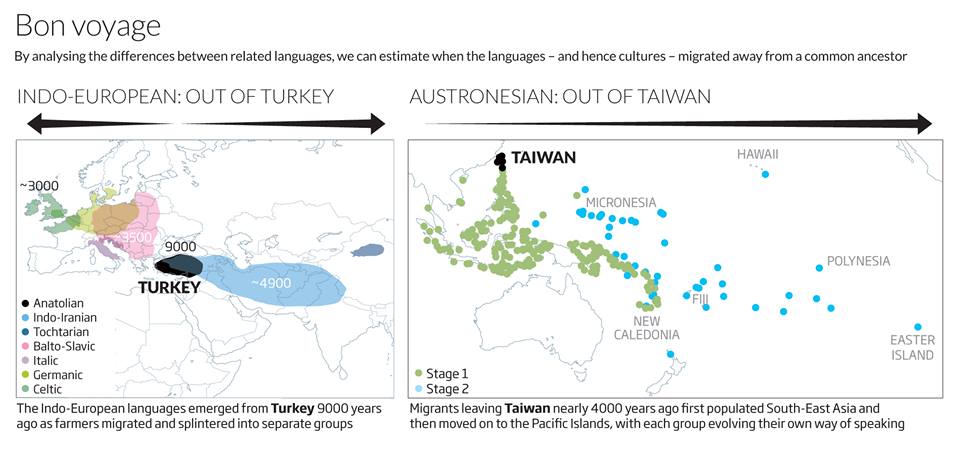
R is by far the most prevalent accounting to over 70% of males in Europe and I accounts for just over 20% (see eupedia.com for more information). What is intriguing however is that, through the analysis of the frequencies of the haplogroups in different regions of the world, haplogroup I seems to correspond to native Europeans whereas the R haplogroup seems to have arrived from Anatolia where present day Turkey is.
To conclude, there is definitely strong evidence that most European males share a common ancestor who lived in Turkey quite a few centuries ago. Human history is an intriguing area and genetics has a lot to offer to these studies!
Same for European languages?
For more information (ordered to help understand the issue better):
– Underhill PA, Kivisild T. 2007. Use of y chromosome and mitochondrial DNA population structure in tracing human migrations. Annu Rev Genet. 2007;41:539-64.
– Jobling MA, Tyler-Smith C. 2003. The human Y chromosome: an evolutionary marker comes of age. Nat Rev Genet. 2003 Aug;4(8):598-612.
– Karafet TM et al. 2008. New binary polymorphisms reshape and increase resolution of the human Y chromosomal haplogroup tree. Genome Res. 2008 May;18(5):830-8. Epub 2008 Apr 2.
– van Oven M, Kayser M. 2009. Updated comprehensive phylogenetic tree of global human mitochondrial DNA variation. Hum Mutat 30(2):E386-E394. http://www.phylotree.org.
Ben 12 yaşındayken (2000) ailecek İngiltere'ye taşındık ve ingilizcem neredeyse sıfırdı. Bunu duyan (Karen Holman adında) Sınıf Öğretmenim, kendimi evimde hissedeyim diye tüm arkadaşlarıma Türkçe cümleler dağıtmış. Sınıfa girer-girmez arkadaşlarımın hepsi bana "Hoşgeldin" dediler










 An ordinary blog by an ordinary bloke