by Dr A. Mesut Erzurumluoğlu | Principal Bioinformatician at Bicycle Therapeutics (formerly at Boehringer Ingelheim, and Univs. of Cambridge, Leicester & Bristol) – blogging since 2006. All views mine unless stated otherwise
Gönül muhabbet ister podcast bahane! 🙂 Genelde, başarılı, bilgilive ‘cool’ insanlarla hafif konularda muhabbet ediyoruz. Twitter’da #AzIsCokLaf hashtagini kullanarak öneride bulunabilirsiniz. (Not: Yavaş konuştuğumuzu düşündüğünüz bölümlerde Spotify ya da Youtube’un 1.2x hızlandırma özelliğini kullanabilirsiniz)
Az İş Çok Laf – Bölüm 15: Kök hücre biyolojisi ve kalıtım üzerine – Dr Ahmet Can Berkyürek (06/04/2021)
Bu bölümde, Cambridge Üniversitesi ve Osaka Üniversitesi gibi dünyanın en iyi üniversitelerinde kök hücre ve kanser biyolojisi, ve nesiller arası epigenetik kalıtım gibi farklı alanlarda önemli çalışmalar yapmış/yapan Dr Ahmet Can Berkyürek’le bu alanlardaki son gelişmeler ve projeleri üzerine konuştuk. Yakında İngiltere’nin en iyi üniversitelerinden biri olan University College London’da kendi grubunu kuracak olan Berkyürek, moleküler biyoloji alanında akademik kariyer yapmak isteyen gençlere de tavsiyelerde bulundu.
Podcast’te kullanılan terminoloji:
1- Epigenetik (epigenetics): Gen ifadesi değişikliklerini inceleyen bilim dalıdır. Basitleştirirsek: İnsanın ~50 trilyon hücresinin her birinde (neredeyse) aynı DNA dizilişi vardır fakat hücrelerimizin, örneğin bir kısmı yağ hücresi, bir kısmı nöron, bir kısmı da deri hücresine dönüşür (insanda ~200 farklı çeşit hücre türü vardır). Kök hücrelerin (Vikipedi) farklı hücrelere dönüşmesini ve tekrar bölündüklerinde yine aynı hücre tipine (nöron->nöron) bölünmesini sağlayan, epigenetik mekanizmalardır (Vikipedi).
2- Nesiller-arası epigenetik kalıtım (transgenerational epigenetic inheritance): Bir bireye >3 jenerasyon önceki atalarından epigenetik degişikliklerin aktarılması. (Not: Nesiller-arası epigenetik kalıtım bazı ‘daha basit’ organizmalarda gözlemse de insanlarda henüz tatmin edici delillerle kanıtlanmamıştır.)
3- C. elegans (“sii elegans” diye okunur): İpliksisolucan – özellikle moleküler biyoloji alanında, canlılardaki (insanlardaki) farklı gelişimsel mekanizmaları anlamak için kullanılan ‘model’ organizmalardan biridir (Vikipedi)
4- Apoptoz (apoptosis): Programlanmış hücre ölümü/intiharı – bu mekanizmanın doğru çalışması hücrelerin kansere dönüşmemesi ya da etrafındaki dokulara zarar vermemesi için önemli (Vikipedi)
Gönül muhabbet ister podcast bahane! 🙂 Genelde, başarılı, bilgilive ‘cool’ insanlarla hafif konularda muhabbet ediyoruz. Twitter’da #AzIsCokLaf hashtagini kullanarak öneride bulunabilirsiniz. (Not: Yavaş konuştuğumuzu düşündüğünüz bölümlerde Spotify ya da Youtube’un 1.2x hızlandırma özelliğini kullanabilirsiniz)
Az İş Çok Laf – Bölüm 14: Genç yaşta girişimcilik üzerine – Selahattin Furkan Karadaş (31/03/2021)
Bu bölümde, genç yaşta SÜTUN Akademi (bir etkinlik: GriFest Ankara), ANMUN/d’MUN (Model United Nations), FUNTALYA (Fantasy United Nations), EDRO (İngiltere’de eğitim danışmanlığı) gibi başarılı girişimlerde bulunan, aynı zamanda da Leicester Üniversitesinde Hukuk lisans öğrencisi olarak okuyan Selahattin Furkan Karadaş’a (kendinden de) gençlere girişimcilik tavsiyelerini sorduk ve Z jenerasyonunun (Gen Z) problemleri üzerine konuştuk.
Podcast’te kullanılan terminoloji:
1- Z jenerasyonu (Generation Z): 1996 yılından sonra doğan gençleri tanımlamak için kullanılıyor (Detaylar için: BBC Türkçe haberi – 1 Temmuz 2020)
2- Brexit: İngiltere, Galler, İskoçya ve Kuzey İrlanda’dan oluşan Birleşik Krallık’ın Avrupa Birliğinden ayrılması – ‘Britain’ ve ‘exit’ kelimelerinden oluşan bir bileşik kelimedir (Detaylar için: BBC Türkçe haberi – 1 Ocak 2019)
Some Leicester landmarks (clockwise from top-left): Jewry Wall (Roman site), National Space Centre, Arch of Remembrance (located in one of my favourite parks, Victoria Park), Central Leicester (near the Clock Tower), Curve theatre, Leicester Cathedral (where Richard III is buried)and Guildhall, Welford Road Stadium (Leicester Tigers’ ground), Leicester Market (where Gary Lineker once worked as a teenager). Image source: wikipedia.org
Important Notes: I declare no conflict of interest for any of the places of interest, stores or restaurants I mention below. I also take no responsibility if you have a bad experience in/at any of my recommendations.
Don’t forget to watch these videos by ‘Visit Leicester’
It’s happened again: As I’m quite famous(!) in my circles for still living in Leicester (read ‘less-ter’ or ‘Lestah’ if prefer local language) although I work at the University of Cambridge, I once again got asked about how life in Leicester is. So it’s time for me to write a blog post and share my general views. To get a more comprehensive view, you can always read the relevant Wiki page, which has a lot of nice information but is boring to say the least 🙂
TL;DR – cut the crap and tell me why I should live in/visit Leicester!
Leicester’s famous for:
1- Being one of the most multicultural cities in the UK – you can eat fantastic Indian, Chinese, Italian and Turkish food for great prices and there’s always some festival going on (e.g. Leicester Caribbean Carnival, Diwali Day Celebrations, Comedy Festival – see list here). You can also find almost everything Indian on Melton Road or stores such as Falcon Cash & Carry
2- Its sports teams such as Leicester City FC (watch this documentary) and Leicester Tigers (one of the most successful and famous Rugby teams). Leicester Riders is also one of best basketball teams in England but the sport isn’t that popular here.
3- Its famous sites such as Richard III’s Tomb (at Leicester Cathedral), Roman settlements from two millennia ago (e.g. see Jewry Wall Museum), and the National Space Centre
4- Its famous people/bands such as Sir David Attenborough (and the Attenborough family), Gary Lineker, Prof. Sir Alec Jeffreys (see below), Kasabian, Engelbert Humperdinck, Mark Selby and many others
Sir Alec is the main reason I chose to study Genetics @uniofleicester. My father was a criminologist and he kept mentioning DNA fingerprinting and how it changed the field.
I had the privilege of being lectured by him too in 2010 (2nd year). To many years!
5- The discovery of DNA fingerprinting – which revolutionised forensic investigations – at the University of Leicester (a top 200 university) by Prof. Sir Alec Jeffreys (read about one high-profile case here)
6- Its famous exports such as Thomas Cook (who rests at Welford Rd Cemetery – see tweet below), Walkers Crisps, and Admiral Sportswear – who manufactured and marketed the first football kits in the 1970s (Quorn could also be included in this list)
One of Leicester's most famous names, Thomas Cook (d. 1892) and family's modest grave.
— A. Mesut Erzurumluoğlu (@mesuturkiye) July 25, 2020
7- Its fantastic countryside (especially Bradgate Park, Watermead Park, Beacon Hill/Outwoods, Charnwood Forest, Foxton Locks, Rutland Water, Wistow Maze) and other ‘green’ spaces (e.g. University Botanic Garden, Attenborough Arboretum, Brocks Hill Country Park, Wash Brook Nature Reserve, Shady Lane Arboretum, Barnsdale Gardens (£), Launde Abbey/Park, Aylestone Meadows, Knighton Park, Abbey Park, Stoney Cove, Spinney Hill Park).
The beautiful Heights of Abraham and Dovedale (both in different parts of Peak district), Attenborough Nature Reserve (Nottingham) and Wollaton Park (Nottingham) are also a ~50 minute drive away. West Midlands Safari Park (near Birmingham) is ~1hr 20mins away.
Bradgate Park in 2025 (Credit: Mesut Erzurumluoglu)
Knighton Park panoramic view (Credit: Kerem Aydın)
8- Its geographical location as it’s within driving distance to almost all major cities and English Heritage sites (incl. being very close to Warwick Castle, Isaac Newton and Shakespeare’s birthplaces, the historical market town of Market Harborough, and Stamford/Burghley House). Also Birmingham International Airport being ~50 mins away has been fantastic for picking up my visitors from abroad – mostly Turkey
9- Being ‘value for money‘: You can buy a flat/house in a nice neighbourhood and provide a decent life for your family with an average salary (~£2000 a month***)
(10- I don’t go to pubs much but there are some nice pubs like The Old Horse, The Grange Farm, The Landsdowne and the Marquis – but don’t take my word for the quality of their drinks)
That’s it! If you want further info and like watching videos, then I would also recommend this video on top 50 attractions in Leicester and this playlist on Leicester (or this YouTube channel on the Oral history of Leicester and the East Midlands)
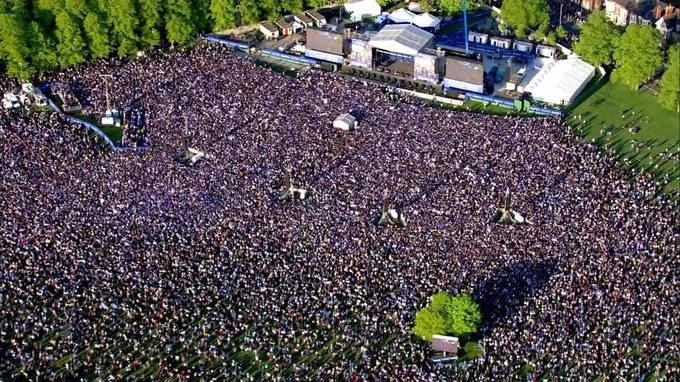
Leicester City FC ‘Victory Parade’ at Victoria Park (May 2016). Image source: itv.com4.561 billion year old Barwell Meteorite displayed in Leicester MuseumAt Welford Rd Cemetery with my son Isaac – where Thomas Cook and his family also rests
Who are you to talk about Leicester?
I’m 31 at present, and although I was born in Turkey, I only lived there (in Ankara) for 6 years and 22 yearsin total in Leicester: between ages 1-7, then did my SATs (ages 12-14) and GCSEs (15-16) at Crown Hills Community College, A-Levels (16-18) at Wyggeston & Queen Elizabeth I College, undergraduate degree (19-23) and first Postdoc job (27-30) at the University of Leicester (see My Research page for details). I also met my wife, got married (at the Town Hall) and became a father in Leicester. The magical 2015-16 Premier League season happened the year I returned to Leicester to work at the University of Leicester after a 4-year stint in Bristol (ages 23-27) for a PhD at the University of Bristol. I had been watching most (and even attending some) Leicester City FC games when I used to live in Bristol between 2012 and 2015.
My photo was used in the University of Leicester Undergraduate Prospectus 2012/13, 13/14 and 14/15 (in the Biological Sciences section). See my blog post on the matter.
Since my second arrival to the UK in 2000, I’ve been very active in the Turkish/Kurdish community in Leicester, worked in many take-away shops in different parts of Leicester and even served as the President of the Turkish Society at the University of Leicester for ~2 years. I even co-setup a Sunday league football team for in 2007. Through these, I’ve met all sorts of people and taken part in many sportive, intercultural and interfaith events in Leicester – so I’m more knowledgeable than many in this regard. For example, I know that many religious groups and sects that you’ve probably never heard of have a temple/shrine in Leicester (see Leicester Council of Faith for some examples – I even met a true Shaman in one event who offered to read tarot cards for me and invited me to their place for some enlightenment 🙂 ).
Throughout the years I became a bit of an ambassador for Leicester as the city became famous – and more and more of my friends started paying a visit out of curiosity. I’ve taken >100 people/families on a Leicester tour over the last 3-4 years.
I was truly honoured to have been awarded the Future Leader (2020) award by my fellow alumni.
The city and University of Leicester have always been special for me and tonight has made them even more special. https://t.co/Fq61WEd8rb
— A. Mesut Erzurumluoğlu (@mesuturkiye) March 6, 2020
Life in Leicester for me
I like to keep it short when introducing “my second home town” (or more correctly joint-first): Leicester is a wonderful place to live in. For me it’s just the right size: not too big, not too small. It has so much to offer for any type of person – whether you like food, sports, cultural activities, the countryside or history. It’s geographically well placed so you are close to almost all cities in England – you can go to London in an hour by train which is how long it takes for most Londoners to reach somewhere in London. I made it to North London (e.g. Woodgreen) so many times in ~90 minutes by car. Add on top of all this the world-class university (that is, the University of Leicester but even DeMontfort University’s competitive in certain fields) and getting the chance to meet people of many many ethnicities/cultures and faith with virtually no violence/tension between the different communities. Not too many reasons to be unhappy 🙂
I tried some of my favourite* Indian food at Tipu Sultan and Kayal**, (Western) Chinese food at Karamay, and Turkish food at Konak. It’s also been nice to see Korean-inspired Grounded Kitchen do so well since opening their first store on Queens Road exactly where our old (TJ’s Kebab) take-away shop used to be (yes! we used to own a take-away shop like most Turks have in the UK!). There are also some fantastic cafes and book shops on/near London Road, Queens Road (esp. Loros and Clarendon Books) and St Martin’s Square.
Cavendish House ruins in Abbey Park
I really enjoy walking to the Welford Road Cemetery with my wife for its serene atmosphere or to Chaiiwala and having a nice Karak Chai. We occasionally enjoy a tandoori chicken box from Tuk Tuk Journey, a curry box from Bombay Bites, bubble tea from Hi Tea or a pizza from our favourite TJ’s (Evington Village). I should also mention the Phoenix, Curve, and the Attenborough Art Centre for their Film Festivals and interesting events.
In short, there’s so much I personally like about Leicester!
I hope this has been sufficient in convincing you to at least pay a visit, but if you have specific questions, feel free to ping me an email at m.erz@hotmail.com
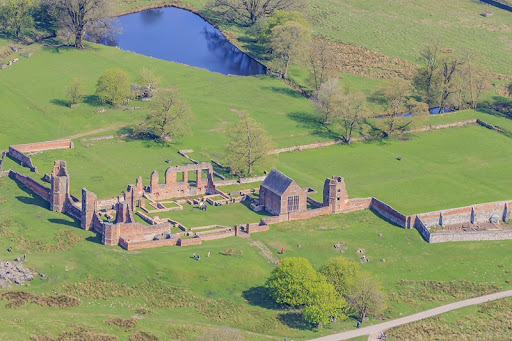
The beautiful Bradgate Park with its ruins, river and deers. Image source: leicesterairport.com
Footnotes:
*As with all my blog posts, these are my views on the day of writing
**I’m being told there are some fantastic Indian restaurants (and dessert shops) on the ‘Golden Mile‘ – so should give those a try too! I also recently discovered Anmol Sweet Centre on Welford Road and their Samosas are amazing!
***My salary (after tax & other deductions) when I started working at the University of Leicester in 2015 – my first ‘proper’ job. My rent was £600 when I lived with my family (2015-19) in a 2-bedroom flat in Stoneygate (nice neighbourhood) – 20 minute walk to the University of Leicester. I then moved to a 3-bedroom house with a garden in a very nice neighbourhood (again in Stoneygate – 15 mins away from the University) and my rent is £800.
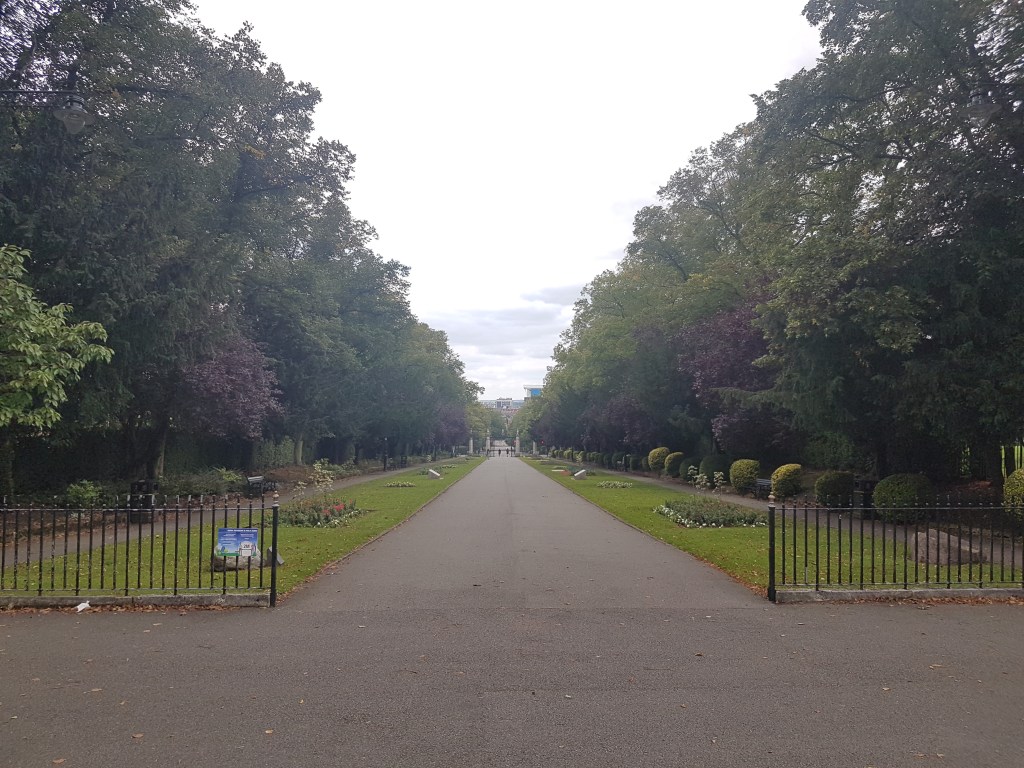
Get on the steam train from the ‘Leicester North’ station‘Peace walk’ which leads to the Arch of Remembrance in Victoria Park from University Road – where University of Leicester’s main campus is
This blog post first appeared on the Leicester Connect webpage (a platform for University of Leicester Alumni) on the 20th March 2020
Out of all the inspirational quotes on the internet, an old Sufi saying is the one that touches me the most:
“There are as many paths to God as there are souls on Earth.”
Although it is mostly used in a religious (mostly Islamic) setting, for me it carries truths that tower above this narrow meaning. It especially reminds me that we all start from different steps of the ladder, face different challenges along the way, and ultimately end up where we are because of the way we respond to those challenges, the doors that are open to us and the people we meet along the way – with the latter two we mostly cannot control.
I was kindly asked if I could write a blog post after being awarded the Future Leader Award at the 2020 Alumni Awards. I am grateful and honoured to have received the award but also acknowledge that there were at least two more people (my fellow finalists) who deserved it as much as me – if not more.
I would like to start by saying – from my experience in life and academia – that there are no objective criteria which separates those “who made it” versus those who just fell short. I got to meet plenty of people and interview panels who I felt judged me using very narrow and subjective criteria and ignored every other quality I had. It’s always nice to get the job or funding you applied for, however I never dwelled on the outcome if I did my preparation right. I would strongly recommend this approach.
I was truly honoured to have been awarded the Future Leader (2020) award by my fellow alumni.
The city and University of Leicester have always been special for me and tonight has made them even more special. https://t.co/Fq61WEd8rb
— A. Mesut Erzurumluoğlu (@mesuturkiye) March 6, 2020
Free yourself from the need for appreciation
Many academics suffer from a condition called Impostor Syndrome – simply put, doubting one’s own accomplishments and constantly fearing being exposed as a “fraud”. I can’t say I ever had it because I always thought of myself as successful in my own way and never sought confirmation from anyone. Although striving to improve myself all the time, I was happy with “just trying to do the right things” – irrespective of the outcome.
I base this belief on the fact that the people who judge us do not know the full story about us. Maybe if they did, they would look at us differently. For example, someone who is born to a middle-class English family will not be able to judge how much of a success it is for an immigrant to learn advanced-level English from scratch, get citizenship and compete for the same positions. Someone who has not had any serious health issues will not be able to comprehend what success is for a disabled person. How about a person who has managed to stay away from crime in a neighbourhood full of ignorance, hate and violence? None of these are mentioned in a CV and no one finds these people and offers them an MBE… or a job. However, this doesn’t change the fact that these people are inspirational and successful. I can only wish more people would realise this and stop treating subjective decisions about themselves or others as objective truths.
I feel privileged to be living in the UK which is a relatively meritocratic country and has a higher quality of life index compared to most. However, this also means that the competition is fiercer for “top jobs” and can mean those from underprivileged backgrounds are affected severely. One must realise this early on and respond to the challenge. The good news is that there are plenty of people out there who are willing to help and share their knowledge and experience when approached.
Believe in yourself but get help. Make friends!
I had to overcome many financial, emotional and visa issues during my undergraduate years which undoubtedly affected my performance. When I somehow graduated from the University of Leicester with a 2.1 in BSc Genetics in 2011, I did not listen to the people who thought I would not be able to make the cut in academia and started applying for PhDs. Before applying, I read all the blogs and papers that were out there about “selling yourself well” and making your CV stand out. I alwaysdid my research before taking an important step. Thankfully, I must have been at the right place at the right time as I was very fortunate to be offered a fully-funded studentship at the University of Bristol – I remember even my interview not going that well. The scholarship freed me from the shackles of financial distress as I was embarking on an academic career.
Again, doing my thorough background reading, I quickly realised that the field of Genetic Epidemiology – the field I now found myself in – required a solid foundation in medical statistics, epidemiology, bioinformatics, and programming as well as human genetics. I realised and accepted my limited expertise in these fields and got to work. I got all the help and knowledge I need from my supervisors, friends, online courses, blogs and research papers. I made sure I spent at least 2-3 hours a day on improving myself on top of working on my specific PhD project. Not keeping to myself, I was also supportive and sincere with my “PhD friends” who were on the same boat as me. I’m still close with many of my supervisors/teachers and friends. I couldn’t have achieved what I’ve achieved without their help.
Ultimate success: happiness and self-respect
In this fast-paced world, especially in academia, we continually forget that family and friends are worth more than any academic success. Although my academic papers are important to me – and I can only hope they’ll be useful to someone, somewhere, somehow – I do not spend much time thinking about my papers or PhD thesis. But I’m always longing to spend more time with my family and friends and the fact that I have them is the success of my life.
I want to finish by saying that I was very fortunate to get to where I am and achieve many milestones in the process, but it could have all turned out very differently, very easily. Yes, I triedto do the right things, but many things were out of my control. But as long as I had my friends and family, I’d like to think I would have been happy wherever I ended up.
I wrote all of these to convince you of one thing: do not let others – even senior people – define what success is for you as they do not know you and how you got to where you are. Just keep doing the rights things and, with the help and support of your loved ones, you’ll eventually get through everything in life.
Feel free to contact me!
I blog – in English and Turkish – about my research and other academia and culture-related things…
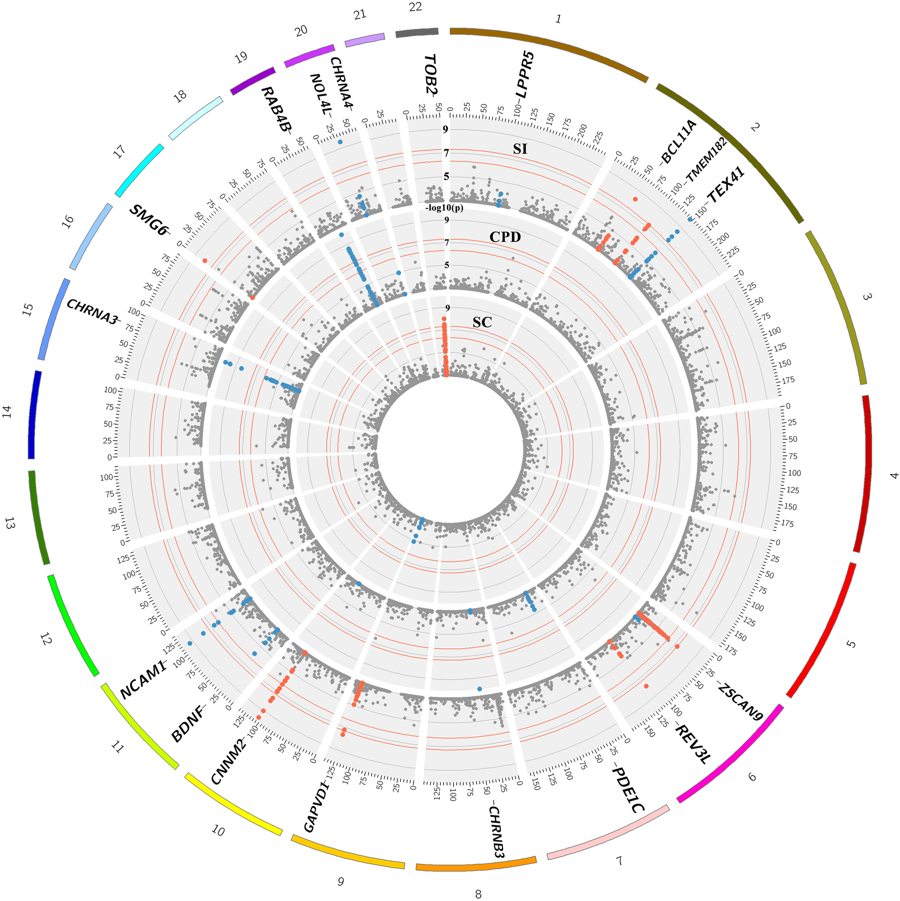
A ‘Circos’ plot (with three concentric circular ‘Manhattan’ plots) presenting results from our latest genetic association study of smoking behaviour – showing some (not all) regions in our genome that are associated with smoking behaviour (Erzurumluoglu, Liu, Jackson et al, 2019). SI: Smoking initiation – whether they smoke or not; CPD: Cigarettes per day – how many cigarettes do they smoke per day; SC: Smoking cessation – whether they’ve stopped smoking after starting. Labels in the outer circle show the name of the nearest gene to the identified variants. X-axis: Genomic positions of the variants in the human genome (chromosome numbers, 1-22, in the outer circle), Y-axis: Statistical significance of the genetic variants in this study – higher the peak, greater the significance. Red peaks are the newly identified regions in the genome, and the blue ones were identified by previous groups. Image source: Molecular Psychiatry
I believe that all scientists should be bloggers and that they should spare some thought and time to explain their research to interested non-scientists without using technical jargon. This is going to be my attempt at one; hopefully it’ll be a nice and short read.
We’ve just published a paper in one of the top molecular psychiatry journals (well, named Molecular Psychiatry 🙂 ) where we tried to identify genetic variants that (directly or indirectly) affect (i) whether a person starts smoking or not, and once initiated, (ii) whether they smoke more. The paper is titled: Meta-analysis of up to 622,409 individuals identifies 40 novel smoking behaviour associated genetic loci. It is ‘open access’ so anyone with access to the internet can read the paper without paying a single penny.
If you can understand the paper, great! If not, I will now try my best to explain some of the key points of the paper:
Why is it important?
Smoking causes all sorts of diseases, including respiratory diseases such as chronic obstructive pulmonary disease (which causes 1 in 20 of all deaths globally; more stats here) and lung cancer – which causes ~1 in 5 of all cancer deaths (more stats here). Therefore understanding what causes individuals to smoke is very important. A deeper understanding can help us develop therapies/interventions that help smokers to stop and have a massive impact on reducing the financial, health and emotional burden of smoking-related diseases.
Genes and Smoking? What!?
There are currently around fifty genetic variants that are identified to be associated with various smoking behaviours and we identified 40 of them in our latest study, including two on the X-chromosome which is potentially very interesting. There are probably hundreds more to be found*. So, it’s hard to comprehend but yes, our genes – given the environment– can affect whether we start smoking or not, and whether we’ll smoke heavier or not. This is not to say our genes determine whether we smoke or not so that we can’t do anything about it.
There are three main take-home messages:
1- I have to start by re-iterating the “given the environment” comment above. If there was no such thing as cigarettes or tobacco in the world, there would be no smoking. If none of our friends or family members smoked, we’re probably not going to smoke no matter what genetic variants we inherit. So the ‘environment’ you’re brought up in is by far the most important reason why you may start smoking.
2- I have to also underline the term “associated“. What we’re identifying are correlations so we don’t know whether these genetic variants are directly or indirectly affecting the smoking behaviour of individuals – bearing in mind that some might be statistical artefacts. Some of the genetic variants are more apparently related to smoking than others though: for example, variants in genes coding for nicotine receptors cause them to function less efficiently so more nicotine is needed to induce ‘that happy feeling‘ that smokers get. Other variants can directly or indirectly affect the educational attainment of an individual, which in turn can affect whether someone smokes or not. I’d highly recommend reading the ‘FAQ’ by the Social Science Genetic Association Consortium (link below) which fantastically explains the caveats that comes with these types of genetic association studies.
3- Last but not least, there are many (I mean many!) non-smokers who have these genetic variants. I haven’t got any data on this but I’m almost 100% sure that all of us have at least one of these variants – but a large majority of people in the world (~80%) don’t smoke.
Closing remarks
To identify these genetic variants, we had to analyse the genetic data of over 620k people. To then identify which genes and biological pathways these variants may be affecting, we queried many genetic, biochemical and protein databases. We’ve been working on this study for over 2 years.
Finally, this study would not be possible (i) without the participants of over 60 studies, especially of UK Biobank – who’ve contributed ~400k of the total 622k, and (ii) without a huge scientific collaboration. The study was led by groups located at the University of Leicester, University of Cambridge, University of Minnesota and Penn State University – with contribution by researchers from >100 different institutions.
It will be interesting to see what, if any, impact these findings will have. We hope that there will be at least one gene within our paper that turns out to be a target for an effective smoking cessation drug.
Meta-analysis of up to 622,409 individuals identifies 40 novel smoking behaviour associated genetic loci – by Erzurumluoglu, Liu and Jackson et al https://t.co/vTxzjOPlpm
*in fact we know that there is another paper in press that has identified a lot more associations than we have
Great to see this published today in Molecular Psychiatry. A huge team effort, using data from 60 studies and @uk_biobank, to further our understanding of the biology behind #tobacco#addiction. https://t.co/0sGD3Q40yr
We – as a group – carried out the largest genome-wide association study to identify genetic variants that are associated with decreased lung function and increased risk of chronic obstructive pulmonary disease. We hope that our findings will ultimately lead to the identification of effective drug targets for COPD. Image source: University of Leicester
I remember reading somewhere that ‘if you get asked the same question three times, then write a blog post about it’. That’s what I’ve been doing so far, and the purpose of this blog post is the same: to try and provide an answer to a commonly asked question. (Important note: my answers are in no way authoritative and only meant for interested non-scientists)
As a ‘Genetic Epidemiologist’, I constantly get asked what I do and what my (replace ‘my’ with ‘our’, as I do everything within a team) research can lead to. Please see my previous post ‘Searching for “Breathtaking” genes. Literally!‘ and My Research page for short answers to these questions. In tandem to these, I am constantly asked ‘why we can’t find a ‘cure’ for (noncommunicable) diseases that affect/will affect most of us such as obesity, diabetes, cancer, COPD – although there are many scientific advancements?’. I looked around for a straight forward example, but couldn’t find one (probably didn’t look hard enough!). So I decided to write my own.
I will first try and put the question into context: We do have ‘therapies’ and ‘preventive measures’ for most diseases and sometimes making that distinction from ‘a cure’ answers their question. For example, coronary heart disease (CHD) is a major cause of death both in the UK and worldwide (see NHS page for details) but we know how we can prevent many CHD cases (e.g. lowering cholesterol, stopping smoking, regular exercise) and treat CHD patients (e.g. statins, aspirin, ACE inhibitors). However, there are currently there are no ‘cures’ for CHD. So once a person is diagnosed with CHD, it is currently impossible to cure them from it, but doctors can offer quite a few options to make their life better.
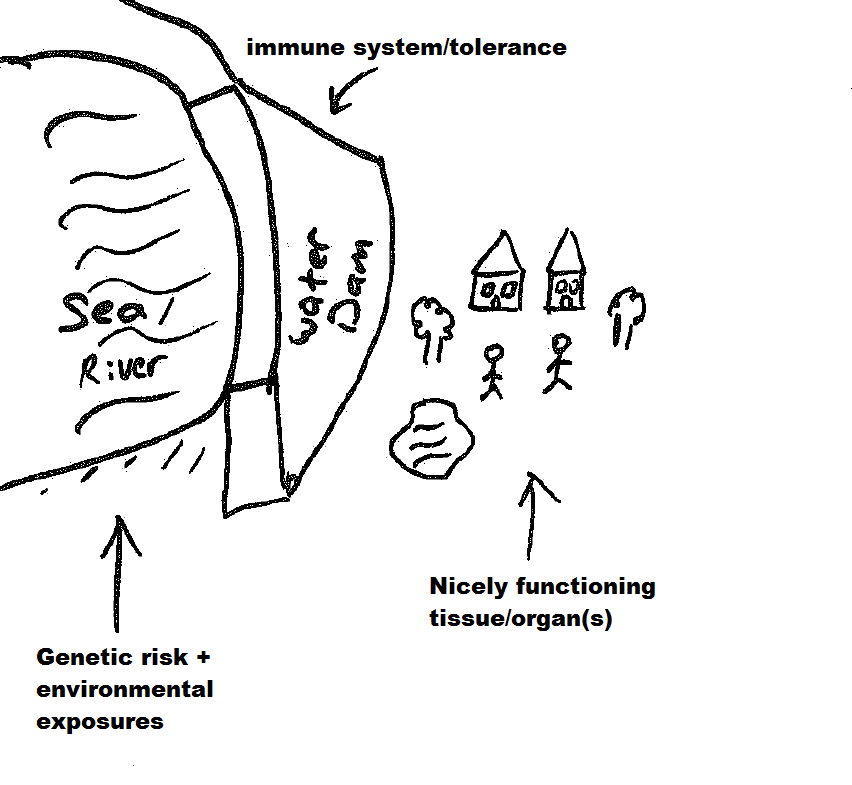
I then gave it some thought about why finding a ‘cure’ was so hard for most diseases, and came up with the below analogy of a river/sea, water dam, and a nicely functioning village/city (excuse my awful drawing!).
The first figure below sets the scene: there’s a water dam that’s keeping the river from flooding and damaging the nice village/city next to it. Now please read the caption of the below figure to make sense of how they’re related to a disease.
The river/sea is the combination of your genetic risk (e.g. you could have inherited genetic variants from your parents that increased your chances of type-2 diabetes) and environmental exposures (e.g. for type-2 diabetes, that would be being obese, eating high sugar content diet, smoking). The water dam is your immune system and/or mechanisms in your body which tame the sea of risk factors to ensure that everything in your body work fine (e.g. pancreatic islet cells have beta cells which produce insulin to lower your glucose levels back to normal levels – which would be damaging to the body’s organs if it stayed high).
So to ‘prevent’ a disease (well, flooding in this case), we could (i) make the water dam taller, (ii) make the dam stronger, and (iii) do regular checks to patch any damage done to the dam. To provide an example, for type-2 diabetes, point (i) could correspond to being ‘fit’ (or playing with your genes, which currently isn’t possible), point (ii) could correspond to staying ‘fit’, and point (iii) could correspond to having regular check-ups to see whether any preventive measures are necessary. Hope that made sense. If not, please stop reading immediately and look for other blog posts on the subject matter 🙂
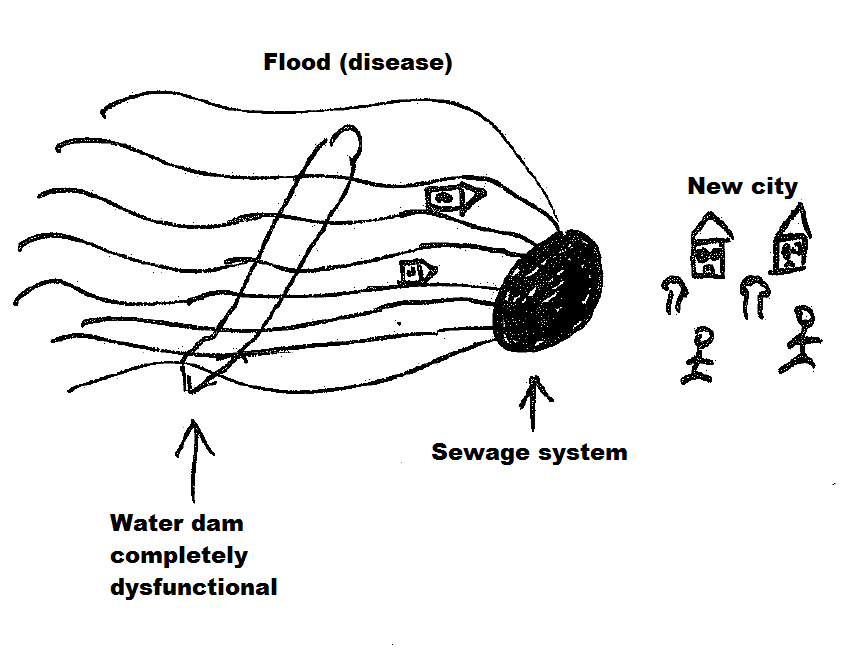
Using the figure below, I wanted to then move to ‘therapy’. So as you can see, the river has flooded i.e. this individual has the disease (e.g. type-2 diabetes as above). The water dam is now not doing a good job of stopping the river and the city is in danger of being destroyed. But we have treatments: (i) The (badly drawn) water pumping trucks suck up excess water, and (ii) we have now built a second (smaller) dam to protect the houses and/or slow the flow of the water. Again, to provide an example using type-2 diabetes, water pumping trucks could be analogous to insulin or metformin injections, and the smaller dams could be changing current diet to a ‘low sugar’ version. This way we can alleviate the effects of the current and future ‘floods’.
Analogy for therapy/treatment – after being diagnosed with the disease
Finally, we move on to our main question: ‘the cure’. Using the same analogy as above, as the water dam is now dysfunctional, the only way to stop future ‘floods’ would be to design a sewage system that can mop up all water that could come towards the city. Of course the water dam and ‘old city’ was destroyed/damaged due to past floods, so we’d need to build a new functioning city to take over the job of the old one. A related real example (off the top of my head) could be to remove the damaged tissues and replace them with new ones. Genetic engineering (using CRISPR/Cas9) and/or stem cell techniques are likely to offer useful options in the future.
Analogy for cure – after being diagnosed with the disease
Hopefully it is now clear that the measures taken to prevent or treat the disease, cannot be used to cure the disease. E.g. you can build another dam in place of the old one, but the city is already destroyed so that’s not going to be of any use in curing the disease.
So to sum up, diseases like obesity, cancer, COPD are very complex diseases – in fact they’re called ‘complex diseases’ in the literature – and understanding their underlying biology is very hard (e.g. hundreds of genes and environmental exposures could combine to cause them). We’re currently identifying many causal variants but turning these findings into ‘cures’ is a challenge that we have not been able to crack yet. However, it is clear that the methods that we currently use to identify preventive measures and therapies cannot be used to identify cures.
I hope that was helpful. I’d be very happy to read your comments/suggestions and share credit with contributing scientists. Thanks for reading!
Figuratively speaking, what is the ‘worth’ of a certain academic? Between two academics, which one has had more positive academic impact than the other? How do you rank academics? And award grants, promotion, tenure etc. to the best* ones?
I’m not going to answer these questions but would like to chip in with some food for thought and suggestions.
Well; one may say: “It’s easy! Just compare their h-index and total no of citations!”
This may be an effective way to go about answering the question. Surely someone with an h-index of 30 has had more positive academic impact than someone with let’s say an h-index of 15 – and is the better candidate?
Maybe – that is if all things are equal regarding the way citations and the h-index works i.e. if both academics:
are in similar fields – as papers in certain fields receive more citations overall than papers in other fields,
are in similar stages in their careers – as comparing an early-career postdoc with an established “Prof.” wouldn’t be fair,
have similar numbers of first/equal-first or last author papers – as an academic with many middle-authorships can have excessively inflated h-indexes,
have similar number of co-authors – as it may be easier to be listed as a co-author in some fields than others and/or mean that more people will be presenting and citing the paper as their own, and
have a similar distribution of citations across the papers – as the h-index ignores highly influential papers and the total citations can be highly influenced by even just one of these (see figure below).
I may have missed other factors, but I think these are the main ones (please add a comment below).
Calculating my h-index: Although problematic (discussed here), the h-index has become the standard metric when measuring the academic output of an academic. It is calculated by sorting the publications of an academic from most to least cited, then checking whether he/she has h papers with h citations e.g. if an academic has 10 papers with ≥10 citations but not 11 papers with ≥11 citations then their h-index will be 10. It was proposed as a way to summarise the number of publications that an academic has and their academic impact (via citations) with a single number. The above citation counts were obtained from my Google Scholar page
As of 31st July 2018, I have 14 published papers – including 5 as first/equal-first author – under my belt. I have a total citation count of 316 and an h-index of 6 (225 and 5 respectively, when excluding publications marked with an asterisk in the above figure). It is fair to say that these numbers are above average for a 29-year-old postdoc. But even I’m not content with my h-index – and many established academics are definitely right not to be. I’ll try and explain why: the figure above shows the citation distribution of my 14 publications sorted by the ‘number of times cited’ from the left (highest) to right (lowest). One can easily see that the h-index (red box) captures only a small portion of the general picture (effectively, 6 x 6 i.e. 36 citations) and ignores the peak (>6 on the y-axis) and tail (>6 on the x-axis) of the publication-citation distribution. I have also included the publication year of each paper and added an asterisk (*) against the publications where I haven’t provided much input e.g. I have done almost nothing for the Warren et al (2017) paper but it constitutes almost a third of my total citations (90/316)**. The ‘ignored peak’ contains three highly cited papers to which I have made significant contributions to and the ‘ignored tail’ contains research papers that (i) I am very proud of (e.g. Erzurumluoglu et al, 2015) or (ii) are just published – thus didn’t have the time to accumulate citations. What is entirely missing from this figure are my (i) non-peer-reviewed publications (e.g. reports, articles in general science magazines), (ii) correspondence/letters to editor (e.g. my reply to a Nature News article), (iii) blog posts where I review papers or explain concepts (e.g. journal clubs), (iv) shared code/analysis pipelines, (v) my PhD thesis with potentially important unpublished results, (vi) other things in my CV (e.g. peer-review reports, some blog posts) – which are all academia-related things I am very proud of. I have seen other people’s contributions in relation to these (e.g. Prof. Graham Coop’s blog) and thought that they were more useful than even some published papers in my field. These contributions should be incorporated into ‘academic output’ measures somehow.
It is also clear that “just compare their h-index and total no of citations!” isn’t going to be fair on academics that (i) do a lot of high-quality supervision at different levels (PhD, postdoc, masters, undergrad project – which all require different skill sets and arrangements), (ii) spend extra time to make their lectures inspiring and as educative as possible to undergrad and Masters students, (iii) present at a lot of conferences, (iv) do ‘admin work’ which benefits early-career researchers (e.g. workshops, discussion sessions), (v) do a lot of blogging to explain concepts, review papers, and offer personal views on field generally, (vi) have a lot of social media presence (e.g. to give examples from my field i.e. Genetic Epidemiology, academics such as Eric Topol, Daniel MacArthur, Sek Kathiresan take time out from their busy schedules to discuss, present and debate latest papers in their fields – which I find intellectually stimulating), (vii) give a lot of interviews (TV, online media, print media) to correct misconceptions, (viii) take part in public engagement events (incl. public talks), (ix) organise (inter-disciplinary) workshops, (x) inspire youngsters to become academics working for the benefit of humankind, (xi) publish reliable reports for the public and/or corporations to use, (x) provide pro bono consultation, (xi) take part in expert panels and try very hard to make the right decisions, (xii) engage in pro bono work, (xiii) do their best to change bad habits in the academic circles (e.g. by sharing code, advocating open access publications, standing up to unfair/bad decisions whether it affects them or not), (xiv) extensively peer-review papers, (xv) help everyone who asks for help and/or reply to emails… The list could go on but I think I’ll stop there…
I acknowledge that some of the above may indirectly help increase the h-index and total citations of an individual but I don’t think any of the above are valued as much as they should be per se by universities – and something needs to change. Academics should not be treated like ‘paper machines’ until the REF*** submission period, and then ‘cash cows’ that continually bring grant money until the next REF submission cycle starts. As a result, many academics have made ‘getting their names into as many papers as possible’ their main aim – it is especially easier for senior academics, many with a tonne of middle-authorships for which they have done virtually nothing****. This is not how science and scientists should work and universities are ultimately disrespecting the tax payers’ and donors’ money. Some of the above-mentioned factors are easier to quantify than others but thought should go into acknowledging work other than (i) published papers, (ii) grant money brought in, and maybe (iii) appearing on national TV channels.
Unless an academic publishes a ‘hot paper’ as first or corresponding author – which very few have the chance and/or luck to do – and he/she becomes very famous in their field, their rank is usually dictated by the h-index and/or total citations. In fact, many scientists who have very high h-indexes (e.g. because of many middle-author papers) put this figure at the top of their publication list to prove that they’re top scientists – and unfortunately, they contribute to the problem.
People have proposed that contributions of each author are explicitly stated on each paper but this is going to present a lot of work when analysing the academic output of tens of applicants – especially when the number of publications an individual has increases. Additionally, in papers with tens or even hundreds of authors, general statements such as “this author contributed to data analysis” are going to be assigned to many authors without explicitly stating what they did to be included as a co-author – thus the utility of this proposition could also be less than expected in reality.
It’s not going to solve all the problems, but I humbly propose that a figure such as the one above be provided by Google Scholar and/or similar bibliometric databases (e.g. SCOPUS, CrossRef, Microsoft Academic, Loop) for all academics, where the papers for which the respective academic is not the first author are marked with an asterisk. The asterisks could then be manually removed by the respective academic on publications where he/she has made significant contributions (i.e. equal-first, corresponding author, equal-last author or other prominent role) but wasn’t the first author. Metrics such as the h-index and total citations could then become better measures by giving funders/decision makers the chance to filter accordingly.
Thanks for reading. Please leave your comments below if you do not agree with anything or would like to make a suggestion.
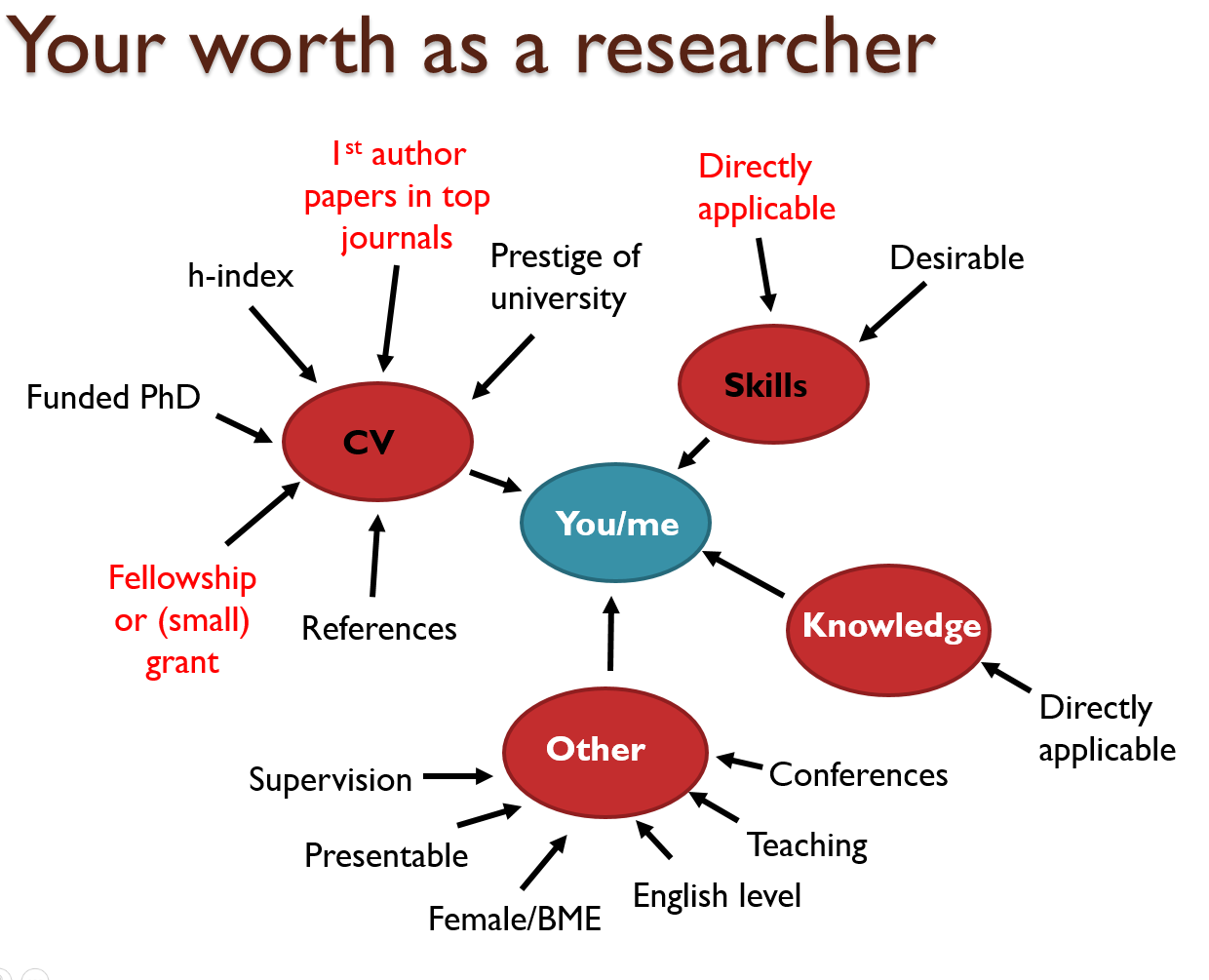
The heuristic that I think people use when calculating the worth of an early career researcher (but generally applies to all levels): ‘CV’ and ‘Skills’ are the two main contributors, with the factors highlighted in red carrying enormous weight in determining whether someone should get the job/fellowship or not. Virtually no one cares about anything that is outside what is written here – as mentioned in the post. Directly applicable: Some technical skill that the funder/Professor thinks is essential for the job; Prestige of university: where you did your PhD and/or undergrad; Funded PhD: whether your PhD was fully funded or not; Female/BME: being female and/or of BME background – this can be an advantage or a disadvantage depending on the regulations/characteristics of the university/panel, as underrepresented groups can be subjected to both positive and negative discrimination. NB: this is a simplified version and there are many factors that affect outcomes such as “who you know” and “being at the right place at the right time“.
Added on 30/10/18: I just came across ‘No, it’s not The Incentives—it’s you‘ by Tal Yarkoni about the common malpractices in academic circles, and I think it’s well worth a read.
*Making sure there’s a gender balance and that academics from BME backgrounds are not excluded from the process – as they’ve usually had to overcome more obstacles to reach the same heights.
**I have been honest about this in my applications and put this publication under “Other Publications” in my CV.
***REF stands for the ‘Research Excellence Framework’, and is the UK’s system for assessing the quality of research in higher education institutions. The last REF cycle finished in 2014 and the next one will finish in 2021 (every 7 years). Universities start planning for this 3-4 years before the submission dates and the ones ranked high in the list will receive tens of millions of pounds from the government. For example, University of Oxford (1st) received ~£150m and University of Bristol (8th) received ~£80m.
****Sometimes it’s not their fault; people add senior authors on their papers to increase their chances of getting them accepted. It’s then human nature that they’re not going to decline authorship. It sounds nice when one’s introduced in a conference etc. as having “published >100 papers with >10,000 citations” – when in reality they’ve not made significant (if any!) contributions to most of them.
PS: I also propose that acknowledgements at the bottom of papers and PhD theses be screened in some way. I’ve had colleagues who’ve helped me out a lot when learning some concepts who then moved on and did not have the chance to be a co-author on my papers. I have acknowledged them in my PhD thesis and would love to see my comments be helpful to these colleagues in some way when they apply for postdoc jobs or fellowships. Some of them did not publish many papers and acknowledgements like these could show that they not only have the ability to be of help (e.g. statistical, computational expertise), but are also easy to work with and want to help their peers.
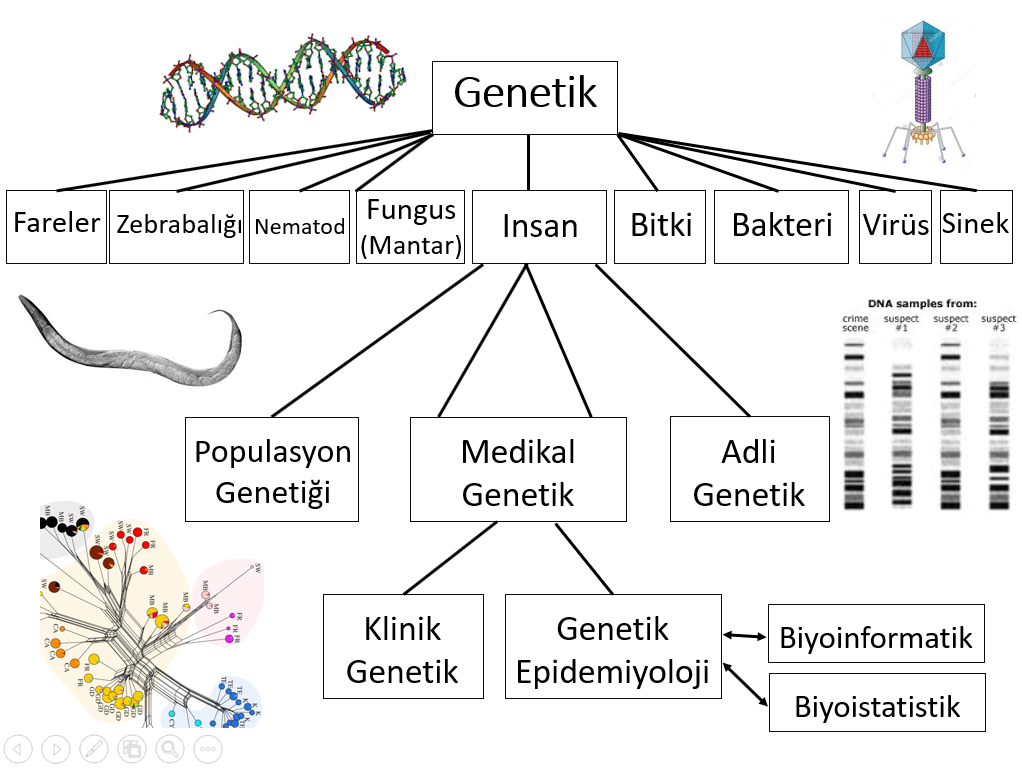
Genetik alanının genel olarak alt-dalları. 15-20 yıl önceki “Genetik”le şimdiki genetik çok farklı ve bir sürü alt-dala ayrıldı. Belki de son 10-15 yılda ortaya çıkan Genetik Epidemiyoloji alanında çalışan ve bütün günü bilgisayar başında geçen bir araştırmacı olarak ben de “genetikçi”yim, tüm günü laboratuvarda geçen ve fare genetiği üzerine çalışan bir araştırmacı da. Not: Yazının genetikle ilgili bölümüne geçmek isterseniz direk “Bu girişten sonra asıl meselemiz olan “genetiğin reklamına” dönecek olursak…” diye başlayan kısma geçin.
Türk (ve Britanyalı) bir bilim insanı olarak halkımızın bilimle fazla ilgilenmemesine çok kızıyorum. Hatta akademisyenlerin/araştırmacıların dahi fen bilimleri ve/ya da sosyal bilimlerden çok siyasetle içli-dişli olması beni çıldırtıyor ve ülkem adına ümidimi kaybediyorum. Fakat kendi kendime “bir bilim insanı olarak bunun değişmesi için neler yapıyorum?” diye düşündüğümde haftada bir gün birkaç Türk gence özel fen/matematik/ingilizce dersi vermenin ve sağda-solda gençlere verdiğim konuşmaların dışında fazla birşey aklıma gelmiyor. Bunun üzerine “belki bir-iki kişi okur/çocuklarıyla paylaşır” düşüncesiyle bilimin her türlüsünün, özellikle de genetiğin reklamını yapan bir blog yazısı yazmaya karar verdim. Genel olarak bilim üretmenin önemi üzerine fikirlerimi sunduktan sonra, kendi alanım olan Genetik/Genetik Epidemiyoloji’ye doğru bir geçiş yapacağım. Kendim de nispeten genç ve daha yolun başında olduğum için (yaş 30) sözlerim daha çok lisans öğrencisi ve üniversite-öncesi yaşlardaki arkadaşlara yönelik olacak; hızlıca yazdığımdan daha olgun okurlarım için çiğ bir yazı olarak görünebilir. Ayrıca, istediğimden uzun bir yazı oldu maalesef. Isterseniz sonraki iki paragrafı okumadan direk “Bu girişten sonra asıl meselemiz olan “genetiğin reklamına” dönecek olursak…” diye başlayan kısma geçin.
Belki sıkıcı, yavan ve klişelerle dolu olacak ama önemli gördüğüm bir girişle başlayayım: Tüm gün siyaset, futbol/dizi ve komplo teorileri hakkında konuşan milletlerin, tüm insanlığı geçtim, kendi ülkelerine dahi bir fayda sunmaları imkansız. Bu milletler bir süre ülkenin kendi yeraltı/üstü kaynaklarından faydalanıp, onları tükettikten sonra, her alanda dışa bağımlı olmak zorunda kalırlar. Maalesef, Türkiye de bu konuda epey bir yol kaydetmiş durumda: Teknoloji, tıp ve diğer önemli bilim alanları adına çok birşey üretmediğimizden dolayı, hemen hemen her ilaç, teknoloji ve sistem/bilgiyi dışarıdan ithal ediyoruz. Haliyle belki 5 liraya üretilen elektronik eşya/sistem/ilacı 100 liraya satın alıyoruz. Ayrıca, o kadar para harcamamıza rağmen, “know-how”, yani bir işi düzgün bir şekilde yapabilme ve daha da geliştirebilme özelliğini de kazanamıyoruz. İşler böyle gittiği sürece de ilelebet fahiş fiyatlar ödemek zorunda kalacağız. Devlet insanına ve bilime (research & development) yatırım yapmadığından, ülkenin ekonomik olarak alım gücü zayıfladığı an, büyük krizler kapıdan içeri girecek ve normalden de daha büyük tavizler vermeden, bir sürü maddi-manevi sıkıntı çekilmeden ve on yıllar kaybedilmeden aşılamayacak. Özellikle biriken borçlarla gelecek nesillerin emekleri ve imkanları çalınacak. Bilimin önemine en güzel örnek iki tane dünya savaşı geçirip, ikisinde de düşman tarafından dümdüz edilmiş Almanya’nın nispeten kısa bir sürede kendine gelmesi ve şu anda dunyanın en büyük teknoloji, ilaç ve bilim üreten ülkesi olması – çünkü (dünyanın her yerinden gelmiş) bilim insanlarını baş üstünde tutan bir millet. Tüm dünya ekonomik krizle boğuşsa dahi, kendi başına ayakta kalabilecek belki de tek ülke. Bilim insanlarına atalarının yaptığı hataları analiz ettirdikten sonra, aynı hataları tekrarlamadan yollarına devam etmişler. Hem sosyal olarak, hem de teknolojik olarak gelişmişler. “Bizim atalarımız hata yapmaz” bağnazlığından kurtulup (örnek: Kemalisti de, Islamcısı da, Ulkücüsü de tiksindirici şekilde geri kafalı bu konuda), bu savaşları çıkaran ve ülkeyi her türlü krize sokan nesillere ise lanet okuyorlar. Almanya o günlerde olanlardan dolayı hala bazı ülkelere tazminat ödüyor. Biz de ise başımıza ülke olarak gelen olaylar bilimsel olarak araştırılmadığından tarih hep tekerrür ediyor – hep aynı hatalar, aynı krizler…
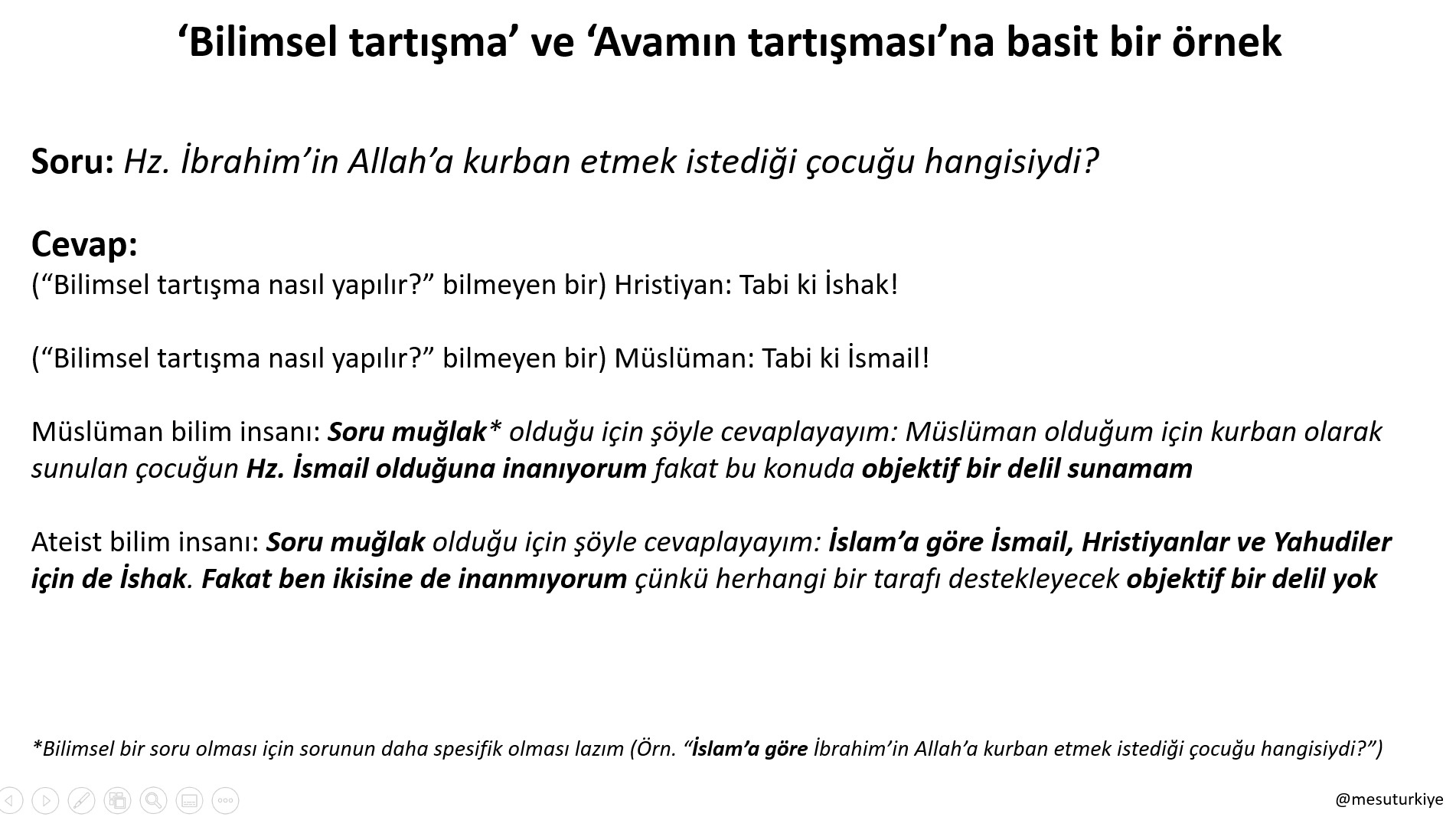
‘Bilimsel tartışma’ ve ‘Avamın tartışması’na basit bir örnek. “Bilimsel tartışma nasıl yapılır?” bilmeyen bir insanın hayata bakışıyla, bilmeyen arasındaki farkı az/çok ortaya koyuyor…
Bunları yazmamın sebebi ise eğer bilim insanı olmanın çok da önemli olmadığını düşünüyorsan, yanıldığını hatırlatmak içindir – her ne kadar da arkadaşlarının hepsi futbolcu olmak istese ya da etrafındaki insanlar tüm gün futbol/dizi hakkında konuşsa da… Bana göre bilim insanları dünyanın en çok ihtiyacı olduğu grup. Büyüdüğünde bakarsın: değerin Türkiye’de anlaşılmazsa, Amerika, Almanya, Ingiltere gibi dünyanın en gelişmiş ülkelerindeki gruplar değerini bilecektir. Gelişmiş dünyada her zaman iş bulabilecek bir insan olacaksın. Hele bir de her akademik grubun ihtiyacı olan bir yeteneğe sahipsen (fen bilimleri için genel bir örnek: ‘big data’ analiz/data science, sağlam istatistik bilgisi). Bu fırsatı başka hiçbir iş alanında kolay kolay bulamazsın. Ayrıca dünyaya ve hayata karşı bakışın ise çoğu insandan daha farklı ve kapsamlı olacak. Bu ise bana göre bir insanda paha biçilmez bir özellik. Hayatta sadece bilim insanlarının gördügü düzen ve desenler var ve bunların en azından bir kısmını görmeden ömür tüketmek çok büyük bir kayıp. Bu konuyu önceden paylaştığım Entelektüeller neden sevilmezler?, Din, bilim ve bilim adamları ve Duya duya gına geldi arkadaş gibi yazılarıma havale ediyorum. Özetle, ileride bir “bilim insanı” olmanızı tavsiye ediyorum.
Bir insanda 50-100 trilyon (100,000,000,000,000) hücre var (bunların %90’ı bakteri) ve inanılmaz bir şekilde, bir ignenin ucundan bile onlarca kat küçük olan (insan) hücrelerinin her birinin içinde yaklaşık 2 metre uzunluğunda DNA bulunuyor. Image source: fenogretmeni.net
Bu girişten sonra asıl meselemiz olan “genetiğin reklamına” dönecek olursak: ben çocukken genetik “geleceğin mesleği”ydi. İşin garibi şu anda da geleceğin meslekleri arasında yer alıyor. Fakat ufak bir farkla: ben çocukken, “çocukken” dediğim de daha 15 sene öncesi, genetik alanı çok genel olarak “insan genetiği/klinik genetik”, “model organizma ve hayvan/bitki genetiği” ve “adli genetik” olarak üçe ayrılıyordu ve çoğunlukla genetik denince akla beyaz önlüklü, laboratuvarda çalışan ve ufak tüplerde bazı sıvılar karıştırıp bunları değişik jellere yerleştiren insanlar akla geliyordu. Şimdi ise laboratuvarda çalışan insanlar hala olsa da, artık genel olarak laboratuvardaki işler kolaylaştığından, beyinden daha çok el mahareti önemli hale geldi ve tabir-i caizse, bu tarz “ayak işlerini” çoğunlukla akademisyen/araştırmacı olmayan “teknisyen”ler yapıyor. Akademisyenler/araştırmacılar ise asıl beyin gerektiren işlerle uğraşıyorlar ve her işlerini artık bilgisayarda hallediyorlar. Örneğin ben DNA fingerprinting’in (DNA parmak izinin) bulunduğu Leicester Üniversitesi’nde Kronik Obstrüktif Akciğer Hastalığı (KOAH) üzerine çalışan bir Genetik Epidemiyologum ve kariyerim boyunca, doktora projemin ufak bir bölümü dışında hiç laboratuvarda çalışmadım – laboratuvarda çalışmayı da hiç sevmedim. Şu anda bir araştırma görevlisi (Postdoctoral Research Associate) olarak günlük işim yüzbinlerce insanın genetik (kişi başı milyonlarca mutasyona/genetik varyanta tekabül ediyor) ve (kişinin yaş, cinsiyet, sigara içip-içmediği gibi) fenotipik datasını “süper bilgisayar”ları kullanarak istatistiki olarak analiz etmek. Bu sayede insanları KOAH’a meyilli hale getiren genleri ve varyantları tespit etmeye ve bulduğumuz genlerin arasından biri “bir KOAH ilacına netice verir mi?” diye araştırmaya çalışıyoruz. Ayrıca yaptığımız analizlerden ne çıkacağı belli olmadığı için her sabah işe kalktığımda “ya Hu yine mi iş?” diye iç geçirmiyorum. Bir buluş yaptığımız zaman ileride insanlara bir ilaç olarak dönebileceğini düşünmek ise insanı manevi olarak mutlu ediyor. Genetik Epidemiyoloji alanı, diger alanlar gibi, çok hızlı ilerlediğinden belki her hafta ses getiren bir makale çıkıyor ve onları okuyunca insanın içi açılıyor ve geleceğe dair bazı hastalıkların tamamen tedavi edilebilmesi adına umudu artıyor.
Bir ‘Circos’ çizimi (Circos plot). Teknik detaylara fazla girmeden, bu çizimde genomumuzda hangi bölgelerin KOAH tanısı için kullanılan FEV1, FVC ve FEV1/FVC’yle istatistiki olarak korelasyon gösterdigini görebiliyoruz. Çizimde bulunan her nokta – milyonlarca var – DNA’mızda bir varyanta tekabül ediyor ve noktalar yüksekse, orada bulunan genlere (isimleri dış dairede) sonraki araştırmalarımızda öncelik veriyoruz.
Bunları anlatmamın sebebi ise, diyelimki, lisede notların iyi ve üniversitede genetiği kazanma hakkı kazandın ama “kariyer olarak genetiği sevecek misin?” tam bilmiyorsun. Şimdiden sana seveceğini söyleyebilirim. Çünkü ilk figürde de göreceğin gibi genetik o kadar büyük bir alana dönüştüki Avrupa ve Amerika’da artık birçok üniversitenin Genetik departmanı Biyoloji departmanından ayrı. “Saf genetik” diye bir alan artık yok denebilir – çünkü genetiğin bir sürü birbirinden çok uzak alt-dalı (sub-field) oluştu. Bu yüzden ben de “genetikçiyim” dediğimde aslında işin kolayına kaçıyorum demektir. Genetik alanını bilen birisi bana “tamam da; genetikte hangi alandasın?” diye sorar çünkü başka bir “genetikçi”yle çok farklı konuları çalışıyor, çok farklı teknikler kullanıyor olabiliriz. Bu yüzden genetiği seçtikten sonra kendi kendine düşünmeli ve şimdi sıralayacağım alt-dallardan birine doğru ilerlemelisin:
Eğer, daha çok çocuk yaştayken ortaya çıkan, Kistik fibroz (Cystic fibrosis) ve Akdeniz atesi (Mediterranean fever) gibi 100% genetik hastalıklar üzerine çalışmalar yürütmek istersen Klinik Genetik* (Clinical Genetics) alanını düşünebilirsin;
Benim şimdi yaptığım gibi kanser, diyabet, obezite, KOAH gibi daha kompleks (hem genetik, hem sigara/alkol/hava kirliliği gibi çevresel etkenlerin önemli olduğu) hastalıkları çalışmak ve potansiyel olarak milyonlarca insanın hayatına katkı sağlama fikri hoşuna gidiyorsa Genetik Epidemiyoloji;
CSI (Crime Scene Investigation) dizisindeki gibi cinayetlerin çözümünde yer almak istiyorsan Adli genetik (Forensic genetics);
İnsanlık tarihini etkileyen eski caglardaki büyük savaşlar, göçler gibi olayları genetik ve tarihsel olarak çalışmak istiyorsan Popülasyon genetiği (Population genetics);
İnsanlar üzerinde genetik deneylere izin verilmediği için insanlardaki bazı gen/protein/biological pathway’lerin üzerine çalışmak adına (insana genetik olarak en cok benzeyen hayvanlar olan) maymun, (fizyolojik olarak insanlara çok benzedikleri ve maymunlar üzerinde calışmaya nazaran daha ucuz ve etiksel oldukları için) fare/sıçan (murine), yuvarlak kurt (nematode), sirkesineği (Drosophila melanogaster) ya da zebrabalığı (developmental biology/gelişim biyolojisi) genetiği;
Bakteriler ve menenjit gibi bakteriyel enfeksiyonları çalışma adına Bakteri genetiği (Bacterial genetics);
Virüsler ve grip virüsü gibi virüslerle ilgili enfeksiyonlarını çalışma adına Virüs genetiği (Viral genetics);
Mantarlar ve kandidiaz gibi enfeksiyonları çalışma adına Mantar genetiği (Fungal genetics);
Bitkiler üzerine çalışmak ve/ya da insan nüfusu arttığı için ileride yemek bulmanın problem olmaması adına bitkilerin verimliliğini arttırmak istiyorsan Bitki genetiği (Plant genetics);
Eski canlılar üzerine çalışmalar yürütmek istersen Paleogenetik (Palaeogenomics);
Canlıların evrimi üzerine çalışmak istersen (ilk figürde olmayan) Evrimsel genetik (Evolutionary genetics)
Çok büyük genetik dataların en iyi şekilde analiz edilmesini ve anlaşılmasını kolaylaştırmak istersen Biyoistatistik (Biostatistics) ya da
Biyoenformatik (Bioinformatics)
alanlarında çalışabilirsin. Ayrıca, yeni dönemde (büyük ihtimalle bu sistemi bulanlara Nobel kazandıracak) CRISPR-Cas9 tekniğiyle insan genlerini dahi editlemeye/düzenlemeye başlayacaklar ve bir sürü hastalığı meydana getiren mutasyonları insanların genomlarından silecekler. Klonlamadan, kök hücre teknolojilerinden, gen terapilerinden, epigenetikten vs. hiç bahsetmedim bile. Yukarıda bahsettiğim her alt-dalda inanılmaz gelişmeler oluyor ve bu yüzden bana göre genetik alanı içinde her tür insanın beğeneceği bir alt-alan bulunabilir. Bulamıyorsan, iyi araştırmıyorsun demektir.
Bu yazımda “genetikçi” (aslında genetik epidemiyolog) olduğum için genetiğin alt-dalları üzerine detaylar verdim ve reklamını yaptım ama yukarıda söylediklerim artık birçok sosyal bilim ve fen bilimi için de geçerli**. Fakat büyük devletler genetik ve biyokimya alanına çok büyük paralar akıttığı için iş ve çalışacak proje bulma sıkıntısı çekmeyeceksiniz.
Umarım biraz fedakarlık yapıp, bilim insanı olmaya karar verirsiniz; çünkü halkımızın siyasetin kısır döngüsünden kurtulmasını bana göre ancak bilim insanları ve entelektüeller sağlayabilir. Ama binde birlerden yüzde birlere çıkması ve onlara karşı bakış açısının değişmesi ve önemlerinin artması lazım. Tabi genetik alanına girmeye karar verirseniz ekstradan mutlu olurum. Umuyorumki fikir dünyanızın gelişmesiyle doğrudan etrafınızdaki insanlara ve öğrencilerinize; yazdığınız kaliteli makalelerle ise tüm insanlığa faydanız dokunacak.
Gelecek sorulara vs. göre bu tarz yazıları yazmaya devam etmek istiyorum. Okuduğunuz için teşekkür ederim.
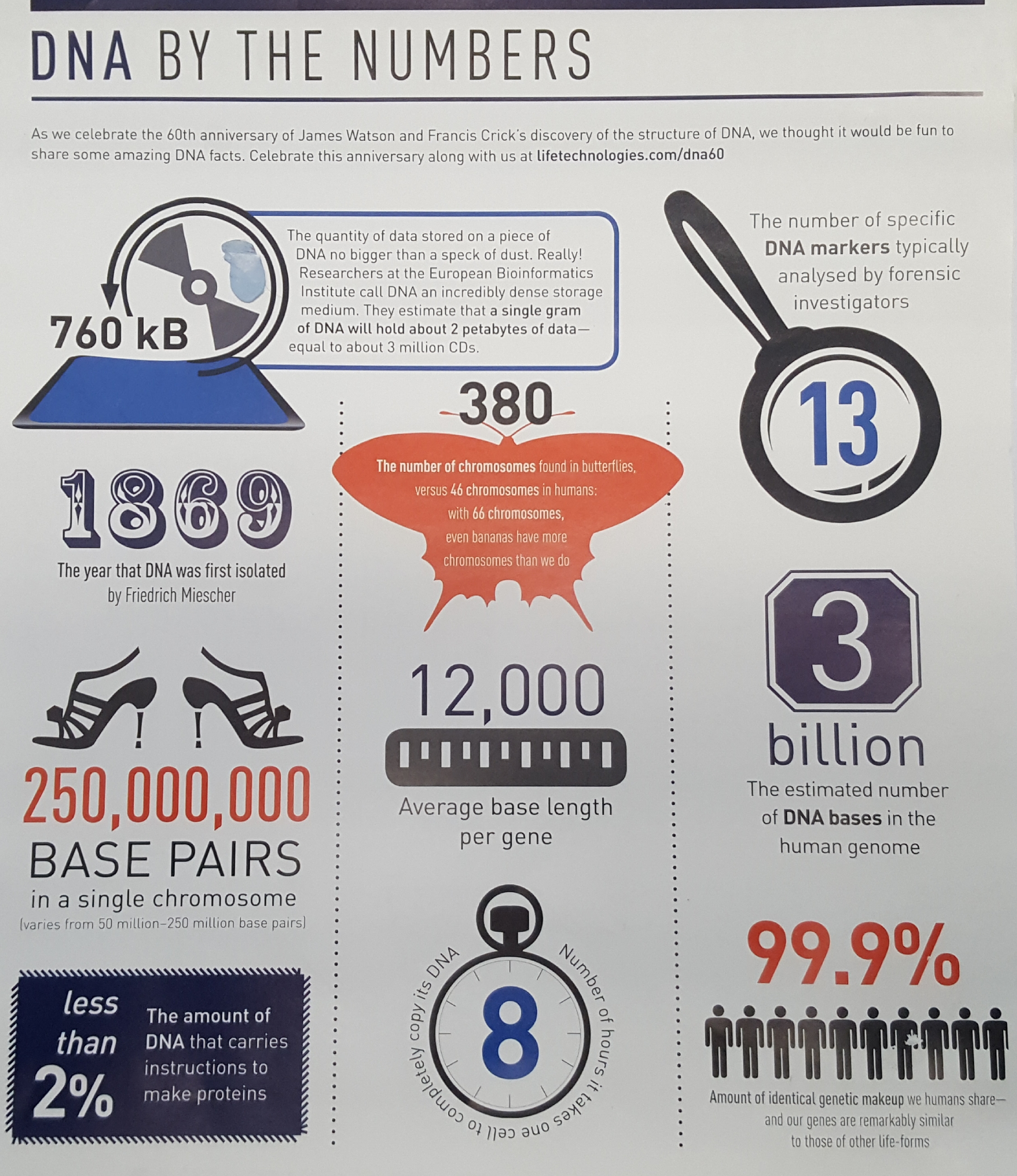
DNA’yla ilgili ilginç anektodlar (‘DNA by the numbers’ by Life Technologies)
*Doktoramda Suudi Arabistan’daki akraba evlilikleri üzerine çalışmıştım ve yaptığım çalışmalar daha çok Klinik genetik alanına katkı sağlamıştı. Şimdi ise Genetik Epidemiyoji alanındayım. Makalelerime Google Scholar hesabımdan bakabilirsiniz.
Epidemik haline gelebilecek hastalıklar. Bunların herhangi birine çare buldugumuz vakit, milyonlarca insanın hayatını kurtarmış olacagız. (‘Emerging Threats’ graphic by Nature. Source URL: http://www.nature.com/news/how-to-beat-the-next-ebola-1.18114)
Breathtaking genes: A ‘Circos’ plot depicting how chronic obstructive pulmonary disease (COPD) has become a global concern – the 3rd biggest killer, defined by poor lung function. Our work shows that many parts of our DNA play a role in our lung health. Peaks in red are newly discovered regions, and the blue ones were previously identified by other groups. Millions of genetic variants from tens of thousands of individuals were analysed in this study. The identified genes will help us understand why some of us have better lung function, and lead to the identification of drug targets of potential relevance to COPD.
A press release was issued by the University of Leicester Press Office on 6 February 2017 about a study that I was also heavily involved in (please click on links below for details):
The study has received a lot of attention from the media, with articles appearing in large media outlets such as BBC News, The Independent and MSN News. If you’re interested in the details, please read the paper published in Nature Genetics.
If interested in reading about the area of Genetic Epidemiology itself, please have a look at my (previously published) blog post about the matter: Searching for “Breath taking” genes. Literally!
Details on Circos plot* (above): FEV1: Forced expiratory lung volume in 1 second; FVC: Forced lung volume capacity; FEV1/FVC: the ratio of the two measurements. Labels in the outer circle show the name of the nearest gene to the newly identified (red) variants. X-axis: Genomic position of variant in genome (chromosome number in the outer circle), Y-axis: Statistical significance of variant in this study (higher the peak the greater the significance).
*The figure is a more artistic version of Figure 1 (Manhattan plot) in the above mentioned academic paper. It did not make it into the final manuscript published in Nature Genetics (6th Feb 2017) as it was found to be “confusing” by one of the reviewers – and the editor agreed. 😦 However, the plot was shortlisted (title: Breathtaking genes) and displayed in the Images of Research exhibition (9th Feb 2017) organised by the University of Leicester. 😉
My role in the Wain et al paper mentioned above: I led the ‘functional follow-up’ of the identified associated variants (e.g. mining eQTL datasets, biological pathway analyses, identify druggable genes, pleiotropy, protein-protein interactions) and appropriately visualise the GWAS results (various Manhattan and Circos plots). I was part of the core bioinformatics team of three in Leicester – alongside Dr. Nick Shrine and Dr. Maria Soler-Artigas.
References:
Wain LV et al., Published online 6th Feb 2017. Genome-wide association analyses for lung function and chronic obstructive pulmonary disease identify new loci and potential druggable targets. Nature Genetics. URL: https://www.nature.com/articles/ng.3787
University of Leicester Turkish Society 2016 logo – Not used for financial gains (all our events are ‘not-for-profit’). However, it will be changed soon as it is an infringement of the University’s own logo (we did not realise at the time the logo was designed).
I am extremely proud to have had the chance to lead the University of Leicester Turkish Society for the 2016 season; and am grateful to the following committee members for their excellent work in organising some great events – especially our annual ‘Turkish Day’ event at the Queens Hall (University of Leicester):
President: A. Mesut Erzurumluoglu Vice-President: Kevser Sevim Secretary: Halil Ibrahim Egilmez Treasurer: Turkan Ozkent Event coordinator: Ufuk Barmanpek and Yasemin Alpdogan IT Manager: Muhammet Ziya Komşul
More information about the Turkish Society can be found at the below links:
Ben 12 yaşındayken (2000) ailecek İngiltere'ye taşındık ve ingilizcem neredeyse sıfırdı. Bunu duyan (Karen Holman adında) Sınıf Öğretmenim, kendimi evimde hissedeyim diye tüm arkadaşlarıma Türkçe cümleler dağıtmış. Sınıfa girer-girmez arkadaşlarımın hepsi bana "Hoşgeldin" dediler















 An ordinary blog by an ordinary bloke