by Dr A. Mesut Erzurumluoğlu | Principal Bioinformatician at Bicycle Therapeutics (formerly at Boehringer Ingelheim, and Univs. of Cambridge, Leicester & Bristol) – blogging since 2006. All views mine unless stated otherwise
Some good programs and booklets produced by the Open University; which they’re giving away for free. Could also have a look at the programs they produce on BBC at the link:
I went through these three websites below and made a list of the books worth reading… Also audible.co.uk gives a free audible ebook to whoever signs up…
Order of books not important… Also I do not mean these are the only books worth reading (I have not put religious books in here, but knowledge in world religions is a must I think!)…
The Dialogue Society are doing an excellent work for social cohesion and the propagation of dialogue amongst faith leaders and different communities!
I’d fully recommend any youngster to go and volunteer for their activities/events! It would be a great experience for one to learn to respect others’ opinions whilst also making a contribution to the British society.
Especially their publications (e.g. Dialogue in Islam, Deradicalisation by default) are top notch!
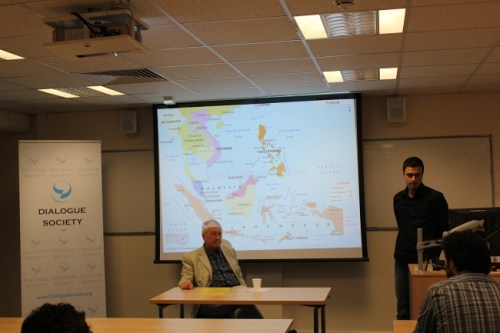
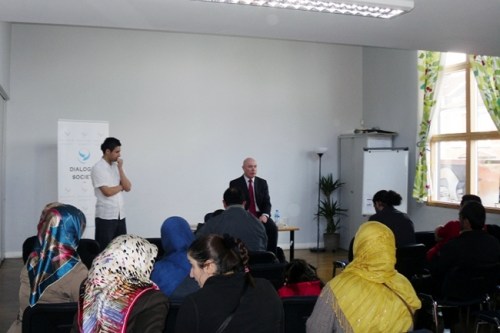
Addendum (Dec 2015): Just to show that I do not state things that I do not believe in, below is a few example photos of me volunteering for (and/or attending) the Dialogue Society – Bristol branch and Leicester branch events (e.g. as a presenter/chair, audience, event coordination).
Leicester Council of Faith public meeting – Presented the ‘Islamic perspective on the Purpose and Creation of the Universe’ (5th December 2015). An outline of my talk can be found here:
Dialogue Society ‘Success School’ certificate (2012)Book Review (27 Sept 2012) – European Muslims, Civility and Public LifePublic Seminar (27 Apr 2012): Malaysia – Affirmative Action for the Majority?Public Seminar (18 Jan 2012) – Race in School EducationSuccess School (4 Dec 2012) – Session 6 with UWE Vice-Chancellor Prof. Steve WestPublic Seminar (30 Apr 2013) – The role of the Crown Prosecution ServicePublic Talk (19 Jan 2011) – Rising as a Civilisation: Which Muslim Countries Can Accept the Challenge?
Bu yardımlar, kendilerini Allah yoluna vakfeden yoksullar içindir. Bunlar yeryüzünde dolaşıp geçimlerini sağlama imkânı bulamazlar. Halktan istemekten geri durmaları sebebiyle, onların gerçek hallerini bilmeyen kimse, onları zengin sanır. Ey Resulüm, sen onları simâlarından tanırsın! Onlar yüzsüzlük ederek halktan bir şey istemezler. Şunu bilin ki, hayır adına her ne verirseniz mutlaka Allah onu bilir. (Bakara, 273)
(i) Cok hosuma giden bir ayet. Cunku Allah’tan baskasından birseyler istemek hep zor gelmistir bana. Bu yuzden gencligimde ailemden uzak gurbetde kaldıgım zamanlarda dahi, kimseden maddi (sorunlar olmasına ragmen) yardım istemedim. Allah(c.c.)’a guvendim ve O’da bin sukurler olsun hic kimseye muhtac etmedi beni (ve kardesimi)… Fakat zor o gunlerimde benim halimi soran/arastıran, ve yardım teklif eden insanlar oldu. Onları hic unutmadım; unutturmasın Allah!
Bu ayetden kendime de (ins.!) bir ders cıkardım: Dostlarımla, zor durumlarında gelip benden yardım isteyebilecekleri sekilde samimi olmaya calıstım. Bu sayede ne onlar yardım isteme konusunda kendilerini kotu hissediyorlar, ne de ben yapmam gereken bir isten kacmıs oluyorum. Insanız, dusmez kalmaz bir Allah’tır! Kimin ne zaman (maddi yada manevi yonden) kayacagı belli olmaz. O gunlerde dostlarımıza sahip cıkmalıyız. Onlar anlatmazsa, biz bulmalıyız.
(ii) Roller Coaster’a ilk bindigimde hic korkmamıstım ama hemen ardından ikinci kez bindigimde korktugumu hissettim; ki tam tersi olmalıydı normalde…
Bunun nedenini dusundugumde ilk bindigimde Allah’ın beni koruyacagına ve onun izniyle birsey olmayacagına tam guvendigimden Roller Coaster’da eglenebildim. Fakat hemen sonrasında tekrar bindigimde Allah’a (kalben) guvenden daha cok kendime, cesaretime ve tecrubeme guvendim; tabi Allah’da bunun icin kalbime korku verdi…
Allah’a ne zaman tam olarak guvensem, kalbime sekine verdi ve ben o isten/durumdan alnımın akıyla ve heyecanlanmadan cıktım (gerek is mulakatı olsun, akademik sunum olsun yada daha deminki ornekteki gibi adrenalini yuksek aktiviteler olsun)…
Allah(c.c.) bize kendine tam inanan ve guvenenlerden eylesin!
(iii) Ben yıllardır sabahları kahvaltı yapmayan bir insanım. Bir cay icerim, kahvaltımı ise ogle gibi yaparım. Fakat Ramazanın daha ilk gunu – sahurda yemek yemis olmama ragmen – sabah okula giderken acıktıgımı hissettim. Kendi kendime “daha iftara 11-12 saat var. nasıl dayanacagım?” diye soylenirken, aklıma “sen zaten kahvaltı yapmazdın! ne acıkması?” dedim. Bunun (Seytanın ve/yada nefsin ufledigi) bir vesvese oldugunu anladım, ve hemen o saniyede aclıgım gitti. Butun gun boyuncada hic acıkmadım, uzun ve yorucu bir gun olmasına ragmen.
Insanin ruh haleti her gun, hatta her saniye bile aynı olmayabiliyor; ve Ondan(c.c.) farkında olmadan uzaklasabiliyoruz. Bize devamlı Allah’ı hatırlatacak arkadas ve objelere ihtiyacımız var!
PS: Sunnetullah’ın daha fazla arastırılması ve halka ogretilmesini cok onemsiyorum – bizim hayata olan dar bakısımızı genisletecektir
Muslim scholars’ contribution to Life, Earth and Social sciences is usually overlooked today due to the ‘Golden age’ of the Islamic world coinciding with the ‘Dark Ages’ of Europe. This leads to an understanding within the general public that Muslims did not contribute to Science at all; sadly this conception is also shared by many Muslims. So if today’s Muslims share the wrong belief that their ancestors have achieved nothing in the past, how can they themselves then go on and become successful in the present and future?
Logo of ‘1001 Inventions of Muslims’ exhibition
Due to the curious nature of mankind, it was not easy to ignore the celestial bodies of different sizes and colours which appeared in the sky during the day and night for ancient civilisations and mankind have been in awe of these shiny things throughout history and tried their utmost to understand the vastness of space and the infinitely looking numbers of celestial bodies which were visible to the human eye. They tried to comprehend what they were doing there and what purpose(s) were they serving. Especially the movements, positioning and the resulting effects of the sun, the moon and nearby stars were intensively observed to make sense of seasons, Earth’s movements and mark the passing of days, months and years.
Following the decline of the Roman Empire, Europe entered a period called the ‘Dark Ages’ by Western scholars to emphasize the cultural and economic decline that occurred in the continent. However it is usually misunderstood by the public as an age of stand-still in terms of science, economy and health issues which encapsulated all the world populations – which of course was not the case. What was supposedly a Dark Age for Europe was when there were significant improvements and discoveries in Astronomy, Mathematics and Medical sciences just a few thousand kilometers away in the Middle East, where Arab (and/or Arabic speaking) scholars were using what the Ancient Greek and Far East scholars had observed in the past to build upon and find new things which would transform the life standards of mankind and increase the understanding of the natural world.
As far as Astronomy (not forgetting other areas such as mathematics and biology) was concerned, Arab (and/or Arabic speaking) astronomers of the era were regarded as the masters of the field. Their achievements – which are usually overlooked by today’s academics, and not surprisingly, by the public, have played a crucial role in the development of this enthralling science which existed since humankind set foot on earth.
Ancient Greek scientists had observed that the North Star (which is named Polaris by modern scientists today) appeared lower in the sky as a person traveled to the South and thus made suggestions that the Earth could be spherical. Muslim scholars, inspired by the Quran and the teachings of the Prophet, set on a journey to understand the natural world to get to know the creations of the Creator better started to research the literature produced by past scholars. Only a few centuries after the founding of Islam (in 610 AD), the Bedouin Arabs of the past became the great thinkers of the time and Arabic became the ‘Language of Science’ and most world renowned scholars of the time knew or learnt Arabic to be able communicate with the best of the best of their time in the ‘House of Wisdom’ in Baghdad. Nearly all available literature in the Sanskrit and Greek languages which contained a wealth of information about many sciences including Astronomy and mathematics, such as the one aforementioned about the North Star, would be translated into Arabic and made available in many libraries (especially at the House of Wisdom) across the Islamic empire (The Abbasid Caliphate was the Islamic state of the time). The available information would then be discussed amongst the greatest scholars of the time. Also the rulers (called ‘Caliphs’ in the Muslim World) were usually interested in natural sciences and this would mean a lot of encouragement to scholars in term of high salaries, bonuses and higher social status amongst the public.
However, Astronomy stood out from other sciences in Islamic states because it was related to the worshiping of God, Allah. Muslims have the obligation of facing the Kaaba during the daily prayers and doing that requires the pinpointing of the direction of Mecca from any location. It went as far as mosques employing professional astronomers (called muwaqqits), who helped Muslims pray to the right direction and at the right time during the day. Muwaqqits were also important when determining the start of the month of Ramadan and certain religious dates such as the Hajj period and how to get there through the shortest possible route.
Baghdad (capital of present day Iraq) became the centre for scientists in the 9th century and many libraries and observatories were present. The Caliph would have his own dedicated group of mathematicians, geographers and medical scientists who would analyse past literature and find new cures, calculate distances and how long it would take to a certain place. Naturally, this encouragement of scientists bared its fruits and in the 11th century. Abu Rayhan al- Biruni made remarkable conclusions by mentioning that planets were possibly moving elliptical orbits rather than circular ones. Muslim scholars even made calculations about the Earths circumference by walking in the Syrian desert until they realised that the North Star had moved by one degree according to their vision and then calculated the value of 37369 km which was correct by over 90% (True figure is just over 40000 km). They even started to challenge theories which had held on for centuries using the Quran as a platform to build upon. One example of this occurred thorugh Fakhr al-Din al-Razi, who lived between 1149–1209, rejected the Aristotelian and Avicennian notion of the Earth’s centrality within the universe in his book Matalib (Volume 4), but instead argued that there are “a million worlds (alfa alfi ‘awalim) beyond this world such that each one of those worlds be bigger and more massive than this world as well as having the like of what this world has.” To support his argument, he even cited the Qur’anic verse (Surat-ul Fatiha, verse 1), “All praise belongs to God, Lord of the Worlds,” emphasizing the term “Worlds”; thus making other scientists think outside the box and let them know what he thinks about the Earth being the center of the universe (and indicating also the possibility of multiple universes might have existed, again which was in contrast with the common views of that age).
Another example of a Muslim genius in the era was Khawaja Muḥammad ibn Muḥammad ibn Ḥasan Ṭūsī (more commonly known as Nasireddin) who lived from 1201 to 1274 and born in the city of Tus, Khorasan (in Iran) who has about 150 works in a variety of fields including Astronomy, Biology and Mathematics. He was very influential when convincing the Mongol ruler Hulagu Khan (another ruthless leader, one of the grandsons of Genghis Khan) to build an observatory for establishing accurate astronomical tables for better astrological predictions. He was the first to publish a work on Trigonometry independent of astronomy and geometry effectively establishing it as a separate field. He provided proof for the ‘law of sines’ for plane and spherical triangle (which was used by Copernicus also) is still taught today to Mathematics students. There could be an encyclopedia of books written just about him and his works. But how many people know the name of this true great let alone his works?
Sophisticated (and expensive) instruments from astrolabes to quadrants, sextants to sundials were made available for use by the state to any researcher with credibility. Astrolabes – which were succeeded by sextants afterwards, have been labelled as the most important astronomical device before the telescope. They came very close to solving the inconsistencies found in Claudius Ptolemaeus’ model (which has become nearly synonymous with the superseded Geocentric model) and couldn’t find the ultimate correct answer due to uncharacteristically not being able to start without any assumptions in this occasion (due to wrong evidence from past literature being shown as facts) and by making the wrong assumption that the Earth lay at the centre of planetary orbits.
In a period dismissed by most scientists today as the ‘Dark Ages’ where supposedly nothing blossomed in terms of intellectual and academic purposes, there were near miraculous discoveries in the Islamic world and the Middle East. But it is more saddening to see that even the Muslims do not know and/or acknowledge the achievements of their ancestors such as Al-Biruni, Ibn Sina (known as Avicenna in the West), Ibn Rushd (aka Averroes), Al Khwarizmi (who is called the father of Algebra), Abu Al-Qasim Al-Zahrawi (aka Albucasis – most renowned surgeon of his time), Al-Kindi, Ibn Khaldun (famous historian and philosopher – best known for his book ‘Muqaddimah’) etc. The list can go on forever so while even when most of the Muslim world does not recognise the abovementioned names, no one can blame the non-Muslims for doing the same (these comments are general and does exclude the few distinguished and objective academicians of today and the past). The new generation of Muslims must be encouraged to learn from their ancestors, acknowledge the things they have achieved and combine it with today’s knowledge and make it their ultimate goal to understand the physical world just like they did in order to understand the creation (and the Creator) and carry on being in awe of the things he has created. The early Islamic states have paid enormous attention to natural and life-sciences as did the Ottomans and thus were the global forces (in terms of knowledge, economy and political power) of their times. Isn’t it time Muslims did the same?
A few Famous Quotes Inspiring Muslims to Seek knowledge and Contribute to Sciences
“Travel through the lands (Earth) and try to understand (observe) how He began creation.” [Holy Quran, The Spider, 29:20]
“Have those who disbelieved not considered that the heavens (sky) and the Earth/land were a joined entity, and We separated them; and made every living thing from water?” [Holy Quran, The Prophets, 21:30]
“Whomever teaches me a word, I will be his/her slave for 40 years” [Fourth Caliphate of Islam: Ali bin Abu Talib]
“Be a teacher, or a student, or a listener, or one who encourages seeking knowledge; but never be the fifth, or you will be perished” [Prophet Muhammad]
“(Useful) Knowledge is like a Muslim’s lost property. They must seek to find it!” [Prophet Muhammad]
“The death of an Alim (scholar) is the death of the Alam (world/universe/creation).” [Prophet Muhammad]
References (and Further Reading)
Adi Setia (2004). “Fakhr Al-Din Al-Razi on Physics and the Nature of the Physical World: A Preliminary Survey”. Islam & Science, Winter 2004. findarticles.com/p/articles/mi_m0QYQ/is_2_2/ai_n9532826/
Berggren, J. Lennart (2007). “Mathematics in Medieval Islam”. The Mathematics of Egypt, Mesopotamia, China, India, and Islam: A Sourcebook. Princeton University Press. ISBN 978-0-691-11485-9.
David A. King (1993). Astronomy in the Service of Islam. Aldershot, U.K. Variorum
George Saliba (1994), A History of Arabic Astronomy: Planetary Theories During the Golden Age of Islam, p. 233–234, 240. New York University Press, ISBN 0-8147-8023-7
John David North (2008). Cosmos: An Illustrated History of Astronomy and Cosmology. University of Chicago Press. ISBN: 0226594416
Jonathan Lyons (2009). The House of Wisdom. Bloomsbury. ISBN 1596914599.
Ragep, F. Jamil (2001). “Freeing Astronomy from Philosophy: An Aspect of Islamic Influence on Science”. Osiris, 2nd Series 16 (Science in Theistic Contexts: Cognitive Dimensions), pp49–71. doi:10.1086/649338.
PS: Terrorist groups have unfortunately blackened the name and the beautiful face of Islam. We must take a stand against all oppressors: whether they are carried out by radical groups such as the Al-Qaeda or ISIS, or by states (e.g. Chinese oppression on Uyghur Turks, Israel’s oppression on Palestinians) – through diplomacy, boycotts, and/or military intervention (without causing any more civilian casualties, final option!).
We must realise that every ideology-belief-religion (e.g. Fascism, Marxism, Christianity, Social Darwinism) has been – and some are still being (e.g. Capitalism, Tribalism) – used to suit a political agenda of a few rulers/elite class (whether we realise it or not). These (mentally, spiritually) corrupted individuals/groups have caused nothing but oppression and/or death to millions. Unfortunately the same agenda has now been put into play via the use of wrong interpretations of Islam (e.g. Wahhabism) to spur on uneducated, alienated and ‘lost’ youth to join the ranks of these supposedly “Islamic” terrorist groups. There is no terrorism in Islam. As the highly respectable scholar Fethullah Gulen put it: “A Muslim cannot be a terrorist and a terrorist cannot be a Muslim!”
PPS: We must stop calling the science carried out by Muslims in the golden ages as “Islamic Science”. Science is an objective field which belongs to nobody, it belongs to all of us. There is no Islamic, Christian or Jewish Science.
We must also stop saying Muslims do not contribute to science today. That is not true. You will see a Muslim scientist in almost all (large scale) labs and/or projects in virtually all areas of science. However, the problem is that our ‘brains’ are not valued in our ‘not-so-Islamic-but-Islamic-in-name’ countries thus we serve countries which provide us a platform to concentrate on our research. These are the Western countries! Thus (rightly so!) these countries also get all the credit…
Bizi futbol dunyasına tanıtan her zaman milli takımımız olmuştur, bundan sonrada oyle olacaktir; cunku takımlarımız hic bir zaman bir Barcelona, Real Madrid yada Milan olamayacaklar (mesela cok zengin bir Arap almazsa – cunku alt yapıdan oyuncu yetistiremiyoruz, biraz potansiyeli olanlarda kendilerini bitiriyorlar!). Insallah yanılırım.
Onumuzdeki 4 sene ulkemiz futboluna iki buyuk firsatla geliyor: 2014 Dunya Kupası ve 2016 Avrupa Kupası.
Dunya kupaları her zaman buyuk bir organizasyondur ama ozellikle şike olaylarından sonra ve son 4 turnuvanın ucune katılamamızdan dolayı cizilen karizmamızı tekrar duzeltme acısından daha buyuk bir onem tasıyor bu turnuva. Avrupa sampiyonası ise bundan sonra 24 takımla oynanacak, bu yuzden de gruplarında ilk ikiye giren her takım kesin olarak buyuk organizasyona katılacak. Hatta ucunculerin yarısı dahi katılacak. Milli takımımızda her zaman 2. oldugu icin bize potansiyel olarak buyuk bir iyilik yapmıs oldu Platini. Dunya sıralamasında Japonyalarin, Afrika ulkelerinin arkasına dusmemizin en buyuk sebebiydi bu turnuvalara katılamamız.
Hollandanın Avrupa kupasında oynadıgı futbolu gordukten sonra biraz endiseliyim cunku tekrar bilenecekler ama bizimde simdiki milli futbolcularimızı dusununce cok umutluyum. Bence 2002’deki altın jenerasyondan sonraki en iyi takim var su anda Abdullah Avcı’nın elinde. Ilk macimizin Hollanda ile olmasıda bence bir taraftan buyuk bir fırsat.
Belkide tarihimizde hic olmadıgı kadar cok Avrupa tecrubesi olan futbolcu var milli takımımızda:
Kaleci: Volkan Demirel (Sinan Bolat, Tolga Zengin) – 96’dan bu yana milli takim kaleci sıkıntısı pek cekmedi (Rustunun vesilesiyle) ve bu boyle devam edecek gibi gozukuyor. Ilk kalecimiz su anda Volkan ama arkasında en az onun kadar iyi olan Sinan ve Tolga, hatta Onur var; ve hepside bir kaleci icin genc yasta sayılırlar. Volkan bazen cok formsuz olabiliyor ve ben Milli takim TDsi olsam Sinan yada Tolga’yı kaleye koymakta bir dakika tereddut etmem.
Defansta: Sagda Gokhan Gonul, Ortada Omer Toprak ve Egemen Korkmaz, Solda ise Caner Erkin (yada Hakan Balta, Hasan Ali Kaldırım) dortlusu beni cok umutlandırıyor. Cunku bizim tarih boyunca hep yumusak karnımız oldu defansımız (Alpay Ozalan ve Bulent Korkmaz ikilisini katmazsak); ama bu dortlu beraber oynamaya alısırlarsa sadece defansif yonden degil, ileri gitme yonundede cok yararlı olabilirler. Ayrica Serdar Aziz’inde zamanla Egemenin yerini alacagını dusunuyorum. Ismail Koybası ise kendisini bekledigimiz kadar gelistiremedi ama her zaman iyi bir alternatif olabilir solda.
Orta Saha: Sagda Hamit Altıntop, Solda Arda Turan, Ortada ise Emre Belozoglu, Nuri Sahin ve Selcuk Inan beslisi dunyada bile az bulunur bir orta sahaya sahip oldugumuz anlamına geliyor (bana gore). Tek sorun bu beslinin bir arada pek oynamamıs olması; ozellikle Nuri’nin bir an evvel milli takımda kendisini uvey evlat gibi hissetmesini asmamız lazım. Cunku Nuri’de muthis bir potansiyel var ve eminim bir kac sene icinde Real Madrid’inde vazgecilmezleri arasina girecektir (ins. sakatlık vs. olmazsa). Allah gostermesin sakatlık durumunda her zaman Mehmet Topuz, Mehmet Topal, Mehmet Ekici, Gokhan Tore, Tunay Torun, Sercan Sararer ve daha nice oyuncu gereken bolgelere yerlestirilebilir. Bir umutlandırıcı gelisme ise Muhammet Demirci’nin yavas yavas Besiktas’ta sans bulmaya baslaması.
Forvet: Burak Yılmaz’dan baska kimse su anda bu bolgede oynayacak forma sahip degil su anda (nerede Hakan Sukur simdi!). Umut Bulut, Mustafa Pektemek yada Mevlut Erdinc belki dusunulebilir ama bir sezonda attıkları gol sayısı 10’u gecmiyor. Burak’ın ise oyunu okuma ve sırtı donuk topla oynama konusundaki beceriksizligi bizlere sac bas yoldurabilir. Ilerisi icin en kısır bolgemiz denebilir, bunun icinde mutlaka bu konuya el atılmalı. Gerekirse kuluplerimizde ‘bir forvet nasıl olmali?’ konusunda genc adaylara seminerler verilmeli. Kısa vadede ise gol yollarında orta sahamızın kendilerine daha cok guvenip ileri cıkması ve surpriz kosu ve sutlarla gol araması gerekir. Ayrıca korner ve frikik konusunda (hem defansif hem ofansif) birseyler gelistirmemiz lazım cunku elin oglu bedava gol buluyor boyle durumlardan.
Eger bu kadroyla onumuzdeki 4 senede birseyler yapamazsak bir daha sittin sene basarı gelmez. Bu donemde kulup takımlarımızın basarısıda uzerine bonus olur insallah (GS ve FB’den bir seyler bekliyorum). Boyle basarılar gurbetcilerimizin ‘Turkiyeliyim’ derken gurur duymasına vesile oluyor ve sonuc olarakta daha cok Nuri Sahin, Yildiray Basturk gibilerinin Milli Takimımızı secmesini saglıyor (Mesut Ozil’i kotu kacırdık! Allah yolunu acık etsin, oda bizim gururumuz. Tabi gonul Turkiye forması giymesini isterdi).
Basarı icin Turk futbolcuların kendilerini her zaman fiziksel olarak hazır tutmaları ve kendi bolgelerinde dunyanın en iyi futbolcularının maclarını izlemeleri gerekiyor. Su anda da Real Madrid ve Barcelonalı futbolcular buyuk bir sans bizim topcularımız icin; gerekirse gidip canlı canlı izlemek lazım (topsuzken ne yapıyorlar cok onemli).
Son olarak haddim olmayarak bir sosyal mesaj(!) vereyim : Bence futbolseverler olarak birilerine kufur etmek yerine, ’ulke futbolunu nasil gelistirebiliriz?’ konusunda kafa yormamız daha makul olur diye dusunuyorum. Hepimiz kardesiz! Ulkemizin basarısı hepimizin basarısıdır!
Dikkat: Atila Turan’ıda yetistirip Mesut Ozil gibi kacırmamamız gerekiyor! Altdan yetisen diger oyuncularida mutlaka takip etmemiz lazım; ozellikle Almanya, Fransa ve Ingilterede ikamet edenleri…
If we were to ask a question like this to the public we would probably get an equal split between yes and no. Also many reasons will be given for the explanation of the answers. A question like this is a tough and a broad one; and must be approached by a consortium of Statisticians, Psychologists and Sociologists. However genetics can also have a say on this.
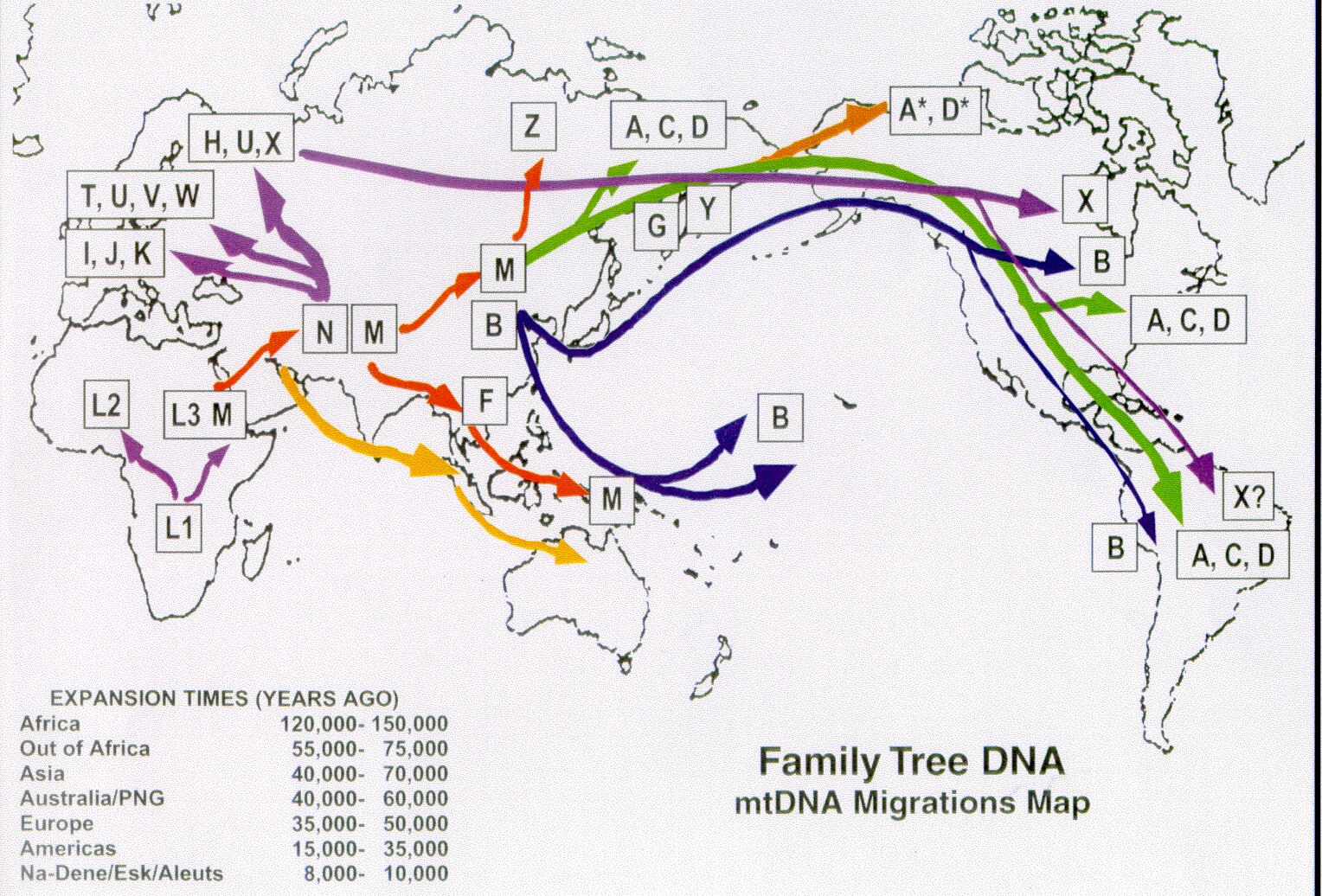
To come straight to the point: Mitochondrial DNA and the non-recombining regions of the Y chromosome can be used to determine the matrilineal and the patrilineal ancestry of an individual respectively. By analysing the variants in these uniparentally inherited DNA molecules people who shared a common ancestor many generations ago can be identified; and these individuals are usually clustered in ‘haplogroups’. Also by analysing the spread and frequency of haplogroups in different regions, we can deduce migrations and special events which occurred in human history.
When the spread of Y-DNA and mitochondrial (mtDNA) haplogroups are compared, we see that mtDNA haplogroups are more spread (and are less associated with a geographic region) than Y-DNA haplogroups indicating that women (who were our ancestors) in the past seems to have married more outside of their ethnic origin compared to males. This could probably be explained by the use of women when strengthening ties with other communities and monarchies in ancient times but the same might by said for males also. So (ancestral human) genetics gives some evidence towards the answer ‘yes’. More evidence from other fields are needed of course.
From what we read from the news, women from the poor parts of the world have a tendency to marry *foreign men for money and better life standards but there isn’t much statistical information on this, so cannot say anything definitive.
I suggest that scientists from different fields (like the above mentioned ones) come together and answer broad questions such as this; otherwise the correct answer will never be arrived at by a single field of science.
For more information about the use of genetics (i.e. mitochondrial DNA and Y chromosome) when deducing maternal and paternal ancestry:
Mr and Mrs Lettuce need to attend a meeting and need to leave their house quickly. But Mrs Lettuce is taking too long (probably doing her makeup or something). Mr Lettuce shouts: “Hurry up! LETTUCE go!”
It’s like the ‘ketchup’ joke in Pulp Fiction; I know you laughed at that 🙂
For over fourteen centuries, the Holy Quran and the Hadiths (sayings) of our beloved Prophet (PbuH) has brought light into the lives of billions of people. Their magical (in the sense of breath taking) narration, timeless advice/warnings, and miraculous scientific correctness has put no doubt in Muslims’ mind that the Quran is a revelation from Almighty God (Allah) and Prophet Muhammad is the (final) messenger of God. The Bedouin Arabs of the pre-Islamic era (called the ‘Jahiliyah’ period in the Muslim world, meaning the era of ignorance and darkness) – who would bury their daughters alive due to the ‘shame’ they may bring in their adulthood, have become Master Mathematicians, Astronomers, Architects, Philosophers in a matter of a few centuries…
Islam’s enlightening effect did not only affect the Arabs but also the Turks who would embrace Islam in the 10th century and go on to found the Ottoman State (not an ’empire’) in 1299. The Ottomans would become ‘Super-power’ of the world for the large part of the six centuries they have been in existence. The Turks were known for their strength, brutality and anarchic nature before Islam. This barbaric population would then become a symbol of tolerance in the way that they allowed Christians and Jews to live alongside Muslims without any fear of harm and under the protection of the law – even when they had the strength to wipe them off the face of the Earth, just like the Roman Empire did. They did not do this because it would be against the peace advising religion they believed in.
Al Jazaari
So what has gone wrong? Why did the Muslims become what they have become today? From the days of Salahaddin Ayyubi, Sultan Mehmet ‘The Conqueror’, Sultan Suleiman ‘The Magnificent’, Halid bin Walid, Omar bin Hattab – leaders who were well ahead of their time, to the dictators we see in the Muslim world today and the near past. It is a broad question but to answer it simply, it is because the Muslims have forgotten what the Quran and the Prophet had advised them: Try to understand yourself and the things Allah has created; this way Muslims would always keep their faith alive while also making discoveries that would help mankind. A Muslim should always find a way to improve their Imaan (faith) and spread the love of Islam not just for his relatives but for the whole of creation…
Between the 9th and 14th centuries, just two centuries after Islam was founded in Arabia, Muslims were renowned as masters of a variety of scientific and sociological fields. Arabic had become the language of knowledge and every scientist of the era would learn it to communicate with their colleagues in their respective fields. Islamic city of Baghdad (present day Iraq) was the ‘home of knowledge’ and scientific literature from all over the world would be made available in the Arabic language in the ’House of Wisdom’ to visiting scientists along with many observatories and libraries. They would all try to understand the Creator through studying his creation. That is why they have made many discoveries as well as improving many of the theories of the past scholars of Greek, Indian and Chinese background.
This enthusiasm to understand the natural world among the Muslim ‘ummah‘ (community as a whole) seems to be lost for the good part of the last two centuries. This has coincided with the decline of the Ottoman Empire which is indicative of a need of a new leader in the Muslim world just like the Caliphs aforementioned. However, even though the performance of Muslims stalled in the natural sciences, the Holy Quran still shines like a star even with the latest scientific discoveries, standing the ‘age of science’ – the era we’re living in. Only the fact of not containing errors is a miracle on its own. Though, it is sad to see that it is not Muslims who are contributing to the findings of these important scientific facts. It has become common practice for Muslims to say that ‘the Quran had that fact in it all along’ straight after a discovery is made by Western (non-Muslim) scientists. This is why we have let the Quran and the Prophet down. If that fact was in the Quran all along why didn’t we discover it well before others have done so? This is why Muslims scientists should make it a priority to reunite and ask for scholars of all areas to come forward and build consortia where they would study the Quran, the Hadith and the other Islamic literature (such as the Masnawi of Mawlana Jalalladdin Rumi, Risalei Nur of Bediuzzaman Said Nursi) extensively and then come up with hypotheses which they could test…
A few questions that pops up in one’s mind:
1- It would be a breakthrough to find Prophet Noah’s Ark where the Quran has told it had landed (Mount Judi? Something to think for historians, geologists, archaeologists etc.)…
2- They could see if the evidence is still there about the Moon splitting in half (for astronomers, historians)…
3- Try to find out why milk-brother/sisters are considered real brother/sisters in Islam (something for biologists maybe)?
4- The fire Prophet Abraham was thrown into, what happened to it? Could the fish swimming in ‘Balikli Gol’ in Urfa (Turkey) be different than others (maybe for zoologist and geneticists)?
5- What is different about the ‘Hajarul Aswad’ (black) stone in Kaaba (for chemists)?
6- Solid proof about ‘Haman’ being the chief advisor and/or architect of Pharaoh at Prophet Moses’ time (for Egyptologists, archaeologists and ancient historians)? Although Maurice Bucaille has done some terrific research in to this, more is needed…
7- What is miraculous about the location and the configuration/structure of the Kaaba?
8- When and where did Prophet Adam live?
9- What is God trying to tell us with all the fossils – why has he created and then allowed them to become extinct (whether they are dinosaur fossils, trilobite fossils or human-like creatures)?
10- Who was Dhul-Qarnayn?
11- Why were certain animals’ names mentioned in the Qur’an in the context that they are in (click here)?
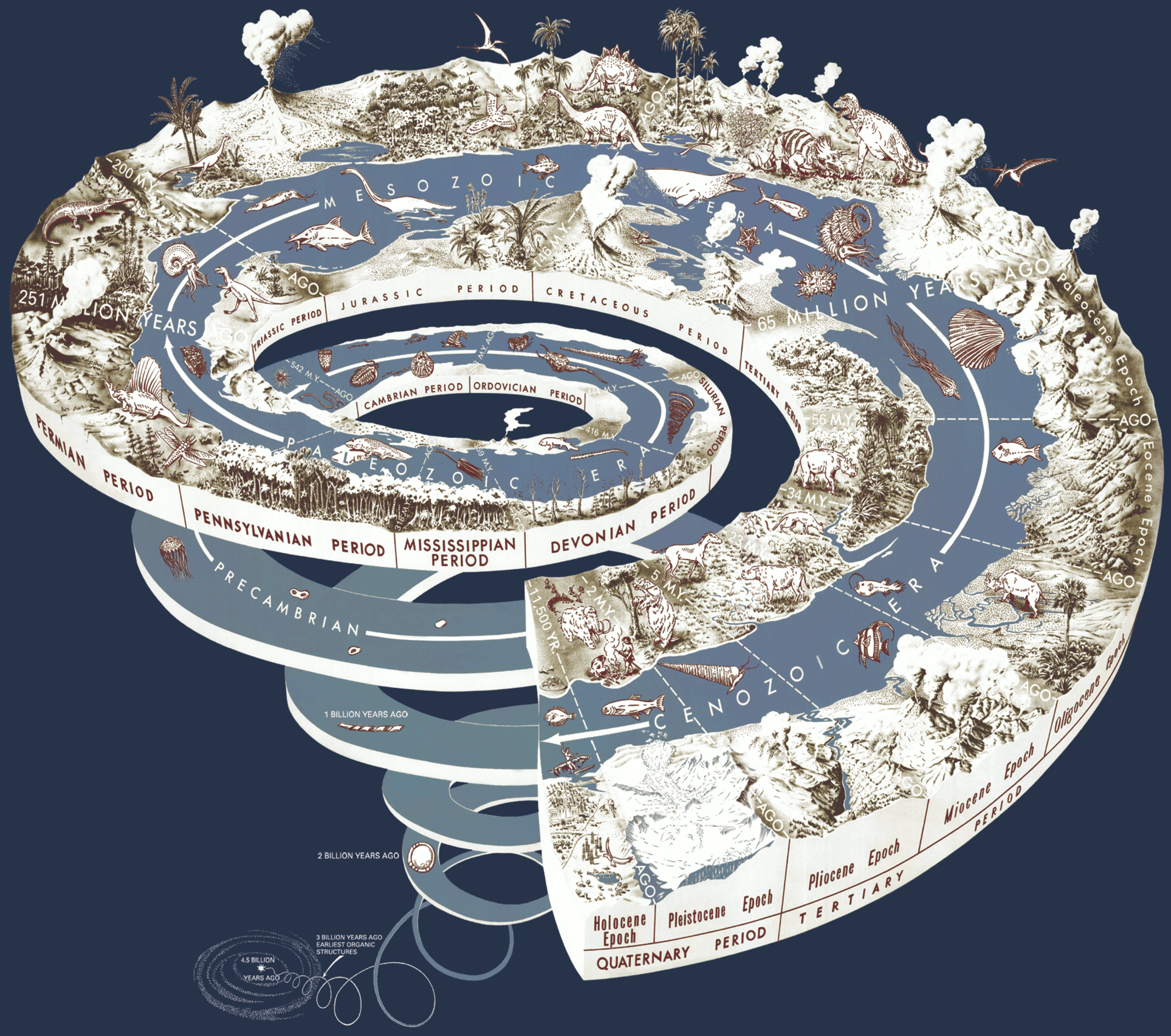
12- Trying to understand the mind of God using the timescales and types of creation e.g. approx. 10 billion years after the creation of the universe, the Earth is formed. Then half a billion years later the first life forms emerge (i.e. single celled organisms such as the first prokaryotes). Humans come into the scene only 100-200 thousand years ago (something for Islamic philosophers to discuss with scientists?)
and many more questions waiting to answered not just in life sciences but also social sciences; but by who? Muslims? or other scientists?
The above might have been a one-off miracle by Allah but we also know that this is a ‘cause and effect’ world thus Allah may have left clues about them somewhere if we look close enough to the right places. And also to bear in mind: Surely these questions cannot be answered by a single scientist but by a consortium of scientists from many backgrounds.
It is not all doom and gloom for the Muslim world as there are many distinguished Muslim medical and social scientists out there and I believe we must acknowledge their achievements by rewarding them accordingly, maybe through starting a competition just like the Nobel Prize within the Islamic world (with the winners being decided by scientists from all over the world so that it does not lose it’s credibility). This would surely breathe new life into the scientific world and increase the enthusiasm within Muslims…
Many aspects of the Quran and the Hadith remain undiscovered and it is up to us find these jewels, and we cannot afford to wait for non-Muslims to do it for us. Muslim leaders of the world could fund projects and such consortiums as aforementioned which would once again gain the attraction of the Muslim world, encourage them to learn about Science and inspire future generations to become great scientists. We cannot carry on living in ignorance while science keeps improving. We have to contribute to it like our ancestors have been doing in the past; and more importantly, because The Creator wants us to!
Ben 12 yaşındayken (2000) ailecek İngiltere'ye taşındık ve ingilizcem neredeyse sıfırdı. Bunu duyan (Karen Holman adında) Sınıf Öğretmenim, kendimi evimde hissedeyim diye tüm arkadaşlarıma Türkçe cümleler dağıtmış. Sınıfa girer-girmez arkadaşlarımın hepsi bana "Hoşgeldin" dediler










 An ordinary blog by an ordinary bloke