by Dr A. Mesut Erzurumluoğlu | Principal Bioinformatician at Bicycle Therapeutics (formerly at Boehringer Ingelheim, and Univs. of Cambridge, Leicester & Bristol) – blogging since 2006. All views mine unless stated otherwise
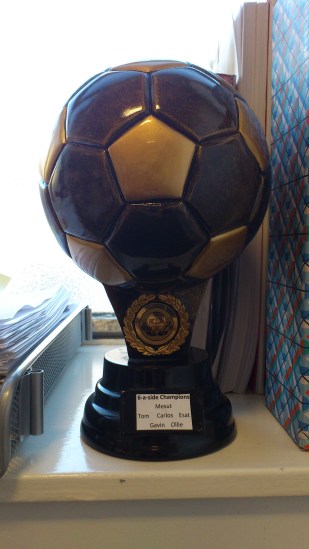
The Team: Mesut Erzurumluoglu (Captain), Esat Erzurumluoglu, Tom G. Richardson, Gavin Lunney, Carlos Fonseca & Oliver Lyttleton
(The UBU Turkish Society President) Mesut and Co have won the Christmas 6-a-side Football Tournament organised by the University of Bristol Staff League (at the Bristol Grammar School on the 16th December 2012), winning all three of their knockout matches to claim the cup
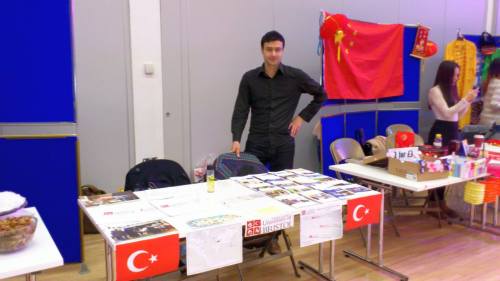
Thanks to the help of many friends and Bristolians, we have now founded the Turkish Society at the University of Bristol. Please visit our website (www.ubu.org.uk/activities/societies/BristolTSoc/) or Facebook (University of Bristol – Turkish Society) group page for our upcoming events and many more!
The below is a Ahdnama (Declaration) from Sultan Mehmed II El Fatih (The Conqueror) in 1463 – I am not a Ottoman or Turkish nationalist but am only sharing it because I like it – seen rarely in history:
(Mehmet – son of Murat Khan, The victorious)
The command of the honorable, sublime Sultan’s sign and shining seal of the conqueror of the world is as follows:
“I, Sultan Mehmet Khan inform the world that the ones who possess this imperial edict, the Bosnian Franciscans, have got into my good graces, so I command:
Let nobody bother or disturb those who are mentioned, nor their churches. Let them dwell in peace in my empire. And let those who have become refugees live and be safe. Let them return and let them settle down their monasteries without fear in all the countries of my empire.
Neither my royal highness, nor my viziers or employees, nor my servants, nor any of the citizens of my empire shall insult or disturb them. Let nobody attack, insult or endanger neither their life or their property or the property of their church. Even if they bring somebody from abroad into my country, they are allowed to do so.
As I have graciously issued this imperial edict, I hereby take my great oath: In the name of the Creator of the earth and heaven (Allah), the one who feeds all creatures, and in the name of the seven Mustafas and our great Messenger (Muhammad PbuH), and in the name of the sword I have, nobody shall do contrary to what has been written, as long as they are obedient and faithful to my command.”
See a similar one – over 700 years before the above – from the Prophet Muhammad (PbuH): Letter to all Christians – again, sharing it as I like the message.
Some good programs and booklets produced by the Open University; which they’re giving away for free. Could also have a look at the programs they produce on BBC at the link:
I went through these three websites below and made a list of the books worth reading… Also audible.co.uk gives a free audible ebook to whoever signs up…
Order of books not important… Also I do not mean these are the only books worth reading (I have not put religious books in here, but knowledge in world religions is a must I think!)…
The Dialogue Society are doing an excellent work for social cohesion and the propagation of dialogue amongst faith leaders and different communities!
I’d fully recommend any youngster to go and volunteer for their activities/events! It would be a great experience for one to learn to respect others’ opinions whilst also making a contribution to the British society.
Especially their publications (e.g. Dialogue in Islam, Deradicalisation by default) are top notch!
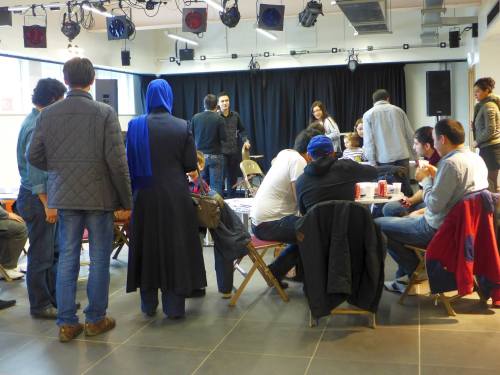
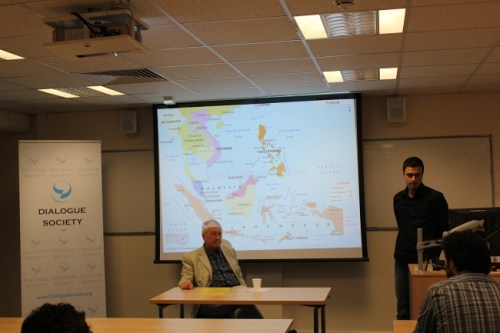
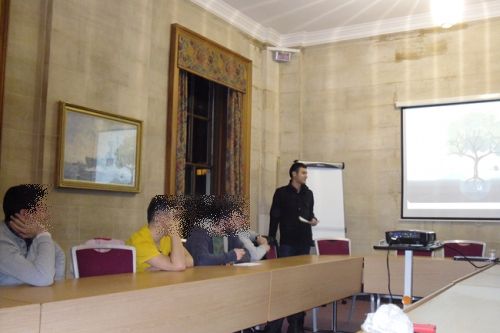
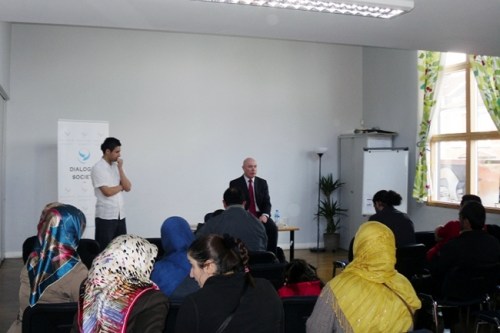
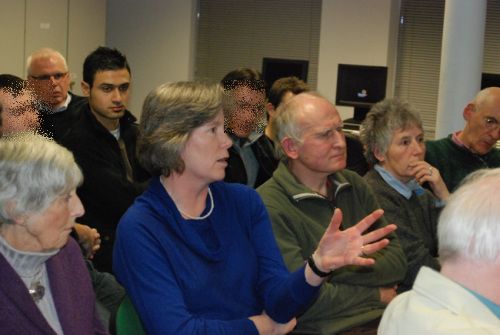
Addendum (Dec 2015): Just to show that I do not state things that I do not believe in, below is a few example photos of me volunteering for (and/or attending) the Dialogue Society – Bristol branch and Leicester branch events (e.g. as a presenter/chair, audience, event coordination).
Leicester Council of Faith public meeting – Presented the ‘Islamic perspective on the Purpose and Creation of the Universe’ (5th December 2015). An outline of my talk can be found here:
Dialogue Society ‘Success School’ certificate (2012)Book Review (27 Sept 2012) – European Muslims, Civility and Public LifePublic Seminar (27 Apr 2012): Malaysia – Affirmative Action for the Majority?Public Seminar (18 Jan 2012) – Race in School EducationSuccess School (4 Dec 2012) – Session 6 with UWE Vice-Chancellor Prof. Steve WestPublic Seminar (30 Apr 2013) – The role of the Crown Prosecution ServicePublic Talk (19 Jan 2011) – Rising as a Civilisation: Which Muslim Countries Can Accept the Challenge?
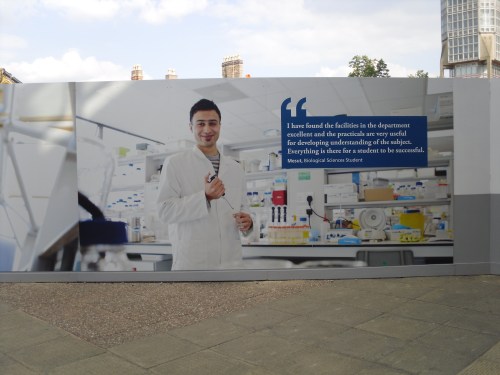
My Poster in front of David Wilson Library, University of Leicester, UK
The above lab photo was printed on a large billboard just in front of the David Wilson Library (during the refurbishment/renovations) at the University of Leicester (UoL) in 2011, and then in 2013. The photo was also used in the Biological Sciences sections of the 2011/12, 2012/13 and 2013/14 UoL undergraduate prospectuses – although I was a PhD student at the University of Bristol since January 2012. I was in the third (out of four) year of my PhD course but was still in the UoL prospectus as an ‘undergraduate’ 🙂
Me in University of Leicester Prospectus 2012/13
The university also included my views in the online version of the University of Leicester Biological Sciences prospectus and in a ‘Time management’ lecture:
Univ. of Leicester – Biological Sciences webpageApocryphal quote attributed to me: “It wasn’t that challenging, if you’re organised” was used in a ‘Time Management’ lecture (2016) given at the University of Leicester (by Dr. Alex Patel -see her comment below). Photo by Yasemin Alpdogan.
Muslim scholars’ contribution to Life, Earth and Social sciences is usually overlooked today due to the ‘Golden age’ of the Islamic world coinciding with the ‘Dark Ages’ of Europe. This leads to an understanding within the general public that Muslims did not contribute to Science at all; sadly this conception is also shared by many Muslims. So if today’s Muslims share the wrong belief that their ancestors have achieved nothing in the past, how can they themselves then go on and become successful in the present and future?
Logo of ‘1001 Inventions of Muslims’ exhibition
Due to the curious nature of mankind, it was not easy to ignore the celestial bodies of different sizes and colours which appeared in the sky during the day and night for ancient civilisations and mankind have been in awe of these shiny things throughout history and tried their utmost to understand the vastness of space and the infinitely looking numbers of celestial bodies which were visible to the human eye. They tried to comprehend what they were doing there and what purpose(s) were they serving. Especially the movements, positioning and the resulting effects of the sun, the moon and nearby stars were intensively observed to make sense of seasons, Earth’s movements and mark the passing of days, months and years.
Following the decline of the Roman Empire, Europe entered a period called the ‘Dark Ages’ by Western scholars to emphasize the cultural and economic decline that occurred in the continent. However it is usually misunderstood by the public as an age of stand-still in terms of science, economy and health issues which encapsulated all the world populations – which of course was not the case. What was supposedly a Dark Age for Europe was when there were significant improvements and discoveries in Astronomy, Mathematics and Medical sciences just a few thousand kilometers away in the Middle East, where Arab (and/or Arabic speaking) scholars were using what the Ancient Greek and Far East scholars had observed in the past to build upon and find new things which would transform the life standards of mankind and increase the understanding of the natural world.
As far as Astronomy (not forgetting other areas such as mathematics and biology) was concerned, Arab (and/or Arabic speaking) astronomers of the era were regarded as the masters of the field. Their achievements – which are usually overlooked by today’s academics, and not surprisingly, by the public, have played a crucial role in the development of this enthralling science which existed since humankind set foot on earth.
Ancient Greek scientists had observed that the North Star (which is named Polaris by modern scientists today) appeared lower in the sky as a person traveled to the South and thus made suggestions that the Earth could be spherical. Muslim scholars, inspired by the Quran and the teachings of the Prophet, set on a journey to understand the natural world to get to know the creations of the Creator better started to research the literature produced by past scholars. Only a few centuries after the founding of Islam (in 610 AD), the Bedouin Arabs of the past became the great thinkers of the time and Arabic became the ‘Language of Science’ and most world renowned scholars of the time knew or learnt Arabic to be able communicate with the best of the best of their time in the ‘House of Wisdom’ in Baghdad. Nearly all available literature in the Sanskrit and Greek languages which contained a wealth of information about many sciences including Astronomy and mathematics, such as the one aforementioned about the North Star, would be translated into Arabic and made available in many libraries (especially at the House of Wisdom) across the Islamic empire (The Abbasid Caliphate was the Islamic state of the time). The available information would then be discussed amongst the greatest scholars of the time. Also the rulers (called ‘Caliphs’ in the Muslim World) were usually interested in natural sciences and this would mean a lot of encouragement to scholars in term of high salaries, bonuses and higher social status amongst the public.
However, Astronomy stood out from other sciences in Islamic states because it was related to the worshiping of God, Allah. Muslims have the obligation of facing the Kaaba during the daily prayers and doing that requires the pinpointing of the direction of Mecca from any location. It went as far as mosques employing professional astronomers (called muwaqqits), who helped Muslims pray to the right direction and at the right time during the day. Muwaqqits were also important when determining the start of the month of Ramadan and certain religious dates such as the Hajj period and how to get there through the shortest possible route.
Baghdad (capital of present day Iraq) became the centre for scientists in the 9th century and many libraries and observatories were present. The Caliph would have his own dedicated group of mathematicians, geographers and medical scientists who would analyse past literature and find new cures, calculate distances and how long it would take to a certain place. Naturally, this encouragement of scientists bared its fruits and in the 11th century. Abu Rayhan al- Biruni made remarkable conclusions by mentioning that planets were possibly moving elliptical orbits rather than circular ones. Muslim scholars even made calculations about the Earths circumference by walking in the Syrian desert until they realised that the North Star had moved by one degree according to their vision and then calculated the value of 37369 km which was correct by over 90% (True figure is just over 40000 km). They even started to challenge theories which had held on for centuries using the Quran as a platform to build upon. One example of this occurred thorugh Fakhr al-Din al-Razi, who lived between 1149–1209, rejected the Aristotelian and Avicennian notion of the Earth’s centrality within the universe in his book Matalib (Volume 4), but instead argued that there are “a million worlds (alfa alfi ‘awalim) beyond this world such that each one of those worlds be bigger and more massive than this world as well as having the like of what this world has.” To support his argument, he even cited the Qur’anic verse (Surat-ul Fatiha, verse 1), “All praise belongs to God, Lord of the Worlds,” emphasizing the term “Worlds”; thus making other scientists think outside the box and let them know what he thinks about the Earth being the center of the universe (and indicating also the possibility of multiple universes might have existed, again which was in contrast with the common views of that age).
Another example of a Muslim genius in the era was Khawaja Muḥammad ibn Muḥammad ibn Ḥasan Ṭūsī (more commonly known as Nasireddin) who lived from 1201 to 1274 and born in the city of Tus, Khorasan (in Iran) who has about 150 works in a variety of fields including Astronomy, Biology and Mathematics. He was very influential when convincing the Mongol ruler Hulagu Khan (another ruthless leader, one of the grandsons of Genghis Khan) to build an observatory for establishing accurate astronomical tables for better astrological predictions. He was the first to publish a work on Trigonometry independent of astronomy and geometry effectively establishing it as a separate field. He provided proof for the ‘law of sines’ for plane and spherical triangle (which was used by Copernicus also) is still taught today to Mathematics students. There could be an encyclopedia of books written just about him and his works. But how many people know the name of this true great let alone his works?
Sophisticated (and expensive) instruments from astrolabes to quadrants, sextants to sundials were made available for use by the state to any researcher with credibility. Astrolabes – which were succeeded by sextants afterwards, have been labelled as the most important astronomical device before the telescope. They came very close to solving the inconsistencies found in Claudius Ptolemaeus’ model (which has become nearly synonymous with the superseded Geocentric model) and couldn’t find the ultimate correct answer due to uncharacteristically not being able to start without any assumptions in this occasion (due to wrong evidence from past literature being shown as facts) and by making the wrong assumption that the Earth lay at the centre of planetary orbits.
In a period dismissed by most scientists today as the ‘Dark Ages’ where supposedly nothing blossomed in terms of intellectual and academic purposes, there were near miraculous discoveries in the Islamic world and the Middle East. But it is more saddening to see that even the Muslims do not know and/or acknowledge the achievements of their ancestors such as Al-Biruni, Ibn Sina (known as Avicenna in the West), Ibn Rushd (aka Averroes), Al Khwarizmi (who is called the father of Algebra), Abu Al-Qasim Al-Zahrawi (aka Albucasis – most renowned surgeon of his time), Al-Kindi, Ibn Khaldun (famous historian and philosopher – best known for his book ‘Muqaddimah’) etc. The list can go on forever so while even when most of the Muslim world does not recognise the abovementioned names, no one can blame the non-Muslims for doing the same (these comments are general and does exclude the few distinguished and objective academicians of today and the past). The new generation of Muslims must be encouraged to learn from their ancestors, acknowledge the things they have achieved and combine it with today’s knowledge and make it their ultimate goal to understand the physical world just like they did in order to understand the creation (and the Creator) and carry on being in awe of the things he has created. The early Islamic states have paid enormous attention to natural and life-sciences as did the Ottomans and thus were the global forces (in terms of knowledge, economy and political power) of their times. Isn’t it time Muslims did the same?
A few Famous Quotes Inspiring Muslims to Seek knowledge and Contribute to Sciences
“Travel through the lands (Earth) and try to understand (observe) how He began creation.” [Holy Quran, The Spider, 29:20]
“Have those who disbelieved not considered that the heavens (sky) and the Earth/land were a joined entity, and We separated them; and made every living thing from water?” [Holy Quran, The Prophets, 21:30]
“Whomever teaches me a word, I will be his/her slave for 40 years” [Fourth Caliphate of Islam: Ali bin Abu Talib]
“Be a teacher, or a student, or a listener, or one who encourages seeking knowledge; but never be the fifth, or you will be perished” [Prophet Muhammad]
“(Useful) Knowledge is like a Muslim’s lost property. They must seek to find it!” [Prophet Muhammad]
“The death of an Alim (scholar) is the death of the Alam (world/universe/creation).” [Prophet Muhammad]
References (and Further Reading)
Adi Setia (2004). “Fakhr Al-Din Al-Razi on Physics and the Nature of the Physical World: A Preliminary Survey”. Islam & Science, Winter 2004. findarticles.com/p/articles/mi_m0QYQ/is_2_2/ai_n9532826/
Berggren, J. Lennart (2007). “Mathematics in Medieval Islam”. The Mathematics of Egypt, Mesopotamia, China, India, and Islam: A Sourcebook. Princeton University Press. ISBN 978-0-691-11485-9.
David A. King (1993). Astronomy in the Service of Islam. Aldershot, U.K. Variorum
George Saliba (1994), A History of Arabic Astronomy: Planetary Theories During the Golden Age of Islam, p. 233–234, 240. New York University Press, ISBN 0-8147-8023-7
John David North (2008). Cosmos: An Illustrated History of Astronomy and Cosmology. University of Chicago Press. ISBN: 0226594416
Jonathan Lyons (2009). The House of Wisdom. Bloomsbury. ISBN 1596914599.
Ragep, F. Jamil (2001). “Freeing Astronomy from Philosophy: An Aspect of Islamic Influence on Science”. Osiris, 2nd Series 16 (Science in Theistic Contexts: Cognitive Dimensions), pp49–71. doi:10.1086/649338.
PS: Terrorist groups have unfortunately blackened the name and the beautiful face of Islam. We must take a stand against all oppressors: whether they are carried out by radical groups such as the Al-Qaeda or ISIS, or by states (e.g. Chinese oppression on Uyghur Turks, Israel’s oppression on Palestinians) – through diplomacy, boycotts, and/or military intervention (without causing any more civilian casualties, final option!).
We must realise that every ideology-belief-religion (e.g. Fascism, Marxism, Christianity, Social Darwinism) has been – and some are still being (e.g. Capitalism, Tribalism) – used to suit a political agenda of a few rulers/elite class (whether we realise it or not). These (mentally, spiritually) corrupted individuals/groups have caused nothing but oppression and/or death to millions. Unfortunately the same agenda has now been put into play via the use of wrong interpretations of Islam (e.g. Wahhabism) to spur on uneducated, alienated and ‘lost’ youth to join the ranks of these supposedly “Islamic” terrorist groups. There is no terrorism in Islam. As the highly respectable scholar Fethullah Gulen put it: “A Muslim cannot be a terrorist and a terrorist cannot be a Muslim!”
PPS: We must stop calling the science carried out by Muslims in the golden ages as “Islamic Science”. Science is an objective field which belongs to nobody, it belongs to all of us. There is no Islamic, Christian or Jewish Science.
We must also stop saying Muslims do not contribute to science today. That is not true. You will see a Muslim scientist in almost all (large scale) labs and/or projects in virtually all areas of science. However, the problem is that our ‘brains’ are not valued in our ‘not-so-Islamic-but-Islamic-in-name’ countries thus we serve countries which provide us a platform to concentrate on our research. These are the Western countries! Thus (rightly so!) these countries also get all the credit…
If we were to ask a question like this to the public we would probably get an equal split between yes and no. Also many reasons will be given for the explanation of the answers. A question like this is a tough and a broad one; and must be approached by a consortium of Statisticians, Psychologists and Sociologists. However genetics can also have a say on this.
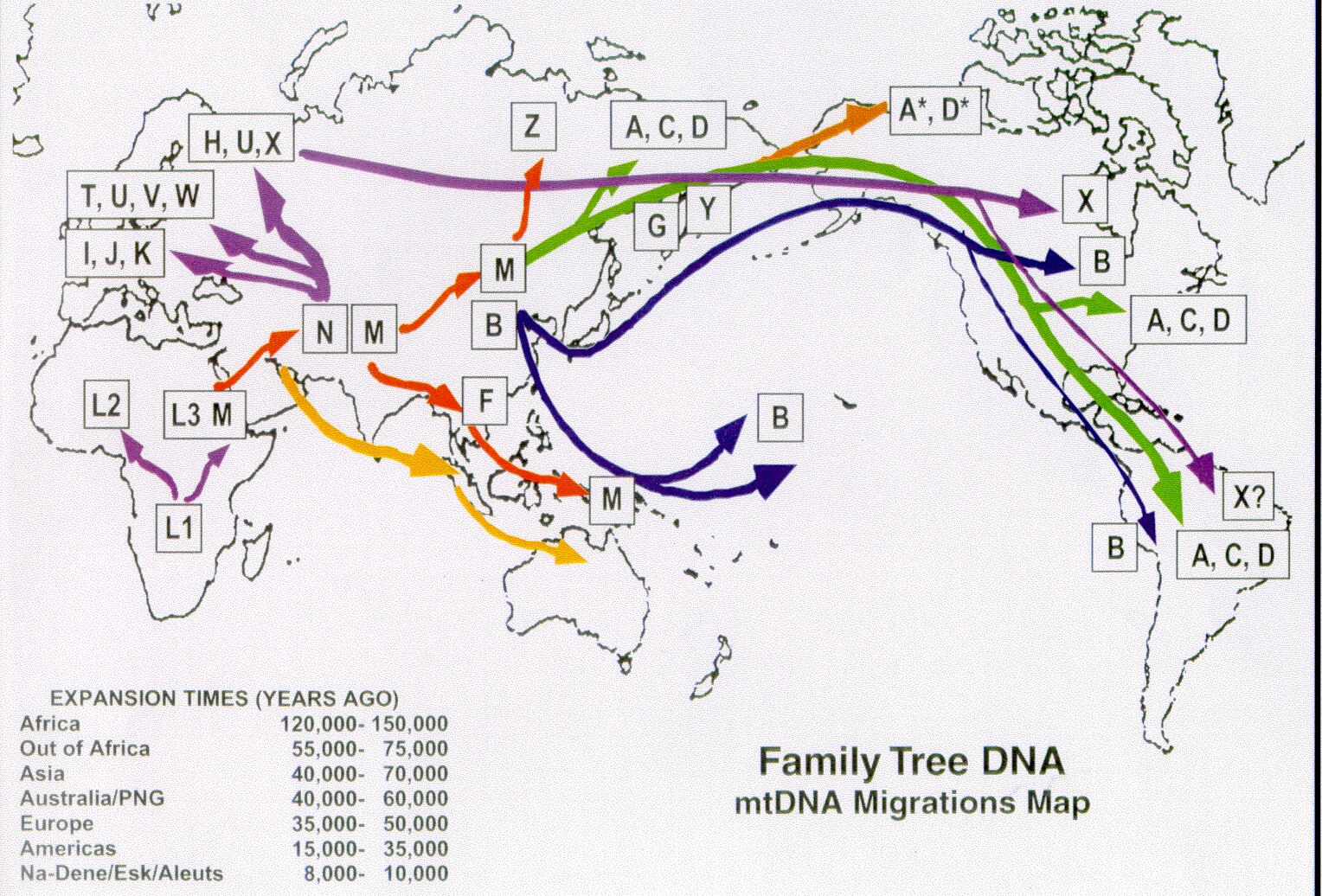
To come straight to the point: Mitochondrial DNA and the non-recombining regions of the Y chromosome can be used to determine the matrilineal and the patrilineal ancestry of an individual respectively. By analysing the variants in these uniparentally inherited DNA molecules people who shared a common ancestor many generations ago can be identified; and these individuals are usually clustered in ‘haplogroups’. Also by analysing the spread and frequency of haplogroups in different regions, we can deduce migrations and special events which occurred in human history.
When the spread of Y-DNA and mitochondrial (mtDNA) haplogroups are compared, we see that mtDNA haplogroups are more spread (and are less associated with a geographic region) than Y-DNA haplogroups indicating that women (who were our ancestors) in the past seems to have married more outside of their ethnic origin compared to males. This could probably be explained by the use of women when strengthening ties with other communities and monarchies in ancient times but the same might by said for males also. So (ancestral human) genetics gives some evidence towards the answer ‘yes’. More evidence from other fields are needed of course.
From what we read from the news, women from the poor parts of the world have a tendency to marry *foreign men for money and better life standards but there isn’t much statistical information on this, so cannot say anything definitive.
I suggest that scientists from different fields (like the above mentioned ones) come together and answer broad questions such as this; otherwise the correct answer will never be arrived at by a single field of science.
For more information about the use of genetics (i.e. mitochondrial DNA and Y chromosome) when deducing maternal and paternal ancestry:
Ben 12 yaşındayken (2000) ailecek İngiltere'ye taşındık ve ingilizcem neredeyse sıfırdı. Bunu duyan (Karen Holman adında) Sınıf Öğretmenim, kendimi evimde hissedeyim diye tüm arkadaşlarıma Türkçe cümleler dağıtmış. Sınıfa girer-girmez arkadaşlarımın hepsi bana "Hoşgeldin" dediler












 An ordinary blog by an ordinary bloke