Feeds:
Posts
Comments

Posts Tagged ‘anatolia fc’

Maldini was one of my favourite players and the above quote from him is one of my favourite football-related quotes. I love watching and learning from people who are masters of their craft and see the true essence of their job*

Introduction

As a 13-year old playing as a forward (‘number 9’) for a prominent football team in Leicester (Highfield Rangers) – and at a cross-roads in my (potential) football career, I was (wrongly) diagnosed with meniscitis and told to stay away from any intense sports for ~6 months. As football was my only passion at the time, I couldn’t resist a kick-about with my school mates and ended up damaging my knee even further. I would have very intense pain for days after every game. I went to another doctor for help and he diagnosed me with Osgood-Schlatters disease, which is a common cause of knee pain in growing adolescents who do intense sports. It’s certainly not as bad as meniscitis and many players who reached the top like Steven Gerard and Paul Scholes have it. So, if I was diagnosed correctly at the time, I could have got away with a couple of weeks’ rest and regular ice pack treatment until my growth spurt ended – which I probably would have obliged. So (i) the wrong diagnosis, (ii) my inability to withstand my desire to play football, and (iii) not having someone to guide me in my early football career gave me the worst possible start. Before the injury, I was the top goalscorer of the U15 team – mostly thanks to being very fast** and having a very good technique – even though I was one of the youngest and shortest at the time (I’d like to also think I was quite intelligent for my age too). Pains me to say this but, living in Germany now – where even teams in the Kreisliga (like Division 10 in the UK) have access to good resources, I can also better see that the UK or a city like Leicester was not the best place for a young player like me (see the three points in bold above). Maybe if I was in Germany, I would have been better treated and educated, and could have made a fresh start.

After the intense pain (mostly) went away in a year or so time, I started to play in football tournaments every now and then, and won a few prestigious cups (incl. local 5-a-side Goals tournaments) but always felt that I (even as a 15 year old) was now too late for professional football in the UK, so decided to concentrate on my studies – which I have no regrets over. What I do regret is that (our peak physical) life is too short to fully commit to different careers – if having a football career was an option now (i.e. as a 34 year old now, I would still be at my peak physical condition for the next 10-15 years let’s say), I definitely would have given it a go just to see how far I could go. I did have a successful Leicester Sunday League (2007-10) and University of Bristol Staff League (2012-16) career though 😊

Anyway, after a slightly longer introduction than anticipated, let’s move straight to some things I picked up from my experiences but also others’:

General advice

  • Thinking about being a player you would hate to play against is a good start to set up the foundations for development. The most annoying oppositions for me were physically strong ones that never gave up – even after 3-0 down
  • Technical talent is overrated. ‘Hard work’ definitely beats ‘talent’ if talent doesn’t work hard (attributed to Tim Notke – a basketball coach). When talented people work hard and continuously improve themselves, then they become unstoppable – Ronaldo and Messi being perfect examples
  • Being available is the most underrated skill***. Keeping fit and ready (even if when not first pick) throughout the season is the reason why some ‘not-so-skilled’ players have had very successful and long careers at the top. I used to also think that the Golden Boot being awarded to a player who scored 1-2 extra goals than the 2nd player who played 10 games less was unfair but I now fully support it – same with the Golden Boot being shared although one player played many more games
  • Learn from the wins as well as the losses – analyse what went well also, not just what went wrong
  • Ask your coach and friends what you can improve on – this will be an eye opener, even if you don’t agree with them
  • Study yourself first and then study the best similar-styled players. Read autobiographies of these players and analysis books (e.g. do you know what POMO is?), listen to podcasts (e.g. The Athletic, Football Ramble), and watch analysis channels such as Sky Sports Football (and related channels e.g. The Overlap) and Tifo Football. Making a Football Manager-style summary card for yourself could help (Advanced: once you’ve honed your strengths and worked on your own weaknesses, study your likely opponents and learn to exploit their (potential) weaknesses e.g. if a defender or a goalkeeper is known to be eccentric – as a striker applying pressure, you know they might try to not just hoof the ball up the field every time but fake a kick and try to get past you at some point. Be prepared to nick the ball off them when that opportunity comes)
  • Best players are not right or left-sided, they use either foot almost as good
  • Have short and long term plans – and when an opportunity comes, see whether it fits with those plans. If you’re not on track to achieve those goals, talk to manager and experienced mates to get their advice
  • Do whatever gives you an extra boost pre-game – whether that’s listening to a certain type of music and/or praying – as most games are decided on small details (even many of those that finished 3-0)
  • Think of ways to become (one of) the coach’s and fan’s favourite. This will ensure that you’re playing and give you another chance to shine – this is what each game is! For the coach, showing that you’re listening and trying to keep to his tactics is key. For the fans, having tidy hair, clapping after the game and/or chatting with them after the game will go a long way. Using social media wisely is also important once you start accumulating follower – get at least one person to have a look before posting something
  • Playing for the national youth teams of smaller footballing nations is a great way to make a name for yourself – without committing to them for the rest of your career. So if you have citizenship and/or ancestry from these nations, contact their coaches and maybe you’ll get a call up even if you’re not playing in a top (youth) team. For example, a friend of mine had Antiguan ancestry and played for the Antigua and Barbuda National Team at a young age – and even played against the USA
  • Try to find yourself an English-speaking agent from a young age – to help with your visibility when you’re ready to make the jump

Advice to forward players

  • Number one priority for a striker is to score and directly assist goals. Getting involved in team play, winning headers, pressing defenders, defending corners etc. are all secondary and should not hinder your first priority. Only add these to your game once you’ve mastered your main job. Haaland is a perfect example of this – he can definitely improve on the other aspects but as long as he’s scoring at his current rate, no one will mind.
  • Best strikerslead the line‘ (e.g. Ronaldo, Rooney, Drogba, Ibrahimovic, Lewandowski, Shearer, Benzema****), therefore you must be strong physically and mentally but also have a leader mindset. If you’re not a natural leader, then take courses and/or read books to become one. You are the most important player in the team and therefore must be able to handle the responsibilities and the accompanying pressure
  • Football is a team sport, thus learn to work with your team mates to make space for yourself. There’s a reason why Ronaldo and Messi consistently scored a large number of goals every year: not only are they masters on the ball but off it too (e.g. if teams blindly concentrated on stopping Messi, then Suarez or Neymar would have also destroyed them. Messi utilised Suarez and Neymar’s runs to consistently make space for himself and score). It’s also OK not to score in a game if you played ‘well’ (e.g. directly contributed to the team’s win by assisting a goal) and the team won.
  • Best strikers make it look easy and usually score with their first touch where possible (max 1-2 touches before finishing). If you find yourself doing a lot of work before scoring, then reanalyse what could be made efficient. Especially work on first time finishes (of all sorts e.g. whipped, floated and slow crosses, penalties, volleys, tap-ins, headers – utilising both feet) – as defenders and/or keepers have a much increased chance of closing the angle or blocking a shot with every passing millisecond
  • As a striker, you must have a thick skin and be oblivious to abuse from (cunning/dirty) defenders and the opposition supporters. I was elbowed by a defender once and the referee didn’t see it. I got so angry and wanted to punch the guy but – even in the heat of the moment I was calm enough to realise that – if I did, he would have got exactly what he wanted. I told the referee about it to make him aware and carried on with my game
  • Learn to quickly forget any missed chances and not letting your head down. You will have plenty of chances to rectify any misses – if not this game, then the next. Learning to miss and forget is so important that I would recommend actually training for this. Do some ‘missing sessions’ (e.g. hit the ball nicely but deliberately miss a chance in training) and simulate how you would react. Even the greatest strikers miss gilt-edged chances but they usually do so in a cool way e.g. they hit the ball sweetly over the bar – not scuff it 😊
  • Learn how to slow down games when time is on your side e.g. you’re 2-0 up after 80 minutes. I do not mean time wasting by faking an injury but running to the channels when you have the chance and keeping the ball as further away from your goal as possible. Also, keep your head up and see if other team mates are running with you – if yes, pass to them, if not, try to win a throw-in or corner by hitting the ball to the opposition. If you don’t have the chance to run, always put your body between the ball and defender so they have no choice but to foul you or let you keep control of the ball – which will give you the chance to pass or make a run yourself. The main aim is to win and anything that puts this at risk should be avoided (see France v Bulgaria 1993 for a famous example). Only if the game is surely dead (e.g. 3-0 with five minutes to go) or it’s not an important game, then you can go for ‘stat padding’ – otherwise slow the game down
  • Being unpredictable will make you unstoppable. This is why being able to shoot from distance and/or chipping over a keeper, using both feet and head, coordinating with team mates to make dummy runs etc. will make you a nightmare for defenders
  • Many goals are wasted because a striker can’t keep with the offside line before the ball is played. Speeding up horizontally before making a sprint towards the goal has to come naturally. As this also requires coordination with your team mates, they should recognise your run/’signal’ before they attempt the pass – and vice versa. Work on this until you get it right – also Google ‘Beating the offside trap’ and you will find many nice examples (Google everything!)
  • In line with the point above regarding exploiting your opponent’s (potential) weaknesses, if you observe that a defender is prone to reckless sliding, there will be an opportunity to win an easy penalty as some point. I have seen Aguero and many other master strikers do this: As you’re about to shoot, if the defender slides from the slide to block you, you can use your feet to shield the ball and – although potentially painful – he will slide through you and knock you down. To find identify opportunities such as these, if possible, watch a game your direct rival defender has played poorly in

I hope these were useful. Please provide feedback as I would like to improve this post – I’m also happy to elaborate any point made here.

Thanks for reading!

Footnotes

*Another quote I love – I believe by Sir Bobby Robson, the legendary English manager – that I have heard years ago but haven’t been able to validate is (something like): “When the fans want you out, the board will stick by you. When the fans want the board out, get ready to pack your stuff

**Got a gold certificate at school for running 100m in ~12.0 seconds

***Giroud is a great example for this. He’s the all-time top goalscorer of the (Men’s) France National Team

****Deliberately kept the list long to show the different types of successful strikers

Read Full Post »

Anatolia_FC
Anatolia FC, Ingiltere’nin Leicester şehrinde (2007-2011 yılları arasında) kurdugumuz amatör futbol kulübüydü. Benim de kulüp profilim ve maç istatistiklerime ulaşmak için linklere tıklayın…

If I have to make a tackle then I have already made a mistake” (Eger beni rakibin ayagına kayarken görürseniz, bir önceki pozisyonda hata yapmışımdır) – Maldini

Spor yapmayı saglıksal ve manevi açıdan çok önemsiyorum. Epidemiyoloji alanında okudugum derleme (review) makalelere göre günlük yarım saatlik sporun bile obezite riskini büyük bir ölçüde azalttıgı rapor ediliyor. Saglam bir kafanın genellikle saglam bir vucutta bulundugunu da çok duyduk; ve görülebilir bir gerçek. Nazik yerinin üzerine oturmaya alışmış bir insanın hayatta başarılı olması çok zordur. Spor yapmayan insan nispeten daha çabuk yorulur, daha çabuk uykusu gelir ve daha çok uyumak zorunda kalır. Cok uyuyanın gününde bereket olmaz.

Ayrıca davranışlar bulaşıcıdır. Spor yapmayan anne-babanın çocuklarıda büyük ihtimalle spor yapmaz. Bir kısır-döngü başlar ve böyle devam eder gider…

Fakat benim konsantre olmak istedigim nokta – futbol örnegine odaklanarak – sporun benim üzerimde bıraktıgı (fiziki etkilerinden çok) kalıcı manevi etkileridir.

Ben çocukluk ve delikanlılık dönemlerim de çok top oynadım ve hemen hemen herzaman sahaya forvet olarak çıktım. Bugunden geçmişime dönup baktıgımda futbolu forvet olarak oynamanın benim daha sabırlı olmama, ruhen daha sakin davranmama (e.g. nispeten daha az fevri davranmama, daha yavas sinirlenmeme, sinirlenince daha çabuk sakinleşmeme) ve hislerimin onune aklımı daha çok koymama vesile oldugunu soyleyebilirim. Nasıl oldugunu ise sozlere dökebildigim kadarıyla madde-madde aktaracagım…

(i) Oncelikle forvetin isi gol atmaktır. Insan asıl işini bilmeli ve öncelikle ona odaklanmalıdır. Yan-işlere ancak asıl işini yaptıktan sonra odaklanmalıdır…

(ii) Gol atabilmek için kendine güveninin tam olması lazım. Bizde herkes ‘golcü/forvet’ olabilecegine inandıgı için gozler hep senin uzerinde oluyor. Kendine güvenmeyen adamdan forvet olmaz!

(iii) Gol kaçırsan da, kötü oynasanda sogukkanlılıgını (ingilizlerin ‘composure’ dedigi) korumayı ögrenmen lazım. Bir forvet için sakin kalmak en önemli hasletlerden birisidir. Sakin kalarak, topa vurman gereken yerde vurmayı, arkadaşına pas atman gereken yerdede atmayı bilmen lazım. Ayrıca hangisini yapmanın ‘en dogru’ oldugu her zaman belirgin degildir. Zamanla, tecrube ve sogukkanlılıgı arttıkça insan daha dogru seçimler yapıyor.

(iv) 4-3 yenildigin bir maçta ‘hattrick’ de yapsan (i.e. takımının 3 golünü sen atmış dahi olsan) arkadaşların sana “ah o golü kacırmasaydın kazanırdık” diyebiliyor. Kendini savunabilirsin tabi, fakat takımdaki uhuvveti bozmamak adına bazen haklı da olsan susman gerektigini bilmelisin.

Yüzüne hakem görmeden dirsek atan bir defans oyuncusuna takımını 10 kişi bırakmamak için karşılık vermemeyi de bilmelisin. Bunu herkes başaramaz. “La havle…” deyip işine bakmayı bilmelisin!

(v) “Sonunu düşünen kahraman olamaz” tabiri futbolda golcüler içinde geçerlidir. Penaltının başına hocan seni koymuşsa “aman penaltıyı kaçırırsam ne olur?” diye düşünmemen lazım. O an sadece işine odaklanman gerekir. Topa konsantre olmayan kotü bir vuruş çıkarır ve büyük ihtimalle de kaçırır.  Aynı anda birden fazla fikirle kafasını kurcalayan insanlar, ‘asıl işe’ konsantre olamazlar.

(vi) Kaleciyle karşı karşıya kaldıgında yanındaki arkadaşına topu bırakmak istesende bazen arkadaşın senin kadar akıllı olamayabiliyor ve ofsayt’da bekleyebiliyor. Ofsayt olacagından dolayı ona pas atmaman gerekiyor. Yani o anda hem kaleciye, hem defansa, hem arkadaşına, hemde topa bakman gerekiyor ve en dogru/akıllı seçimi yapman bekleniyor.

Ayrıca kendin ofsayta kalmamak için koşularını iyi ayarlaman gerekiyor. Gözün hem defansta hem topu atacak arkadaşında olmalı. Koşu anını ona gore ayarlayıp hem defans oyuncularına gore daha onceden hızlanmış olmalısın, hemde pasın atıldıgı anda en sondaki defans oyuncusunun hızasında olmalısın. Kolay bir iş degil. Eger “koşuyu yapmadan bekleyeyim, pas atıldıktan sonra koşmaya başlarım” dersen sittin sene defansın arkasına atılan topa yetişemezsin (kaleci yada defans uzaklaştırır her defasında).

(vii) ‘Iyi’ bir forvet olmak beyin işi. Maçın çogunda top ayagına gelmiyor, fakat gelen 3-5 anda golü atman bekleniyor. Bunun içinde yetenegini dogru kullanmanın yanında, sabırlı ve hep konsantre olman, golu ‘koklaman’ ve defans oyuncularından daha uyanık/kurnaz olman gerekiyor.

(viii) Forvet oyuncusunun görevlerinden biriside, kendisi gol atamıyorsa arkadaşlarına alan açmaktır. Skorun yakın oldugu maçlarda takım baskı yediyse, rakip defans oyuncularının ileri çıkmasına izin vermemesi ve kendi defansının ileri diktigi topları kontrolu altına alıp topu göturebildigi kadar rakip sahaya taşıması gerekiyor. Kapalı defanslara karsı sırtı donuk oynamayı (e.g. topu kaptırmadan koşu yapan arkadasına iletmeyi) ve gerektiginde defansa hata yaptırarak faul kazanmayı becermesi gerekiyor.

(ix) Bazi maçlarda gol atamayacagını hissedersin (e.g. rakip çok kapalı oynuyordur, seni markaj altına almışlardır). O zaman kendin yerine “takım nasıl gol atar?”i düşünmen ve ona gore oyununu adapte etmen gerekir.

(x) Bazen hocanın verdigi kararları begenmeyebilirsin. Ona tabiki goruslerini soyleme hakkın vardır fakat karar mercisi o oldugu için takımın adına bazı şeyleri sineye çekmeyi ogrenmesini bilmeli insan.

(xi) Enerjini iyi kullanmayı bilmen lazım. Iyi niyetlede olsa ‘başı kesik tavuk’ gibi ordan oraya koşarsan, gol pozisyonu geldiginde yorgunluktan yeterli guçte bir vuruş yapamaz ve golu atamazsın.

(xii) Futbolda maalesef bazen yenilmekte vardır. Insanın nefsine hoş gelmesede (bana yenilgiler çok agır gelirdi) bunu kabullenmeyi ogrenmeli insan. Yenilgi tatmamış insan, hiç birşey yapmamış insandır.

Yenilgide, rakibinin dogru yaptıgı şeyleride analiz etmek onemlidir, kendi yaptıgın hataların yanında. Her maçtan gerekli dersleri almayı ogrenmeliyiz.

(xiii) Rehavet iyi takımların en buyuk düşmanıdır. Her maçta – rakip kim olursa olsun – organize olmayı, rakibe saygı duymayı ve elinden geleni yapmayı ögrenmeli insan.

(xiv) Ne kadarda hakemi aldatmak (ve haksız kazanç saglamak) nefse hoş geldiginden, ahlaklı oynamak her babayigin harcı degildir. Forvet olarak ceza sahası (ve çevresinde) gerekmedikçe kendini yere bırakmamak yada rakibinin sana ufak bir dokunuşundan sonra onun kart gormesi için sakatlık simulasyonları yapmak vicdanen, ahlaken ve dinen kabul edilir birşey degildir. Sporda dahi insan müslüman oldugunu (ve ahlaklı davranması gerektigini) unutmamalı. Hak etmeden kazanılan başarı, başarı degildir. Buna en çokta insanın vicdanı ve Allah şahitdir.

(xv) Futbol sahasında ne olursa olsun, (menfi şeyler dönmediyse) maç bitiminde rakibinin ve hakemin elini sıkmayı ögreniyor insan.

(xvi) Gol attıkları surece, takımın gozdesi çogu zaman forvetlerdir. Fakat bu hiçbir zaman insanı rehavete sokmamalı. Başarıya ulaşmak kadar, orada kalmakta onemlidir; ve çogu zaman daha zordur. Nice başarılı insan, en yüksege çıktıktan sonra kaybolmuştur. Averaj yetenekteki insanlar devamlı ve organize bir şekilde çalışarak, çok daha iyi kariyerlere sahip olmuştur bir çogundan.

(xvii) Insan herseyi kendi başına yapamayacagını çok çabuk anlıyor futbolda. Buda insanın haddini bilmesi açısından bir ders olabiliyor…

(xviii) Futbol bir takım oyunudur, bu yüzden takımın içinde bir ‘parça’ olmayı ögrenmelidir insan. Başarı ugruna, insanlarla beraber çalışmak zorundasınız.

(xix) Futbol fedakarlıgı da ogretir. Her oyuncu elinden geleni yapıp yapmadıgını (vicdanında) çok iyi bilir. Dışardakiler bilmese bile… Belki terinin son damlasına kadar akıttıgını gör(e)meyebilir insanlar. Belki biraz daha az yetenekli arkadaşının hatalarını onlemek adına kendin hata yaparsında kimse senin hatanı örtmez. Bazen kornerde ön direge gidecegini bilirsin topun ama arkadaşında orada oldugu için o alana dogru koşu yapmazsın. Belki top ondan seker diye de yerini ona göre ayarlarsın… Yada defansif bir kornerde kısa boylu bir takım arkadaşına uzun bir rakip geldigini görürsun. Boyun yeterli uzunlukta olmasına ragmen, sorumluluktan kaçıp basit/kısa bir rakiple eşleşebilirsin. Fakat onunla rakip degiştirip sorumluluk almalı insan… Kendi işini zorlaştırma pahasına! Takım için!

Takımlarımızın ‘scout’ları sorumluluk sahibi futbolcuları da aramalı! Sırf teknik olarak yetenekli görünen topçuları degil!

(xx) Futbolcunun en önemli hasletlerinden biride tecrübe kazanma ve gençlere aktarma becerisidir. Genç futbolcular ne kadar yetenekli de olsalar, son dakikada 1-0 önde (veya geride) iken (ve benzeri “ufak bir hatanın dahi buyuk kayıp yada kazançlara sebep verebilecegi” durumlarda) nasıl davranacagını bilemeyebilir, sakin kalamayabilirler… Bu tarz durumlarda tecrübeli oyuncular yaptıkları ve soyledikleriyle takım arkadaşlarını rahatlatmalıdır

(xxi) Birçok maçı saha içinde degil, saha dışındaki ‘hazırsız’lıgımızdan dolayı kaybettigimizi; birçok golüde, yine saha dışı faktörlerden dolayı kaçırdıgını görüyorsun bir forvet olarak… Antrenman yapmanın (yani bir işe iyi hazırlanmanın) ne kadar önemli oldugunu ögretiyor futbol insana…

Bristol International Cup Final 2013 – Video’ya çekilmiş maçlarımızdan biri


Yukarıda yazdıklarımın hepsi kendisini kritik edebilen, maçtan sonra sadece yaptıgı ‘iyi’ şeyleri degil, hatalarını da analiz eden bireyler içindir. Ben top oynarken kendi (amatör) çapıma gore bu analizleri yapmaya çalışırdım.

Bence, çocuklarımız/gençlerimize kendi kabiliyetlerine gore bir spor bulmayı ‘yapılacaklar’ listesinde ilk sıralara koymalıyız. Futbolcu olsunlar diye degil, hayat dersleri alsınlar diye…

Yukarıda yazmadım fakat futbol vesilesiyle sayısız guzel insanla tanıştım. Ayrıca çevrem genişlediginden daha sosyal hale geldim ve insanlarla konuşma/anlaşma yetenegim gelişti. Bugun bir futbolcu degilim fakat (ins.) akademisyenlik/bilim adamlıgına dogru yürüdügüm bu ‘ömür’ denen yolda, futbol(ve diger sporlar)dan ögrendigim dersler çok işime yaradı, yaramaya da devam ediyor…

PS: Tabi ben sırf forvet olarak ögrendiklerimi yazdım. Mesela kaptanlık yapmışsa bir insan, her türden insanı bir araya toplamayı, onlara ornek olarak saygılarını kazanmayı ve takım içinde bir sinerji oluşturmayı ogrenmesi gerekir. Ornek olmak isteyen insan sorumluluk almalı, herkesten daha çok koşmalı/çabalamalı ve takım zor durumda kaldıgında imdadına yetişmeli. Bunların hepsini (iyi bir şekilde) yapmak fiziki güç ve yetenegin yanı sıra, çok yüksek derecede iradi ve akli güç gerektirir.

Ayrıca futbol sahasındaki diger pozisyonlardan da yukarıda bahsettigimin dışında alınabilecek dersler vardır. Mesela kaleciler yalnızdır, ufak hataları bile rakip adına golle sonuçlanabilir ve hataları göze daha çok batar. Onündeki defansı her zaman organize etmelidir.

Defans oyuncuları bir forvet kadar (kale önünde) yetenekli olmak zorunda degildir fakat aklını kullanmayı, diger defanstaki arkadaşlarıyla organize ve senkronize bir şekilde oynamasını bilmelidir; ve her daim konsantre olmalıdır. Oyunun tıkandıgı maçlarda ileriye çıkıp gol at(tır)abilmelidir.

Futboldan veya takım oyunlarından hoşlanmayanlar diger tek kişilik sporlara da göz atmalıdırlar.

PPS: Ben de az topçu degildim 🙂 Cok hızlıydım (14 yaşımda 100 metreyi 12 saniye’de koşmuşlugum var) ve iki ayagımla da iyi vuruşlar çıkarabiliyordum. Futbol zekam ve liderlik özelligimde vardı… Boyum-posum ve kondisyonum da yerinde(ydi) çok şükür. Fakat büyüme çagımdaki saglık sebeplerinden (ve desteksizlikten) dolayı kısmet olmadı… Babamın işleri ve egitiminden dolayı devamlı taşınmamız da önemli bir faktör oldu. 1997-98’de Gençlerbirligi altyapısında oynarken (10 yaşındayım), maçlar/antremanlarda herkesi geçer, kaleciyi de geçer sonra başka bir arkadaşıma bırakırdım – golü o atsın diye… Buna ragmen alt yapıdaki hoca kendi adamlarını (büyük ihtimal tanıdıklarının çocuklarını) oynatma adına beni oynatmıyordu; bizde çocuk oldugumuz için psikolojik olarak moralimiz bozuldu ve (kardeşimle) takımdan ayrıldık. 2000’de Ingiltere’ye taşındıktan sonra da Leicester’da Highfield Rangers adında bir takımda benden yaşça büyük (ve çok uzun olan) siyahi topçularla beraber oynadım ve takımımın forveti ve gol kralıydım.

Omür şöyle bin sene olsaydı, mutlaka ne yapar eder denerdim futbolcu olmayı; ama ömür (çok) kısa oldugundan, (işinde iyi olmak istiyorsan) sadece bir işe odanlanmak zorunda kalıyorsun. Bilimle ugraşmak hoşuma gidiyor, bu yüzden halimden memnunum çok şükür…

Universite’de de futbolu bırakmadım:

TLSL top goalscorers list (2007-08 season)
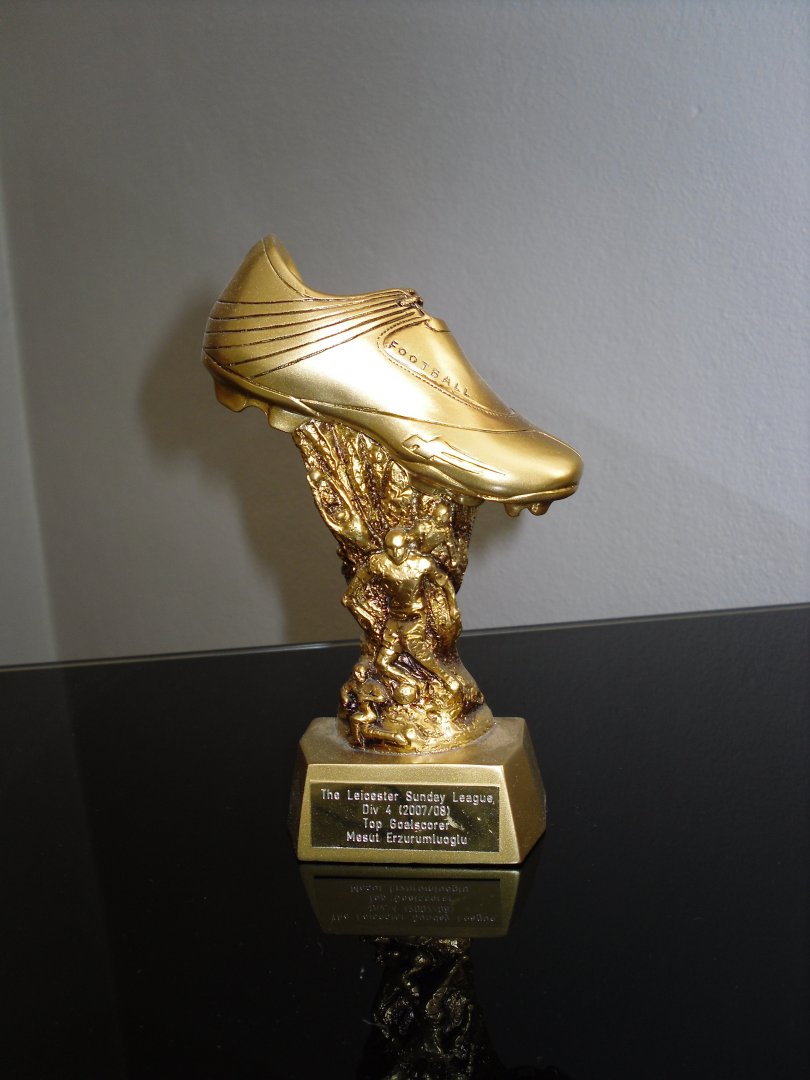
Top Goalscorer for Anatolia FC in The Leicester Sunday League Division 4 (2007/08 season)


UoB_Staff_FC
Dandy Regents 2-7 University of Bristol (UoB) Staff FC (my team) Match Report

Bristol_Chinese_FC
UoB Staff FC 6 – 2 Bristol Chinese FC (my team) – This time playing against my University’s team

Bristol_Post_Football_Nov_2012
Played a game for Lazz FC and got my goal – an amateur Turkish team in Bristol (UK)

Anatolia FC v Wigston Car Breakers
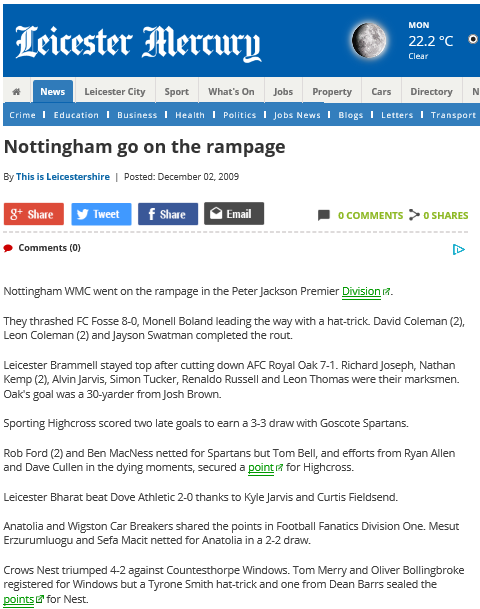
Anatolia FC v Wigston Car Breakers (29 Nov 2009) – Article in Leicester Mercury

Read Full Post »

Anatolia FC logo
Anatolia FC’s logo for 2008/09 season

Anatolia FC was established with the help of Anatolia Cultural and Educational Society (ACES), to help the youth with Turkish/Kurdish background living in Leicester to blend together and keep them away from bad habits by encouraging them to engage in sports…

The team enrolled to The Leicester Sunday League. For more details, please see Anatolia FC’s webpage.

Founded: 17th August 2007
Ended: 28th February 2010

All time statistics

Player Statistics
Most Appearances: Mesut Erzurumluoglu (54), Erol Nas (51), Ozer Kircicek (47), Fatih Gaygusuz (46), Sefa Macit (43), Esat Erzurumluoglu (40)
Most Goals: Mesut Erzurumluoglu (59), Erkan Ozbek (24), Sefa Macit (23), Fatih Gaygusuz (15), Serkan Pala (7)
Most Goals in a Single Match: (3) by Mesut Erzurumluoglu, Erkan Ozbek, Serkan Pala and Sefa Macit
Scored in How Many Games: Mesut Erzurumluoglu (35), Sefa Macit (17), Erkan Ozbek (16), Fatih Gaygusuz (13)
 
Youngest Player To Play: Hoshang Ibrahim (15 Years, 171 Days) 
Youngest Player To Score: Hoshang Ibrahim (15 Years, 348 Days)
Oldest Player To Play: Kenan Tunc (38 Years, 251 Days) 
Oldest Player To Score: Dean Ramsey (32 Years, 279 Days)

Team Statistics
Total Games Played: 54 (including Cup matches & Friendlies)
Total Games Played (League): 45
Total Results: W19, D11, L24
Total Results (League): W19, D10, L16
Total Goals Scored: 160
Total Goals Scored (League): 143
Total Goals Conceded: 195
Total Goals Conceded (League): 143
 
Biggest Win: 7-0 (The Alliance – 3 Feb 2008)
Heaviest Loss: 1-10 (G.T. FC – 26 Oct 2008)
Highest Scoring Game: 4-9 (Aylestone Utd – 23 Nov 2008)
 
Longest Unbeaten Run: 
14 Games (From 12 Nov 2007 To 20 Sep 2008) 
Longest Period Without A Win: 
6 Games (From 2 March 2009 To 10 Oct 2009)  
 
Captains (2007-2010) – at least one game
Fatih Gaygusuz (1st)
Idris Ciftci (2nd)
Erol Nas
Erkan Ozbek
Mesut Erzurumluoglu

Milestones

First Silverware

Anatolia FC were awarded the ‘Fair Play’ Trophy in an International Tournament based in London (Summer 2009) for reaching the knockout stages without a single yellow card. The team qualified to the Quarter Finals as Group Winners (beating Teams from Holland and Turkey in the process), before losing to the eventual runners-up Xanthi FC (from Greece) on penalties after the game finished 1-1. The team was managed by Kenan Tunc

Lucozade Sport Performance League

Anatolia FC has been picked out of the draw (also announced in talkSPORT radio) to become one of the 80 Teams in the whole of the UK to be given the chance to participate in the first ever Lucozade Sport Performance League (Season 08/09)

First Season Summary

Anatolia FC finished the 2007/08 Season in 3rd place, scoring the most goals (79) and with a 17 game unbeaten run! Also, Mesut Erzurumluoglu finished the season as Top Goalscorer of Division 4 (with 28 goals)

First Win

Anatolia FC convincingly defeated Leicester Echos 4-0 at home to record the first win in the Club’s history – the second game of the 2007/08 Season… Goals came from Ramazan Aslan (2), Mesut Erzurumluoglu & Sefa Macit

First Match & Goal

Mesut Erzurumluoglu was the first Scorer in the Club’s history, scoring the only goal against Shoemakers FC (A) in the 3-1 Loss – first game of the Season 07/08…

Foundation Date Anatolia FC was setup on the 17th August 2007 – starting in Division 4 of The Leicester Sunday League

Video from one of our games:

Anatolia FC were also chosen to be one of the eighty teams throughout the UK to take part in the first Lucozade Sport Performance League (LSPL, Sept 2009). Click here for picks from the weekly LSPL newsletter mentioning Anatolia FC.

mesut_erzurumluoglu_anatolia_fc_photo
mesut_erzurumluoglu_anatolia_fc
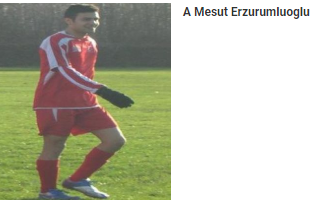
A snapshot from my personal player page. I was the top goalscorer of the club in all three seasons I played there and was the top goalscorer in Division 4 in 2007/08 season when we finished 3rd in the league (Note: Assist info lost for 2008/09 season due to acquisition of Club Website by Pitchero)

Mesut_Erzurumluoglu_Anatolia_FC_football (1)
Top goalscorers in the 2007/08 season of The Leicester Sunday League

Mesut_Erzurumluoglu_Anatolia_FC_football (2)
My ‘Top Goalscorer of TLSL Division 4 (2007/08)’ award

Read Full Post »