by Dr A. Mesut Erzurumluoğlu | Principal Bioinformatician at Bicycle Therapeutics (formerly at Boehringer Ingelheim, and Univs. of Cambridge, Leicester & Bristol) – blogging since 2006. All views mine unless stated otherwise
Backstory: I joined the Human Genetics team of Boehringer Ingelheim Pharma (in South Germany) ~6 months ago and as part of our ‘team responsibilities’, it was our turn to give a short presentation (technically called a ‘Safety Minute’) on a health & safety issue of our choice (e.g. how to ride a bike safely, safety in the lab). I rolled the lowest value within our team and therefore had to choose the topic and give the presentation. I didn’t feel like I could lecture the attendees/my colleagues on German laws or working in a lab filled with chemicals – as I recently moved to Germany and spend my entire working day in front of my home PC. So I thought it would hopefully be interesting for them to hear what are the small things (therefore must-do things like cleaning teeth properly incl. flossing, getting vaccinated, doing sports or having a first-aid kit nearby* is not mentioned here) I do at home (office) for my physical and mental wellbeing and then they could take what they wanted from the presentation but also comment on what they found interesting or even wrong – so I could learn from them too. Needless to say, many enjoyed the topic and shared their views with me during the call or via email afterwards. I therefore wanted to share the presentation in my blog too for the same reasons.
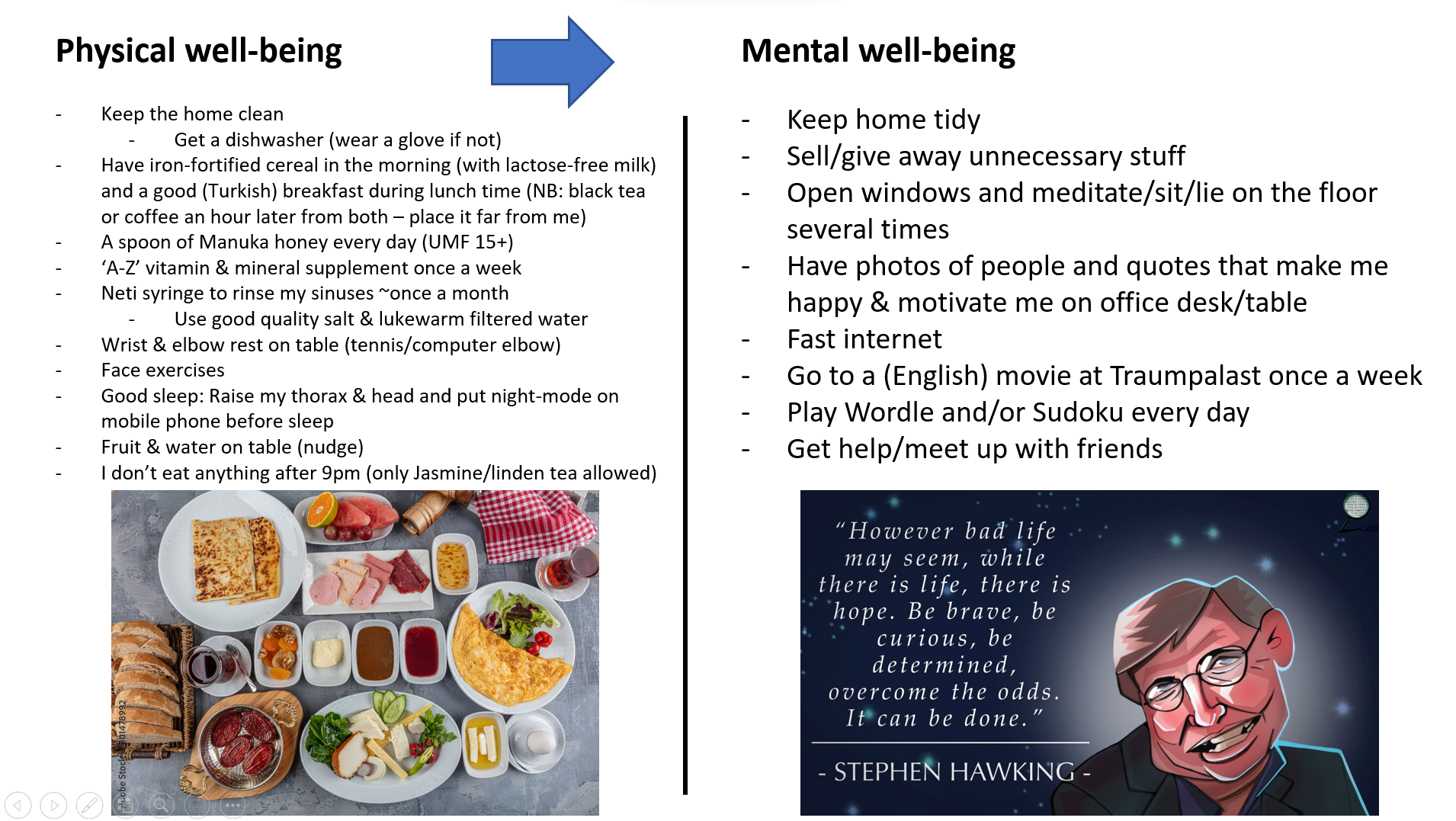
So in preparation for this topic, I had a look around my home and made a list of the small things that I do for my physical and mental well-being (NB: of course anything I do for my physical wellbeing affects my mental well-being too) – in no particular order:
Physical well-being
I (try to) start the day with some face exercises
I try to keep my home clean and wash the dishes before going to bed (get a dishwasher if you can!)
I have a few wrist & elbow rests on my table to prevent tennis/computer elbow
I make time during my lunch break to have a proper ‘Turkish breakfast’ (see slide): e.g. Fresh bread/baguette, Omelette (e.g. Menemen made with top/”0″ class eggs, ‘sivri’ pepper, and good quality chopped tomatoes), green and black olives (in high-quality olive oil), variety of fruit, yoghurt (with mint), and good-quality spices e.g. pepper, chilli flakes…
I eat a teaspoonful of Manuka Honey every day (UMF 15+), take ‘A-Z’ vitamin & mineral supplement once a week, and try to have fruit on my table to nudge me to eat more (I should do this with water too!)
Once a month (or every two months), I rinse my sinuses with saline solution (made using high-quality salt and filtered lukewarm water) using a Neti syringe. I used to suffer from sinusitis (and consequent migraines) almost every 2-3 days before I started doing this
I gargle with antibacterial mouthwash or salty water once a day – doing this continually has cured my chronic tonsilitis, cough (from nasal drip) and bad breath
I don’t eat anything after 9pm (only water or high-quality jasmine/linden tea allowed). I find that brushing my teeth somehow signals to my brain that I will not be eating – and the urge to eat (mostly) stops
I set a reminder on my phone at ~9:30pm everyday to do some exercise such as (15x) crunches, push-ups, pull-ups, and leg-ups – if I haven’t already done some cycling or football/basketball training that day (making sure to apply Sudocrem or Chamois cream to jock area to prevent skin damage/jock itch due to friction)
I try to get a ‘good’ sleep by sleeping no later than 12pm. I also raise my thorax & head (cured my reflux/stomach – used to feel like garbage in the morning) and put ‘night-mode’ (i.e. switch to warmer colours) on my mobile phone before sleep
Currently obsessed with these short Latin phrases of wisdom – looking for more: Per aspera ad astra (through hardships to the stars) Amor fati (love your fate) Memento mori (remember that you will die) pic.twitter.com/TVzJ2SCxk8
— A. Mesut Erzurumluoğlu (@mesuturkiye) April 1, 2022
Mental well-being
I am shameless at getting help from friends who are more knowledgeable than me on respective matters and this saves me so much time and hassle
I made sure my internet was fast enough to not cause me trouble during meetings and webinars. It can be draining to let it linger and it is certainly worth the additional 10-20 euros/pounds a month if mostly working from home
I try to keep my home tidy and spacious by selling/giving away unnecessary stuff (e.g. if I don’t use something for ~6 months, then I can do away with it)
I open the windows and meditate/sit/lie on the floor several times during work hours. Also having a head massager is a (cheap) luxury which is well worth it!
I have photos of people (e.g. my family) and quotes (see slide for example) that make me happy and/or motivate me on my office desk/table**. Having a digital photo frame (set to ‘random’ mode) also helps massively to make use of photos on my PC.
Leaving the home is important e.g. I go nature parks and/or to the cinema (and/or a restaurant) at least once a week with my family and/or work colleagues
I play Wordle (both Turkish and English versions), a strategy/puzzle/mystery game (e.g. Professor Layton, Minesweeper or Brain Training on my Nintendo DS), and/or Sudoku every morning to start the day with a challenge that gets me going and the brain working
I look at the stars and planets during the night using an app called ‘Sky Map’. I also check out Google Earth, and Explore.org every now and then to observe elephants, eagles (nests), safari animals etc. live
I don’t read the news in the morning – especially during stressful world events (e.g. Russia’s unlawful invasion of Ukraine)
I hope the list was useful. It is also available to download here as a Powerpoint slide:
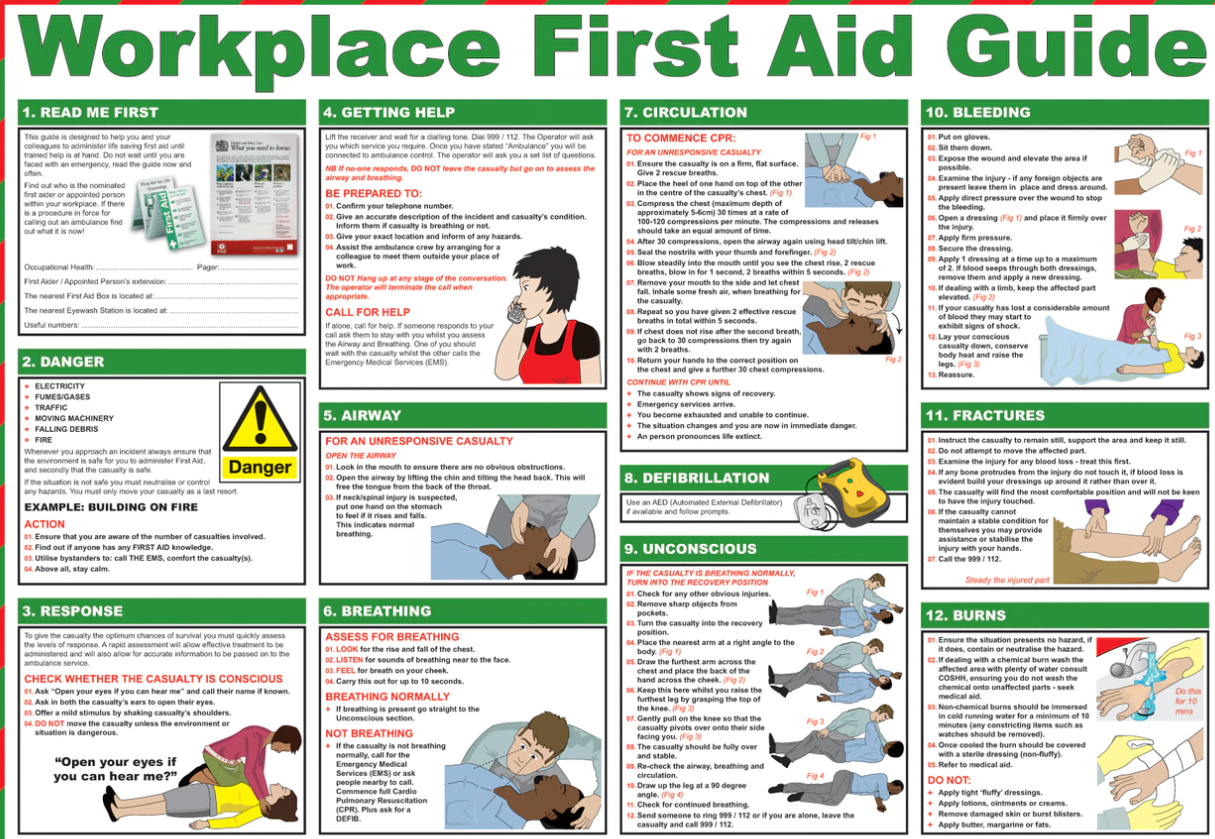
*I also keep an easy-to-eyeball first-aid guideline on my desktop – you can either buy a poster or a digital copy (like the one below) and keep it on your desktop
**I also keep a magazine or book that entertains me nearby; or have a favourite video/podcast list on my YouTube/Spotify accounts to fall back on when I want to discharge
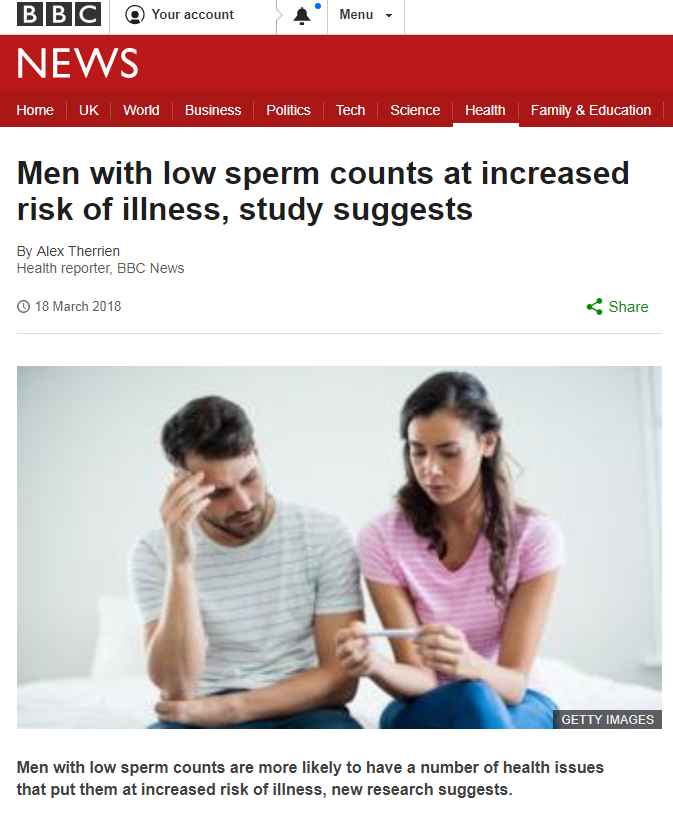
BBC news article published on the 18th March 2018. According to the article, men with low sperm counts are at a higher risk of disease/health problems. However, this is unlikely to be a causal relationship and more likely to be a spurious correlation. May even turn out to be the other way round due to “reverse causality”, a bias we encounter a lot in epidemiological studies. The following sounds more plausible (to me at least!): “Men with disease/health problems are likely to have low sperm counts” (likely cause: men with health problems tended to smoke more in general and this caused low sperm counts in those individuals).
As an enthusiastic genetic epidemiologist (keyword here: epidemiologist), I try to keep in touch with the latest developments in medicine and epidemiology. However, it is impossible to read all articles that come out as there is a lot of epidemiology and/or medicine papers published daily (in fact, too much!). For this reason, instead of reading the original academic papers (excluding papers in my specific field), I try to skim read from reputable news outlets such as the BBC, The Guardian and Medscape (mostly via Twitter). However, health news even in these respectable media outlets are full of wrong and/or oversensationalised titles: they either oversensationalise what the scientist has said or take the word of the scientist they contact – who are not infallible and can sometimes believe in their own hypotheses too much.
It wouldn’t harm us too much if the message of an astrophysics related publication is misinterpreted but we couldn’t say the same with health related news. Many people take these news articles as gospel truth and make lifestyle changes accordingly. Probably the best example for this is the Andrew Wakefield scandal in 1998 – where he claimed that the MMR vaccine caused autism and gastro-intestinal disease but later investigations showed that he had undeclared conflicts of interest and had faked most of the results (click here for a detailed article in the scandal). Many “anti-vaccination” (aka anti-vax) groups used his paper to strengthen their arguments and – although now retracted – the paper’s influence can still be felt today as many people, including my friends, do not allow their children to be vaccinated as they falsely think they might succumb to diseases like autism because of it.
The first thing we’re taught in our epidemiology course is “correlation does not mean causation.” However, a great deal of epidemiology papers published today report correlations (aka associations) without bringing in other lines of evidence to provide evidence for a causal relationship. Some of the “interesting ones” amongst these findings are then picked up by the media and we see a great deal of news articles with titles such as “coffee causes cancer” or “chocolate eaters are more successful in life”. There have been instances when I read the opposite in the same paper a couple of months later (example: wine drinking is protective/harmful for pregnant women). The problem isn’t caused only due to a lack of scientific method training on the media side, but also due to health scientists who are eager to make a name for themselves in the lay media without making sure that they have done everything they could to ensure that the message they’re giving is correct (e.g. triangulating using different methods). As a scientist who analyses a lot of genetic and phenotypic data, it is relatively easier for me to observe that the size of the data that we’re analysing has grown massively in the last 5-10 years. However, in general, we scientists haven’t been able to receive the computational and statistical training required to handle these ‘big data’. Today’s datasets are so massive that if we take the approach of “let’s analyse everything we got!”, we will find a tonne of correlations in our data whether they make sense or not.
To provide a simple example for illustrative purposes: let’s say that amongst the data we have in our hands, we also have each person’s coffee consumption and lung cancer diagnosis data. If we were to do a simple linear regression analysis between the two, we’d most probably find a positive correlation (i.e. increased coffee consumption means increased risk of lung cancer). 10 more scientists will identify the same correlation if they also get their hands on the same dataset; 3 of them will believe that the correlation is worthy of publication and submit a manuscript to a scientific journal; and one (other two are rejected) will make it past the “peer review” stage of the journal – and this will probably be picked up by a newspaper. Result: “coffee drinking causes lung cancer!”
However, there’s no causal relationship between coffee consumption and lung cancer (not that I know of anyway :D). The reason we find a positive correlation is because there is a third (confounding) factor that is associated with both of them: smoking. Since coffee drinkers smoke more in general and smoking causes lung cancer, if we do not control for smoking in our statistical model, we will find a correlation between coffee drinking and lung cancer. Unfortunately, it is not very easy to eliminate such spurious correlations, therefore health scientists must make sure they use several different methods to support their claims – and not try to publish everything they find (see “publish or perish” for an unfortunate pressure to publish more in scientific circles).
A figure showing the incredible correlation between countries’ annual per capita chocolate consumption and the number of Nobel laureates per 10 million population. Should we then give out chocolate in schools to ensure that the UK wins more Nobel prizes? However, this is likely not a causal relationship as it makes more sense that there is a (confounding) factor that is related to both of them: (most likely) GDP per capita at purchasing power parity. To view even quirkier correlations, I’d recommend this website (by Tyler Vigen). Image source: http://www.nejm.org/doi/full/10.1056/NEJMon1211064.
As a general rule, I keep repeating to friends: the more ‘interesting’ a ‘discovery’ sounds, the more likely it is to be false.
Hard to explain why I think like this but I’ll try: for a result to sound ‘interesting’ to me, it should be an unexpected finding as a result of a radical idea. There are just so many brilliant scientists today that finding unexpected things is becoming less and less likely – as almost every conceivable idea arises and is being tested in several groups around the world, especially in well researched areas such as cancer research. For this reason, the idea of a ‘discovery’ has changed from the days of Newtons and Einsteins. Today, ‘big discoveries’ (e.g. Mendel’s pea experimets, Einstein’s general relativity, Newton’s law of motion) have given way to incremental discoveries, which can be as valuable. So with each (well-designed) study, we’re getting closer and closer to cures/therapies or to a full understanding of underlying biology of diseases. There are still big discoveries made (e.g. CRISPR-Cas9 gene editing technique), but if they weren’t discovered by that respective group, they probably would have been discovered within a short space of time by another group as the discoverers built their research on a lot of other previously published papers. Before, elite scientists such as Newton and Einstein were generations ahead of their time and did most things on their own, but today, even the top scientists are probably not too ahead of a good postdoc as most science literature is out there for all to read in a timely manner (and more democratic compared to the not-so-distant past) and is advancing so fast that everyone is left behind – and we’re all dependent on each other to make discoveries. The days of lone wolves is virtually over as they will get left behind those who work in groups.
To conclude, without carefully reading the scientific paper that the newspaper article is referring to – hopefully they’ve included a link/citation at the bottom of the page! – or seeking what an impartial epidemiologist is saying about it, it’d be wise to take any health-related finding we read in newspapers with a pinch of salt as there are many things that can go wrong when looking for causal relationships – even scientists struggle to make the distinction between correlations and causal relationships.
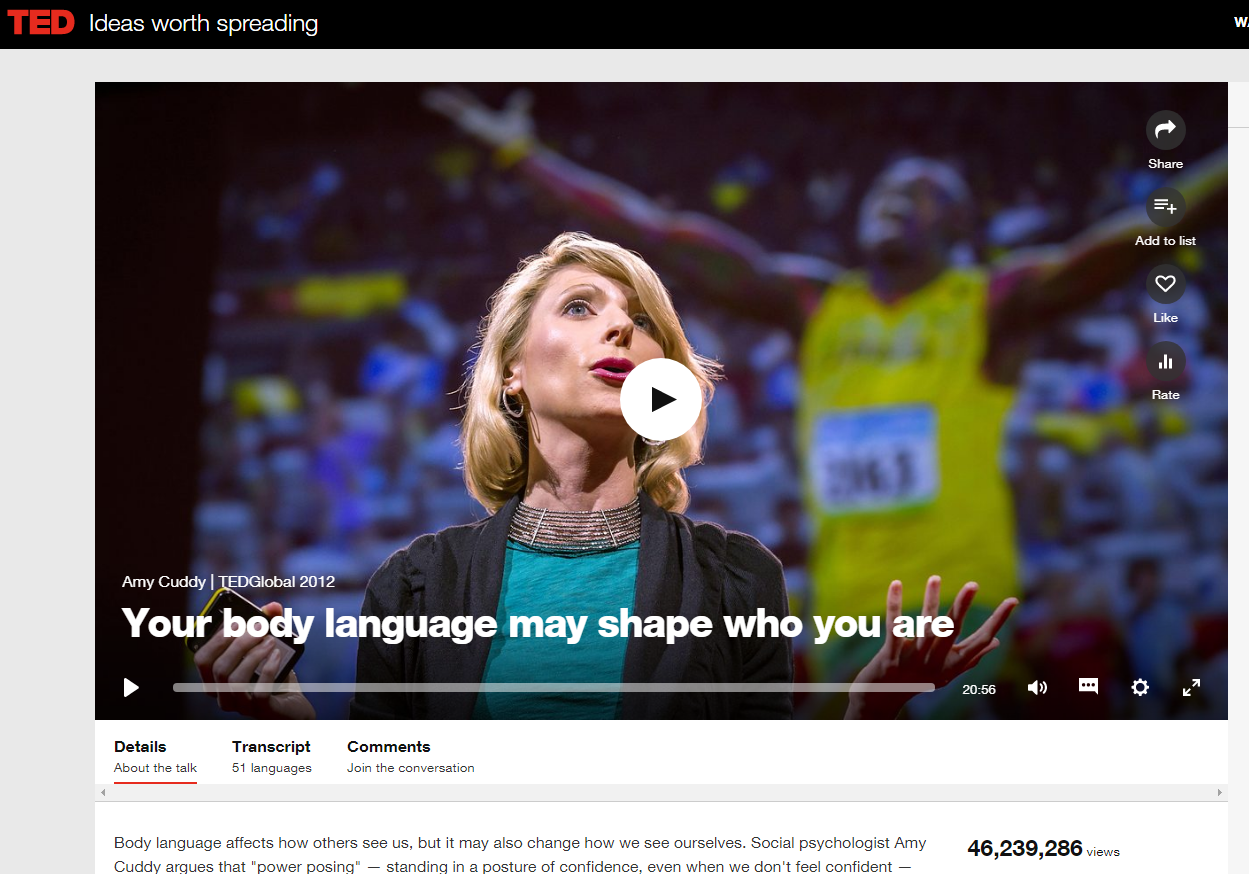
Amy Cuddy’s very famous ‘Power posing’ talk, which was the most watched video on the TED website for some time. In short, she states that if you give powerful/dominant looking poses, this will induce hormonal changes which will make you confident and relieve stress. However, subsequent studies showed that her ‘finding’ could not be replicated and she that did not analyse her data in the manner expected of a scientist. If a respectable scientist had found such a result, they would have tried to replicate their results; at least would have followed it up with studies which bring other lines of concrete evidence. What does she do? Write a book about it by bringing in anecdotal evidence at best and give a TED talk as if it’s all proven – as becoming famous (by any means necessary) is the ultimate aim for many people; and many academics are no different. Details can be found here. TED talk URL: https://www.ted.com/talks/amy_cuddy_your_body_language_shapes_who_you_are
PS: For readers interested in reading a bit more, I’d like to add a few more sentences. We should apply the below four criteria – as much as we can – to any health news that we read:
(i) Is it evidence based? (e.g. supported by a clinical trial, different experiments) – homeopathy is a bad example in this regard as they’re not supported by clinical trials, hence the name “alternative medicine” (not saying they’re all ineffective and further research is always required but most are very likely to be);
(ii) Does it make sense epidemiologically? (e.g. the example mentioned above i.e. the correlation observed between coffee consumption and lung cancer due to smoking);
(iii) Does it make sense biologically? (e.g. if gene “X” causes eye cancer but the gene is only expressed in the pancreatic cells, then we’ve most probably found the wrong gene)
(iv) Does it make sense statistically? (e.g. was the correct data quality control protocol and statistical method used? See figure below for a data quality problem and how it can cause a spurious correlation in a simple linear regression analysis)
Wrong use of a statistical (linear regression) model. If we were to ignore the outlier data point at the top right of the plot, it becomes easy to see that there is no correlation between the two variables on the X and Y axes. However, since this outlier data point has been left in and a linear regression model has been used, the model identifies a positive correlation between the two variables – we would not have seen that this was a spurious correlation had we not visualised the data.
18 Mart 2018’de BBC’de çıkmış bir sağlık haberi. Haberin başlığına göre “sperm sayısı düşük olan erkeklerin sağlık problemleri yaşama riski daha yüksek”. Fakat gerçekte olan büyük ihtimalle tam tersi: Sağlık problemleri yaşayan erkeklerin genel olarak sperm sayısı daha düşük. Epidemiyolojide buna “reverse causality” (ters nedensellik) diyoruz ve analizlerimizde çok sık karşılaşıyoruz.
Bir Genetik Epidemiyolog olarak (anahtar kelime: epidemiyolog) tıpla ilgili önemli gelişmeleri takip etmeye çalışıyorum. Fakat bu günlerde tıp ve epidemiyoloji alanında o kadar çok ‘buluş’ yapılıyor ki çıkan her habere yetişmek imkansız. Bu yüzden BBC, The Guardian, The Times gibi saygıdeğer haber kaynaklarına odaklanıyorum. Işin kötüsü, bu haber kanallarında dahi çıkan haberlerin çoğunun verdiği ana mesaj çoğu zaman yanlış ya da abartılı: ya analizi yapan bilim insanlarına fazla güveniyorlar ya da bilim insanlarının kendilerine söylediklerini daha sansasyonel hale getiriyorlar.
Belki astrofizik alanında yapılan bir buluş ile ilgili bir haberin doğru olup-olmaması bizi fazla etkilemez ama sağlığımızı ilgilendiren bir ‘buluş’un yanlış çıkması için aynı şeyi söyleyemeyiz. Insanlar bu haberleri okuyup, ona göre kendi hayatlarında değişimlere gidebiliyorlar. Bu tarz haberlerin belki de en etkilisi 1998’de tıp alanındaki en ünlü dergi olan The Lancet’de çıkan bir makaleyle ilgiliydi (Wakefield et al, 1998). Makaleye göre, özetle, MMR (measles, mumps, and rubella) aşısının test edildiği 12 çocuğun hepsinde de otizm, davranış bozuklukları, bağırsak problemleri gibi sorunlar ortaya çıkmıştı. Çalışma tüm dünyada haber olmuş ve MMR aşısına karşı kampanya başlatılmıştı. Bu sadece MMR aşısına değil, tüm aşılara dini (“kaderci”) ya da başka sebeplerden dolayı (“organik yaşam” savunucuları gibi) karşı çıkan grupların işini kolaylaştırdı ve bu “anti-vaxxer” (aşı karşıtı) gruplar her mecrada argümanlarını bu makaleyle güçlendirdiler. Fakat sonraki bilimsel ve adli araştırmalarla bu çalışmayı yürüten Andrew Wakefield’ın aşı karşıtı gruplardan para aldığı ve sonuçların neredeyse tamamını kendisinin uydurduğu ortaya çıktı (daha detaylı bir analiz için tıklayın). Gerçek, özellikle bilim alanında, eninde sonunda ortaya çıkıyor fakat iş işten geçmiş olabiliyor bazen. Bu makaleninin etkileri toplum nazarında bugün dahi devam ediyor ve bir sürü aile çocuklarına bu tarz korkulardan dolayı aşı (vaccination) yapılmasına izin vermiyor.
Bize epidemiyolojide öğrettikleri ilk şey: “correlation does not mean causation” (korelasyon, sebep-sonuç ilişkisi olduğu anlamına gelmez). Fakat bugünlerde tıp ve epidemiyoloji alanında ‘buluş’ adı altında bir sürü korelasyon (correlation) yayınlanıyor. Bunların arasında ilginç ve çok okunacak olanları gazeteciler yakalıyor ve “kahve içmek kansere yol açıyor”, “çikolata yiyenler daha başarılı” ve benzeri başlıklı haberler yayınlıyorlar. Birkaç gün sonra tam tersi bir haber okuduğumuz da oluyor (“kahve içmek kanseri engelliyor!” gibi). Bu tarz haberlerin yayılmasında gazetecilerin suçu olduğu gibi, bilim insanlarının da suçu var. Sıkıntı şu: bilim insanlarının elindeki datalar son 5-10 yılda inanılmaz bir hızla büyüdü ama bilim insanları dahi genel olarak bu büyümeye data analizi açısından yetişemedi. Datalar çok büyük olduğundan, hipotezsiz, data analizi ve “causal inference” (nedensel çıkarım) uzmanlığınız olmadan “dur şunu da analiz edeyim!” dediğiniz zaman, istemediğiniz kadar korelasyon buluyorsunuz.
Örnek olarak: diyelim ki datanızdaki tonlarca verinin arasında kişilerin kahve içme oranı ve akciğer kanseri teşhisi de var. Eğer basit bir istatistiki korelasyon (örneğin: linear regression) analizi yapacak olursak, büyük ihtimalle ikisi arasında anlamlı bir korelasyon bulacağız. Bu korelasyonu sadece siz değil, benzer dataya bakan 10 kişi daha bulacak; bunlardan belki 3’ü bu korelasyonun gerçek olduğuna inanacak ve bir makale yazacak; 1’i de makaleyi gönderilen derginin “peer review” (birkaç bilim insanı tarafından değerlendirme) aşamasından geçirip, yayınlayacak – ve büyük bir ihtimalle ilginç bir ‘buluş’ olarak her yerde haber olacak: “kahve içmek akciğer kanserine yol açıyor!”
Gerçekte ise kahve içmeyle akciğer kanseri arasında hiçbir sebep-sonuç ilişkisi yok. Bulduğumuz korelasyonun sebebi bu ikisiyle de – yani kahve içmek ve akciger kanseriyle – bağlantılı üçüncü bir (confounding) faktörün olması: sigara içmek. Kahve içenler genelde daha fazla sigara içiyorlar ve sigara içmek de akciğer kanserine sebep olduğu için, eğer istatistiki modelimize kişinin sigara içme oranını da eklemezsek, kahve içmeyle akciğer kanseri arasında istatistiki olarak güçlü bir korelasyon buluruz. Maalesef bu tarz sebep-sonuç ilişkisi göstermeyen korelasyonların önüne geçmek ve elimine etmek kolay değil; bu yüzden bilim insanlarının daha dikkatli olması ve yaptıkları her “buluş”u başka bilimsel yöntemlerle desteklemeden yayınlamaması gerekiyor.
Figür, ülkelerdeki çikolata tüketim oranıyla ülkenin toplamda kazandığı Nobel ödülü sayıları arasındaki inanılmaz korelasyonu gösteriyor. O zaman bu “buluş”a bakıp, Türkiye’deki herkese çikolata yedirmeye başlamak lazım – malum ülke olarak sadece iki Nobel ödülümüz var. Fakat bu korelasyonun (büyük ihtimalle) muhtemel en büyük sebebi, çikolata tüketimiyle, Nobel ödülü sayılarını etkileyen üçüncü bir faktörün olması: GDP per capita at purchasing power parity (satın alma paritesi). Bulunan daha ilginç korelasyonlara bakmak için tıklayın. Image source: http://www.nejm.org/doi/full/10.1056/NEJMon1211064.
Konuyu daha fazla uzatmadan genel bir prensip olarak şunu rahatlıkla söyleyebilirim: bir buluş kulağa ne kadar ilginç ve sansasyonel geliyorsa, yanlış olma ihtimali de o derece yüksektir.
Biraz zor olacak ama neden böyle düşündüğümü kısaca izah etmem gerekirse: bir buluşun bana ‘ilginç’ gelmesi için, o buluşun o konuda bilinenlerden çok farklı birşey olması lazım. Böyle bir buluş yapmak günümüzde bir hayli zor çünkü artık bilim insanı sayısı eskiden olduğu gibi az değil; artık binlerce bilim insanı bir konu üzerinde çalışıyor olabilir (örnek: kanser). Artık her tür fikir/hipotez, birçok grupta aynı anda ortaya çıkabiliyor ve test ediliyor. Bundan dolayı birkaç haftada bir ‘buluş’ yapılıyor denebilir – ama eskiye nazaran alanını on yıllarca ileri taşıyan değil, ‘inkremental’ buluşlar bunlar. Belki son ufak adımı bir grup/insan diğerlerinden önce atıyor ve bu yüzden alanlarında ‘büyük buluşu yapan kişi/grup’ diye anılıyorlar. Oysa belki 3-5 ay sonra başka bir grup büyük ihtimalle aynı buluşu yapacaktı. Eskiden Newton ya da Einstein gibi elit bilim insanları zamanlarının çok ilerisinde olabiliyorlardı, çünkü etrafta fazla bilim insanı yoktu ve bilim bu kadar hızlı ilerlemiyordu.
Son olarak, bu tarz haberleri okurken biraz ihtiyatlı olmakta fayda var ve bu çalışmalara bakıp hayatımızda değişiklikler yapmadan önce, eğer anlıyorsak, araştırma metotlarına bakmamız lazım – ya da epidemiyolojiden ve “causal inference”dan iyi anlayan (yani doğru soruları sorabilen) birisine danışmamız lazım.
Amy Cuddy’nin “power posing” konuşması, en çok izlenen TED talk. Kısaca, “eğer güçlü görünen pozlar verirseniz, kendinize güveniniz artar” diyor bu konuşmasında. Fakat sonraki bilimsel analizler bunun doğru olmadığını ve Amy Cuddy’nin analiz metotlarının bir bilim ınsanından beklenmeyecek kadar zayıf olduğunu gösteriyor. Detaylar için tıklayın. TED talk source: https://www.ted.com/talks/amy_cuddy_your_body_language_shapes_who_you_are
PS (post-script/dipnot): Konuyla ilgilenenler için ekstradan bir-iki paragraf daha karalayayım istedim. Sağlık alanında yapılan bir buluş (i) delil/deney bazlı (evidence-based) ve (ii) epidemiyolojik, istatistiki ve biyolojik olarak mantıklı olmalı. Bir ‘buluş’la ilgili haberi okuduktan sonra “ya evet, mantıklı” demeden önce elimizden geldiğince “bu 4 konuda tatmin edici mi?” diye sorgulamamız lazım. Kriterlere örnek vermek gerekirse:
“Evidence-based” dedik. Bunlara en güzel karşıt örnekler “homeopati/alternatif tıp” olarak adlandırdığımız “ilaç/kürler”. Bunların hepsini toptancı bir yaklaşımla “kesinlikle etkisiz” diye çöpe atmamak lazım fakat çoğu alternatif tıp savunucusunun “belge” olarak sunduğu şeyler kulaktan dolma bilgiler: “Kaynımın şu hastalığı vardı; şu Hoca bir bitki karışımı verdi ve hastalığı geçti” gibi. (Bilinmeyen bir sebepten dolayı) bir kişinin hastalığı geçiyor, 10 kişininki geçmiyor; ve sadece bu hastalığı geçen kişininki kulaktan kulağa yayılıyor, reklamı yapılıyor. Bilim insanlarının daha bilmediği/araştırması gereken çok şey var fakat bir ilaç “klinik deneme”den (clinical trial) geçmeden önce onun efektif olduğunu, yani gerçekten de bir çare olduğunu belgelemek çok zor.
“Epidemiyolojik olarak mantıklı olmalı” dedik: Yukarıda bahsettiğim kahve, sigara ve akciger kanseri örneğinden tonlarca var hayatta. Kendimize, “bu korelasyona sebep olabilecek 3.ncü bir faktör var mı?” diye sormalıyız.
“Biyolojik olarak mantıklı olmalı” dedik: “X geni gırtlak kanseri yapıyor” diye bir haber/makale okudunuz ama bu “X” geni sadece ayağımızdaki bazı hücrelerde aktifse, büyük ihtimalle yanlış bir haber/sonuç.
“Istatistiki olarak mantıklı olmalı” dedik: Çok basit bir örnek olarak aşağıdaki figüre bakınız. Basit bir linear regression analiziyle bu iki veri arasında bir korelasyon buluruz. Fakat datayı visualise/plot ettiğimiz zaman, aslında korelasyon çıkmasının sebebinin en üstteki “outlier”dan (aykırı gözlemden) dolayı olduğunu görebiliyoruz. Burada bir data “temizleme” problemi ve yanlış bir istatistiki modelin kullanıldığını görebiliyoruz. Böyle bir plot çizmesek, bu korelasyonun yanlış olduğunu göremezdik.
Yanlış bir linear regression (doğrusal regresyon) metot kullanımı. Kendi başına en uçta duran noktayı görmezden gelirsek, X ve Y eksenindeki veriler arasında hiçbir korelasyonun olmadığını çok rahat bir şekilde görüyoruz. Fakat o problemli veri silinmediğinden ve yanlış bir şekilde linear regression metodu kullanıldığından, aralarında sanki pozitif bir korelasyon varmış gibi bir çizgi çizilmiş.
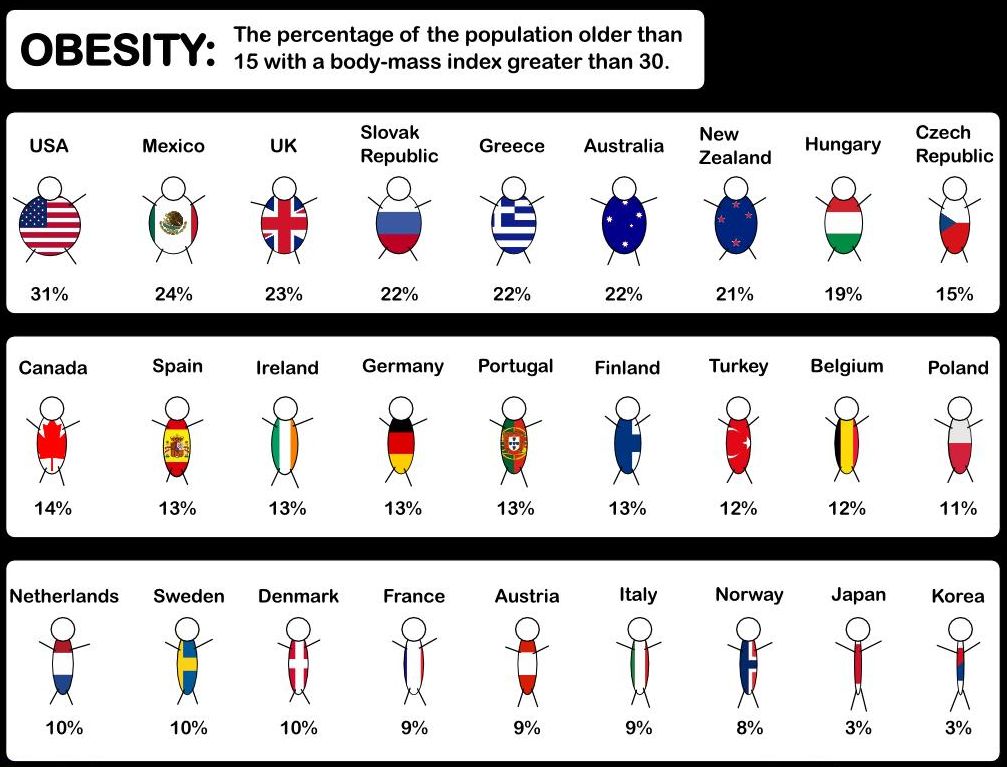
Obesity is a ‘big fat’ problem World-wide (Image from Wikipedia)
Obesity increases the risk of a variety of disorders such as coronary heart disease (UK’s biggest killer!) and cancer (e.g. colon, breast) and influences other health related traits such as increasing blood pressure and blood fats. Therefore it is always important to know what your normal range for body mass index (BMI) is. Keeping within this range is bound to decrease your risk for obesity related disorders – although should not be solely relied on. Intake of right amount of minerals and vitamins is also crucial.
The NHS have created an online BMI calculator which I found very useful:
PS: Please also check the BMI of your loved ones (especially elder members) as most people usually ignore the early signs and become obese… Warn them if they’re overweight so that it is easier to lose weight compared to when they’re already obese!
PPS: There is also some useful and succinct info on this website
Ben 12 yaşındayken (2000) ailecek İngiltere'ye taşındık ve ingilizcem neredeyse sıfırdı. Bunu duyan (Karen Holman adında) Sınıf Öğretmenim, kendimi evimde hissedeyim diye tüm arkadaşlarıma Türkçe cümleler dağıtmış. Sınıfa girer-girmez arkadaşlarımın hepsi bana "Hoşgeldin" dediler





 An ordinary blog by an ordinary bloke