by Dr A. Mesut Erzurumluoğlu | Principal Bioinformatician at Bicycle Therapeutics (formerly at Boehringer Ingelheim, and Univs. of Cambridge, Leicester & Bristol) – blogging since 2006. All views mine unless stated otherwise
Gönül muhabbet ister podcast bahane! 🙂 Genelde, başarılı, bilgili ve ‘cool’ insanlarla hafif konularda muhabbet ediyoruz. Twitter’da #AzIsCokLaf hashtagini kullanarak öneride bulunabilirsiniz. (Not: Yavaş konuştuğumuzu düşündüğünüz bölümlerde Spotify ya da Youtube’un 1.2x hızlandırma özelliğini kullanabilirsiniz)
Az İş Çok Laf – Final Bölüm 30: Futbol tuhaf oyun – Kerem Aydın (11/05/2025)
Not: Maalesef hem akustik hem de internet bağlantı sorunları çektik ve birçok kısımı silmek zorunda kaldık. Kerem’in de sonradan bağlantısı tamamen koptu. Neyse artık elveda diyoruz zaten – umarız fazla rahatsız etmez. İyi dinlemeler!
“Truth is stranger than fiction, but it is because fiction is obliged to stick to possibilities; truth isn’t.” (Gerçek, kurgudan daha tuhaftır, çünkü kurgu, olabilirlikleri gözetmek durumundadır; gerçeğin öyle bir zorunluluğu yoktur) – Mark Twain
Bu bölümde Bilkent Universitesi Endüstri mühendisliği mezunu ve arkadaşları arasında ‘futbol almanağı‘ olarak tanınan Kerem Aydın’ı ağırladık ve kendisinden futbolla ilgili tuhaf anılarını dinledik.
Glitch: Genelde oyunlarda ortaya çıkan (fizik kurallarına aykırı) komik arızalar (örn. FIFA konsol oyununda futbol topunun kalecinin içinden geçmesi gibi)
Infamous: Kötü anlamda, negatif bir şöhret/ün (örn. Ajdar ünlü bir şarkıcı)
‘Ateistler bunu da açıklasın‘ internet geyikleri/memeleri (Ekşisözlük)
Yayında bahsettiğimiz futbol mucizeleri ve tuhaf olaylar:
Bayern Münih v Manchester Utd 1999 Şampiyonlar Ligi Finali (YouTube)
Leicester City FC v Watford 2013 (Premier League) Play-off maçı son saniyeler (YouTube)
Hırvatistan v Türkiye Euro 2008 çeyrek finali son saniyeler (YouTube)
Fransa v Arjantin 2022 Dünya Kupası Finali – ve son saniyede Martinez’in kurtarışı (YouTube)
Ertem Şener ve Fatih Terim’in komik diyaloğu (YouTube)
Leverkusen’in 2023/24 Bundesliga sezonunu ilk defa (ve namağlup!) kazanması (YouTube)
Fenerbahçe v Galatasaray (1991) derbisinde sakatlanan futbolcuyla sıcağı sıcağına röportaj (YouTube)
Arsenal v Zaragoza 1995 Kupa Galipleri Kupası finali – uzatmaların son dakikasında orta sahadan gol (YouTube)
Lilian Thuram’ın Fransa Milli Takımı için 142 maça çıkması ve attığı iki golü de 1998 Dünya Kupası Yarı Finalinde Hırvatistan’a karşı atıp, ülkesini finale taşıması (YouTube)
Manchester City’nin Aguero’nun golüyle son dakikalarda 2012 yılı Premier League şampiyonluğu (Son 10 dakika full | Aguerooo!)
Liverpool v Milan 2005 Şampiyonlar Ligi Finali (YouTube)
DC United v Orlando (2018) – Wayne Rooney’nin son saniyelerde inanılmaz asisti (YouTube)
Fransa’nın son saniyelerde yediği golle 1994 Dünya Kupasına gidememesi (YouTube)
Liverpool kalecisi Karius’un 2018 Şampiyonlar Ligi Finalinde yaptığı büyük hata (YouTube)
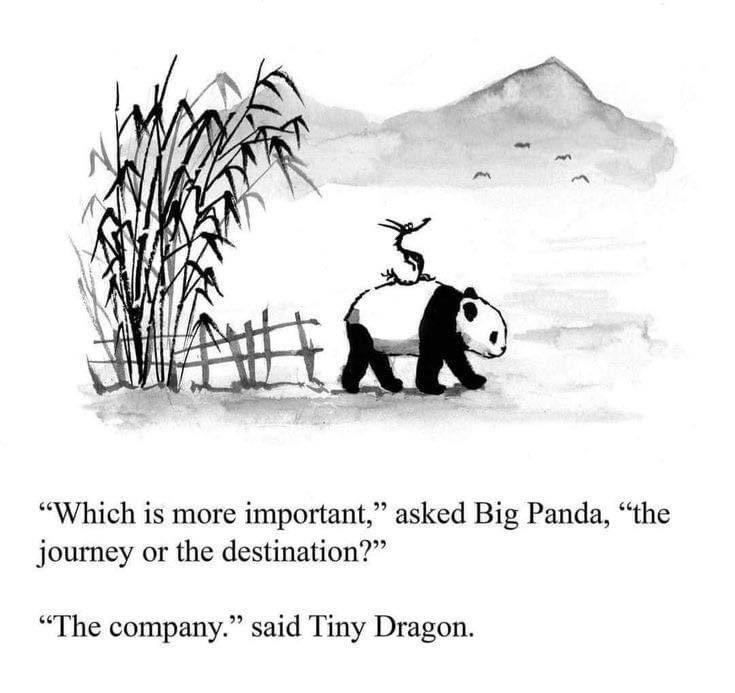
“Which is more important? The journey or the destination?” asked Big Panda
“The company.” said the Tiny Dragon
Backstory
In September 2021 (as a 33 year old), I moved to (South) Germany with my wife and son – and joined the then newly formed Computational Biology (‘gCBDS’ in short) Department of Boehringer Ingelheim (BI) as a ‘Senior Scientist’ (and ‘Product Owner’ afterwards for ~20 months). I was <20th hire of the department (incl. leadership team), which went on to hire >100 in a short space of time. So I didn’t get much of a chance to loiter and had to learn quickly to be helpful to the ‘new hires’. The Human Genetics team was an even newer team within gCBDS and designed to be a truly cross-cutting one – so we dealt with all therapeutic areas (there was six at the time: Cardio-Metabolic, Immunology & Respiratory, CNS, Cancer Immunology & Immunomodulation, Cancer Research, and Research Beyond Borders – which was ‘everything else’). It was very challenging at first – especially as there were colleagues who didn’t believe in the power of human genetics/omics in drug target ID/validation/repurposing – but gave me the chance to: (i) meet colleagues who are experts in different fields and learn a lot about different diseases and their molecular causes/master mechanisms – and tweak my analysis pipelines and visualisations to their needs (published quiet a few papers with them too e.g. Jones et al., 2024; Kousathanas et al., 2024; Noyvert, Erzurumluoglu, Drichel, Omland & Andlauer et al., 2023; Qiu et al., 2024), and (ii) lead (or co-lead) important initiatives such as the Digital Innovation Unit (DIU)’s Biobank Project where I would come up with ‘solutions’ as Product Owner (PO) to make the biobank data that BI invests heavily in more ‘accessible’ to the CompBio and wet-lab colleagues and ultimately impact the portfolio – pitching for funding to the leadership team (obtaining >450k euros in ~1.5 years), presenting ‘business value’ (e.g. making certain analysis pipelines >25% faster and cheaper, pushing targets to portfolio), scouting/interviewing CROs, and leading subteams/project managers as part of my PO role. We were also one of the earliest users of the UKB RAP (UK Biobank) and Sandbox (FinnGen) platforms, and helped shape the Our Future Health genotyping array. Having a bit of influence in the External Innovation camp also helped with bringing Dr Richard Allen – a leading scientist in the genetics of Idiopathic Pulmonary Fibrosis (NB: BI has a blockbuster drug called Ofev used in treating IPF patients) – to Biberach for a week. I am proud of what we were able to achieve and I probably wouldn’t be able to do most of these at this stage of my career if I was to stay in academia or had joined Pharma companies with more established CompBio/Human Genetics departments e.g. GSK, AZ, and Regeneron.
As a family, we learned, saw and grew a lot as individuals, so I wanted to jot down a few sentences to share our experiences for Comp. Biologists curious about a move to (South) Germany and/or Boehringer Ingelheim.
As always, happy to take any questions directly and/or in the comments section!
Looking back
I want to start with the ‘goodbye’ email I sent (with the above picture from ‘Big Panda and Tiny Dragon’) to my colleagues on my last day – which summarised my feelings:
Dear all, I spent an action packed ~3 years as a fellow gCBDSer! Looking back, I not only learned so much as a scientist but also as a person. It would be too long to list the cultural, social, and emotional impact moving to Biberach/Germany had on me and my family, but we will never forget the teary eyes of many of our friends, neighbours, and Isaac’s kindergarden teachers/friends – we also shed a few tears to say the least. We enjoyed (almost!) every second of our time here and will be recommending BI as a great employer wherever we go. On this end, I thank Till (Andlauer) for contacting/encouraging me to join BI and the Human Genetics team – learned a lot from him. I was fortunate enough to help shape the Human Genetics Team from its early days – most notably, championing Mendelian Randomisation to virtually all the therapeutic areas (TAs) – but also be Product Owner (PO) of the DIU’s Biobank project, where we* graduated three solutions to make the Biobank data FAIRer (via self-service tools/algorithms, and integration with NTC Studio) and more impactful. We pinpointed that at least 27 targets (across 5 TAs) that entered portfolio were significantly supported by this data in the ~1.5 years I was PO. I also want to underline that we helped with the deprioritisation of even more – which I believe can be as important as validating a target. My family’s moved back to the UK last month as my wife started as a Lecturer at Warwick University and my son started school in Leicester. I will join a biotech after a little break (details will be shared on social media when I formally start). If you’re ever in the UK, we would be very happy to host you and/or catch up over a kebab, fish & chips, or a curry – on me as usual 😉 Mach’s gut! Mesut (on behalf of Fatma, Isaac & Newton)
*Too many people to thank but special thanks to Dr Boris Bartholdy, Dr Julio C. Bolivar-Lopez, Dr Johann de Jong, and Dr Hanati Tuoken – the Project Managers whom (co)led the solutions proposed to the DIU leadership team
Pros & Cons
Going back to the beginning: It was not an easy decision to leave our ‘comfort zone’ in Leicester (where I lived most of my life; see blog post for details) but we couldn’t pass up the chance to move to a country like (the South of) Germany, learn a new culture/language, and meet lots of new people – in addition to working for a ‘Big Pharma’ company (see my blog post when I was about to join BI). We decided to live in Biberach an der Riss from ‘Day 1’ (when many colleagues suggested living in nearby Ulm – the birthplace of Einstein) – and this small town with a population of ~40k grew on us quickly. You’re left amazed at how clean, safe, and economically productive the town is with the presence of large companies such as Liebherr, Handtmann, KaVo, and Baur – in addition to BI’s largest research centre (with >6k employees) being located here.
Let me summarise the ‘Pros’ first: 1- BI pays well (and provides a lot of benefits) – even for German standards (which is higher than UK standards!). The company is also quiet special in that it’s the largest private pharma company in the world – so the way things work are bit different than other ‘Big Pharma’ companies. So you can certainly ‘learn and earn’ well here! 2- The German system supports families well e.g. child benefit/kindergeld is ~250 euros per child and the tax class is (usually) lower, and kindergartens (in South Germany) are of very good quality and cheap compared to the UK (at least Leicester!). 3- South Germany is beautiful with lots to do. It’s also at the heart of continental Europe, so flights are very cheap (check Ryanair flights from Memmingen Airport) and a lot of places (incl. Eastern France, Switzerland, Austria, Northern Italy, Czechia) are within driving-distance. There are also a lot of unique festivals (big and small) and fantastic Christmas Markets, which are worth attending at least once (see tweets below)
It’s not easy to pinpoint the challenges you personally might face at the Biberach site – as everyone’s context is different – but I’ll list the ones I personally struggled with (at least for some time):
Watch out for: 1- You’d need to learn a bit of German to get along with the older generation in South Germany – as they get annoyed if you talk English to them directly. Try learning at least basic German – then they also try to help and speak English with you if needed 2- Rent and living costs are high in Biberach (and Ulm). Thinking of buying a decent house? Better have a massive budget or forget about it! Housing market is even worse than the UK! 3- Do not argue with the police/government officials – or appeal their decisions (see ‘Anecdotes’ section below too). You will likely get double the fine with nowhere to complain. Things are a bit devoid of common sense when it comes to state matters. As an example from my own experience, an officer suddenly puts up a sign on our street to state that there’s no parking for a certain amount of time. But the sign that says ‘Residents only/free’ was still up there. So I had parked my car on my usual spot. I see the officer writing a ticket and go over to him to ask what was happening. He explains the situation and I apologise, show him the sign that confused me, also noting that I was new here. I assumed he hadn’t issued the ticket – but of course I was wrong. I then appealed the ticket to explain the situation (with photo evidence of the signs) but it was rejected – and this time with twice the fee. Another example: During the pandemic, my wife and son were made to queue outside for some time to let other passengers through. My (4 year old) son was about to burst and needed the toilet but the police didn’t allow him – no matter how many times she asked. This would almost never happen in the UK 4- Non-German take-aways/restaurants aren’t at the same level as the UK (at least nowhere near Leicester!). It can also get boring in the evenings and Sundays as most places are closed (see below to see what we were up to). 5- The turnover in BI’s CompBio department is high (a huge waste of resources unfortunately!), so get ready for many ‘welcomes’ and ‘goodbyes’. This is partially due to company/HR (e.g. miscommunication, false promises before joining, not allowed to live far from Biberach) and/or the leadership team-related issues (e.g. lack of empathy/care and/or power to keep ‘junior’ talent happy) but not always – and colleagues have cited a variety of other reasons (e.g. spouses struggling to find jobs, weather, not being able to integrate to South German society).
Why did I leave?
I resigned mostly due to family reasons – as my wife (who has a PhD in Law) was not able to find a job for >2 years in/near Biberach that also allowed hybrid or remote work. BI – which I believe will change for the better in this regard (but too late for me and family!) – doesn’t allow even Computational Biologists to live too far away from Biberach, which made it much harder for her as there were nice opportunities at international Law firms in/near Frankfurt and Berlin. Before I signed, we were reassured by an HR colleague that BI’s Legal Team should be able to find something but unfortunately not much came out of my wife’s endeavours. In addition to the disappointment regarding the lack of help from HR, Legal Team members, and my own boss(es) regarding my wife’s situation, I also wasn’t very happy with the direction of the team/department and – although I didn’t ‘downtool’ – it made it easier for me to leave my well-paying permanent position and look elsewhere.
Once my wife found a job at a prestigious university in the UK, I also looked around for UK-based posts that fit my skillset, ambitions and (were likely to have) met my minimum salary and flexibility expectations. After two rejections at the panel interview stage for senior roles (i.e. at Director and Assoc. Director level) at Big Pharma companies, and four strong applications not concluding due to (i) cancellations (e.g. the interview process took >5 months in one application and the company/HR changed hiring priorities due to people leaving; another post was closed due to relocation to the US), (ii) potential conflict of interest as they had signed recent contracts with BI or (iii) ‘being overqualified’ and/or ‘being expensive’ (note that I wouldn’t have applied if I wasn’t happy with the title/role and/or salary), I decided to push different buttons and try to revive my data science/infrastructure business ‘data muse’ (datamuse.co.uk) – which I had initially set up with my sister (a successful businesswomen/data engineer) during the pandemic and then stepped down when I got hired by BI. I thought it was a good time for me to explore different sectors and it turned out to be a good decision (in the short term) as I widened my UK-based network and forged alliances with a Cambridge-based biotech (working as their Lead Comp. Biologist in ‘stealth mode’) and two SMEs (incl. a consultant role). However, I also had several applications progressing (incl. a Team Lead position at a very prestigious Aerospace company) and one biotech really ticked all the boxes for me: Bicycle Therapeutics – a biotech with fantastic potential (see their pipeline), nice culture/people, very good benefits and where I can learn a lot (e.g. had never worked with ‘bicycles’ before). I will (handover hands-on responsibilities at data muse and) formally start in January 2025.
Conclusion & Anecdotes
Long story short, I not only learned and travelled a lot (in Continental Europe, LA & South East Asia) but also earned/saved enough money during my ~3 years at Boehringer to (be in a position to) buy a house in a nice neighbourhood in my home town (i.e. Leicester). I also got to use the Agile/Atlassian Project and Team Management tools (e.g. Jira, Confluence), which I also utilised at data muse. As a family, we made many lifelong friends, which I see as the biggest gain.
I would certainly advise anyone to give BI at least a try should the right opportunity arise.
I want to finish with three (tragicomical) anecdotes – showing the good, the bad and the ugly side of ‘our journey’: 1- Although I was headhunted for the position at BI and had a very nice chat with Till Andlauer (1st hire and very senior member of the Human Genetics team – who persuaded me to apply), my initial application was rejected by HR. After two days of feeling betrayed (I was naïve at the time), I reached out to Till to ask why I was rejected and he told me there must have been a mistake. The same day HR writes back to say they made a mistake and I will be invited for a panel interview soon.
It was a good lesson on how ‘diligent’ and coordinated HR can be with some of these applications – and how much role luck (and making your own luck) can play!
2- For our arrival to Germany, our assistant had purchased a ticket to Munich airport from London. When we arrived, all the rental cars were gone (rent before arrival!). So we decided to ask for a taxi. When the taxi driver asked for >300 euros to travel to Biberach, I – still with the ‘Academia/Postdoc mindset’ (and not listening to my wife!) – decided that we would try the Deutsche Bahn/train (which cost ~40 euros). Normally, there would be 3 changes (Airport -> Munich -> Ulm -> Biberach) but we didn’t know/realise there were strikes that day (quite common!), so we ended up in Stuttgart rather than Ulm – which is further away. Took us >5 hours to get to Biberach! It was midnight when we arrived at the Biberach Bahnhof/Train Station and the first thing we see is 7-8 young adults having a serious fight with broken bottles being thrown about (we’ve lived there for 3 years since and never saw anything like it!). I was getting ready to defend my family in case they came close to us but thankfully we quickly found a taxi (driver who knew some English) who took us to our guest apartment. The apartment flat was a bit stuffy, so we opened the windows and (not exaggerating!) hundreds of mosquitos came in (we never had a mosquito problem in Leicester). I spent an hour killing them 😐 When I met my colleagues on my first workday, I asked how they (i.e. the cross-border hires) all travelled to Biberach and every single one said they used the taxi – as they knew the company would reimburse. You learn from these experiences I guess 😀
3- At the time of writing, Blue Card holders (which we were) are entitled to permanent residence in Germany in 27 months if they learn basic German (certified A1 or above) and pass the ‘Leben in Deutschland’ test. There was also a newly created ‘Highly-qualified worker’ visa (Sec 18c ResA), which does not specify any criteria on the website other than having ‘special expertise‘. Although we were planning to leave Germany due to my wife’s situation (no formal resignation yet), because we were very happy and wanted to keep in regular touch with our friends here (and even live here again if the right opportunity arose for both myself and my wife), I decided to go for this visa type – as I didn’t want to wait 4-5 months for a spot to enter the ‘Leben in Deutschland’ test in Biberach (I already had a A1 certificate with a ‘Sehr Gut’ grade from the Goethe Institute). I wrote a cover letter explaining why I wanted to apply and why I was qualified – enclosing my payslips, CV, Tax returns, proof of address, my son’s school details etc. Turns out I was the first one to apply via this route in Biberach. Of course, this lack of clarity in the criteria created a big dilemma for the case worker and it took some time for her to do her research and get back to me. She then told me that I had to provide documentation that I would be able to sustain myself and family permanently (which is a huge criteria that she/her boss pulled out of thin air). I wasn’t going to reply initially (as I had now formally resigned from Boehringer and was returning to the UK in ~4 months) but later underlined what I wrote in the cover letter (e.g. highly-cited papers in the field, Top 2% earner in Germany, permanent contract) in a last bid to get a permanent visa – of course to no avail. That was the end of it for me but not for her – and showed a side to German State affairs that we are not used to in the UK: Turns out she contacted BI to find out that I had now resigned and gave my name to the authorities to issue a fine to me (due to not informing the authorities of my resignation). I paid the fine but also wrote her the below email:
I received a letter today, titled ‘Anhorung im Bussgeldverfahren’ from the Biberach Bussgeldstelle. It seems like you told them that I did not inform you/Auslanderstelle regarding my resignation from Boehringer Ingelheim. I am not sure why you decided to do this without telling me first – as I thought/understood that Boehringer Ingelheim would tell the authorities about my resignation. I hope you understand that I am not fully knowledgeable about the workings of this country – and it would have been kinder if you had informed/warned me first. The big problem for me is that you treated me like I’m trying to stay here as an illegal immigrant. I am an established scientist whose CV includes highly-cited academic papers in some of the best journals. I was also chosen ‘top performer’ for consecutive years in my group at Boehringer Ingelheim. I had a permanent contract here and I decided to terminate it as we – as a family – found better opportunities in the UK. You’ll be happy to hear that we are leaving Germany in a month’s time and will deregister as soon as possible.
Biberach an der Riss commemorated on the Arc de Triomphe in Paris – as Biberach was the battleground of two Napoleonic Wars (1796 & 1800). Photo credit: Fatma Nursima Arslan (July 2025)
Notable things about Biberach an der Riss:
-Historical city: Imperial Free City (1281-1803), and battleground of the Thirty Years’ War (1618 -> +30?) & two Napoleonic wars (1796 & 1800 – see photo above) -The Biberach Donkey (a story by the writer Christoph Martin Wieland; see summary here) -Birthplace of Heinz H. Engler – who designed the first system tableware in the catering industry (Link) -Birthplace of Loris Karius – Liverpool’s Goalkeeper in the 2018 Champions League Final (don’t watch the highlights!) POIs closeby: (Clustered POIs close to eachother) -Burrenwald/Kletterwald -Baltringen (Fossil site) -Federsee/Wackelwald (Bouncy forest) -Erwin Hymer (Caravan) Museum/Tannenbuhl/Bad Waldsee -Öchslebahn -Kürnbach Museum (watch out for special events) -Jordanbad (we used to go to this spa almost every weekend with my son) Nearby cities/POI to visit: <1.5 hours driving distance: -Ulm (Einstein’s birthplace, home of the Löwenmensch) -Ravensburg (birthplace of the Ravensburger puzzles) -Konstanz/Meersburg -Lindau/Bregenz -Breitachklamm/Oberstdorf -Neuschwanstein Castle/Füssen -Nördlingen -Northern Switzerland: Schaffhausen (Rheinfall), Zürich, Basel -Eastern France: Strasbourg, Colmar/Riquewihr
Related Tweets:
One of the best things about living in South Germany: being very close to the Alps.
— A. Mesut Erzurumluoğlu (@mesuturkiye) July 18, 2022
Almanya'nın çoğu yerinde 'Schutzenfest' (atıcı/nişancı festivali) var bu aralar ve 10 gün sürüyor bizim şehirdeki.
Dün de bu sene 95, 90, 80, 70 vs. (40'a kadar) yaşına girenlerin sırayla yürüdüğü bir geçit töreni düzenlendi ve geçenler tek tek alkışlanıp, hediyeler verildi. pic.twitter.com/t0Af1mdWhx
— A. Mesut Erzurumluoğlu (@mesuturkiye) July 17, 2022
Was great to host my friend and former colleague @rjallen513 – a leading scientist in the field of Genetics of Idiopathic pulmonary fibrosis (IPF) – at @Boehringer‘s main research site in Biberach and also show him landmarks nearby.
My comedy attempts – inspired by my interactions in Germany 🙂
When Friedrich, Eberhard, Schneider etc. are considered 'hard to pronounce' 😃 pic.twitter.com/o2PIxqF5f3
— A. Mesut Erzurumluoğlu (@mesuturkiye) July 16, 2023
My perceived level of respect given to researchers/scientists in the three countries I've lived in so far 😀😂😄 🇬🇧🇩🇪🇹🇷 (My 1st meme attempt) pic.twitter.com/R89qLMbNUB
— A. Mesut Erzurumluoğlu (@mesuturkiye) July 26, 2022
— A. Mesut Erzurumluoğlu (@mesuturkiye) June 30, 2024
I’m selling a barely used #Ger T-shirt if anyone is interested 😂😅 (I also have an #Eng one that’s not for sale 😏)
As a side note, I don’t know a single player from #Japan’s team – I could easily name 5-6 players from their previous WC squads. Great TEAM! #FIFAWorldCuppic.twitter.com/I1eJxs20KY
Shout out to my German speaking colleagues/friends. Please help Google Translate's algorithm get better 😂 I need it often! (I love how it capitalised all the nouns though!) pic.twitter.com/m5lnqODhso
Maldini was one of my favourite players and the above quote from him is one of my favourite football-related quotes. I love watching and learning from people who are masters of their craft and see the true essence of their job*
Introduction
As a 13-year old playing as a forward (‘number 9’) for a prominent football team in Leicester (Highfield Rangers) – and at a cross-roads in my (potential) football career, I was (wrongly) diagnosed with meniscitis and told to stay away from any intense sports for ~6 months. As football was my only passion at the time, I couldn’t resist a kick-about with my school mates and ended up damaging my knee even further. I would have very intense pain for days after every game. I went to another doctor for help and he diagnosed me with Osgood-Schlatters disease, which is a common cause of knee pain in growing adolescents who do intense sports. It’s certainly not as bad as meniscitis and many players who reached the top like Steven Gerard and Paul Scholes have it. So, if I was diagnosed correctly at the time, I could have got away with a couple of weeks’ rest and regular ice pack treatment until my growth spurt ended – which I probably would have obliged. So (i) the wrong diagnosis, (ii) my inability to withstand my desire to play football, and (iii) not having someone to guide me in my early football career gave me the worst possible start. Before the injury, I was the top goalscorer of the U15 team – mostly thanks to being very fast** and having a very good technique – even though I was one of the youngest and shortest at the time (I’d like to also think I was quite intelligent for my age too). Pains me to say this but, living in Germany now – where even teams in the Kreisliga (like Division 10 in the UK) have access to good resources, I can also better see that the UK or a city like Leicester was not the best place for a young player like me (see the three points in bold above). Maybe if I was in Germany, I would have been better treated and educated, and could have made a fresh start.
After the intense pain (mostly) went away in a year or so time, I started to play in football tournaments every now and then, and won a few prestigious cups (incl. local 5-a-side Goals tournaments) but always felt that I (even as a 15 year old) was now too late for professional football in the UK, so decided to concentrate on my studies – which I have no regrets over. What I do regret is that (our peak physical) life is too short to fully commit to different careers – if having a football career was an option now (i.e. as a 34 year old now, I would still be at my peak physical condition for the next 10-15 years let’s say), I definitely would have given it a go just to see how far I could go. I did have a successful Leicester Sunday League (2007-10) and University of Bristol Staff League (2012-16) career though 😊
Anyway, after a slightly longer introduction than anticipated, let’s move straight to some things I picked up from my experiences but also others’:
General advice
Thinking about being a player you would hate to play against is a good start to set up the foundations for development. The most annoying oppositions for me were physically strong ones that never gave up – even after 3-0 down
Technical talent is overrated. ‘Hard work’ definitely beats ‘talent’ if talent doesn’t work hard (attributed to Tim Notke – a basketball coach). When talented people work hard and continuously improve themselves, then they become unstoppable – Ronaldo and Messi being perfect examples
Being available is the most underrated skill***. Keeping fit and ready (even if when not first pick) throughout the season is the reason why some ‘not-so-skilled’ players have had very successful and long careers at the top. I used to also think that the Golden Boot being awarded to a player who scored 1-2 extra goals than the 2nd player who played 10 games less was unfair but I now fully support it – same with the Golden Boot being shared although one player played many more games
Learn from the wins as well as the losses – analyse what went well also, not just what went wrong
Ask your coach and friends what you can improve on – this will be an eye opener, even if you don’t agree with them
Study yourself first and then study the best similar-styled players. Read autobiographies of these players and analysis books (e.g. do you know what POMO is?), listen to podcasts (e.g. The Athletic, Football Ramble), and watch analysis channels such as Sky Sports Football (and related channels e.g. The Overlap) and Tifo Football. Making a Football Manager-style summary card for yourself could help (Advanced: once you’ve honed your strengths and worked on your own weaknesses, study your likely opponents and learn to exploit their (potential) weaknesses e.g. if a defender or a goalkeeper is known to be eccentric – as a striker applying pressure, you know they might try to not just hoof the ball up the field every time but fake a kick and try to get past you at some point. Be prepared to nick the ball off them when that opportunity comes)
Best players are not right or left-sided, they use either foot almost as good
Have short and long term plans – and when an opportunity comes, see whether it fits with those plans. If you’re not on track to achieve those goals, talk to manager and experienced mates to get their advice
Do whatever gives you an extra boost pre-game – whether that’s listening to a certain type of music and/or praying – as most games are decided on small details (even many of those that finished 3-0)
Think of ways to become (one of) the coach’s and fan’s favourite. This will ensure that you’re playing and give you another chance to shine – this is what each game is! For the coach, showing that you’re listening and trying to keep to his tactics is key. For the fans, having tidy hair, clapping after the game and/or chatting with them after the game will go a long way. Using social media wisely is also important once you start accumulating follower – get at least one person to have a look before posting something
Playing for the national youth teams of smaller footballing nations is a great way to make a name for yourself – without committing to them for the rest of your career. So if you have citizenship and/or ancestry from these nations, contact their coaches and maybe you’ll get a call up even if you’re not playing in a top (youth) team. For example, a friend of mine had Antiguan ancestry and played for the Antigua and Barbuda National Team at a young age – and even played against the USA
Try to find yourself an English-speaking agent from a young age – to help with your visibility when you’re ready to make the jump
Advice to forward players
Number one priority for a striker is to score and directly assist goals. Getting involved in team play, winning headers, pressing defenders, defending corners etc. are all secondary and should not hinder your first priority. Only add these to your game once you’ve mastered your main job. Haaland is a perfect example of this – he can definitely improve on the other aspects but as long as he’s scoring at his current rate, no one will mind.
Best strikers ‘lead the line‘ (e.g. Ronaldo, Rooney, Drogba, Ibrahimovic, Lewandowski, Shearer, Benzema****), therefore you must be strong physically and mentally but also have a leader mindset. If you’re not a natural leader, then take courses and/or read books to become one. You are the most important player in the team and therefore must be able to handle the responsibilities and the accompanying pressure
Football is a team sport, thus learn to work with your team mates to make space for yourself. There’s a reason why Ronaldo and Messi consistently scored a large number of goals every year: not only are they masters on the ball but off it too (e.g. if teams blindly concentrated on stopping Messi, then Suarez or Neymar would have also destroyed them. Messi utilised Suarez and Neymar’s runs to consistently make space for himself and score). It’s also OK not to score in a game if you played ‘well’ (e.g. directly contributed to the team’s win by assisting a goal) and the team won.
Best strikers make it look easy and usually score with their first touch where possible (max 1-2 touches before finishing). If you find yourself doing a lot of work before scoring, then reanalyse what could be made efficient. Especially work on first time finishes (of all sorts e.g. whipped, floated and slow crosses, penalties, volleys, tap-ins, headers – utilising both feet) – as defenders and/or keepers have a much increased chance of closing the angle or blocking a shot with every passing millisecond
As a striker, you must have a thick skin and be oblivious to abuse from (cunning/dirty) defenders and the opposition supporters. I was elbowed by a defender once and the referee didn’t see it. I got so angry and wanted to punch the guy but – even in the heat of the moment I was calm enough to realise that – if I did, he would have got exactly what he wanted. I told the referee about it to make him aware and carried on with my game
Learn to quickly forget any missed chances and not letting your head down. You will have plenty of chances to rectify any misses – if not this game, then the next. Learning to miss and forget is so important that I would recommend actually training for this. Do some ‘missing sessions’ (e.g. hit the ball nicely but deliberately miss a chance in training) and simulate how you would react. Even the greatest strikers miss gilt-edged chances but they usually do so in a cool way e.g. they hit the ball sweetly over the bar – not scuff it 😊
Learn how to slow down games when time is on your side e.g. you’re 2-0 up after 80 minutes. I do not mean time wasting by faking an injury but running to the channels when you have the chance and keeping the ball as further away from your goal as possible. Also, keep your head up and see if other team mates are running with you – if yes, pass to them, if not, try to win a throw-in or corner by hitting the ball to the opposition. If you don’t have the chance to run, always put your body between the ball and defender so they have no choice but to foul you or let you keep control of the ball – which will give you the chance to pass or make a run yourself. The main aim is to win and anything that puts this at risk should be avoided (see France v Bulgaria 1993 for a famous example). Only if the game is surely dead (e.g. 3-0 with five minutes to go) or it’s not an important game, then you can go for ‘stat padding’ – otherwise slow the game down
Being unpredictable will make you unstoppable. This is why being able to shoot from distance and/or chipping over a keeper, using both feet and head, coordinating with team mates to make dummy runs etc. will make you a nightmare for defenders
Many goals are wasted because a striker can’t keep with the offside line before the ball is played. Speeding up horizontally before making a sprint towards the goal has to come naturally. As this also requires coordination with your team mates, they should recognise your run/’signal’ before they attempt the pass – and vice versa. Work on this until you get it right – also Google ‘Beating the offside trap’ and you will find many nice examples (Google everything!)
In line with the point above regarding exploiting your opponent’s (potential) weaknesses, if you observe that a defender is prone to reckless sliding, there will be an opportunity to win an easy penalty as some point. I have seen Aguero and many other master strikers do this: As you’re about to shoot, if the defender slides from the slide to block you, you can use your feet to shield the ball and – although potentially painful – he will slide through you and knock you down. To find identify opportunities such as these, if possible, watch a game your direct rival defender has played poorly in
I hope these were useful. Please provide feedback as I would like to improve this post – I’m also happy to elaborate any point made here.
Thanks for reading!
Footnotes
*Another quote I love – I believe by Sir Bobby Robson, the legendary English manager – that I have heard years ago but haven’t been able to validate is (something like): “When the fans want you out, the board will stick by you. When the fans want the board out, get ready to pack your stuff“
**Got a gold certificate at school for running 100m in ~12.0 seconds
***Giroud is a great example for this. He’s the all-time top goalscorer of the (Men’s) France National Team
****Deliberately kept the list long to show the different types of successful strikers
Below is a short book that I wrote for my son, Isaac. Sharing it here for you to enjoy but also as encouragement/inspiration to write your own books for your children and/or loved ones – as I have limited writing skills and virtually no drawing skills and used AI-driven approaches to illustrate the book.
Feel free to download, print* and/or disseminate. I also plan to write it in Turkish if and when I have the time.
Important Note: Please do not edit my son’s images in any way or use it in another medium
I hope to update the book with other conversations if and when I have the time.
Footnotes:
*if you decide to print (this or your own document), I would recommend printing on A4 paper using the ‘Booklet’ option and checking the ‘Auto-rotate pages within each sheet’ and ‘Print on both sides’ boxes. Any questions, please let me know.
Gönül muhabbet ister podcast bahane! 🙂 Genelde, başarılı, bilgili ve ‘cool’ insanlarla hafif konularda muhabbet ediyoruz. Twitter’da #AzIsCokLaf hashtagini kullanarak öneride bulunabilirsiniz. (Not: Yavaş konuştuğumuzu düşündüğünüz bölümlerde Spotify ya da Youtube’un 1.2x hızlandırma özelliğini kullanabilirsiniz)
Az İş Çok Laf – Bölüm 29: Süper Lig Tarihinin En Komik 11’i – Kerem Aydın (02/05/2023)
Bu bölümde Bilkent Universitesi Endüstri mühendisliği mezunu ve arkadaşları arasında ‘futbol almanağı‘ olarak tanınan Kerem Aydın’ı ağırladık ve kendisiyle Süper Lig tarihinin En Komik 11’ini kurduk.
Not: Kerem’i konuk aldığımız ilk podcast bölümü olan Bölüm 3, Bölüm 25 ve Bölüm 26 için tıklayın
Not 2:24:55‘te gazete manşetindeki küfürden dolayı bip girdik (Detaylar için: YouTube)
Yayında bahsettiğimiz videolar:
Rizespor’lu Cumhur’un (2007/08 Fenerbahçe maçında) yan hakemin “Oyna Oyna!” talimatına verdiği cevap (YouTube)
Yılmaz Vural – En Komik Anlar (YouTube) ve ‘Gurbetçi Şaban’da oynadığı rol (YouTube)
Volkan Demirel (2009/10 Galatasaray maçında) topu poposuyla kontrol ediyor (YouTube)
Gönül muhabbet ister podcast bahane! 🙂 Genelde, başarılı, bilgili ve ‘cool’ insanlarla hafif konularda muhabbet ediyoruz. Twitter’da #AzIsCokLaf hashtagini kullanarak öneride bulunabilirsiniz. (Not: Yavaş konuştuğumuzu düşündüğünüz bölümlerde Spotify ya da Youtube’un 1.2x hızlandırma özelliğini kullanabilirsiniz)
Az İş Çok Laf – Bölüm 28:Osmanlı Irak’ı Tarihi ve Pul koleksiyonculuğu üzerine – Oral Avcı (23/03/2023)
Bu bölümde Tezhip ve Hat Sanatçısı, Pul Koleksiyoncusu, Mühendis ve İş Adamı Oral Avcı’yı ağırladık – ve kendisiyle pul koleksiyonculuğu ve ‘İngiliz İşgali Döneminde Osmanlı Irak’ının Posta Tarihi‘ adlı eseri üzerine konuştuk.
Tavsiyeler:
1- Oral Avcı’nın (okul arkadaşı ve Yıldız Holding CEO’su) Murat Ülker’e verdiği ropörtaj: Tarihin Habercileri: Pullar!
Gönül muhabbet ister podcast bahane! 🙂 Genelde, başarılı, bilgili ve ‘cool’ insanlarla hafif konularda muhabbet ediyoruz. Twitter’da #AzIsCokLaf hashtagini kullanarak öneride bulunabilirsiniz. (Not: Yavaş konuştuğumuzu düşündüğünüz bölümlerde Spotify ya da Youtube’un 1.2x hızlandırma özelliğini kullanabilirsiniz)
Az İş Çok Laf – Bölüm 27: Depresyonla ilgili bilinen yanlışlar – Dr Muzaffer Kaşer (21/11/2022)
Bu bölümde Psikiyatrist ve Cambridge Üniversitesinde depresyonun sebep, sonuç ve tedavileri üzerine akademik çalışmalar yürüten Dr Muzaffer Kaşer’i ağırladık – ve kendisiyle akademik serüveni ve çalışmaları, ve depresyonla ilgili bilinen yanlışlar hakkında konuştuk.
Not: Muzaffer Hocanın Academy of Medical Science tarafından düzenlenen ve çok ilgi gören (21/11/22 itibarı ile ~140k izlenme; ingilizce) sunumu için tıklayın: Modafinil benefits for depression
Podcast’te kullanılan terminoloji:
Cohort (‘kohort’ diye okunur): Epidemiyoloji alanında kullanılan ‘Cohort’lar, yüzlerce, binlerce, bazen yüzbinlerce (bkz: UK Biobank) insanın sağlık verisinin sistematik bir şekilde toplandığı ve bilim dünyasına sunulduğu grup çalışmalarıdır.
Meta-analiz (meta-analysis): Belirli bir konuda yapılmış fakat birbirinden bağımsız birden birçok (genelde küçük çapta) çalışmanın sonuçlarını birleştirerek (daha büyük) istatistiksel analiz yapmaktır
Gönül muhabbet ister podcast bahane! 🙂 Genelde, başarılı, bilgili ve ‘cool’ insanlarla hafif konularda muhabbet ediyoruz. Twitter’da #AzIsCokLaf hashtagini kullanarak öneride bulunabilirsiniz. (Not: Yavaş konuştuğumuzu düşündüğünüz bölümlerde Spotify ya da Youtube’un 1.2x hızlandırma özelliğini kullanabilirsiniz)
Az İş Çok Laf – Bölüm 26: FIFA Dünya Kupası ile ilgili ortamlarda kullanılacak bilgiler – Kerem Aydın (14/11/2022)
Bu bölümde Bilkent Universitesi Endüstri mühendisliği mezunu ve arkadaşları arasında ‘futbol almanağı‘ olarak tanınan Kerem Aydın’ı ağırladık ve kendisiyle ilginç FIFA Dünya Kupası istatistikleri hakkında konuştuk.
Not: Kerem’i konuk aldığımız ilk podcast bölümü olan Bölüm 3 ve Bölüm 25 için tıklayın
Dünya Kupasının en hızlı kırmızı kartı: Ilk dakikada Jose Batista – Iskoçya v Uruguay (1986)
Fransa’nın 1994 Dünya Kupası play-off maçında Bulgaristan’a son dakikada yediği golle yenildiği maçın özeti
Milli kariyerinde 142 maçta sadece 2 gol atan Fransa’nın efsanevi defans oyuncusu Thuram, bu gollerin ikisini de Hırvatistan’a karşı 1998 Dünya Kupası yarı-finalinde attı ve takımını finale taşıdı: Fransa v Hırvatistan (1998)
42 yaşındaki Kamerunlu Roger Milla’nın 1994 Dünya Kupasında Rusya’ya attığı gol
33 yaşındaki C. Ronaldo’nun 2018 Dünya Kupasında İspanya’ya attığı hattrick/goller
Adidas’ın dizayn ettiği dişli kramponların Almanya’nın 1954 Dünya Kupasını sürpriz bir şekilde kazanmasındaki rolü hala tartışılır: adidas History
Gönül muhabbet ister podcast bahane! 🙂 Genelde, başarılı, bilgili ve ‘cool’ insanlarla hafif konularda muhabbet ediyoruz. Twitter’da #AzIsCokLaf hashtagini kullanarak öneride bulunabilirsiniz. (Not: Yavaş konuştuğumuzu düşündüğünüz bölümlerde Spotify ya da Youtube’un 1.2x hızlandırma özelliğini kullanabilirsiniz)
Az İş Çok Laf – Bölüm 25: Ilginç futbol terimleri ve ‘Terim’ üzerine – Kerem Aydın (22/09/2022)
Bu bölümde Bilkent Universitesi Endüstri mühendisliği mezunu ve arkadaşları arasında ‘futbol almanağı‘ olarak tanınan Kerem Aydın’ı ağırladık ve kendisiyle ilginç futbol terimleri ve Netflix’in ‘Terim’ belgeseli hakkında konuştuk.
Not: Kerem’i konuk aldığımız ilk podcast bölümü olan Bölüm 3 için tıklayın
Not 2: Yayında bahsettiğimiz Beşiktaş v Dinamo Kiev (2011) maçı son saniyeleri için tıklayın
Gönül muhabbet ister podcast bahane! 🙂 Genelde, başarılı, bilgili ve ‘cool’ insanlarla hafif konularda muhabbet ediyoruz. Twitter’da #AzIsCokLaf hashtagini kullanarak öneride bulunabilirsiniz. (Not: Yavaş konuştuğumuzu düşündüğünüz bölümlerde Spotify ya da Youtube’un 1.2x hızlandırma özelliğini kullanabilirsiniz)
Az İş Çok Laf – Bölüm 24: Suriyeli mülteciler üzerine – Ahmet Utku Akbıyık(17/06/2022)
Bu bölümde, Harvard Üniversitesi’nde doktora yapan Ahmet Utku Akbıyık’la Türkiye ve dünyadaki Suriyeli mültecilerin sosyal medya kullanımı ve sorunları üzerine konuştuk.Akbıyık aynı zamanda bir popüler kültür ve bilim dergisi olan Mesail‘de yazılar kaleme alıyor.
Ben 12 yaşındayken (2000) ailecek İngiltere'ye taşındık ve ingilizcem neredeyse sıfırdı. Bunu duyan (Karen Holman adında) Sınıf Öğretmenim, kendimi evimde hissedeyim diye tüm arkadaşlarıma Türkçe cümleler dağıtmış. Sınıfa girer-girmez arkadaşlarımın hepsi bana "Hoşgeldin" dediler




 An ordinary blog by an ordinary bloke