Feeds:
Posts
Comments

Posts Tagged ‘united kingdom’

A farmer and his son had a beloved stallion who helped the family earn a living. One day, the horse ran away and their neighbours exclaimed, “Your horse ran away, what terrible luck!”

The farmer replied, “Maybe.”

A few days later, the horse returned home, leading a few wild mares back to the farm as well. The neighbours shouted out, “Your horse has returned, and brought several horses home with him. What great luck!”

The farmer replied, “Maybe.”

Later that week, the farmer’s son was trying to break one of the mares and she threw him to the ground, breaking his leg. The villagers cried, “Your son broke his leg, what terrible luck!”

The farmer replied, “Maybe.”

A few weeks later, soldiers from the national army marched through town, recruiting all the able-bodied boys for the army. They did not take the farmer’s son, still recovering from his injury. Friends shouted, “Your boy is spared, what tremendous luck!”

To which the farmer replied, “Maybe.”

IMPORTANT NOTE: EVERYTHING I WROTE BELOW ARE MY OPINIONS AND REFLECT MY EXPERIENCE IN ACADEMIA (IN THE UK) – AT THE TIME OF WRITING. THEREFORE, THEY PROBABLY WILL NOT APPLY TO YOU. ALSO, PLEASE READ FROM START TO FINISH (INCL. FOOTNOTES) BEFORE POSTING COMMENTS.

Very soon, I’ll be moving to the ‘Human Genetics’ team of Boehringer Ingelheim Pharma (BI; Biberach R&D Centre in South Germany) as a ‘Senior Scientist’. I therefore wanted to look back at my time in academia and share my suggestion and concerns with other PhD students and early-career researchers (ECRs). Any criticism mentioned here is aimed at UK-based (research-intensive) academic institutions and “the system” – and not at any of my past supervisors/colleagues. The below are also going to be views that I have shared in some of my blog posts (e.g. Calculating the worth of an academic; Guide to an academic career in the UK; Bring back the ‘philosophy’ in ‘Natural philosophy’; What is success? YOU know better!) and with my colleagues throughout the years – and not something that I am just mentioning after securing a dream (will elaborate below on why I called it a ‘dream’) job at BI. (NB: See ‘Addendum (23/12/21)’ section, reflecting on my first 4-5 months at BI’s Human Genetics team)

To do my time in academia justice, I’ll get the good things out of the way first: I’ve been doing research for >10 years in UK-based academic institutions – first as a PhD student (Univ. of Bristol 2012-2015), then as a (Sn.) Postdoctoral Research Associate (2015-19 Univ. of Leicester; 2019-2021 Univ. of Cambridge) – and enjoyed almost every second of my time here. I met many world-class scientists but also great personalities whose memories and the things I learned from them will remain with me for the rest of my life. I was lucky to have had supervisors who also gave me the space and time to develop myself and I’d like to think I took good advantage of this. I also got to (i) publish quite a few papers I will always be proud about and (ii) travel to the US and many countries in Europe thanks to funding provided for academic conferences and, needless to say, none of them would have been possible without (4-year PhD) funding from the Medical Research Council (MRC UK) or support of my PhD/postdoc supervisors and colleagues. My time in the beautiful cities of Leicester (see: Life in Leicester), Bristol, and Cambridge was enjoyable too! I therefore would recommend any prospective scientist/researcher to spend at least some time as a ‘Postdoc’ in a research intensive UK-based university.

On top of all this, if you were to ask me 5 years ago, I would have said “I see myself staying in academia for the rest of my life” as I viewed my job as being paid for doing a ‘hobby’ – which was doing research, constantly learning, and rubbing shoulders with brilliant scientists. However, things started to change when I became a father towards the end of 2018, and I slowly began to have a change of heart about working in academia due to the well-known problems of fixed-term contracts/lack of permanent job opportunities, relatively poor* salaries compared to the private sector, and the many hurdles (incl. high workload) you need to overcome if you want to move a tiny bit up the ladder. The only thing keeping me going was my ideals of producing impactful science, my colleagues, and the possibility of pursuing my own ideas (and having PhD students). No one needs my acknowledgement to learn that there is ‘cutting-edge’ and potentially very impactful science being done at universities but the meaning of ‘impact’ for me changed during the COVID-19 pandemic when I was sat at home working on projects which I felt didn’t have much immediate impact and probably will not have much impact in the future either – and if they did, I probably would not be involved in the process as an ECR. On top of this, many of the (mostly COVID-19, and academia-related) analyses I was sharing on my Twitter page and blog were being read by tens of thousands. I was also heavily involved with the crowdfunding campaign of a one-year-old spinal muscular atrophy (type-1) patient (see tweet and news article). And these were both eye-opening and thought provoking! So the problems that I ignored or brushed under the carpet when I was a single, very early-career researcher were suddenly too big to ignore, and enduring through fixed-term jobs, relatively low pay packages* and a steep hierarchy (i.e. much more ‘status’ oriented than ideal) was just not worth it.
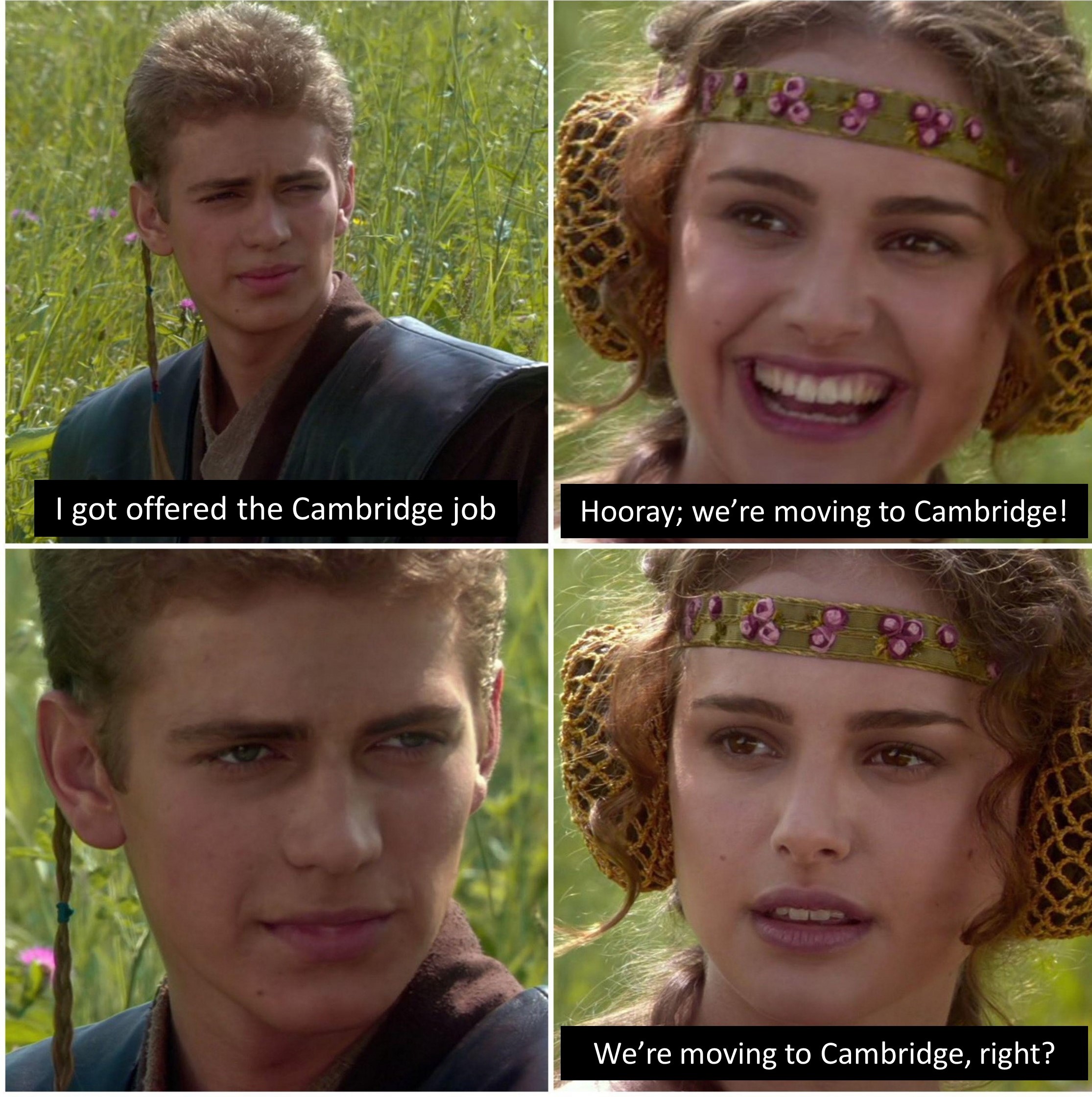
One of my biggest disappointments was not being able to move to Cambridge with my family because (i) Cambridge is very expensive relative to Leicester, and (ii) Univ. of Cambridge doesn’t pay their ECRs accordingly – mind you, I was being paid the equivalent of a (starting) ‘Lecturer’ post at the University’s pay scales (Point 49; see ‘Single Salary Spine’), so many of my colleagues were being paid less than myself.


There was also the issue of not having enough ‘independence’ as an ECR to work on different projects that excited me. As a ‘postdoc’, my priority had to be my supervisor’s projects/ideas. If I wanted to pursue my own projects, I had to bring my own salary via fellowship/grant applications – even those would have to be tailored towards the priorities of the funding bodies. Applying for grants/fellowships is not something I like or I’m trained for but I did try… I submitted three (one grant and two fellowship) applications and made it to the interview/final stage every time, however they were all ultimately rejected mostly because I “was not an expert on that respective disease” or “was too ambitious/couldn’t do all these in 3 (or 5) years”. I guess I also laid all my cards on the table and didn’t hide the fact that I was a proud ‘generalist’** and was never going to be a specialist as I am just too curious (and unwilling) to be working on a single disease or method. In addition to these, I had also co-applied (with a Lecturer colleague in the Arts dept. where we had to submit quite a few documents and a short video) for a very small grant (of ~£6000) to organise a conference to discuss the problems of asylum seekers/refugees in the UK, but it was rejected for strange reasons. I acknowledge that there is an element of luck involved and on another day with another panel, I may have been awarded but these rejections were also eye openers. (NB: I believe the ‘all-or-nothing’ nature of fellowship/grant applications should be revised as a colossal amount of researchers’ time and effort – and therefore taxpayers’ money – is being wasted)

But – in line with the story (of the Chinese farmer) I shared at the start – I am now happy that they didn’t work out as it probably would have meant I stayed in academia for longer (i.e. until the end of my fellowship period). I always took the ‘doing my best and not worrying about the outcome‘ approach and this has proven to be a good strategy for me so far.
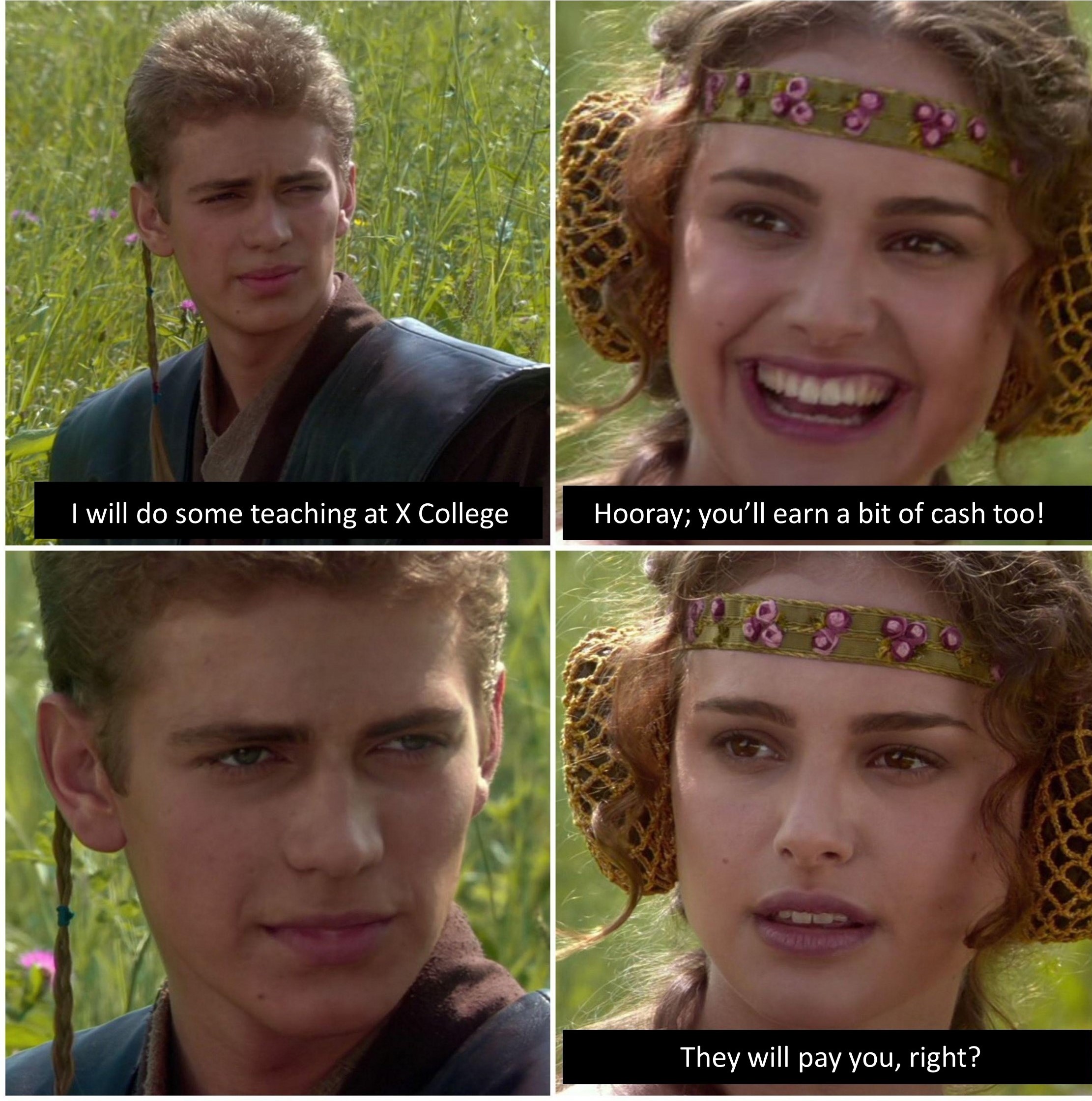
Although unhappy with the way ‘the system’ took advantage of ECRs, I did try and “play by rules” to ramp up my CV and network by applying to become a ‘Non-stipendiary Junior Research Fellow’ at one of the colleges of the Univ. of Cambridge to increase my chances of securing a permanent lecturer post at a high-calibre university. Although I enjoy teaching and think I am good at explaining concepts, the main reason for applying was to add more teaching experience in my CV and secondly, to be more involved with the community of students and ECRs in Cambridge – which I did not have a chance to do much, mostly as I and my wife decided not to move to Cambridge from Leicester for the reasons mentioned above (underneath the first figure). I made a solid application and got to the interview stage. I thought the interview panel would be delighted to see someone like me who has a relatively good academic CV for an ECR (see my CV) but also does sports, has his own podcast, who tried to be active on social media (I had more followers than the college on Twitter – although they’re very active), who writes highly read blogs (some of my blog posts are read and shared by tens of thousands), led many student groups (incl. the President of Turkish Society at the Univ. of Bristol and Leicester) etc. to join their ‘guild’ but I was very surprised to receive a rejection email a couple of weeks later. I was going to work there for free, but it seems like they didn’t value my skills at all and that there were at least 5 other people who they thought were going to contribute to the College’s environment more than me. This was another eye-opener: Academia is full of (highly talented) ECRs who are just happy to do things for free for the sake of adding stuff to their CV and I realised I was about to do the same. I remember thinking “I dodged a bullet there” – I decided it just wasn’t worth fighting/competing over these things. I knew now that I had to explore options outside of academia more assertively as I could see clearer that universities and the senior members who helped build this system were just taking advantage of ECRs’ idealism and ambitions but also desperation. (BTW: I find it astonishing that non-stipendiary fellowships in Cambridge are even a thing. They state that they don’t expect much from their fellows but they clearly do)

I then shared a 1-page CV in certain job recruitment sites to see what was out there for me and I was surprised to see how valuable* some of my transferable skills were to businesses in different sectors. I had many interviews and pre-interview chats with agents and potential employers (incl. Pharma, other private sectors, and public sector) in the last 6 months but only one ticked all the boxes for me: this ‘Senior scientist’ role at the Human Genetics team of BI – who valued my versatility and expertise in various fields***. Thus, I took time out to fully concentrate on the process and prepared well. I had to go through five interview stages, including an hour-long presentation to a group of experts from different fields, before I was offered the post. Throughout the process I also saw that many of my prospective colleagues at BI had seen the abovementioned problems earlier than I did and made the move. They were all very happy, with many working, and hoping to stay, in the company for a long time. I should also mention I had a Lecturer job lined up at the Univ. of Manchester**** too but the opportunity to work for BI’s ‘Human Genetics’ team was too good to refuse.

I didn’t mean this post to be this long so I’ll stop here. To sum up, I am proud of the things I’ve achieved and the friends I’ve made along the way – and if I was to go back, I wouldn’t change anything – but I believe it is the right time for me to leave academia. I think I’ve been a good servant to the groups I worked in and tried to give all I could. Simultaneously, I grew a lot as a scientist but also as a person – and this was almost all down to the environment we were provided at the universities I worked in. But having reached this stage in my life and career, I now think that (UK) universities don’t treat us (i.e. ECRs) in the right way and provide us with the necessary tools or the empathy to take the next step. I don’t see this changing in the near future either because of the fierce job market. Universities are somehow getting away with it – at least for now. This is not to say other sectors are too different in general but I would strongly recommend exploring the job market outside of academia. You may stumble on a recruiter like BI and a post like the one I have been offered, which matches my skill set and ambitions but also pay well so I can live a decent life with my family – without having to live tens of miles away from my office.

Let me re-iterate before I finish: What I wrote above will most probably not apply to you as I (i) am a UK-based academic/researcher, (ii) am an early-career researcher in a field which also has a strong computational/programming and statistics component – so I have a lot of easy-to-sell transferable skills to the Pharma companies/private sector, (iii) am a ‘generalist’** rather than a ‘specialist’ – so I’m a person major funding bodies currently aren’t really too keen on, (iv) don’t have rich parents or much savings, and am married (to a PhD student) and have a son to look after – and thus, salary*****, living in a decent house/neighbourhood and spending time with my family is an important issue, and (v) am an impatient idealist, who wants to see his research have impact – and as soon as possible. I am also in a position that I can make a move to another country with my family.


Footnotes:

*Contractor jobs usually offer much better pay packages than permanent jobs in the ‘data science’ field e.g. as soon I as put my CV on the market as a ‘health data scientist’, I got contacted by a lot of agents who could find me short-term (3-12 months mainly) contracts with very good pay packages. Just to give one example of the salaries offered, there was one agent who in an apologetic tone said: “I know this is not very good for someone like you but we currently offer £400 a day to our contractors but I can push it to £450 for you.”this is ~3x the daily rate of my salary at the Univ. of Cambridge!

**I’ve always been involved in top groups and ‘cutting-edge’ projects so the jump from academia to Pharma in terms of research quality is not going to be too steep but the possibility of being directly involved in the process of a drug target that we identify go through the stages and maybe even become a drug that’s served to patients is not there for a (32 year old) ECR in academia – maybe, when I’m 45-50 years old. I also like the “skin in the game” and “all in the same boat” mentality in many Pharma/BI posts, which I do not see in academia. The current system incentivises people to be very individualistic in academia; and the repetitive and long process of publishing (at least partially) ‘rushed’ papers to lay claim to a potential discovery are things that have always bothered me. I don’t see how I can further improve myself personally and as a scientist as I don’t think my skills were anywhere near fully appreciated there – the system almost solely cares about publishing more and more papers, and bringing in funding. I have many ‘junior’ and ‘senior’ friends/colleagues who have made the transition from academia to Pharma (incl. Roche, NovoNordisk, GSK, AZ, Pfizer) and virtually all of them are happy to have moved on.

***As you can also see from my Google Scholar profile (and CV), I have worked on different diseases/traits and concepts/methods within the fields of medical genetics (e.g. rare diseases such as primary ciliary dyskinesia and Papillon-Lefevre syndrome), genetic epidemiology (e.g. common diseases such as type-2 diabetes and chronic obstructive pulmonary disease, and related traits such as smoking behaviour and blood pressure), (pure) epidemiology (COVID-19 studies), population genetics (Y-DNA & mtDNA haplogroup studies), and statistical genetics (e.g. LD Hub, HAPRAP) – and this is generally not seen as a ‘good sign’ (even when I’ve published papers in some of the most respectable journals in the respective fields as first/equal-first/prominent author) by some ‘senior academics’ (who review your grant/fellowship applications, and papers submitted to respectable journals) as many have spent their entire careers on a single disease, and sometimes on a single/few genes. It doesn’t mean they are right, but they usually make the final decision – and some like to act as gate keepers.

****I applied to the Univ. of Manchester post in case I would not get the BI job but also because it was a nice opportunity to work at a top university/department with high quality students and great scientists. They were also happy to pay me at the higher end of the ‘Lecturer’ salary scale. I believe I would have been a good lecturer and colleague but I just did not see myself in (UK) academia in its current state.

*****Although I – with my wife and son – was living in a nice neighbourhood and house in Leicester (renting of course!), due to my son’s expenses incl. a private nanny for a couple of days a week as my wife was also busy like me (small matter of writing her PhD thesis!), we were basically living paycheck to paycheck – and that was hard. When there were unexpected expenses, we used my wife’s (small amount of) savings, then asked my brother to help out financially – and that was hard too. It was almost impossible to fully concentrate on my research as I was always on the lookout for investment opportunities using the small amount of money I had on the side. At one point, I even contemplated doing casual work to earn a bit of cash on the side. Needless to say, I am very disappointed with the pay packages in academia – at least a stratified approach according to field, (transferable) skillset, and marriage/child status/other circumstances should be considered in my opinion. I also think, universities should at least provide guidance on solid investment (incl. mortgage) opportunities to their ECRs, so they can potentially earn or save a bit more. I can’t say much about my salary but it is a senior and permanent post, and my pay package also includes many of the perks of academia (e.g. >30 days of paid annual leave, flexible working hours, conference/travel allowance).


Couple of tweets – in addition to the blog posts I shared above – where I complain openly about the state of (UK-based) academia:

1- I don’t know how “no/limited feedback” has been normalised in academia:

2- I think science communication is as important as the papers we publish:

3- Publishing papers for the sake of publishing and inflating h-indexes:


Addendum (23/12/21) Reflecting on my first 4 months at BI’s Human Genetics team:

I was going to write a piece later but decided to add to this post now as I have been/am being invited to many ‘academia v industry/pharma‘ workshops/talks and saw that there is a lot of interest in this subject. I cannot properly respond to all emails or accept all invitations, thus would like to direct people here when needed…

A quick summary of what I’m doing: I’m a ‘Senior Scientist’ in the relatively newly established Human Genetics team of BI – and we’re located at the International Research Centre in the beautiful city of Biberach an der Riss in South Germany. As the Human Genetics team, we’re currently building analysis pipelines to make use of the huge amount of human genetics, proteomics and transcriptomics data that’s available to (in)validate the company’s portfolio of drugs (see below video for details).

A short primer on how I spend my days in the Human Genetics team of Boehringer Ingelheim: Leveraging human genetics data to guide drug target validation – Mesut Erzurumluoglu (Respiration/Solunum conference on 31/10/21)

If I say a few words about BI – which I didn’t know before I joined: BI one of the largest family-owned companies in the world with >20 billion euros revenue per year and >50k employees all around the world of which >8k are researchers (largest R&D centre is in Biberach an der Riss, where we’re also located) – so the company and the Boehringer/Von Baumbach family value R&D a lot. Some family members also attend research days organised within the company – which I find very encouraging as an employee but also a scientist at heart!

The other exciting thing for me is that the company’s currently going through a phase of massive expansion in ‘data driven drug target validation’, so the Comp. Bio/Human Genetics department is getting a lot of investment and are going to hire a lot of people in the near future – and I’m very happy to be involved in this process too.

To get back to my views of ‘working for BI v in academia’, I’ve made a summary table below which compares my experience as a Senior Scientist in BI and my time as an ECR/(Sn.) Postdoc/(Prospective) Lecturer in UK academia. I’ve highlighted in bold where I think one side better was than the other for me.

I believe the above rows are self-explanatory except maybe the bottom 4 rows – so I will provide some details here: (i) I feel like we’re ‘all in the same boat’ in my current team as we – as a group – have certain targets that we need to hit, so any success/breakthrough by any of the team members alleviates the pressure on all of us. This is also true of any success within the company. (ii) Re the next point/row, I just want to give one example: I have seen many papers be published in very high-impact journals by ‘top names’, which would not have made it past the ‘top names’ themselves (as reviewers) had the paper been written by some other group. Most of us also don’t have any editor friends who we can write to so that our ‘desk rejection’ at a high-impact journals is reviewed. The struggle for funding is even worse and I think life’s too short to be spending months on a fellowship or grant application, which is usually rejected for non-research related reasons (e.g. competition, timelines, priorities). (iii) We’re not allowed to work on Sundays at BI, and emails sent to others on Saturdays and after work hours is genuinely discouraged. (iv) Last row: We’re encouraged to produce good science and analysis pipelines by the senior management at BI rather than be in competition with colleagues to be the ‘first’ at something. In contrast, many papers in academia will be published in high-impact journals and be cited by others because they were the ‘first’ and not because they did a good job of strengthening their finding(s) via different lines of evidence. They do not lose anything if this ‘new and shiny’ finding turns out to be just a meaningless correlation 5-6 years down the line (i.e. there’s no “skin in the game”; even worse, they will have collected their grants and awards by then).

I also want to mention that career progression in UK academia is too slow for my liking (see below figure). I do not want to be treated as an ECR and living ‘paycheck to paycheck’ until I’m 50 – again, I feel like life is too short for this. This is why I wanted to move to a group where I would be respected more but also earning more – so that I can provide a good life for my family whilst fully concentrating on my/the team’s ‘cutting-edge’ research.
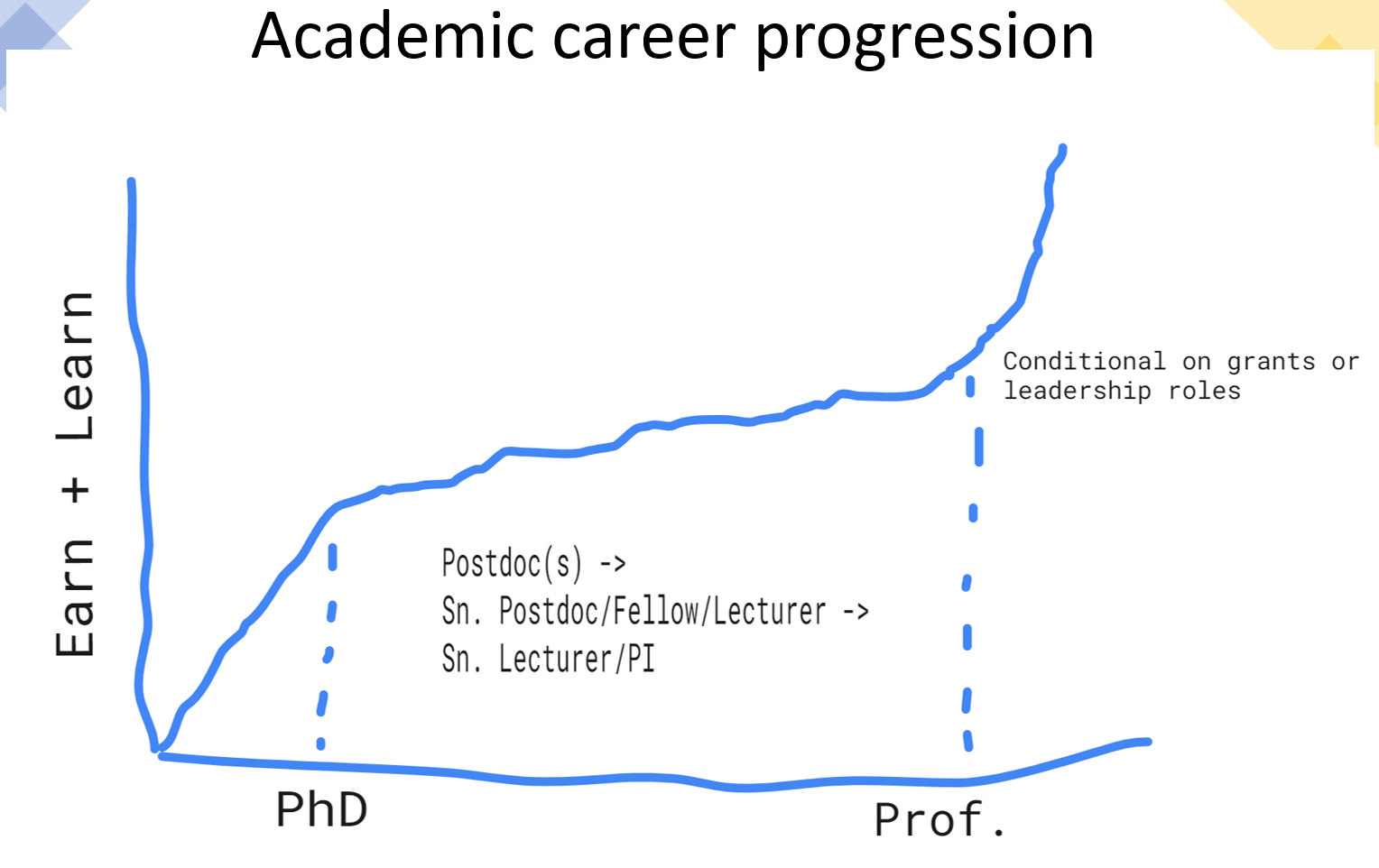
I always judged my ‘value’ at a place by adding how much I was earning and learning there. I was very happy during my PhD and first few years as a postdoc as I was learning a lot (from top scientists, attending conferences, giving talks, being provided the time to explore) and had a good salary/scholarship for a person who is single and <30 years of age. Unfortunately, for me, the increase in this regard was just not steep enough after this period. This feeling didn’t change much even after I secured a Lecturer post at the Univ. of Manchester – I just could not beg funders and apply for grants every year until I die. At BI, in addition to a very good salary, I’m also learning a lot from the different groups we are interacting with (e.g. wet-lab researchers/CRISPR screens, drug target research in different disease areas such as respiratory, immunology, oncology, and cardio-metabolic diseases) whilst also taking part in ‘cutting-edge’ research. There are also internal funds to explore your own ideas and a separate programme called ‘Research Beyond Borders’, which is dedicated to looking into other diseases which do not fit the main programmes.

To finish, I again re-iterate that it would be wise for a talented postdoc with data science and statistical skills to have a look around while they’re still comfortable in their current post (i.e. still have >12 months contract). If you have experience working with clinical and genetic data, then Pharma and Biotech companies would also be very interested in you.

I hope this post is of help, but feel free to contact me if you have specific questions that are not answered here.


Addendum (23/12/23) Reflecting on my first ~2.5 years at BI’s Human Genetics team:

Still happy. Family’s happy here. South Germany is very good for families: Very safe. My son’s kindergarten is great; Biberach and surrounding area is great. So much to see and learn.

Happy with the research I’m doing, things I’ve learned/learning, and my impact in the drug target development process at BI.

Also check out our preprint on structural variants – a valuable resource, openly shared with the research community (Note: I had encouraged Boris Noyvert to join our team and now we’ve published this preprint together):

Noyvert B, Erzurumluoglu AM, Drichel D, Omland S, Andlauer TFM et al. 2023. Imputation of structural variants using a multi-ancestry long-read sequencing panel enables identification of disease associations: https://www.medrxiv.org/content/10.1101/2023.12.20.23300308v1

Tweetorial:

Read Full Post »

Nida Dinçtürk’ün (i) Ingiltere’nin SARS-CoV-2 (COVID-19’a yol açan virüsün ismi) salgını politikası, (ii) çalıştığım alan olan Genetik Epidemiyoloji ve (iii) akademik kariyerim hakkındaki sorularını kısaca yanıtladım. Habere ulaşmak için tıklayın. (Not: ‘Marbour’, ‘Marburg’ olacaktı – herhalde editlenirken yanlış kaleme alındı. Başlıkdaki ‘Pandemik olmasını’ yerine de ‘SARS-CoV-2 salgınını’ yazmak daha doğru)

Son dönemlerde (Genetik) Epidemiyolog olduğum için onlarca Türkiye-bazlı TV kanalı ve online medya kuruluşundan yayına çıkma teklifi aldım. Fakat (i) Türkiye’yle ilgili benden daha bilgili ve ilgili insanlar olduğu için ve (ii) diyabet, obezite gibi salgın olmayan hastalıkların epidemiyolojisi üzerine çalıştığım için SARS-CoV-2 salgını hakkında söyleyebileceğim en fazla 3-5 şey olabilir. Onları da blogum ve Twitter’dan paylaşıyorum zaten. Aynı şeyleri devamlı söylemeyi de sevmediğimden (ve ünlü olma derdim olmadığından) kanallara çıkmayı reddettim.

Aşağıdaki iki ropörtajı kabul etmemin sebebi ise biri zaten benim başarılarım ve hayat hikayemle ilgili bir ropörtajdı (tabi koronavirusünden de sorular sordular); diğerinde ise Londra’da yaşayan Türk/Kürt’ler arasında çok fazla yanlış anlama ve korku olduğunu söylediler. Ben de görev bilinciyle kabul ettim. Yoksa dediğim gibi işi ehline bırakmayı tercih ediyorum böyle halk sağlığını etkileyebilecek konularda. Yüzbinlerce insanın izleyebileceği kanallara çıkıp potansiyel olarak gereksiz yanlış anlaşılmaya sebep vermek istemedim; istemem.

Roportajları okumak isteyenler için ilgili tweetler/linkler:

Linkten röportaja ulaşabilirsiniz

Podcast:


Ekleme (05/04/20): DAY-MER’e verdiğim röportaj

Read Full Post »

It is not the strongest of the species that survives, nor the most intelligent that survives. It is the one that is most adaptable to change – attributed to Charles Darwin

“How did you get accepted to Cambridge?”

I saw a tweet a while ago which said something along the lines of: “If you’ve been asked the same question three times, you need to write a blog post about it”. I get asked about how I got my current postdoc job at the University of Cambridge all the time. Therefore, I decided to write this document to provide a bit of a backstory as I did many things over the years which – with a bit of luck – contributed to this ‘achievement’.

It is a long document but hopefully it will be worth reading in full for all foreign PhD students, new Postdocs and undergraduates who want an introduction to the world of academia in the UK. I wish I could write it in other languages (for a Turkish version click here) to make it as easy as I can for you, but I strived to use as less jargon as possible. Although there is some UK-specific information in there, the document is mostly filled with general guidance that will be applicable to not just foreign students or those who want to study in the UK, but all PhD students and new Postdocs.

I can only hope that there are no errors and every section is complete and fully understandable but please do contact me for clarifications, suggestions and/or criticism. I thank you in advance!

To make a connection between academia in the UK and the quote attributed to Darwin above, I would say being very clever/intelligent is definitely an advantage in academia but it is not the be-all and end-all. Learning to adapt with the changing landscape (e.g. sought-after skills, priorities of funders and PIs), keeping a good relationship with your colleagues and supervisors, and being able to sell yourself is as, if not more important. Those who pay attention to this side of academia usually make things easier for themselves.

I hope the below document helps you reach the places you want to reach:

Good luck in your career!


I included this tweet here because Ed was one of my lecturers when I was a first year undergraduate student at the University of Leicester (2007)
I was kindly asked to send in a short video for the 2022 Univ. of Leicester Annual Alumni Dinner

Read Full Post »

evolution_of_intellectual_freedom_cham_phdcomics

Source URL: PhD Comics

Figuratively speaking, what is the ‘worth’ of a certain academic? Between two academics, which one has had more positive academic impact than the other? How do you rank academics? And award grants, promotion, tenure etc. to the best* ones?

I’m not going to answer these questions but would like to chip in with some food for thought and suggestions.

Well; one may say: “It’s easy! Just compare their h-index and total no of citations!

This may be an effective way to go about answering the question. Surely someone with an h-index of 30 has had more positive academic impact than someone with let’s say an h-index of 15 – and is the better candidate?

Maybe – that is if all things are equal regarding the way citations and the h-index works i.e. if both academics:

  • are in similar fields – as papers in certain fields receive more citations overall than papers in other fields,
  • are in similar stages in their careers – as comparing an early-career postdoc with an established “Prof.” wouldn’t be fair,
  • have similar numbers of first/equal-first or last author papers – as an academic with many middle-authorships can have excessively inflated h-indexes,
  • have similar number of co-authors – as it may be easier to be listed as a co-author in some fields than others and/or mean that more people will be presenting and citing the paper as their own, and
  • have a similar distribution of citations across the papers – as the h-index ignores highly influential papers and the total citations can be highly influenced by even just one of these (see figure below).

I may have missed other factors, but I think these are the main ones (please add a comment below).

mesut_erzurumluoglu_h-index_academic_2018

Calculating my h-index: Although problematic (discussed here), the h-index has become the standard metric when measuring the academic output of an academic. It is calculated by sorting the publications of an academic from most to least cited, then checking whether he/she has h papers with h citations e.g. if an academic has 10 papers with ≥10 citations but not 11 papers with ≥11 citations then their h-index will be 10. It was proposed as a way to summarise the number of publications that an academic has and their academic impact (via citations) with a single number. The above citation counts were obtained from my Google Scholar page

As of 31st July 2018, I have 14 published papers – including 5 as first/equal-first author – under my belt. I have a total citation count of 316 and an h-index of 6 (225 and 5 respectively, when excluding publications marked with an asterisk in the above figure). It is fair to say that these numbers are above average for a 29-year-old postdoc. But even I’m not content with my h-index – and many established academics are definitely right not to be. I’ll try and explain why: the figure above shows the citation distribution of my 14 publications sorted by the ‘number of times cited’ from the left (highest) to right (lowest). One can easily see that the h-index (red box) captures only a small portion of the general picture (effectively, 6 x 6 i.e. 36 citations) and ignores the peak (>6 on the y-axis) and tail (>6 on the x-axis) of the publication-citation distribution. I have also included the publication year of each paper and added an asterisk (*) against the publications where I haven’t provided much input e.g. I have done almost nothing for the Warren et al (2017) paper but it constitutes almost a third of my total citations (90/316)**. The ‘ignored peak’ contains three highly cited papers to which I have made significant contributions to and the ‘ignored tail’ contains research papers that (i) I am very proud of (e.g. Erzurumluoglu et al, 2015) or (ii) are just published – thus didn’t have the time to accumulate citations. What is entirely missing from this figure are my (i) non-peer-reviewed publications (e.g. reports, articles in general science magazines), (ii) correspondence/letters to editor (e.g. my reply to a Nature News article), (iii) blog posts where I review papers or explain concepts (e.g. journal clubs), (iv) shared code/analysis pipelines, (v) my PhD thesis with potentially important unpublished results, (vi) other things in my CV (e.g. peer-review reports, some blog posts) – which are all academia-related things I am very proud of. I have seen other people’s contributions in relation to these (e.g. Prof. Graham Coop’s blog) and thought that they were more useful than even some published papers in my field. These contributions should be incorporated into ‘academic output’ measures somehow.

It is also clear that “just compare their h-index and total no of citations!” isn’t going to be fair on academics that (i) do a lot of high-quality supervision at different levels (PhD, postdoc, masters, undergrad project – which all require different skill sets and arrangements), (ii) spend extra time to make their lectures inspiring and as educative as possible to undergrad and Masters students, (iii) present at a lot of conferences, (iv) do ‘admin work’ which benefits early-career researchers (e.g. workshops, discussion sessions), (v) do a lot of blogging to explain concepts, review papers, and offer personal views on field generally, (vi) have a lot of social media presence (e.g. to give examples from my field i.e. Genetic Epidemiology, academics such as Eric Topol, Daniel MacArthur, Sek Kathiresan take time out from their busy schedules to discuss, present and debate latest papers in their fields – which I find intellectually stimulating), (vii) give a lot of interviews (TV, online media, print media) to correct misconceptions, (viii) take part in public engagement events (incl. public talks), (ix) organise (inter-disciplinary) workshops, (x) inspire youngsters to become academics working for the benefit of humankind, (xi) publish reliable reports for the public and/or corporations to use, (x) provide pro bono consultation, (xi) take part in expert panels and try very hard to make the right decisions, (xii) engage in pro bono work, (xiii) do their best to change bad habits in the academic circles (e.g. by sharing code, advocating open access publications, standing up to unfair/bad decisions whether it affects them or not), (xiv) extensively peer-review papers, (xv) help everyone who asks for help and/or reply to emails… The list could go on but I think I’ll stop there…

I acknowledge that some of the above may indirectly help increase the h-index and total citations of an individual but I don’t think any of the above are valued as much as they should be per se by universities – and something needs to change. Academics should not be treated like ‘paper machines’ until the REF*** submission period, and then ‘cash cows’ that continually bring grant money until the next REF submission cycle starts. As a result, many academics have made ‘getting their names into as many papers as possible’ their main aim – it is especially easier for senior academics, many with a tonne of middle-authorships for which they have done virtually nothing****. This is not how science and scientists should work and universities are ultimately disrespecting the tax payers’ and donors’ money. Some of the above-mentioned factors are easier to quantify than others but thought should go into acknowledging work other than (i) published papers, (ii) grant money brought in, and maybe (iii) appearing on national TV channels.

Unless an academic publishes a ‘hot paper’ as first or corresponding author – which very few have the chance and/or luck to do – and he/she becomes very famous in their field, their rank is usually dictated by the h-index and/or total citations. In fact, many scientists who have very high h-indexes (e.g. because of many middle-author papers) put this figure at the top of their publication list to prove that they’re top scientists – and unfortunately, they contribute to the problem.

People have proposed that contributions of each author are explicitly stated on each paper but this is going to present a lot of work when analysing the academic output of tens of applicants – especially when the number of publications an individual has increases. Additionally, in papers with tens or even hundreds of authors, general statements such as “this author contributed to data analysis” are going to be assigned to many authors without explicitly stating what they did to be included as a co-author – thus the utility of this proposition could also be less than expected in reality.

It’s not going to solve all the problems, but I humbly propose that a figure such as the one above be provided by Google Scholar and/or similar bibliometric databases (e.g. SCOPUS, CrossRef, Microsoft Academic, Loop) for all academics, where the papers for which the respective academic is not the first author are marked with an asterisk. The asterisks could then be manually removed by the respective academic on publications where he/she has made significant contributions (i.e. equal-first, corresponding author, equal-last author or other prominent role) but wasn’t the first author. Metrics such as the h-index and total citations could then become better measures by giving funders/decision makers the chance to filter accordingly.

Thanks for reading. Please leave your comments below if you do not agree with anything or would like to make a suggestion.

academic_worth_researcher_university_mesut_erzurumluoglu

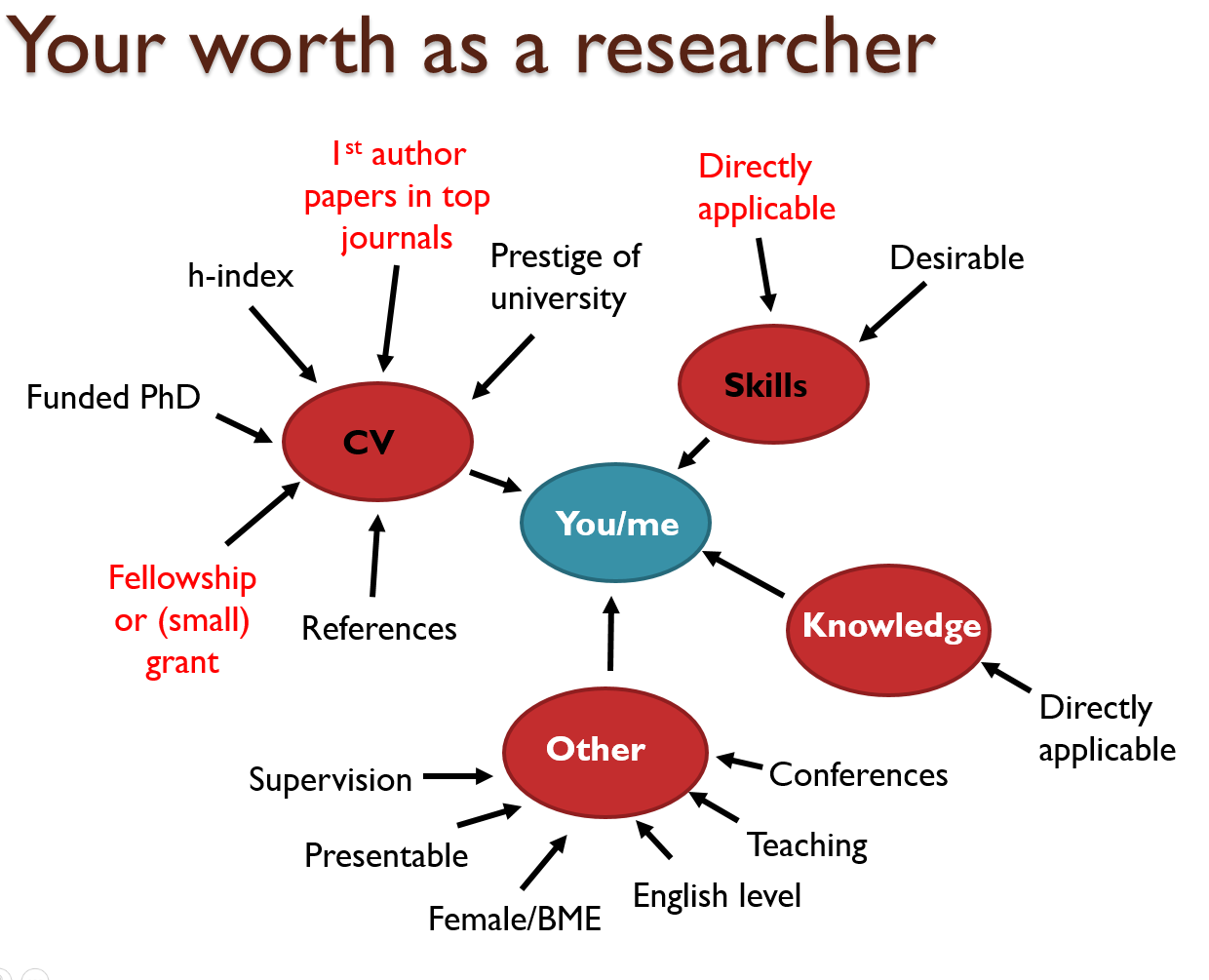
The heuristic that I think people use when calculating the worth of an early career researcher (but generally applies to all levels): ‘CV’ and ‘Skills’ are the two main contributors, with the factors highlighted in red carrying enormous weight in determining whether someone should get the job/fellowship or not. Virtually no one cares about anything that is outside what is written here – as mentioned in the post. Directly applicable: Some technical skill that the funder/Professor thinks is essential for the job; Prestige of university: where you did your PhD and/or undergrad; Funded PhD: whether your PhD was fully funded or not; Female/BME: being female and/or of BME background – this can be an advantage or a disadvantage depending on the regulations/characteristics of the university/panel, as underrepresented groups can be subjected to both positive and negative discrimination. NB: this is a simplified version and there are many factors that affect outcomes such as “who you know” and “being at the right place at the right time“.


Added on 30/10/18: I just came across ‘No, it’s not The Incentives—it’s you‘ by Tal Yarkoni about the common malpractices in academic circles, and I think it’s well worth a read.


*Making sure there’s a gender balance and that academics from BME backgrounds are not excluded from the process – as they’ve usually had to overcome more obstacles to reach the same heights.

**I have been honest about this in my applications and put this publication under “Other Publications” in my CV.

***REF stands for the ‘Research Excellence Framework’, and is the UK’s system for assessing the quality of research in higher education institutions. The last REF cycle finished in 2014 and the next one will finish in 2021 (every 7 years). Universities start planning for this 3-4 years before the submission dates and the ones ranked high in the list will receive tens of millions of pounds from the government. For example, University of Oxford (1st) received ~£150m and University of Bristol (8th) received ~£80m.

****Sometimes it’s not their fault; people add senior authors on their papers to increase their chances of getting them accepted. It’s then human nature that they’re not going to decline authorship. It sounds nice when one’s introduced in a conference etc. as having “published >100 papers with >10,000 citations” – when in reality they’ve not made significant (if any!) contributions to most of them.


PS: I also propose that acknowledgements at the bottom of papers and PhD theses be screened in some way. I’ve had colleagues who’ve helped me out a lot when learning some concepts who then moved on and did not have the chance to be a co-author on my papers. I have acknowledged them in my PhD thesis and would love to see my comments be helpful to these colleagues in some way when they apply for postdoc jobs or fellowships. Some of them did not publish many papers and acknowledgements like these could show that they not only have the ability to be of help (e.g. statistical, computational expertise), but are also easy to work with and want to help their peers.

Read Full Post »

eiMX9R6in
“Union Jack” Birleşik Krallık (United Kingdom; Ingiltere, Galler, Iskoçya ve Kuzey Irlanda)’ın bayragıdır. (Not: Spesifik sorusu olanlar bana Twitter ya da emailden ulaşabilirler; Not 2: ‘Ünlü Ingiliz Atasözleri’ en aşagıda)

Sıkıcı bir giriş olacak ama öncelikle bir-iki şeyden bahsetmeliyim: hayatının çogunu Ingiltere’de geçirmiş*, ingilizlerin arasına nispeten karışmış ve Britanya egitim sisteminde (nispeten) başarılı olmuş biri olarak, ingiliz kültürü hakkında gözlem yapma fırsatım oldu. En sonda söylecegimi başta söylecek olursam: Kanaatimce, genellersem, birçok güzel hasletlere sahipler ve bana kalırsa (banal olacak ama) “Anadolu insanı” ve “müslüman halklar” olarak ingilizlerden ögrenecegimiz çok ama çok şey var. Ufak bir ülke olmasına, popülasyonu da çok yüksek olmamasına ragmen (~65 milyon), neredeyse hayatın her alanında en üst düzeyde insan(lar) yetiştirmişler – eski bir anket olsa da, Wikipedia’da 100 Great Britons listesine bakmanızı tavsiye ederim. Kanaatimce, millet olarak ulaştıkları seviyelere ulaşmalarında kurdukları sistemler kadar, (‘sivil toplum’ olarak güçlü olmalarında) kültürlerinin de büyük önemi var.

Aşagıda sıraladıgım, bize/size göre “yanlış” olan, bazı hasletlerinde ise “kendi bilecekleri iş!” demek lazım; malum din, dil ve kültür farklılıkları var. Bu yüzden bize göre “saygısızlık/edebsizlik/ahlaksızlık” olarak görünen şey, onlara göre degil.

Bu gözlemlerimin bazılarını, (sıralama yapmadan) çok genelleyici bir şekilde, üç başlık altında sizlere sunmak isterim. Lütfen her gözlemin yanında, bizim kültürümüz/alışkanlıklarımızın o konuda onların gözünde nasıl durdugunu düşünelim ve hangisi iyiyse onu hayatımıza örnek alalım. Ben böyle yapmaya çalıştım hep. Umarım Ingiliz kültürünü merak edenler/ögrenmek isteyenlere bir nebze yardımcı olur. Bir ülkenin kültürünü bilmeyince, insan dili iyi bilse/konuşsa dahi, çok pot kırabiliyor.

Burada yazdıklarım genelde orta-sınıf ingilizler için. Ingilizlerin sahip oldukları sosyo-ekonomik statüye göre karakter/hasletleri, hatta diyetleri (yöresel aksanları bile; dinlemek için tıklayın) dahi çok degişiyor . Bu da anca tecrübeyle gözlemlenebilir ancak işçi sınıfı ingilizlerin hayatını hızlıca – tabi dramatize edilmiş halde – ögrenmek için Eastenders ya da Coronation Street dizilerine bakabilirsiniz. Ingilizler kesinlikle homojen bir toplum degiller; ve bireysel olarak çok fazla ‘degisik/unique’ tipten insanı gözlemleyebilirsiniz. Ayrıca, genel olarak, sivil toplum anlayışları da çok gelişmiştir. Son olarak, sosyo-ekonomik statü yükseldikce aşagıda bahsettigim ‘British value‘lara daha sadık yetişiyorlar

english-culture-3-16-638
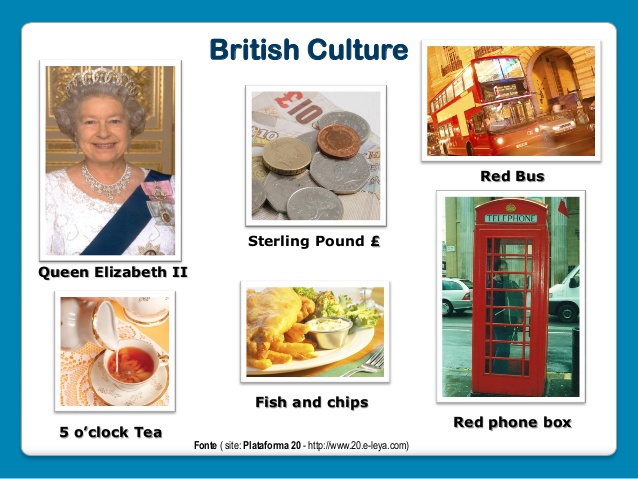
Cok bilinen Ingiliz ikonları. Kralice, Anglikan kilisesinin başı ve “dinin koruyucusu”dur. Ingiltere’nin Hristiyan kesiminin çogu Protestan’dır, fakat Katolik olanlar da az degildir (~4 milyon civarı)

Sosyal hayata dair

  • İngilizler denince aklıma herşeyden önce nezaket (politeness) ve sadelik (simplicity) geliyor. Siz de nazikçe ve sade bir hayat yaşıyorsanız, büyük bir ihtimalle Ingiltere’de ve Ingiliz sisteminde fazla problem yaşamayacaksınız. Bu iki hasletten sonra da pragmatizm denebilir – orta sınıf bir İngiliz kendisine fayda getirmeyecek bir işle fazla uğraşmaz; rahatını bozmaz. Bu yüzden ingiliz ‘fanatik’leri (devletçi/milliyetçi, ırkçıları) bile genelde bizim fanatiklerimize göre daha az şiddetlidir (daha az “dava”sına bağlıdır).
  • Kurallara uyarlar ve üç kagıtçılıga fazla kafa yormazlar. Bir arkadaşım anlatıyor (örnek olsun diye): eskiden tren istasyonlarında çok fazla görevli bulunmuyordu. Bir orta yaşlı kadına “görevliler olmamasına ragmen, neden her defasında bilet alıyorsunuz?” diye sordugumda, kadının verdigi cevap: “üç kagıtçılık/hırsızlık kötü birşeydir!“. Bitti.
  • Hayatın her alanında ama özellikle trafikte çok sakin ve sabırlıdırlar – hatta bizim gibi hep acele iş yapanlar için bazen çıldırtıcı şekilde sabırlı olabiliyorlar. Yol isteyene, en kalabalık saatlerde dahi, yol verirler (sizin de aceleniz varsa, arkada çıldırırsınız; fakat yapacak birşey yok!). Kesinlikle kırmızı ışıkta geçmezler.
  • Ezilen/hakkı yenilen kesimlerin yaşadıkları sıkıntılara karşı duyarlılardır; ondan (bazılarımıza ilginç gelse de) LGBT’ler ve (kültürlerine saygı duyan ve sisteme entegre olan) azınlıklara karşı sempati duyarlar.
  • Insanların kesinlikle din ve ideolojilerini araştırmazlar/ilgilenmezler. O konular hakkında konuşan çok az insan vardır.
  • Cuma ve Cumartesi dışarıda (çogunlukla “pub”larda) içer (eğer evlerine uzak bir yerdeyse, eve taksiyle dönerler – kesinlikle içkili araba sürmezler), Pazarları ise evlerinde dinlenirler. Zengin/kalbur üstü/elit olanlar ise daha çok restoranlara giderler.
  • Cuma geceleri sokaklarda çok sarhoş gezinir fakat çogunlukla (kendilerine verdikleri zarar dışında) zararsızdırlar. Size seslenirlerse duymamış gibi yapıp cevap vermeyin, yoksa peşinize takılabilirler. Aynısı sokaklarda yaşayan evsizler için de geçerli…
  • Cogunluk başka bir dil ögrenmez. Okul yıllarında çogunlukla Fransızca (bazıları da Almanca) ögrenirler; onu da sonradan geliştirmezler.
  • Haftasonu dışarı çıktıklarında önce eglenir (çogunlukla pub/barda içer, cebindeki paranın çogunu harcar), sonra ceplerinde kalan parayla da yemek yerler.
  • Şaşırtıcı şekilde “görmüş/geçirmiş”tirler. Genç yaşta olanlarının dahi, dunyada gormedikleri ülke/kültür, tatmadıkları yemek/içki kalmamıştır.
  • Futbol, Rugby ve Cricket en sevdikleri sporlardır. Halk olarak, Tenisi de Wimbledon turnuvası başladıgında takip ederler. Fakat her alanda önemli sporcular yetiştirmeye calışırlar ve okul çaglarında (her alanda) yetenekli çocukları arar/bulurlar. Yaşlıların arasında yaygın olan sporlar ise Bowls ve Golf’tür.
  • Hava durumu hakkında konuştukları kadar başka bir konu hakkında konuşmazlar.
  • En ufak bir güneş çıktıgında, ailecek cümbür-cemaat parklara akın eder ve güneşlenirler.
  • Kurallı oyunlarda, eskiden kalan en basit protokol/kültürlerini/’centilmenlik kuralı’nı dahi korurlar. Örneğin hakimleri, hala peruk (judge’s wig) giyerler. Genel seçimler, hiçbir hukuki ve hatta mantıki sebebi olmamasına rağmen, hep Perşembe gününe denk getirilir. Cricket’de ‘Ashes’ turnuvasında Avustralya’ya karşı oynadıklarında, kazanan hala ufacık bir kupa olan ‘Ashes urn’ kupasını kaldırır. Wimbledon turnuvası sırasında ‘strawberry and cream’ (krema ve çilek) yerler – onu yemek zorundaymışsın gibi bir ortam oluşur. Rugby maçında rakip oyuncu penaltı çekerken, bütün stat sessiz durur – aynısı Tenis maçı için de geçerlidir. Cornwall bölgesinde tost ekmeği/scone’un üzerine önce reçel sonra kaymak (clotted cream) konur. Hemen yan bölge olan Devon’da ise önce kaymak sonra reçel konur. Bu tarz kurallara uymayanlardan irite olurlar
  • Hukuk herşeyin üstündedir. “Millet”in canı başka birşey istese dahi, hukukun dışına çıkılmaması gerektigini içselleştirmişler.
  • Tarih/kültüre büyük saygı gösterirler; tarihi hiçbir şeyin (bina, yol, yeşil alan) değiştirilmesine izin vermezler. Belediyeden ve komşularınızdan izin almadan evinizin önünde dahi (ciddi) degişiklik yapamazsınız.
  • Doğaya da çok önem verirler. Ülkenin/şehirlerin en pahalı yerlerinde (Londra’daki Hyde Park gibi) çok büyük parklar görmek mümkündür.
  • Degişik/sıradışı insanları severler. Sıradanlıgı/sıradan insanları ise sevmezler; halk nazarında, iş dünyasında veya akademik dünyada önemli yerlere gelmeleri çok zordur bu tip insanların.
  • Insanlar bilmedikleri/araştırmadıkları konularda konuşmaktan sakınırlar.
  • Sadeligi severler; göze batacak lüksten kesinlikle kaçınırlar (pahalı araba, altın bilezik vb.). Evi çok uzakta olmayanların birçogu işe bisikletle ya da yürüyerek gelir – üniversite hocaları ve milletvekilleri arasında da böyleleri az degil.
  • Devlette önemli yerlere gelmiş insanların onlara hizmetkar olması gerektigini bilirler. Onlara bizdeki gibi yalakalık yapmayı bırakın, devamlı eleştirir hatta kafa tutarlar. Milletvekilleri/liderler de bu hali kabullenmişlerdir; ve kesinlikle halka/elestirenlere karşı ters bir hareket yap(a)mazlar.
  • Christmas’a 3-4 ay önceden maddi/manevi (özellikle maddi olarak) hazırlanmaya başlarlar. Eş-dosta bol bol kart alır/gönderirler. Kart sektörü bu dönemde inanılmaz kar yapar, posta servisleri ise inanılmaz yavaşlar bu donemde.
  • Kraliçe (2nci Elizabeth) halk nazarında çok önemli bir yerdedir. Ama onu “eleştirilemez/alay edilemez” görmezler. Onun hakkında saygı sınırlarını fazlasıyla aşan şaka/skeçler yapan komedyenler, (devletin kanalı) BBC’de dahi iş bulur.
  • Okuma alışkanlıkları vardır; otobüs/metrolarda çogunun elinde bir kitap görmek mümkündür.
  • Çocuklarına (kendi kişisel inançlarına ters düşse bile) açık görüşlü olmayı ögretirler ve kendilerine güvendikleri ve çok çalıştıkları takdirde hayatda istedikleri herşeyi başarabileceklerini aşılarlar. Fakat kurallara/kanunlara uymayı da hep tembihlerler. Cocuklarıyla (özellikle küçükken) sokaktan karşıya geçerken, yol boş olsa dahi yayalar için yeşil yanmadıkca geçmezler.
  • Bilim adamları, entellektuelleri, sanatçılarına büyük saygı gösterirler. Brian Cox, Stephen Hawking, Richard Dawkin, David Attenborough, Jim Al-Khalili gibi entellektuel/akademisyenlerin sundugu programlar izlenme rekorları kırar.
  • Churchill, Darwin, Queen Victoria, Shakespeare, Charles Dickens, George Orwell, Oscar Wilde gibi tarihi şahsiyetlere de (biraz eski bir liste de olsa, link de fazlası var) çok önem verirler. Iskoçlar da ise ayrıca William Wallace ve Boudica çok önemli tarihi şahsiyetlerdir.
  • Eleştiriyi (bizim gibi) kişiselleştirmezler. Kendilerini çok ciddiye almazlar. Cok ciddiye alanlardan da irite olurlar. Hatta kendileriyle (belli bir standart/kalitede) alay etmeyi severler. Komedi anlayışları dahi çogunlukla bunun üzerinedir; ondan anlamayız biz. Bu yüzden de kültürlerini tanımadan şakalarına gülmek zorlaşır. Komedi anlayışlarını ögrenmek için, Stewart Lee, Michael McIntyre, Russell Howard, Ricky Gervais, Jimmy Carr, Stephen Fry gibi komedyenlerini izlemenizi tavsiye ederim. Ayrıca Twitter’da ‘Very British Problems’ hesabını da takip edebilirsiniz (kitabı da var – “Sorry I’m British“i de tavsiye ederim). Mr Bean (Rowan Atkinson), Monty Python (grubu) ve Charlie Chaplin ise Ingilizler hepsinin bildigi eski komedyenlerdendir.
  • Haftaiçi dışarıdan yemek yerler: her gün farklı bir mutfak denerler (Çin, Italyan, Turk/kebap, Hint mutfagı favorileridir).
  • Polis, ırkçılık, cinsiyetçilik, homofobi, islamofobi/anti-semitizm ve nefret söylemlerini çok önemser; aradıgınızda anında kapınızda olurlar. Kaza ve hırsızlıga dahi (çok ciddi, ölümlü bir olay degilse) bu kadar önem vermiyorlar.
  • Genel olarak ‘Patriotic’ (vatansever) olsalar da, evlerinin/binalarının önünde fazla asılı bayrak gormezsiniz. Bayrak (Union Jack) kesinlikle bizdeki gibi kutsal birşey degildir. Bayraklarını giysi (hatta iç çamaşırı ve çorap) olarak giyenler de görebilirsiniz. Evinin önünde Ingiltere bayragı (St George’s Cross) asanlar, çogu zaman ırkçı Ingilizlerdir (örnek: English Defense League gibi grupların üyeleri/sempatizanları).
  • Kendi dert/problemini/fikrini anlatmak isteyenler arasında, sadece somut konuşanlara deger verirler; duygusallık onlara işlemez. Özellikle “şöyle uçarım, böyle kaçarım”a kesinlikle deger vermezler.
  • Şikayet kültürleri vardır ve şirketler/devlet daireleri şikayetleri ciddiye alırlar. Bundan dolayı, millet herşeyi şikayet eder. Sikayetlerini kale almayanları, herkese rezil ederler.
  • Komşuluk çok önemli degildir. Senelerce yan yana yaşayıp birbirini tanımayan komşular çoktur.
  • Duygusallıgın hayatlarında çok yeri yoktur. Akıl/mantık hayatlarının her alanında daha önemlidir.
  • Yaptıgı işi tutkulu yapan (passionate) insanları da severler. Ornegin, en sevdikleri futbolculardan birisi olan Gascoigne’ini de bundan dolayı överler hep.
  • “Not bad” (fena degil), “interesting” (ilginç) gibi terimleri çok kullanırlar; ve bu terimleri çogu zaman literal anlamlarının tersi anlamında kullanırlar.
  • Standartları çok yüksektir. Bir Ingilizi yaptıgınız işle memnun etmek için her detayı düşünmüş olmalısınız.
  • “Please”, “Thanks”, “Sorry”, “Allright” gibi tek kelimelik terimleri çok kullanırlar. Özellikle ilk ikisi her cümleden önce ve sonra kullanılıyor desem mubalaga yapmış olmam.
  • Insanlarla samimileşmedikce ve karşıdaki kendisi anlatmadıkça (bu da aylar sürebilir) “nerelisin?” (where are you from?), “ailen nasıl?” gibi kişisel sorular sormazlar. Hele yabancı uyruklu bir insana kesinlikle (yanlış anlayabilir düşüncesiyle) “aslen nerelisin?” (where are you originally from?) gibi soruları kesinlikle sormazlar.
  • Saatlerce uzun bir kuyrukta dahi kimse “kaynak” yapmaz ve sırasını sabırla bekler.
  • Evlerin neredeyse yarısında kedi/köpek gibi evcil hayvan beslenir. Onları (abartısız) evlatları gibi sever, ve yemek ve diger ihtiyaçlarına (saglık, oyuncak vb) ciddi harcamalar yaparlar.
  • “Britain’s Got Talent” (bizim “Yetenek Sizsiniz”) gibi yetenek yarışmaları izlenme rekorları kırar. Bu tür yarışmaların en ünlü versiyonları Ingiltere’de oldugundan, dünyanın her yerinden/milletinden yarışmacılar katılıyor. Fakat ilginçtir, kazananlar halk oylamasıyla seçilmesine ragmen, azımsanmayacak bir oranda bu yarışmayı yabancı gruplar kazanıyor. Bu da Ingiliz halkının ne kadar açık görüşlü ve meritokrat/hakkaniyetli oldugunu gösteriyor.
  • Restoranlarda hesap geldiginde, herkes kendi harcadıgını öder.
  • ‘Posh’ ingilizce (Posh English) konuşabilmek bir iftihar sebebidir.
  • Ingiliz kanallarında akşam 9’dan sonra küfür/şiddet/cinsellik içeren programlara izin var. Fakat bunlarda dahi ölçü kaçınca yüzlerce şikayet gelebiliyor; bu yüzden birçok kanal bu tarz programları akşam 10-11’den sonra yayınlıyor ve birçok sözü ‘bip’liyor.
  • Maalesef, dünyanın neredeyse her ülkesinde oldugu gibi, buralarda da ‘sex sells’. Bu yüzden, kanuni düzenlemelerle yavaş yavaş azalsa da, bazı şirketlerin reklamları gereksiz şekilde cinselleştirilmiş (sexualised) olabiliyor.
  • Işçi sınıfı cogunlukla ‘Full English Breakfast’ yer (bize ters gelse de ham/bacon’ı çok severler). Orta sınıf/üst sınıf ise daha hafif kahvaltı yaparlar (cereal gibi şeyler yerler).
  • Bizde ölülerin hayrına ceşme yapılır; onlar da ise parklara bank konulur
british-culture-38-728
Ingilizler kahvaltıda bizim gibi çok çeşit hazırlamazlar

Iş/Güç/Politika

  • “Health and safety” herşeyin başıdır. Yapılacak olan çok önemli bir iş dahi olsa, insan saglıgını etkileyebilecek herşeye karşı önlemler almadıkça, o işe izin vermezler. Bu yüzden iş kazaları oldukça azdır.
  • Mesai saatlerinde herkes yogundur; bu yüzden ogle arası dışında çok konuşmaya fırsatları olmaz. Bu saatlerde koridorda görürseniz “Hi!” ya da “(Good) Morning!”‘den fazla bir birşey söylememeye çalışın; çünkü büyük ihtimal yetişmesi gereken bir toplantı ya da yetiştirmesi gereken işler vardır. Obür türlü, yanlış anlayıp, “benimle neden konuşmak istemedi acaba?” gibi fikirler kafanızdan geçebilir…
  • Sabah içecekleri çay/kahve günlerinin en önemli parçalarından biridir. Ona özel zaman ayırırlar. Cogu çaylarına (az yaglı) süt koyarlar.
  • Işe alacakları insanlara “işime yarar mı?” gözüyle bakarlar. “Benden mi?” diye degil.
  • (Eski emperyal ziyniyetin de kalıntıları olabilir) Her alanda standartları yüksektir, birinciliğe oynamaları gerektiğine inanırlar. Bundan dolayı da dünyanın en iyilerini, işlerine yarayacak her insanı ülkelerine davet eder, iş verir, kıymet gösterirler – Müslüman/Ateist/LGBT ya da Şaman olmaları birşey degiştirmez.
  • Solcular ve yabancılar Labour’a (Işçi partisi), muhafazakarlar ise cogunlukla Conservative’lere (Muhafazakar parti) oy verirler. Liberal demokratlar da arada sırada kayda deger oylar alırlar.
  • Devlet olarak, dış politikada inanılmaz pragmatik/Makyavelist davranırlar ve hiç bir ülkeyle “Papaz” olmazlar (ama iç basında halkı o liderler/ülkeler/diktatörler hakkında istedigini söylemekte serbesttir).
  • Siddet içermeyen her ideolojiye saygı duyarlar, gerektiginde korurlar. Her konunun (kendi tabularının dahi) konuşulabilmesini, her sorunun (ne kadar aykırı da olsa) sorulabilmesini isterler.
  • Yapıcı eleştiri olmazsa olmazlarıdır. Kesinlikle kişiselleştirmezler. Ogrenci hocasına dahi, kendi fikrine inandıgında, kafa tutar. Hoca da kesinlikle bu konuda komplekse girmez. Sogukkanlı, aklı selim düşünürler. Duygularını işlerine çok karıştırmazlar.
  • Liyakat ve başarı üzerinedir herşey. Cok çalışan, sıradışı işler başaran her insan en üstlere gelebilir.
  • Herkes başarısızlıklarının hesabını vermek zorundadır.
  • Halk olarak politik degiller; apolitik de degiller. Seçim katılım oranları gittikçe yükseliyor.
  • Benim seçtigim partiden olanlar “melek”, rakip partiden olanlar ise “şeytan” mantıgı kesinlikle yoktur.
  • Ortaya bir sorun çıktıgında, aglayıp-sızlamak yerine, “bundan sonra somut neler yapılabilir?” o tartışılır.
  • Yukarıdaki üç noktaya baglı olarak Ingilizler yardım isteyen birisine mutlaka zaman ayırırlar – özellikle bu insan ilticacı ve/ya da mazlum/magdur bir toplumdan ise. Fakat yardım isteyenin toplantıya gelmeden önce dikkat etmesi gereken çok önemli hususlar var: (i) çok ugraştıracak (özellikle kagıt-kürek-legal işler), (ii) kendisine somut birşey kazandırmayacak (para, ün, oy), ve (iii) çok iyi tanımadıgı/güvenmedigi insanlar/işler için çok birşey yapmazlar. Bu üç başlıkla ilgili ciddi düşünmeden gelen kişiler çogu kez eli boş donerler – her ne kadar karşındaki Ingiliz nezaketen yüzüne gülse ve samimi görünse de. Propaganda yapmak ve/ya da bir gruba tamamen yardım istemek yerine kişinin kendi hikayesine odaklanması ve bireysel olarak yardım talep etmesi lazım.
  • Profesyonellige çok önem verirler. Bir iş yapılmadan/tartışılmadan önce ön hazırlık yapmak çok önemlidir. Sıkı hazırlanmış birisiyle, işkembeden sıkanı hemen anlar, ayırt ederler.
  • Ilk izlenim herşeydir (Ingilizce bir deyim: “First impression is last impression”).
  • Rekabet/yarışmanın oldugu alanlarda, mütevazilik, centilmenlik ve fair-play gösterenleri severler. Ama başarılı olan ukala tipleri de severler. Başarılı insanların bu türden irite edebilecek yönlerini görmezlikten gelebiliyorlar.
  • Işlerinde başarılı olmanın sırrı planlı/projeli olmalarıdır (aylar/yıllar önceden planlara başlayanların sayısı azımsanmayacak kadar çoktur). Toplantılarının başında da ve sonunda da dakiktirler: genelde toplantı başlamadan bir dakika önceden gelirler; toplantı da en geç 5 dakika sonra başlar. Profesyönel ortamda zaman israfını çok önemserler.
  • Iskoçlar Ingilizlerle hep bir çekişme içindedirler; fakat Ingilizler neredeyse her alanda baskın çıkar. Galler’de de yavaş yavaş ‘milli kimlik’ hareketleri başlamış olsa da, Ingilizlerle daha barışıktırlar.
  • ‘British values’ çok önemlidir kendileri için; ve başka medeniyetlerde bu ahlak kurallarını görmeyince irite olurlar.
  • Liberaller, entelektüeller ve akademisyenler daha çok The Independent (liberal) ve The Guardian (orta-sol), isçi sınıfı ise daha çok The Sun (sağcı), Daily Mirror (solcu) gibi gazeteleri okurlar. Sağcılar ise genelde Daily Telegraph (orta-sağ)’ı takip ederler.
culture-of-england-9-728
Ingilizler, iş ve sosyal hayatlarında uyguladıkları etik kuralları, hayatın her alanında koydukları/belirledikleri standartları, kanuni kuralları, ve (‘British values’) ‘ahlak’larından gurur duyarlar

Kişisel hayat

  • Birçoguna göre “hayat evde degil, dışarıda yaşanır”. Bir evin asıl var olma amacı gece dinlenmektir. Ondan evlerinde çok bir şaşa olmaz.
  • Herkes birey olarak hayatını yaşamaya programlıdır. Ondan bizdeki kadar samimi olmazlar insanlarla; bundan dolayı (olduklarından fazla) soguk gözükürler.
  • Paralarını fazla biriktirmezler (en fazla morgıçla bir ev alırlar) ve tüm paralarını tatil ve eglenceye harcarlar (konser, tiyatro, sinema, kafeler, dans studyoları hep beyaz Ingilizlerle doludur).
  • Dinin hayatlarında çok önemi yoktur. Çogunlukla yaşlılar (60 üstü) kiliseye gider. Gençlerin arasında yılda bir Christmas (onlara göre Hz. Isa’nın dogum günü) ve Easter (Paskalya; onlara göre Hz Isa’nın ölüm günü) ayinine giden dahi azdır.
  • Bireysellik ön plandadır – gençler bir an evvel kendileri hayata atılmak isterler. Buna da teşvik edilirler. Bu yüzden yenilikçi/inovatif/kreatif fikir üreten çok genç vardır.
  • Evlilikler önemini yitirmiştir. Insanlar onlarca yıl beraber yaşadıktan (ve yaparlarsa, 1-2 cocuktan) sonra evleniyorlar. Birçogu da ömür boyu evlenmiyor ve “partner” olarak kalıyorlar. Ayrıca evlenenlerin arasında boşanma oranları da oldukça yüksek. Sosyo-ekonomik statüsü en düşük kesimlerin dışında, çok çocuk yapanların sayısı da oldukça düşük (ikiyi geçen nispeten az).
  • Kariyer sahibi olanlar (yaparlarsa) genellikle geç yaşta çocuk sahibi oluyorlar. Bu yüzden yanında ufak çocuk olan orta yaşı geçmiş insanları dede/nineleri sanmayın. Ayni şekilde, bazı kadınların yanında nispeten yaşlı duran erkekleri de babaları sanmayın – çogu kez ‘partner’leri oluyorlar. Büyük bir pot kırabilirsiniz.
  • Avret temizligi konusunda sıkıntıları var fakat bunu hergün duş yaparak kapatıyorlar. Fakat bu konuda da yavaş yavaş geliştiriyorlar kendilerini – özellikle bidelerin otellerde ve evlerde daha fazla yer bulmasıyla.
Bu fotoğraf ‘ingiliz isçi sınıfının gece hayatının tablosu’ olarak lanse edilmisti – ve birçok kültürel göstergeyi içinde barındırıyor.
© Joel Goodman – 07973 332324 . 01/01/2016 . Manchester , UK . Police detain a man whilst another lies collapsed in the road , as revellers in Manchester enjoy a New Year night out at the bars and clubs of Manchester City Centre . Photo credit : Joel Goodman
english-culture-2-638
Birleşik Krallık’taki ülkeler (Ingiltere, Galler, Iskocya ve K. Irlanda) hakkında genel sembolik/dini bilgiler. (Not: Baska yerden kopyaladıgım bu resimde ‘Great Britain’ yazıyor fakat (tam dogru konuşmak gerekirse) gösterilen ‘United Kingdom’. Ikisinin arasındaki farkı ögrenmek için Britanya’da okumak/yaşamak yazıma göz atabilirsiniz)

Ünlü Ingiliz Atasözleri (ve ingilizce deyimler)

Bizim atasözü ve deyimlerimizle aşagı-yukarı aynı anlama gelen (birebir aynı değiller) Ingiliz atasözü ve deyimleri:

A bird in the hand is worth two in the bush – Eldeki bir kuş, ağaçtaki iki kuştan iyidir

Actions speak louder than words – Ayinesi iştir kişinin lafa bakılmaz

A drowning man will clutch at a straw – Denize düşen yılana sarılır

All that glitters is not gold – Her sakallıyı deden sanma

Among the blind the one-eyed man is king – Koyunun olmadığı yerde keçiye Abdurrahman çelebi derler

Don’t throw the baby out with the bathwater – Pireye kızıp yorgan yakma

Don’t count your chickens before they hatch – Dereyi görmeden paçayı sıvama

The grass is always greener on the other side (of the fence) – Komşunun tavuğu, komşuya kaz görünür

A rolling stone gathers no moss – Yuvarlanan taş yosun tutmaz

You reap what you sow (As you sow, so you shall reap) – Ne ekersen onu biçersin

Barking dogs seldom bite – Havlayan köpek ısırmaz

Better late than never – Geç olsun da güç olmasın

Curiosity killed the cat – Arayan Mevlasını da bulur, belasını da

Don’t bite off more than you can chew – Kaldıramayacağın yükün altına girme/Ayağını yorganına göre uzat

Don’t bite the hand that feeds you – Yediğin kaba pisleme

Don’t make a mountain out of a molehill – Ceviz kabuğunu doldurmayacak şeyler bunlar

An apple a day keeps the doctor away – Güneş giren eve doktor girmez

Easy come, easy go – Haydan gelen huya gider (orijinali: Hayy’dan gelen Hu’ya gider)

Ignorance is bliss – Cehalet ne güzel şey, her şeyi biliyorsun

Like taking coal to Newcastle – Tereciye tere satmak

Killing two birds with one stone – Bir taşla iki kuş vurmak

You scratch my back and I’ll scratch yours – Sen benim sırtımı kaşı ben de seninkini

Too many cooks spoil the broth – Nerede çokluk orada b*kluk

Out of sight, out of mind – Gözden ırak olan gönülden de ırak olur

The pot calling the kettle black – Tencere dibin kara seninki benden kara

It’s easy to be wise after the event – Testi kırıldıktan sonra yol gösteren çok olur

Every cloud has a silver lining – Her işte bir hayır vardır

Look after the pennies, pounds will look after themselves – Damlaya damlaya göl olur

Deyimler

Once in a blue moon – Kırk yılda bir

The last straw (that breaks the camel’s back) – Bardağı taşıran son damla

When pigs fly – Çıkmaz ayın son Çarşambası

I wouldn’t hurt a fly – Ben karıncayı bile incitmem

Speak of the devil – Iti an çomağı hazırla

You hit the nail on the head – Tam üstüne bastın (en doğru cevabı buldun!)

I know this place like the back of my hand – Burayı avucumun içi gibi bilirim

Between the devil and the deep blue sea – İki arada bir derede kalmak

Piece of cake – Çocuk oyuncağı

Adding insult to injury – üzerine tüy dikmek (halihazırda kötü olan bir durumu daha da beter hale getirme olayı)

Damned if you do damned if you don’t – Aşağı tükürsen sakal yukarı tükürsen bıyık (“İki ucu b**lu değnek” olarak da bilinir)

Take it easy – Kolay gelsin (birebir anlamı aynı olmasa da çalışan bir işçiye söylenebilir)

Cool as a cucumber – Soğuk kanlı

He’s all yours – Eti senin, kemiği benim

My heart was in my mouth – Yüreğim ağzıma geldi

Preaching to the converted – Kendi çalıp, kendi oynuyor

Couch potato – Tembel teneke

Birebir Türkçe karşılığının olmadığını düşündüğüm diğer ünlü Ingiliz atasözleri: Road to Hell is paved with good intentions (Cehenneme gidenlerin çoğunun “kalbi temizdir(!)”); If something seems too good to be true, it probably is (bir şey kulağa gerçek olamayacak kadar iyi geliyorsa, büyük ihtimal yalandır/yanlıştır); An idle brain is the devil’s workshop (boş bir beyin şeytanın meskenidir); Don’t judge a book by its cover (kimseyi dış görünüşüne göre yargılama); You can’t have your cake and eat it too (“hem pastam dursun, hem de karnım doysun” diyemezsin); Final nail in the coffin (son darbeyi vurmak); First impression is the last impression (ilk izlenim, son izlenimdir).

*yazıyı kaleme aldıgım bugünde (16 Mayıs 2017) 28 yaşındayım ve hayatımın 23 yılı burada geçti. Ingiltere’ye ilk gelişimde 1-6 yaşları arasında burada yaşadım; sonrasında ise orta okul (secondary school), kolej (bizdeki ‘lise’ denebilir; sistem biraz farklı), üniversite ve doktorayı bu ülkede okudum. Simdi ise Araştırma gorevlisi/Araştırmacı Hoca (Postdoctoral Research Associate) olarak Leicester Universitesi’nde çalışıyorum.

PS: Ingiltere’de okumak/yaşamak isteyenlere, ingiliz egitim, akademik ve emlak sistemi ile ilgili bazı soruları cevapladıgım Britanya’da okumak/yaşamak isimli yazımı okumanızı tavsiye ederim.

Read Full Post »

UK-regional-map-562x790
Birleşik Krallık (United Kingdom, UK) Ingiltere (England), Galler (Wales), Iskoçya (Scotland) ve Kuzey Irlanda (Northern Ireland)’dan oluşur. Büyük Britanya (Great Britain) ise Ingiltere, Iskoçya ve Galler’den oluşur. (Not: Spesifik sorusu olanlar bana Twitter ya da emailden ulaşabilirler)

Britanya/Ingiltere’de uzun yıllar yaşamış, bu ülkenin sisteminde yetişmiş ve nispeten başarılı olmuş bir birey olarak bana bu ülkenin egitim sistemi ve yaşam koşullarıyla ilgili çok soru soruluyor. Buralara gelen birçok arkadaşımız da psikolojik ve maddi sorunlarla boguşabiliyor, ya da vize, ingilizce ogrenememe, ingiliz kültürüne alışamama (Ingiliz kültürüne dair gözlemlerim adlı yazıma bakabilirsiniz bu konuda), doktoraları ile ilgili sorunlar yaşayabiliyorlar.

İlginizi çekebilecek bir bilgisel – İngiltere’de “Home fee” okumak için verdiğim mücadeleyle ilgili…

Bir nebze yardımcı olur ümidiyle bana sıkça sorulan soruları burada (oldugu gibi, fazla düzenlemeden) paylaşacagım. Sorunuz burada cevaplanmamışsa, lütfen bana buradan (en altta ‘comment’ atma bolümü var) ya da m.erz@hotmail.com’dan ulaşın; yardımcı olmaya calışayım:

İngiltere’de Doktora/PhD öğrencisiyim. Yakında birinci yıl APG (Advanced Postgraduate Assessment*)’m var. Ne önerirsiniz?

Öncelikle bir Doktora/PhD öğrencisi olduğunuzu unutmayın. PhD, akademik olarak alabileceğiniz en yüksek ünvandır – yani çok önemli bir ünvan. Ingilizler doktorayı bitirdiğinizde, size çalıştığınız spesifik konu/alanda ‘bir uzman’ gözüyle bakacaklar – bu yüzden size şimdiden “uzman olacak potansiyel var mı?” gözüyle bakarlar. Bunun şuurunda olun ve kesinlikle pısırık davranmayın.

APG’ye hazırlanırken (bence) yapmanız gerekenleri kendi tecrübe ve gözlemlerime göre sıralarsam:

1- Herşeyden önce literatüre hakim olun. Spesifik konunuzla ilgili her makale ve kitaptan haberdar olun. “Çok fazla makale var” diyorsanız, spesifik konunuz nedir tam bilmiyorsunuz demektir. (Yıl boyu tembellik yaptıysanız, en son çıkan 1-2 review ya da önemli makaleyi okuyup, tamamen anlamaya çalışın.)

Buna rağmen yine de gözünüzden bir makale kaçmışsa, ve APG’nizde examineriniz “şu makaleden haberin var mı?” diye sorarsa, “yok görmedim” yerine “evet haberim var; print edip masamın üzerine koymuştum. Burdan çıkışta ilk okuyacağım makale olacak” gibi politik cevaplarla geçiştirmeye çalışın.

Bir de examinerlarınızın CV’lerine ya da Google Scholar sayfalarına bakın ki ne gibi makaleler çıkarmışlar haberdar olun.

2- Ingilizlerin çok sevdiğim ve gerçekten de birini ‘judge’ yaparken karakterlerini yansıtan bir deyimi var: “First impression is last impression”  (ilk izlenim, son izlenimdir). Ilk izlenim çok önemli; güler yüzlü olun ve rahat görünmeye çalışın. Heyecanlı olabilirsiniz fakat bunu azaltmanın yolları var. Sunuma başlamadan önce sesinizi odada tanıdık birisiyle konuşarak kalibre edin (hatta bir arkadaşınızdan rica edin, biraz erkenden gelsin sırf bu iş için). O kişiyle konuştukça sesiniz açılacaktır ve nefesinizi daha iyi ayarlamanıza yardımcı olacaktır.

Ayrıca sunumunuza slaytlara değil de, insanların gözünün içine bakarak başlayın. Bu süreci kolaylaştırmak için de aklınızda unutmayacağınız 3-5 basit cümle tutun. Örnek: “Hi everyone. I’m Mesut; and I’m a PhD student working under Prof. Brian studying whether dopamine overexpression causes schizophrenia-like behaviour in mice. In the next 15 minutes or so, I’ll try and present how I’m going to do this. I also have some preliminary results that I’d like to share with you and get your comments on. If at any point you have a question, please do ask“. Sizin rahat (confident) olduğunuzu görünce, examinerlarınız da rahatlayacaktır; ve sonradan ufak-tefek hatalar dahi yapsanız görmezlikten geleceklerdir.

3- Introduction’ı kısa tutun, çünkü examinerlar başkalarının ne yaptığını değil, sizin ne yaptığınızı dinlemek için orada. Fakat alanınıza hakim olduğunuzu göstermeniz önemli (çalıştığınız konu neden önemli? benzer çalışmalar oldu mu? Varsa, senin çalışmanı ayıran nedir?). Güzel bir review/makaleyi örnek alın ve onu 2-3 slaytta anlatın. Sonraki slayt da ise arkadaşlarımızın belki de en az yaptığı şeyi yapın: eski literatürü biraz eleştirin; eksikliklerini, hatalarını bulun ve “ben bu eksiklerden haberdarım” mesajı verin. Bir bilim insanı gibi davranın: eski araştırmalara/buluşlara saygılı ama aynı zamanda eleştirel (critical) yaklaşabilen bir insan gibi…

En başta kendinizi tanıtırken hocanızın da ismini zikrettiniz. Artık bir daha ismini dahi anmayın – ta ki en son slaytınız olan “Acknowledgements” slaytına kadar. Ikide bir hocanızın ismini anmanız ve/ya da teşekkür etmeniz sizi pısırık ve hocasının arkasına saklanan bir öğrenci olarak gösterebilir. Türk mentalitesiyle ikide bir hocanızı övmenizin (“onun sayesinde oldu bunlar“, “hocama çok teşekkür ediyorum“) size hiçbir faydası dokunmayacaktır.

4- Introduction, **Aims & Objectives, Methods, Results ve Discussion slaytlarından sonra birer slaytı da (i) “bu bir senede neler öğrendim?” ve (ii) “bu sene neler yaptım?”a ayırın. Birincisi için, öğrendiginiz “skill”er (programming, wet-lab skills, istatistik vs. gibi), ikincisi icin de (a) bitirdiğiniz kurslar/workshoplar, (b) katıldığınız konferanslar/sunduğunuz posterler, (c) hazırda olan makaleleriniz (submitted/published olmasına gerek yok), (d) katılmayı planladığınız workshop ve conferencelardan bahsedin. Kazandığınız ‘skill’erin doktoranızda size nasıl faydalı olacağından bahsedin.

5- Gelebilecek soruları düşünün. Spesifik soruların dışında çok sık gelen genel sorular: (i) “what do you hope to achieve at the end of your PhD?” – iki cevabınız olsun; biri idealist, diğeri realist; (ii) “how does this help the man on the street?”; (iii) “what are the implications of studying this question?” – mesela önemli bir proteini calışıyorsanız, bunun bir hastalık icin ilaç üretilmesine yol açabileceğini söyleyebilirsiniz.

Çok iyi olan öğrenciler ise gelmesini istedikleri soruları dahi kendileri ayarlayabiliyorlar. Sunumlarında mesela ilgi çekebilecek bir konudan bahsedin ve “isterseniz soru-cevap kısmında daha detaylı anlatabilirim” deyin. Emin olun soracaklardır. Bu sayede sorulacaklardan bir soru azaltmış olursunuz.

Soru-cevap kısmında gerçekten takıldıysanız, “I have no idea” vs. gibi cevaplar vermeyin ya da sessiz-sessiz (kızarıp) durmayın. Gerekirse soruyu onlara geri çevirin: “Of course as a PhD student, I’m still learning; and would value the thoughts of experts like you. You’ve published many papers on schizophrenia before. What do you think?” demeniz daha akıllıca bir opsiyon. Bu da examinerlarınızın CV’lerine önceden bakmış olmanın yararları…

Umarım işinize yarar. Kolaylıklar dilerim.

*First year review ve Probation review olarak da biliniyor.

**’Aim’ ve ‘Objective’ arasındaki farkı ögrenmek/bilmek önemli. Örnegin: Aim “Londra’dan Istanbul’a varmak”sa, “Objective”leriniz (i) Skyscanner.com websitesine girip uygun bir fiyata Londra-Istanbul uçak bileti satın almak, (ii) Evinden Londra’daki havaalanına uygun bir saate otobüs/taksi/tren ayarlamak, (iii) Yola cıkmadan Türk Pasaport’unu yanına almak, (iv) Havaalanına 2 saat erken gelmek ve varınca “check-in” yapmaktır. “Aims and Objectives” slaytı sunumuzun belki de en önemli kısmı.

Yazın İngiltere’de dil okuluna gitmeyi düşünüyorum. Hangi ili seçmemi önerirsiniz? Brighton maddi açıdan uygun gibi duruyor… Ayrıca önerebileceğiniz bir dil okulu var mı? Bir yakınınızın gittiği ve/ya iyi bildiğiniz… Aile yanında kalmak en uygun seçenek gibi duruyor fakat sizin çevrenizde sıkıntı yaşıyanlar oldu mu? Size göre bir insanın aylık yeme-içme masrafı ne kadar olur?

Ben şu anda Leicester’da yaşadıgım icin daha çok bu civardaki dil kurslarından haberdarım. Maddi durumunuzu bilmiyorum ama üniversitelerin ‘intensive’ dil kursları, biraz pahalı olsalar da, çok kaliteli oluyor. Bu intensive kurslar pahalı gelirse, üniversitelerin normal “summer class”ları dahi baska yerlere nazaran daha iyi olabiliyor. Leicester üniversitesinin (konaklama dahil) ‘International Summer School‘ kursuyla kıyaslayıp (fiyat, ders programı vs.), ona göre kararınızı verin bence.

Aile yanında kalacak olmanız ingilizcenizi daha iyi geliştireceksiniz anlamına gelmiyor. Yanında kalacagınız aile işten dolayı yogunsa ve/ya konuşkan olmazsa, yüzlerini dahi göremeyebilirsiniz.

Yemek vs. Orta ve Kuzey Ingiltere’de nispeten ucuz ve zorlarsanız aylık ortalama £150-200’la geçinebilirsiniz. Ama Londra vs. de bunun iki katı rahat gidebilir. Ayrıca belki her gün bir-iki saatiniz metroda/yollarda geçebilir.

Brighton’ı çok bilmiyorum ama turistik bir yer oldugu için yazın konaklama fiyatları tavan yapabilir. Ayrıca Brighton’ın kalitesiz dil kurslarıyla ilgili kötü bir ünü var.

Tabi yazdıklarım çok genel. Aynı şehir içinde dahi fiyatlar ve kalite çok degişebiliyor. Begendiginiz birkaç yere email atıp aklınızda kalan soruları sorabilir, ona göre son kararınızı verebilirsiniz. En geç Nisan/Mayıs’a kadar kursunuzu ayarlamanızda fayda var çünkü yaza dogru hemen hemen her kurs ve aile yanı doluyor. Son dakikaya kalırsa size maddi açıdan çok pahalıya mal olabilir.

Ben İngiltere’de Yüksek Lisans (Master) yapmak istiyorum ama herhangi bir ücret ödemem gerekiyor mu?

Ingiltere’de yüksek lisans/Master’lar ücretli; ve hangi ülkenin vatandaşı oldugunuzun fiyatın belirlenmesinde büyük etkisi var. Avrupa birligi ve Britanya vatandaşlarına daha düşük bir fiyat uygulaması var (yıllık ~£9000 gibi). Yabancılara ise ~£12000 civarında (yıllık). Bu fiyatlar bolümden bolüme ve üniversiteden üniversiteye degişiyor (tıp ve benzeri alanlar çok daha yuksek). Universitenin ‘postgraduate prospectus’larını isteyip bakmak ya da admissions office’e email atıp sormak lazım. QS Top Universities sitesinde bazı genel bilgiler mevcut.

Iyi olan Britanya/ingiltere’de cogu Master programı bir sene (ama iki sene olanlar da var). Findamasters.com ve jobs.ac.uk gibi sitelerde reklamlar oluyor; ama her açılan Master programı da bu sitelerde yayınlanmıyor – bu yuzden direk universitenin sitesine bakmak gerekebilir kendi alanınıza gore.

Ayrıca kira, yemek vs. giderleri yıllık £6-7 bini bulabilir. Londra gibi pahalı şehirleri duşunuyorsanız, bu rakamın üzerine en az bir £3-4 bin daha ekleyin.

Maddi durumunuz yeterliyse, geriye kalan tek sey IELTS skorunuz olacaktır. Cogu üniversite 6-6.5 istiyor.

İngiltere’de üniversite okumak için Türkiye’de uluslararası bakalorya (International Baccalaureate) kapsamında olan bir lisede eğitim görmem zorunlu mu? Yoksa IELTS ve GCE yeterli olacak mıdır? Su an lise öğrencisiyim, İngiltere’de İngiliz Dili ve Edebiyatı bölümünü okumayı planlıyorum. 

Universitelerin en çok ilgilenecekleri kualifikasyonunuz ingilizce yeterliliginiz olacaktır. Normalde IELTS’ten 6 ya da fazlasını alırsanız (ve maddi durumunuz yerindeyse), size çogu bolümün kapısı açılır. Fakat Ingiliz dili ve edebiyatı (ve hukuk) için büyük ihtimal daha yüksek skorlar gerekecektir. Eger IELTS dereceniz nispeten yüksekse (7 gibi), sizi büyük ihtimal direk (lisans) 1’nci sınıfa alırlar. Ama orta seviyeyse (ama yine de en az 6 gerekiyordur ingiliz dili ve edebiyatı icin), o zaman size (bir sene) ‘Foundation’ okumayı şart koşabilirler. Bence başvuruları yapın ve gelecek cevaplara gore pozisyonunuzu belirleyin. Kabul gelirse ne güzel; gelmezse hocalarla emailleşir derdinizi anlatırsınız. Belki bir-iki aylık ‘pre-sessional’ kurstan sonra kabul ederler.

Daha detaylı bilgi isterseniz, üniversitelerin çogunun sitesinde “Turkey” bölümü var (Turkiye’den gelen ögrenciler için). Ornek: Leicester Universitesi le.ac.uk/student-life/international-students/countries-list/europe/turkey ve le.ac.uk/courses/major-in-english-literature-ba

Britanya/Ingiltere’de üniversite okumak ucuz birşey degil. Yabancı ogrenciler (Avrupa birligi dısındakiler) icin fiyatlar senelik £10-15bin arası (tıp ve benzeri alanlar daha da pahalı). Üç yıllık bir kurs için (kira, yemek vs. ile) £60-70binlik masraf demek bu.

Yurtdışına ilk çıkış ve yerleşme bir problem. Biz yaklaşık 10 arkadaş İngiltere’ye gelecegiz. Öncelikli problemimiz ailece yaşayabilecegimiz bir ev bulabilme.

Hoşgeliyorsunuz. Maalesef bir çok arkadaşımız (makul fiyatlarda) kalacak yer bulma sorunu yaşıyor. Biz de bu konuda çok yardımcı olamıyoruz maalesef. Birçok ogrenci grubunun Facebook sayfası var (ornek: University of Leicester Turkish Society), orada duyuru yapabilirsiniz. Bazen buradaki arkadaşlar yazları (ya da kursları bitince) evlerini boşaltıyorlar ve yerlerine kalacak birilerini arıyorlar.

Gruplardan ses çıkmazsa, www.rightmove.co.uk/, www.zoopla.co.uk/ ve www.gumtree.com gibi sitelerden sizlere uygun ‘rent/kira’lık evler aramanız lazım. Bu sitelerdeki evler istediginiz gibi degilse, ajenta/estate agentları da aramanız gerekebilir. Onlara istediginiz tarzdaki evi anlatırsanız (ornek: üniversiteye yakın, 2 odalı, aylık £600), ellerine geçtikçe sizi ararlar (yabancılardan 6 aylık kirayı eve girer girmez isteyebiliyorlar). Acil çözümler için de otel odası tutulabilir, fakat oteller son saniye tutulursa çok pahalı oluyor. Universitelerin de geçici ‘accomodation’ları var fakat onlar da pahalı olabilir. Son çare geçici olarak Booking.com ve Airbnb.com gibi sitelerden ev/otel odası kiralamak.

Bu gibi ülkelerde işin püf noktası her işi çok önceden ayarlamaktır. Lütfen son ana bırakmayın, çünkü ev tutarken kagıt/kürek işleri dahi 1-2 hafta sürebiliyor (bir ay sürenler dahi var). Fazla yardımcı olamadıgım için özür diliyorum.

Anladığım kadarıyla İngiltere’de doktoraya burslu kabul almak biraz zor; eğer vaktiniz varsa, doktora (PhD) başvurum konusunda bana tavsiyede bulunabilir misiniz? Yani “burs alman için şunu yapsan işine yarar“, “dil skorun olmasa da olabiliyor” ya da “deadline’lar genelde şöyle“; “buraları takip etsen çok iyi olur” gibi

Dediğiniz gibi Britanya/İngiltere’de burslu doktora bulmak oldukça zor. Öncelikle ingilizceniniz oldukça iyi bir düzeyde olması lazım (sadece yazım değil, konuşmada da). Bir de açılan pozisyonda/projede ‘background’ınızın iyi olması gerek; sizi rakiplerinizden ayıran özellikleriniz ve somut başarılarınız olmalı.Örneğin kıytırıktan bir makale dahi yazmış olsanız, sizin için büyük avantaj çünkü çogu doktora-öncesi öğrencinin makalesi olmaz.

Şansınızı arttırmak için güzel bir CV ve bir sayfalık ‘Supporting statement’ yazıp, uygun gördügünüz her hocayı ‘spam’leyin (ve kendinizi ‘reject’lere alıştırın) derim. Kısmetin nereden çıkacağı belli olmaz; her yolu denemek lazım. Supporting statement’ta “ben şöyle uçarım; böyle kaçarım“ı yemiyor İngilizler. Bu yüzden somut şeylerle desteklemeniz lazım söylediklerinizi: örnegin “writing skillerim çok iyi” yerine, “şu sayıda makale yazdım” gibi; “şu ‘analysis skilleri’ ögrendim” yerine “şu isimde bir workshop’a katıldım” gibi; “presentation skill’lerim çok iyi” yerine; “şu-şu konferanslarda sunum yaptım” gibi. İngiliz kültürüne dair gözlemlerim adlı yazımın ilgili kısmına bakabilirsiniz bu konuda.

Son olarak, eğer Avrupa Birliği ya da Britanya vatandaşı değilseniz, size verecekleri bursun büyük bir kısmı ‘tuition fee’inize gidecektir (PhD’de ‘Home’ fee: ~£4000; ‘Overseas’ fee: ~£12000). Bunu da düşünmelisiniz.

Doktora burslarını findaphd.com ve jobs.ac.uk gibi sitelerden takip edebilirsiniz. Ben de buralardan bulmuştum doktora bursumu. Ayrıca şu an İngiltere’de bir üniversitede öğrenciyseniz, ‘departmental email’lere de bakmayı ihmal etmeyin. Ben (Leicester Üniversitesi’ndeki) ilk Post-doktoramı, Bristol Üniversitesi’nde doktora yaparken departman-arası gönderilmiş bir emailde gördüm.

Benim (yazıyı yazdığım tarihteki) CV ve Supporting statement örneklerim aşağıda – size uyan kısımlarını uyarlarsınız; benimki bayağı akademik bir versiyon:

mesut_erzurumluoglu_cv_mar_2017

mesut_erzurumluoglu_supporting_statement_postdoc

İngiliz eğitim sisteminden biraz bahsedebilir misiniz?

Ingiliz_egitim_sistemi
En basit şekilde Ingiliz egitim sistemi

Ingiltere’de zorunlu eğitim süresi 11 yıldır (‘Year 11’a kadardır; 15 yaşında mezun olunur). Yukarıdaki tabloyu kısaca özetlersek, ogrenciler 5 yaşındayken okula (1’nci sınıf), 15 yaşında iken GCSE sınavlarına (buna Ingiltere’nin LGS/LYS’si denebilir) başlarlar. GCSE’de aldıkları dersler ve notlara göre ise ‘Sixth form’ college’e girerler (Ingiltere’nin sistemi Türkiye’yle aynı olmasa da, bunlara kabaca ‘lise’ denebilir). GCSE Maths (Matematik), English (Ingilizce) ve Science (Fen) college’lerin en çok önemsedikleri derslerdir. Bu derslerde ‘B’ ve üzeri (en yüksek not ‘A*’, en düşük not ‘G’dir. ‘U’ ise ‘dersten kaldı’ anlamına gelir) alan ögrencilere her bölümün ve kolejin kapısı açılır. College’de ögrenciler çogunlukla 4 ‘A-level’ seçerler; ve yine seçtikleri dersler ve (2 yıl sonunda) bu derslerde aldıkları notlar onlara belli universite ve bölümlerin kapısını açar (örnegin, Cambridge/Oxford’a girmek için başvurdugunuz alanla ilgili olan en az 4 tane A* almak, sonra da bir mülakatdan geçmek gerekiyor. Diger üniversitelerde mülakat yok; sadece notlarına bakıyorlar). Her şey yolunda giderse, bir ögrenci 18 yaşında üniversiteye başlar. Sonrasında yüksek lisans (Master) yapmak isteyenler üniversitede (3 yılın sonunda) en az ‘2.2’, doktora (PhD) yapmak isteyenlerin ise en az ‘2.1’ alması gerekiyor.

Tavsiye edeceğim siteler:

Ucretsiz Ingilizcenizi geliştirmek için: learnenglish.britishcouncil.org

Reel TL/Sterlin kur hesabı için: XE

Burslu ya da ‘self-funded’ PhD/doktora bulmak için: findaphd.com ve jobs.ac.uk/phd

Yüksek lisans/Master kursu bulmak için: findamasters.com ve *jobs.ac.uk

Part-time ya da Full-time iş bulmak için: *jobs.ac.uk, *reed.co.uk, *monster.co.uk ve *indeed.co.uk

Kiralık ev bulmak için: *rightmove.co.uk, *zoopla.co.uk ve *gumtree.com

Kiralık oda/ev bulmak için: *airbnb.com

Otel odası kiralamak için: *booking.com ve *trivago.co.uk

Ucuz uçak biletleri için: *skyscanner.net ve *easyjet.com

Park yeri bulmak için: *justpark.com

Ucuz araba sigortası için: *gocompare.com, *moneysupermarket.com, *comparethemarket.com, *confused.com ve *directline.com

Provisional UK sürücü belgesine başvurmak için: gov.uk/apply-first-provisional-driving-licence

Banka hesabı açmak için gereken belgeler: barclays.co.uk/validid

Ingiltere’de oturum almanın yolları: visabureau.com/uk/indefinite-leave-to-remain.aspx

Ucuz telefon hatları: Lycamobile, Vectone, Lebara ve giffgaff (bir de bu siteye bakın derim: moneysavingexpert.com/phones/cheap-sim-only-contracts)

Dünya üniversite sıralamaları: QS World University Rankings

Okul/kolejlerin performanslarını karşılaştırmak için: Compare School/College Performance

Ingiltere’de gezilecek tarihi yerler için: english-heritage.org.uk

Ucuz otobüs ve tren biletleri için: *uk.megabus.com (otobüs), *crosscountrytrains.co.uk (tren) ve *virgintrains.co.uk (tren) – Eger ögrenci iseniz ve sürekli tren kullanacaksanız, mutlaka 16-25 Railcard‘da da başvurun

Ucuza araba kiralamak için: *Enterprise

Bedava üniversite seviyesinde dersler için: *coursera.org

Etrafınızdaki kazalardan haberdar olmak için: crashmap.co.uk/Search ya da Waze*

*app’ı da var

Ekleme (07/09/2019):

Read Full Post »