Feeds:
Posts
Comments

Posts Tagged ‘mesut erzurumluoglu’

Some Leicester landmarks (clockwise from top-left): Jewry Wall (Roman site), National Space Centre, Arch of Remembrance (located in one of my favourite parks, Victoria Park), Central Leicester (near the Clock Tower), Curve theatre, Leicester Cathedral (where Richard III is buried) and Guildhall, Welford Road Stadium (Leicester Tigers’ ground), Leicester Market (where Gary Lineker once worked as a teenager). Image source: wikipedia.org

Important Notes: I declare no conflict of interest for any of the places of interest, stores or restaurants I mention below. I also take no responsibility if you have a bad experience in/at any of my recommendations.

Don’t forget to watch these videos by ‘Visit Leicester’

It’s happened again: As I’m quite famous(!) in my circles for still living in Leicester (read ‘less-ter’ or ‘Lestah’ if prefer local language) although I work at the University of Cambridge, I once again got asked about how life in Leicester is. So it’s time for me to write a blog post and share my general views. To get a more comprehensive view, you can always read the relevant Wiki page, which has a lot of nice information but is boring to say the least 🙂

TL;DR – cut the crap and tell me why I should live in/visit Leicester!

Leicester’s famous for:

1- Being one of the most multicultural cities in the UK – you can eat fantastic Indian, Chinese, Italian and Turkish food for great prices and there’s always some festival going on (e.g. Leicester Caribbean Carnival, Diwali Day Celebrations, Comedy Festival – see list here). You can also find almost everything Indian on Melton Road or stores such as Falcon Cash & Carry

2- Its sports teams such as Leicester City FC (watch this documentary) and Leicester Tigers (one of the most successful and famous Rugby teams). Leicester Riders is also one of best basketball teams in England but the sport isn’t that popular here.

3- Its famous sites such as Richard III’s Tomb (at Leicester Cathedral), Roman settlements from two millennia ago (e.g. see Jewry Wall Museum), and the National Space Centre

4- Its famous people/bands such as Sir David Attenborough (and the Attenborough family), Gary Lineker, Prof. Sir Alec Jeffreys (see below), Kasabian, Engelbert Humperdinck, Mark Selby and many others

5- The discovery of DNA fingerprinting – which revolutionised forensic investigations – at the University of Leicester (a top 200 university) by Prof. Sir Alec Jeffreys (read about one high-profile case here)

6- Its famous exports such as Thomas Cook (who rests at Welford Rd Cemetery – see tweet below), Walkers Crisps, and Admiral Sportswear – who manufactured and marketed the first football kits in the 1970s (Quorn could also be included in this list)

7- Its fantastic countryside (especially Bradgate Park, Watermead Park, Beacon Hill/Outwoods, Charnwood Forest, Foxton Locks, Rutland Water, Wistow Maze) and other ‘green’ spaces (e.g. University Botanic Garden, Attenborough Arboretum, Brocks Hill Country Park, Wash Brook Nature Reserve, Shady Lane Arboretum, Barnsdale Gardens (£), Launde Abbey/Park, Aylestone Meadows, Knighton Park, Abbey Park, Stoney Cove, Spinney Hill Park).

The beautiful Heights of Abraham and Dovedale (both in different parts of Peak district), Attenborough Nature Reserve (Nottingham) and Wollaton Park (Nottingham) are also a ~50 minute drive away. West Midlands Safari Park (near Birmingham) is ~1hr 20mins away.

Bradgate Park in 2025 (Credit: Mesut Erzurumluoglu)
Knighton Park panoramic view (Credit: Kerem Aydın)

8- Its geographical location as it’s within driving distance to almost all major cities and English Heritage sites (incl. being very close to Warwick Castle, Isaac Newton and Shakespeare’s birthplaces, the historical market town of Market Harborough, and Stamford/Burghley House). Also Birmingham International Airport being ~50 mins away has been fantastic for picking up my visitors from abroad – mostly Turkey

9- Being ‘value for money‘: You can buy a flat/house in a nice neighbourhood and provide a decent life for your family with an average salary (~£2000 a month***)

(10- I don’t go to pubs much but there are some nice pubs like The Old Horse, The Grange Farm, The Landsdowne and the Marquis – but don’t take my word for the quality of their drinks)

That’s it! If you want further info and like watching videos, then I would also recommend this video on top 50 attractions in Leicester and this playlist on Leicester (or this YouTube channel on the Oral history of Leicester and the East Midlands)

Leicester City FC ‘Victory Parade’ at Victoria Park (May 2016). Image source: itv.com
4.561 billion year old Barwell Meteorite displayed in Leicester Museum
At Welford Rd Cemetery with my son Isaac – where Thomas Cook and his family also rests

Who are you to talk about Leicester?

I’m 31 at present, and although I was born in Turkey, I only lived there (in Ankara) for 6 years and 22 years in total in Leicester: between ages 1-7, then did my SATs (ages 12-14) and GCSEs (15-16) at Crown Hills Community College, A-Levels (16-18) at Wyggeston & Queen Elizabeth I College, undergraduate degree (19-23) and first Postdoc job (27-30) at the University of Leicester (see My Research page for details). I also met my wife, got married (at the Town Hall) and became a father in Leicester. The magical 2015-16 Premier League season happened the year I returned to Leicester to work at the University of Leicester after a 4-year stint in Bristol (ages 23-27) for a PhD at the University of Bristol. I had been watching most (and even attending some) Leicester City FC games when I used to live in Bristol between 2012 and 2015.

My photo was used in the University of Leicester Undergraduate Prospectus 2012/13, 13/14 and 14/15 (in the Biological Sciences section). See my blog post on the matter.

Since my second arrival to the UK in 2000, I’ve been very active in the Turkish/Kurdish community in Leicester, worked in many take-away shops in different parts of Leicester and even served as the President of the Turkish Society at the University of Leicester for ~2 years. I even co-setup a Sunday league football team for in 2007. Through these, I’ve met all sorts of people and taken part in many sportive, intercultural and interfaith events in Leicester – so I’m more knowledgeable than many in this regard. For example, I know that many religious groups and sects that you’ve probably never heard of have a temple/shrine in Leicester (see Leicester Council of Faith for some examples – I even met a true Shaman in one event who offered to read tarot cards for me and invited me to their place for some enlightenment 🙂 ).

Throughout the years I became a bit of an ambassador for Leicester as the city became famous – and more and more of my friends started paying a visit out of curiosity. I’ve taken >100 people/families on a Leicester tour over the last 3-4 years.

Finally, I was recently awarded the ‘Future Leader Award’ (2020) by the University of Leicester Alumni Association for my “academic achievements and notable community work post-graduation” (see my tweets and blog post)


Life in Leicester for me

I like to keep it short when introducing “my second home town” (or more correctly joint-first): Leicester is a wonderful place to live in. For me it’s just the right size: not too big, not too small. It has so much to offer for any type of person – whether you like food, sports, cultural activities, the countryside or history. It’s geographically well placed so you are close to almost all cities in England – you can go to London in an hour by train which is how long it takes for most Londoners to reach somewhere in London. I made it to North London (e.g. Woodgreen) so many times in ~90 minutes by car. Add on top of all this the world-class university (that is, the University of Leicester but even DeMontfort University’s competitive in certain fields) and getting the chance to meet people of many many ethnicities/cultures and faith with virtually no violence/tension between the different communities. Not too many reasons to be unhappy 🙂

I tried some of my favourite* Indian food at Tipu Sultan and Kayal**, (Western) Chinese food at Karamay, and Turkish food at Konak. It’s also been nice to see Korean-inspired Grounded Kitchen do so well since opening their first store on Queens Road exactly where our old (TJ’s Kebab) take-away shop used to be (yes! we used to own a take-away shop like most Turks have in the UK!). There are also some fantastic cafes and book shops on/near London Road, Queens Road (esp. Loros and Clarendon Books) and St Martin’s Square.

Cavendish House ruins in Abbey Park

I really enjoy walking to the Welford Road Cemetery with my wife for its serene atmosphere or to Chaiiwala and having a nice Karak Chai. We occasionally enjoy a tandoori chicken box from Tuk Tuk Journey, a curry box from Bombay Bites, bubble tea from Hi Tea or a pizza from our favourite TJ’s (Evington Village). I should also mention the Phoenix, Curve, and the Attenborough Art Centre for their Film Festivals and interesting events.

In short, there’s so much I personally like about Leicester!

I hope this has been sufficient in convincing you to at least pay a visit, but if you have specific questions, feel free to ping me an email at m.erz@hotmail.com

The beautiful Bradgate Park with its ruins, river and deers. Image source: leicesterairport.com


Footnotes:

*As with all my blog posts, these are my views on the day of writing

**I’m being told there are some fantastic Indian restaurants (and dessert shops) on the ‘Golden Mile‘ – so should give those a try too! I also recently discovered Anmol Sweet Centre on Welford Road and their Samosas are amazing!

***My salary (after tax & other deductions) when I started working at the University of Leicester in 2015 – my first ‘proper’ job. My rent was £600 when I lived with my family (2015-19) in a 2-bedroom flat in Stoneygate (nice neighbourhood) – 20 minute walk to the University of Leicester. I then moved to a 3-bedroom house with a garden in a very nice neighbourhood (again in Stoneygate – 15 mins away from the University) and my rent is £800.

Get on the steam train from the ‘Leicester North’ station
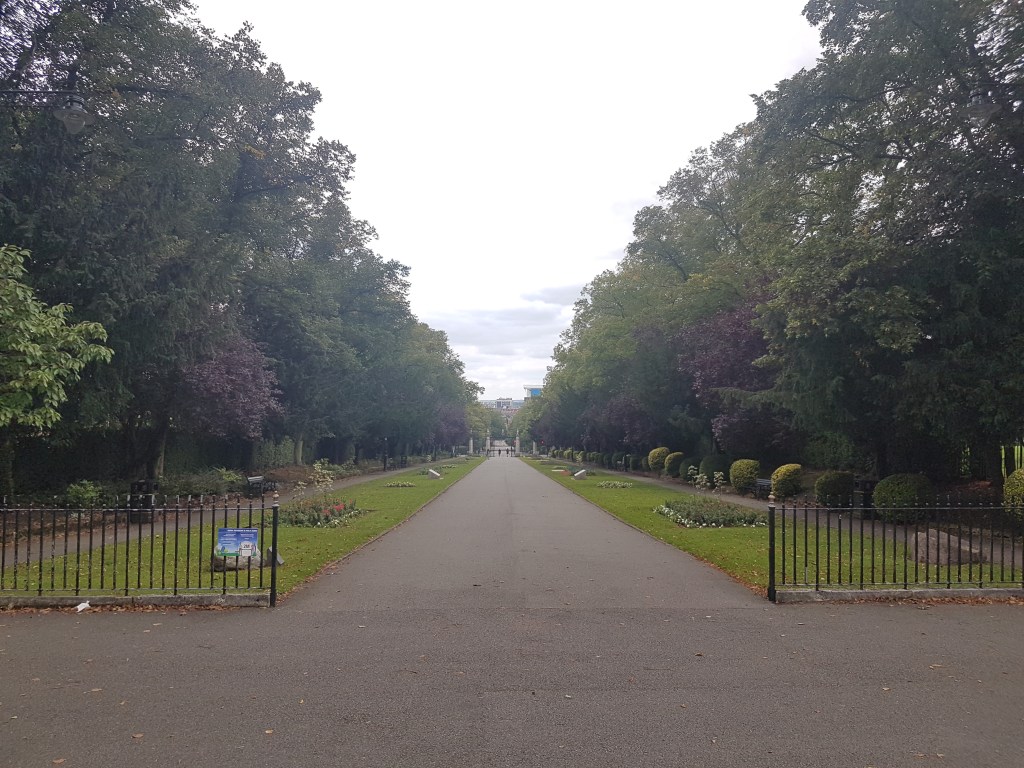
‘Peace walk’ which leads to the Arch of Remembrance in Victoria Park from University Road – where University of Leicester’s main campus is

Read Full Post »

Önemli not (Ocak 2021): Yazıyı yazdığımda uzmanlar aşıların 1.5-2 seneden önce gelmeyeceğini söylüyordu. Fakat 9-10 ay gibi sürede BioNtech (Pfizer), Moderna, AstraZeneca (Oxford), Sinovac (Çin) aşıları gibi efektif aşılar geliştirildi ve milyonlarca doz üretildi. Boyle bir durumda da yapılacak tek şey öncelikle risk grubundakiler, sonra da (ıya alerjisi olanlar ve kemoterapi tedavisi görenler dışında) tüm halkın aşılanması.

Ek (27/02/2021): ‘Pandemide İngiltere ve sağlık sistemi (NHS)’ üzerine söyleşimiz yayınlanmış. 43. dakikadan sonra son bir senede İngiliz Hükümetinin aldığı kararlar ve İngiltere-bazlı bilim insanlarının pandemi sürecine katkıları hakkında konuşuyorum.

Bir Epidemiyolog olduğum için bana da COVID-19’la ilgili çok soru geliyor. Bu blog yazısıyla gözden devamlı kaçırılan birkaç şeyin altını çizmek ve bazı bariz yanlışları* düzeltmek istiyorum:

Herkesin COVID-19 konusunda fikrini beyan etmeden (ya da mantıksız bir soru sormadan) önce aşağıdakileri göz önünde bulundurması lazım. Bunlar artık çoğumuzun bildiği şeyler ama ben yine de tekrar edeyim çünkü hala durumu tam anlamayan insanların sayısı hiç de az değil:

  1. Öncelikle ortada daha önce görülmemiş bir virüs var. Kuluçka süresi iki haftaya kadar çıkabiliyor ve (Çin dışında) diğer ülkeler – özellikle çok turist alan ülkeler – daha farkına varmadan pandemik seviyelere ulaşmış. Yani İngiltere, İtalya, İspanya, Türkiye ya da ABD hükümetlerinin kendi ülkelerindeki salgını engellemesi neredeyse imkansızdı. Ama bu demek değil ki hükümetlerin herhangi bir sorumluluğu yok. (6’ncı bölümde sıraladım bazılarını)
  2. Hastalanmadan atlatmamızı sağlayacak bir aşı ya da hastalanırsak bizi iyileştirecek kanıtlanmış bir tedavi henüz yok. Böyle bir ortamda, özellikle büyük şehirlerde yaşayanların artık şunu anlaması gerekiyor: Bugün değilse yarın, yarın değilse bir sene içinde SARS-CoV-2 çoğumuza bulaşacak (Not: Boris Johnson ve Prince Charles’a bile bulaştı!). 
  3. Bu saatten sonra toplum olarak elimizi yıkayarak, insanlardan uzak durarak, sokağa çıkma yasaklarına riayet ederek toplum bazında sadece yayılma hızını yavaşlatabiliriz – ki hükümetlerin şu anda aldığı her kararın altındaki mantık da bu olmalı. Büyük şehirlerde yayılmasını engellememiz neredeyse imkansız. Bütün ülkeyi karantinaya alıp, hayatı tamamen durdurmanız gerekir ki bunu hiçbir ülke ve toplum uzun süre kaldıramaz. Hayatın minimum seviyede işlemesi için bile kritik işlerde çalışan doktor/hemşireler, bazı çocuk bakıcıları ve öğretmenler, polis, fırıncılar, market çalışanları, çöpçüler, postacılar, sosyal hizmet görevlileri, hatta gazeteciler (liste uzun) sokağa inmek ve çalışmak zorunda.
  4. Maalesef neredeyse her ülke bu salgına hazırlıksız yakalandı. Bu konuda hükümetleri eleştirmeliyiz. Örneğin İngiltere gibi gelişmiş bir ülkede yoğun bakım yatak sayısı OECD averajlarının bile altındaydı. Haklı olarak bu konuda çok eleştirildi
  5. Şimdi ise işin en yanlış anlaşıldığını düşündüğüm konuya gelmek istiyorum: İngiltere’nin başta sunduğu “sürü bağışıklığı” stratejisini birçok bilim insanı dahi yanlış anladı. Yayınlanan raporları İngiliz gazetecilerin ve bilim insanlarının dahi tam okuduğuna inanmıyorum. Bizim medya ise orada yazılanları çevirip yayınlıyor genelde. Bir de İngiltere Hükümetinde kararları Boris Johnson’ın kafasına göre verdiğini sanıyordu birçok insan – hala böyle sananların sayısı az değil. Kendisine ve partisine hiç oy vermedim fakat hakkını vermek lazım bu sürecin en başında İngiltere’nin en iyi üniversitelerinden viroloji, epidemiyoloji, tıp, genetik ve medikal istatistik uzmanlarını topladı ve bu kurulun yayınladığı raporlara göre stratejisini belirledi hep. Bu raporlar diğer ülkeler için de örnek oldu; olmalı

Bilmeyenler için İngiliz Hükümetinin stratejisi başta kısaca şuydu: Madem bu virüs artık durdurulamaz (doğru!) ve çok büyük oranda yaşlılara zarar veriyor (doğru!) – ilginç bir şekilde cocuklara da fazla zarar vermiyor, o zaman yaşlılara biz “evde durun!” diyelim (doğru karar!). Bu süreçte de kontrollü bir sekilde gençlere bulaşsın ve toplum bağışıklığı (herd immunity) oluşsun (o zamanki verilere göre mantıklı – doğru demiyorum – bir karar). Bu sayede “hem halk sağlığı açısından, hem de ekonomik açıdan nispeten az zararla bu işten sıyrılabiliriz” diye düşündüler ki birçok epidemiyoloji uzmanı dahi bu “stratified lockdown” (kısaca, toplumun “yüksek riskte olan” kısmının evde durması) stratejisini mantıklı ve sürdürebilir buldu**. Ben de Türkiye medyası ve Twitter’ında “Ingilizlerin stratejisi ‘ölen ölsün, kalan sağlar bizimdir!’” tarzı yüzlerce (gereksiz ve yanlış ama) popüler tweet/haber görünce – çok tweet atmamaya özen göstermeme rağmen – birkaç kez bunu yazdım.

Her ne kadar bu ilk strateji mantıklı olsa da işler hükümetin ümit ettiği ‘en güzel’ senaryoya göre gitmedi. Örneğin sonradan ortaya çıkan veriler İngiltere’de yaşlılara da beklenenden fazla bulaşmış olduğunu gösterdi – çünkü o zaman bilinen COVID-19 belirtilerine bakılarak yayılmasını engelleme adına “öksürüğü ya da ateşi olanlar evde kalsın” dendi ama semptomsuz ya da çok hafif şekilde atlatan bir sürü insan olduğu ortaya çıktı. Ayrıca KOAH, astım, diyabet, obezite gibi kronik hastalığı olanlar, immün sistemi zayıf olanlar ve ya hipertansiyonu olanlar da “riskli” grubuna dahil edildi – çünkü bu insanlar da nispeten genç olsa dahi hastanelik olmaya başladılar. Bu da hem ‘yüksek riskte olanlar’ grubunun bir anda ~2 kat büyümesi, hem de zaten çok fazla yaşlı ve kronik hastanın tedavi gördüğü hastanelerin dolup-taşması anlamına gelecekti. Yani COVID-19 yüzünden hastanelik olanlar için düzgün bir tedavi süreci geçirse averajda ölme ihtimali belki %1 iken (gençler için çok daha düşük) bu ihtimali %5-10’lara çıkaracaktı. Bu yüzden – bu insanların hayatını gereksiz riske sokmamak için – daha sert politikalar uygulamak zorunda kaldılar. Ayrıca Londra’da ve Birmingham gibi diğer büyük şehirlerde yoğun bakım yatak sayısını çok kısa sürede iki katına çıkardılar. Insanlar gereksiz yere evden çıkmasınlar diye de geniş çaplı ekonomik paketler açıkladılar. Bu konuda dünya standartlarında bir bilim kurulu topladığı, onları dinlediği ve dinamik bir politika izlediği için İngiliz hükümetini – böyle bir pandemiye hazırlıksız yakalanmanın dışında – başarılı buluyorum***. Bunu söylemek bile abes ama “yaşlılardan, kronik hastalığı olanlardan ne kadar öldürsek kardır” deseler hiçbir önlem almaz, ya da alır gibi yaparlardı biterdi.

  • 6. Umarım buraya kadar kendimi anlatabilmişimdir çünkü işin asıl noktasına gelmek istiyorum: Bir aşı geliştirilmesi ~1.5 seneyi bulacak, tedavilerin ise ne zaman geliştirileceği belli değil. Hiçbir ülkenin kendini dış dünyaya 1.5 sene kapatamayacağı aşikar. Bu da aslında her ülke – sağlık sistemini hazır hale getirdikten sonra – kontrollü “toplum bağışıklığı” stratejisini yavaştan denemek zorunda demek. Çünkü bu bağışıklık seviyesine (kızamık için bu seviye ~%95; COVID-19 içinse ~%60) erişilene kadar SARS-CoV-2 hükümetlere problem olmaya devam edecek. İstediğiniz kadar ülkede sokağa çıkma yasağı getirin, gevşetildiği an büyük şehirlerde 2’nci, 3’ncü dalgalar gelecek. Çoğu salgın hastalık (kızamık, çiçek hastalığı, grip) gibi SARS-CoV-2 için de er ya da geç toplum bağışıklığı geliştirmek zorundayız.

Bir daha yazmak istiyorum: Er ya da geç toplum bağışıklığı geliştirmek zorundayız!

Bu bir pandemi; hem de hazırlıksız yakalanılan bir pandemi. Maalesef bu >1 yıllık süreçte insanlar öldü; ölecek. Ama hastanelik olanlar düzgün bir tedavi süreci geçirirse bu sayılar minimumda kalacak (bu ‘minimum’ ülkeden ülkeye degişen bir sayı****). Bizler birey olarak hükümetler sağlık sistemi olsun, açıklanan ekonomik paketler olsun “yapabileceklerini yaptılar mı?” buna bakmamız lazım. Ülkelerin hasta ya da ölüm sayılarını vs. karşılaştırmaktan ziyade örneğin “hastanelik olanlar düzgün bir tedavi süreci geçiriyorlar mı?”, “evden çıkmaması gerekenleri destek için ne yapılıyor?”, “şu anda yapılan PCR-bazlı testler yeterli/güvenilir mi?”, “serolojik***** testlere ne zaman ulaşabileceğiz ve ücreti ne olacak?” gibi soruların cevabını aramalı ve bu konularda hükümetlere baskı kurmalıyız. Bu da toplumun ve özellikle de medyanın hesap sorması ve doğru soruları sormasının önemini gösteriyor.

  • 7. Son olarak şunu da belirtmek istiyorum: SARS-CoV-2 yeni bir virüs olduğu için bu işin direk uzmanı sayılacak insan çok çok az (yok demiyorum!) ama uzmana en yakın sayılabilecekler (Marc Lipsitch, Christian Drosten, Rachel Roper, Michael Farzan gibi) koronavirüs ‘ailesi’ üzerine çalışmış insanlardır. Sonra bulaşıcı hastalıklar üzerine çalışan epidemiyologlardır (infectious disease epidemiology). “Konuşabilecekler” listesinin en sonunda ise belki benim gibi eline bir epidemiyoloji makalesi aldığında okuduğunu anlayanlar gelir (belki bulaşıcı olmayan hastalık epidemiyolojisi, moleküler biyoloji, genetik gibi alanlarda çalışan tecrübeli bilim insanları). Bu listenin dışındakilerin COVID-19’la ilgili yazdıklarının – kendi alanlarıyla ilgili değilse – bir değeri yoktur.

Bu arada amacım kimsenin fikrini değiştirmek değil, sadece fikrini beyan etmeden önce biraz daha araştırma yapmaya ve olayın ne kadar kompleks (sadece halk sağlığı değil, ekonomik, psikolojik, lojistik ve sosyolojik taraflarının da) olduğunu gözden kaçırmama konusunda tavsiyede bulunmaktır.

Okuduğunuz için teşekkürler. Umarım faydalı olmuştur.

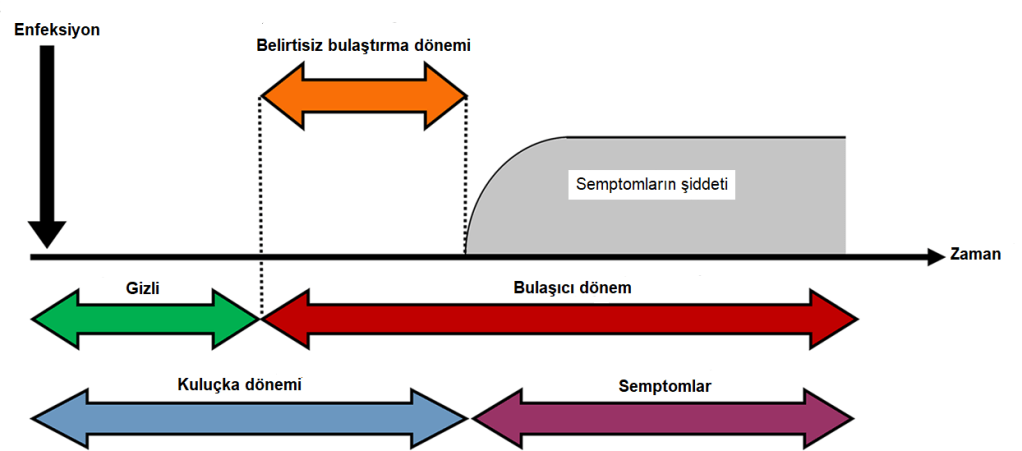
SARS-CoV-2’yi çok ‘sinsi’ yapan özelliklerinden birisi ‘kuluçka’ (Incubation) döneminin uzunluğunun yanı sıra ‘gizli’ (Latent) döneminin de nispeten kısa olması. Bu sayede ‘Belirtisiz bulaştırma’ (Subclinical infectious) dönemi uzuyor ve birçok insan daha semptomları bile başlamadan bulaştırmaya başlıyor. Image adapted from: Arzt et al (2019)

Dipnotlar (önemli!)

*Bu konuda fikrini paylaşan birçok insan SARS-CoV-2 (virüsün ismi) ve COVID-19 (hastalığın ismi) arasındaki farkı bile bilmiyor!

**Çin’in ‘full lockdown’ stratejisini övenler (ben bu gruba katılmıyorum çünkü bu konuda sağlıklı haberler aldığımızı düşünmüyorum – bir başarıdan söz etmek için önce transparan olunmalı. Çin’i öven ama Batılı ülkelerde yaşayan akademisyenlerin de uzmanlıgı ve olaylara onyargısız bakabildiginden şüphe ediyorum), Çin gibi bir ülkede yaşamayı göze alıyorlar mı? Batı toplumlarında herkesin her adımının takip edildiği bir sisteme – kısa süreliğine dahi – sivil toplum izin vermez. Çocugunuzun (kanser, diyabet gibi) kronik bir hastalıgı olsaydı da “Çin gibi ülkeyi tamamen kapatın hemen!” der miydiniz? Çünkü bu işler plansız-projesiz yapıldıgı zaman belki COVID-19’dan ölmeyeceksiniz ama sizin ya da hasta çocugunuzun başka bir hastalıktan ölme ihtimali yükselecek. Çin ve benzeri ülkelerin kullandıgı taktiklerin birey ve toplum için kısa ve uzun vadede (varsa!) faydalarından çok zararı olduğu aşikar ama burada özgürlükçü, liberal “Batı” insanıyla, devletçi, milliyetçi “Doğu” insanı arasında anlaşmazlıklar var. Ülkemizde her iki mentaliteden de insan çok – bu yüzden çatışma da çok.

***Tabi ki şu ana (7 Nisan) kadar – yoksa süreç neyi gösterir bilemem. Özellikle hala doktor ve hemşireler icin maske ve test yetersizliğinden bahsediliyor. Bunların tedariki daha da uzarsa bu konuda fikrim değişecektir.

Ek (20/05/20): Yukarıda söylediklerimin/övgülerimin >%95 arkasında olmakla beraber, artık İngiliz Hükümetini pandemiden sonraki hamlelerinden dolayı genelde başarısız buluyorum. Özellikle halka iletişim ve sağlık personeline güvenilir ve yeterli düzeyde koruyucu malzeme tedariki konusunda sınıfta kaldıklarını düşünüyorum – ki bu iki faktör kritikti.

****Bu da 2020 sonundaki toplam ölüm sayılarıyla 2019’un ölüm sayıları kıyaslandığında anca ortaya çıkacaktır.

*****(Güvenilir) Serolojik testlerle birey olarak “bağışıklık kazanmış mıyız?” bunu öğrenebilir ve normal hayata geri dönüp, mahallemizde bize düşen maddi-manevi işleri yerine getirebiliriz – özellikle evden dışarı çıkmaması gereken yaşlılar, kronik hastalara vs. yardımcı olabiliriz.


Konuyla ilgili ekstra detaylar/Tweetler:

1- Gazete duvaR’dan Nida Dinçtürk’e verdiğim röportaj

2- ‘Herd immunity’nin teorisi ile ilgili kapsamlı (ingilizce) bir makale – okumayan/anlamayan bence bu konuda en azından kesin konuşmasın

3- Röportajlar

4- Muthiş başarılı (ve Türkiye doğumlu) iki bilim insanı

5- SARS-CoV-2: Bir yağ topçuğunun içine saklanmış bir RNA molekülü

6- Istanbul’da haftalık ölum sayıları – her hafta yayınlanacak:

7- Çok karıştırılan 4 farklı terim:

8- 10 Nisan teoriyle pratiğin çatıştığı bir gün oldu Türkiye için: İnsanların kontrolsüz bir şekilde enfekte edilmesi hem variolizasyon (kontrollü enfekte etmek), hem de vaksinasyona (güvenilirliği test edilmiş bir aşı kullanmak) göre çok daha riskli

Read Full Post »

Nida Dinçtürk’ün (i) Ingiltere’nin SARS-CoV-2 (COVID-19’a yol açan virüsün ismi) salgını politikası, (ii) çalıştığım alan olan Genetik Epidemiyoloji ve (iii) akademik kariyerim hakkındaki sorularını kısaca yanıtladım. Habere ulaşmak için tıklayın. (Not: ‘Marbour’, ‘Marburg’ olacaktı – herhalde editlenirken yanlış kaleme alındı. Başlıkdaki ‘Pandemik olmasını’ yerine de ‘SARS-CoV-2 salgınını’ yazmak daha doğru)

Son dönemlerde (Genetik) Epidemiyolog olduğum için onlarca Türkiye-bazlı TV kanalı ve online medya kuruluşundan yayına çıkma teklifi aldım. Fakat (i) Türkiye’yle ilgili benden daha bilgili ve ilgili insanlar olduğu için ve (ii) diyabet, obezite gibi salgın olmayan hastalıkların epidemiyolojisi üzerine çalıştığım için SARS-CoV-2 salgını hakkında söyleyebileceğim en fazla 3-5 şey olabilir. Onları da blogum ve Twitter’dan paylaşıyorum zaten. Aynı şeyleri devamlı söylemeyi de sevmediğimden (ve ünlü olma derdim olmadığından) kanallara çıkmayı reddettim.

Aşağıdaki iki ropörtajı kabul etmemin sebebi ise biri zaten benim başarılarım ve hayat hikayemle ilgili bir ropörtajdı (tabi koronavirusünden de sorular sordular); diğerinde ise Londra’da yaşayan Türk/Kürt’ler arasında çok fazla yanlış anlama ve korku olduğunu söylediler. Ben de görev bilinciyle kabul ettim. Yoksa dediğim gibi işi ehline bırakmayı tercih ediyorum böyle halk sağlığını etkileyebilecek konularda. Yüzbinlerce insanın izleyebileceği kanallara çıkıp potansiyel olarak gereksiz yanlış anlaşılmaya sebep vermek istemedim; istemem.

Roportajları okumak isteyenler için ilgili tweetler/linkler:

Linkten röportaja ulaşabilirsiniz

Podcast:


Ekleme (05/04/20): DAY-MER’e verdiğim röportaj

Read Full Post »


This blog post first appeared on the Leicester Connect webpage (a platform for University of Leicester Alumni) on the 20th March 2020


Out of all the inspirational quotes on the internet, an old Sufi saying is the one that touches me the most:

“There are as many paths to God as there are souls on Earth.”

Although it is mostly used in a religious (mostly Islamic) setting, for me it carries truths that tower above this narrow meaning. It especially reminds me that we all start from different steps of the ladder, face different challenges along the way, and ultimately end up where we are because of the way we respond to those challenges, the doors that are open to us and the people we meet along the way – with the latter two we mostly cannot control.

I was kindly asked if I could write a blog post after being awarded the Future Leader Award at the 2020 Alumni Awards. I am grateful and honoured to have received the award but also acknowledge that there were at least two more people (my fellow finalists) who deserved it as much as me – if not more.

I would like to start by saying – from my experience in life and academia – that there are no objective criteria which separates those “who made it” versus those who just fell short. I got to meet plenty of people and interview panels who I felt judged me using very narrow and subjective criteria and ignored every other quality I had. It’s always nice to get the job or funding you applied for, however I never dwelled on the outcome if I did my preparation right. I would strongly recommend this approach.

Free yourself from the need for appreciation

Many academics suffer from a condition called Impostor Syndrome – simply put, doubting one’s own accomplishments and constantly fearing being exposed as a “fraud”. I can’t say I ever had it because I always thought of myself as successful in my own way and never sought confirmation from anyone. Although striving to improve myself all the time, I was happy with “just trying to do the right things” – irrespective of the outcome.

I base this belief on the fact that the people who judge us do not know the full story about us. Maybe if they did, they would look at us differently. For example, someone who is born to a middle-class English family will not be able to judge how much of a success it is for an immigrant to learn advanced-level English from scratch, get citizenship and compete for the same positions. Someone who has not had any serious health issues will not be able to comprehend what success is for a disabled person. How about a person who has managed to stay away from crime in a neighbourhood full of ignorance, hate and violence? None of these are mentioned in a CV and no one finds these people and offers them an MBE… or a job. However, this doesn’t change the fact that these people are inspirational and successful. I can only wish more people would realise this and stop treating subjective decisions about themselves or others as objective truths.

I feel privileged to be living in the UK which is a relatively meritocratic country and has a higher quality of life index compared to most. However, this also means that the competition is fiercer for “top jobs” and can mean those from underprivileged backgrounds are affected severely. One must realise this early on and respond to the challenge. The good news is that there are plenty of people out there who are willing to help and share their knowledge and experience when approached.

Believe in yourself but get help. Make friends!

I had to overcome many financial, emotional and visa issues during my undergraduate years which undoubtedly affected my performance. When I somehow graduated from the University of Leicester with a 2.1 in BSc Genetics in 2011, I did not listen to the people who thought I would not be able to make the cut in academia and started applying for PhDs. Before applying, I read all the blogs and papers that were out there about “selling yourself well” and making your CV stand out. I always did my research before taking an important step. Thankfully, I must have been at the right place at the right time as I was very fortunate to be offered a fully-funded studentship at the University of Bristol – I remember even my interview not going that well. The scholarship freed me from the shackles of financial distress as I was embarking on an academic career.

Again, doing my thorough background reading, I quickly realised that the field of Genetic Epidemiology – the field I now found myself in – required a solid foundation in medical statistics, epidemiology, bioinformatics, and programming as well as human genetics. I realised and accepted my limited expertise in these fields and got to work. I got all the help and knowledge I need from my supervisors, friends, online courses, blogs and research papers. I made sure I spent at least 2-3 hours a day on improving myself on top of working on my specific PhD project. Not keeping to myself, I was also supportive and sincere with my “PhD friends” who were on the same boat as me. I’m still close with many of my supervisors/teachers and friends. I couldn’t have achieved what I’ve achieved without their help.

Ultimate success: happiness and self-respect

In this fast-paced world, especially in academia, we continually forget that family and friends are worth more than any academic success. Although my academic papers are important to me – and I can only hope they’ll be useful to someone, somewhere, somehow – I do not spend much time thinking about my papers or PhD thesis. But I’m always longing to spend more time with my family and friends and the fact that I have them is the success of my life.

I want to finish by saying that I was very fortunate to get to where I am and achieve many milestones in the process, but it could have all turned out very differently, very easily. Yes, I tried to do the right things, but many things were out of my control. But as long as I had my friends and family, I’d like to think I would have been happy wherever I ended up.

I wrote all of these to convince you of one thing: do not let others – even senior people – define what success is for you as they do not know you and how you got to where you are. Just keep doing the rights things and, with the help and support of your loved ones, you’ll eventually get through everything in life.

Feel free to contact me!

I blog – in English and Turkish – about my research and other academia and culture-related things…

E.g. a post that may be of interest: An Academic Career in the UK

Download

If you’d like to download the blog post as it appeared on the Leicester Connect website, click the ‘Download’ button below:

Read Full Post »

This is a post inspired by a question I saw online: Which single public health intervention would be most effective in the UK?

I would like to share my own views on the question although don’t expect anything comprehensive as I don’t have much experience about how an idea can be taken further to impact policy and public health practice.

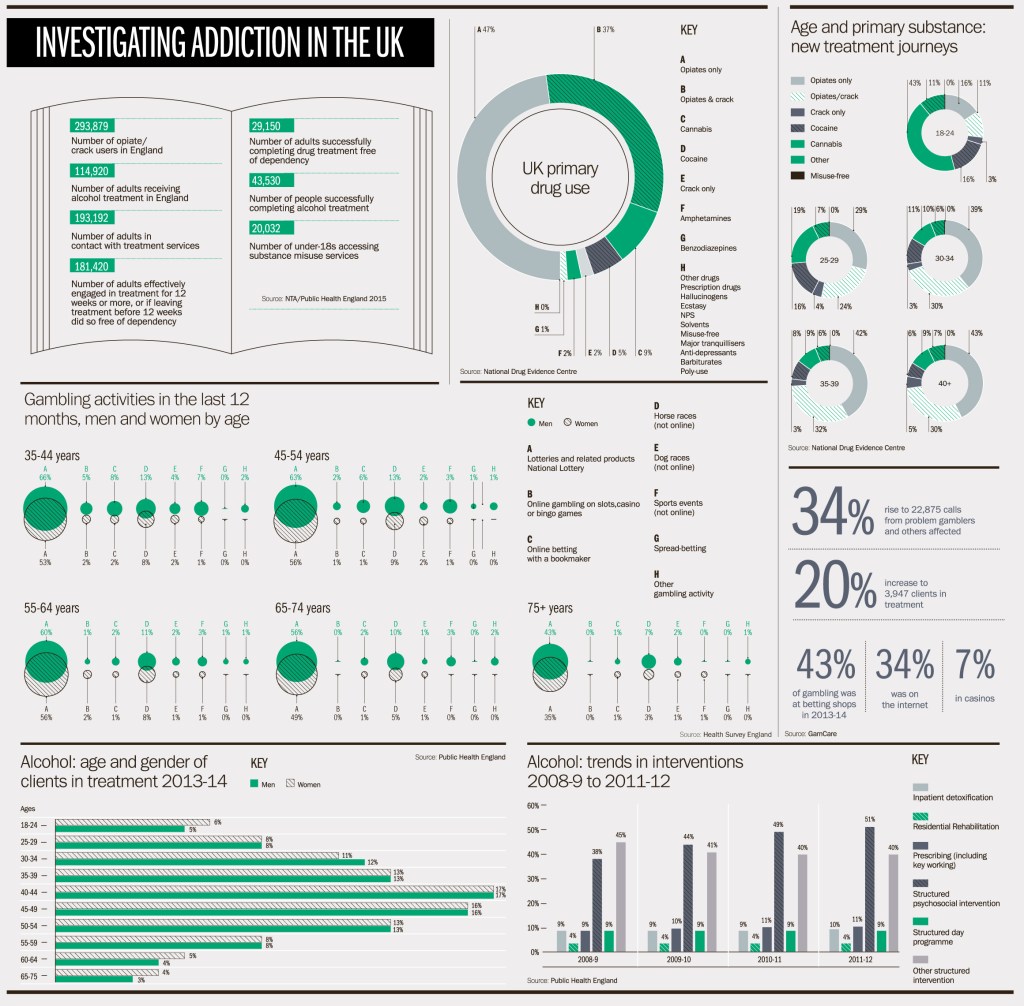
‘Investigating addiction in the UK’ study. Source URL: http://www.raconteur.net

Something must be done – and fast!

Legend has it that a great chess player travelled to Manhattan to take part in a World Chess tournament. Looking around Central Park, he saw that a crowd had gathered around a street chess player who was offering money to those who could beat him. He decided to give it a go – and after a gruelling match, they shaked hands on a draw. This dented his confidence and ultimately caused him to return to his homeland without taking part in the tournament.

Little did he know that the street chess player was a grand master who wanted to pass time before taking part in the same the tournament.

What has this got to do with a public health intervention? I will come back to it…

From my observations over the last 7-8 years as a scientist studying different common diseases such as diabetes – to which £1 of every £10 of the NHS’s budget is spent on, obesity – which is the major risk factor for heart attacks, and chronic obstructive pulmonary disease (COPD) – currently the third leading killer in the world, it is clear that cheap and effective treatments for these diseases are a long way away. This is not to say that there is no progress as there is tremendous research being carried out on (i) understanding the molecular causes of (e.g. genes, proteins that cause) these diseases and (ii) developing new therapies. The continuous economical costs of treating patients with current state-of-the-art therapies is reaching infeasible levels with a significant proportion being wasted on patients who do not adhere to their prescriptions properly1 and ‘top selling’ drugs being so inefficient that up to 25 patients need to be treated in order to prevent one adverse event such as a heart attack2. These diseases drain the NHS’s budget, cost the lives and healthy years of hundreds of thousands of people and causes emotional distress to the patients and their loved ones. If something is not done now – and quick – latter generations may not have an NHS that is ‘free and accessible to all’ to rely on as the system is already showing signs of failure in many parts of the country3,4 – although costing around 1 in 5 of the government’s annual budget.

Parents need help!

What is also striking about these diseases is that up to 9 in 10 cases are thought to be preventable. Thus, concentrating on prevention rather than ‘cure’ makes most sense as the only economically feasible solution lies here. No single public health intervention is going to solve all the problems that the UK health system faces currently but one thing that has always stared me in the face was how clueless and/or irresponsible most parents are, regardless of which socio-economic stratum they belong to – writing this sentence as I read an article on a teenager who died from obesity after his mother continually brought takeaway to his hospital bed5. The consequence is children living through many traumatic experiences, picking up bad habits and developing health problems due to a combination of ignorance, lack of guidance and toxic environments.

A wise man was once asked: “How do we educate our children?” and he is said to have replied “Educate yourself as they will imitate you”. As a new father, I got to observe first-hand that my child is virtually learning everything in life from myself and my wife. Thinking back, my parents never smoked, did not allow any visitors to smoke in the house, and kept me away from friends who smoked. Their actions were the main factor for myself and my three siblings to never start smoking – although there was pressure from my school friends. Research suggests that this is true across the general population, that is, if parents do not smoke, their children are more likely to become adults who will not either6; if parents prepare healthy food, their children will do too; if parents do not drink or drink moderately, the children will do too; if parents are educated, their children will be too7; and the list goes on… As the only economically feasible hope seems to be prevention, there is no better place to start than educating parents.

Since starting as a researcher at my current institute, I have been to a dozen or so ‘induction courses’, taking lessons on a variety of subjects from ‘equality and diversity’ to ‘fire safety’ to ’unconscious biases’. Although most seemed a bit of a time waster at first, after enrolling to them, I soon accepted that these were important as I did not know how crucial they were in certain situations – situations that are more common than one would think. I would not have attended them if they were not mandatory.

However, arguably, none of these skills that I picked up in these induction courses are as important as being a good parent and helping my children achieve their potential physically, intellectually, psychologically, emotionally and socially. I think it is irresponsible that there exists no mandatory training before people become parents. We as parents are expected to be not just people who keep our children alive by providing for them, but we are also expected to be good dieticians, sleep coaches, pedagogues, psychiatrists, life coaches, friends… Unsurprisingly, many parents are failing horribly as we are not equipped with a solid foundation to guide them properly. The result is: one-third of the population is obese, one-fourth drink above advised thresholds, one-fourth of students report to have taken drugs, one-fifth smoke (noting that vaping is not included in this figure), one-fifth show symptoms of anxiety or depression and up to one-tenth may be game addicts.

To help parents in this long and extremely difficult journey of parenthood, I propose mandatory courses tailored for first-time parents – with exemptions & alternatives available. The specific syllabus and the length of the course should be shaped by pedagogy, public health, psychology, sociology, and epidemiology experts but also by the parents themselves.

In this course parents can:

  1. Be persuaded about the importance of such a course – just as I learned that spending time learning about fire safety was not a bad idea
  2. Be provided with links on where to easily find reliable information (e.g. NHS website)
  3. Learn about the mental and physical health aspects of smoking, drinking alcohol, exercising, eating high sugar content food, pollution, watching TV, reading books, cooking healthy food, mould, asthma triggers, excessive use of social media etc.
  4. Feedback any problems they have to a central panel and make suggestions as to how the course could be improved
  5. Hear about local activities (e.g. ‘Stop smoking’ events, English courses, even events such as Yoga classes)
  6. Receive information about who they can contact if they themselves have addiction problems (e.g. smoking, alcohol, drugs, gambling)
  7. Learn about what to look out for in their children (e.g. any obvious signs of physical and mental diseases, bullying)
  8. Be encouraged to support their children achieve their potential – no matter what background they come from
  9. Be encouraged to offer help in local as well as national problems such as the organ donor shortage, climate change (recycling, carbon emissions), air pollution etc.
  10. Be reminded of the responsibility to provide future generations a sustainable world
  11. Be taught about the relevant laws (e.g. child seat, domestic abuse, cannot leave at home on their own).

I believe if the course is designed with the help of experts but also by parents, the course can be engaging and lead to more knowledgeable parents. This is turn will lead to positive changes in behaviour and a significant drop in the incidence of unhealthy diets/lifestyles, (at least heavy) smoking, substance use and binge drinking – major causes of the abovementioned common diseases. I think to ensure that parents engage and take part in the process, an exam should be administered where individuals who fail should re-take the exam. Parents who contribute to the process with feedback and suggestions can be rewarded with minor presents or a simple ‘thank you’ card from the government itself – a gesture that is bound to make parents feel part of a bigger process. Parents who are engaged in this process will also be encouraged to engage with their children’s education and help their teachers when they start going to school. Parental participation in turn, will positively affect academic achievement and the healthy development of children – a phenomenon shown by many studies8,9. Incentives such as additional child tax credit/benefit and/or paid parental leave for both parents should be considered to increase true participation rates.

These courses can then be accompanied by a number of optional courses where NGOs and volunteers from the local community can offer advice on matters such as ‘how to quit smoking?’, ‘how to find jobs?’, online parenting, English language courses (for non-speakers), and engaging children with local sports teams. I would certainly volunteer to give a session on the genetic causes of diabetes and obesity – and I know there are plenty of academics and professionals (e.g. experienced teachers, solicitors) out there whom would happily offer free advice to those who are interested. There are NGOs providing information on almost all diseases and health-related skills (e.g. CPR, first-aid) and this course would offer a more targeted and cost-efficient platform for them to disseminate their brochures and information on their upcoming events.

Many upper-middle to upper class parents regularly attend similar courses and events – and making this available to every parent would represent another way to close ‘the gap’10. Old problems persist but new ones are added on top such as online gaming, e-cigarettes, FOMO and betting addiction – and the courses can evolve with the times. A government which successfully implements such a course can leave a great legacy as social interventions have long lasting impact and even affect other countries.

One could argue that a course like this should be offered to every citizen at few key stages in their lives (e.g. first parenthood, before first child reaches puberty) – and that would be the ultimate aim. But as this option may initially be very costly and hard to organise and focusing on parents ensures that not only the parents are educated but consequently the children are too – making the process more cost efficient. The first courses could be trialled in certain regions of the country before going nation-wide.

We are all in the same boat – whether we realise or not

I would like to diverge a little to mention the potential sociological benefits of the proposed course: Tolstoy, in Anna Karenina wrote “Happy families are all alike; every unhappy family is unhappy in their own way” – also an increasingly used aphorism in public health circles. However, I observe and believe that many of us are unhappy due to similar reasons: we all want to be listened to, understood and feel like we are being cared about. I believe the proposed course accompanied with an honest feedback system would be a great start in getting the ‘neglected masses’ involved in national issues.

I would like to finish by returning to the little story at the start. I believe that many parents, especially those from poorer backgrounds, give up trying for their children early on as they do not think that they or their children can compete against other ‘well-off’ individuals and therefore see no future for themselves. Their children and grandchildren also end up in this vicious cycle. But if they get to see first-hand in the proposed course that we all – rich and poor – start from not too dissimilar levels as parents and have the same anxieties about our children can also motivate us all to push a little bit extra and hopefully close the massive gaps that exist between the different socio-economic strata in the UK11 – and ultimately decrease the prevalence of the diseases that are crippling the NHS.

Further reading

  1. Shork, N. 2015. Personalized medicine: Time for one-person trials. Nature. 520(7549)
  2. Bluett et al., 2015. Impact of inadequate adherence on response to subcutaneously administered anti-tumour necrosis factor drugs: results from the Biologics in Rheumatoid Arthritis Genetics and Genomics Study Syndicate cohort. Rheumatology. 54(3):494-9
  3. NHS failure is inevitable – and it will shock those responsible into action. The Guardian. URL: https://www.theguardian.com/commentisfree/2018/apr/06/nhs-failure-health-service. Accessed on 30th October 2019
  4. The first step towards fixing the UK’s health care system is admitting it’s broken. Quartz. https://qz.com/1201096/by-deifying-the-nhs-the-uk-will-never-fix-its-broken-health-care-system/. Accessed on 30th October 2019
  5. Teenager Dies from Obesity After Mother Brought Takeaways to His Hospital Bed – Extra.ie. URL: https://extra.ie/2019/09/12/news/extraordinary/child-dies-obesity-mum-hospital. Accessed on 27th October 2019
  6. Mike Vuolo and Jeremy Staff. 2013. Parent and Child Cigarette Use: A Longitudinal, Multigenerational Study. Pediatrics. 132(3): 568–577
  7. Sutherland et al. 2008. Like Parent, Like Child. Child Food and Beverage Choices During Role Playing. Arch Pediatr Adolesc Med. 162(11): 1063–1069
  8. Sevcan Hakyemez-Paul, Paivi Pihlaja & Heikki Silvennoinen. 2018. Parental involvement in Finnish day care – what do early childhood educators say? European Early Childhood Education Research Journal, 26:2, 258-273
  9. Jennifer Christofferson & Bradford Strand. 2016. Mandatory Parent Education Programs Can Create Positive Youth Sport Experiences. A Journal for Physical and Sport Educators. 29:6, 8-12
  10. How Obesity Relates to Socioeconomic Status. Population Reference Bureau. URL: https://www.prb.org/obesity-socioeconomic-status/. Accessed: 18/12/19
  11. Nancy E. Adler, Katherine Newman. 2002. Socioeconomic Disparities In Health: Pathways And Policies. Health Affairs. 21:2, 60-76

Read Full Post »

It is not the strongest of the species that survives, nor the most intelligent that survives. It is the one that is most adaptable to change – attributed to Charles Darwin

“How did you get accepted to Cambridge?”

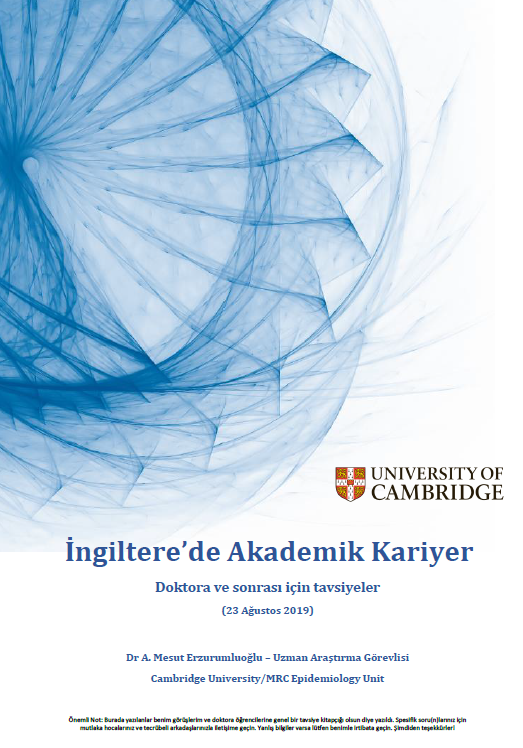
I saw a tweet a while ago which said something along the lines of: “If you’ve been asked the same question three times, you need to write a blog post about it”. I get asked about how I got my current postdoc job at the University of Cambridge all the time. Therefore, I decided to write this document to provide a bit of a backstory as I did many things over the years which – with a bit of luck – contributed to this ‘achievement’.

It is a long document but hopefully it will be worth reading in full for all foreign PhD students, new Postdocs and undergraduates who want an introduction to the world of academia in the UK. I wish I could write it in other languages (for a Turkish version click here) to make it as easy as I can for you, but I strived to use as less jargon as possible. Although there is some UK-specific information in there, the document is mostly filled with general guidance that will be applicable to not just foreign students or those who want to study in the UK, but all PhD students and new Postdocs.

I can only hope that there are no errors and every section is complete and fully understandable but please do contact me for clarifications, suggestions and/or criticism. I thank you in advance!

To make a connection between academia in the UK and the quote attributed to Darwin above, I would say being very clever/intelligent is definitely an advantage in academia but it is not the be-all and end-all. Learning to adapt with the changing landscape (e.g. sought-after skills, priorities of funders and PIs), keeping a good relationship with your colleagues and supervisors, and being able to sell yourself is as, if not more important. Those who pay attention to this side of academia usually make things easier for themselves.

I hope the below document helps you reach the places you want to reach:

Good luck in your career!


I included this tweet here because Ed was one of my lecturers when I was a first year undergraduate student at the University of Leicester (2007)
I was kindly asked to send in a short video for the 2022 Univ. of Leicester Annual Alumni Dinner

Read Full Post »

Many of today’s scientists (incl. myself a lot of the time) have probably lost touch with some of the central tenets of being a scientist – instead titles, number of published papers and grant money brought in becoming more important than the societal impact of their publications and how much they contributed to human knowledge. A shoddy paper published in Nature/Science/Cell (especially if cited/talked about a lot) carries far more weight than a solid paper in a less glamorous journal. An academic who brings in grant money – doesn’t matter if he/she wastes it on shoddy or average research – is far more important (i.e. they will be promoted and bring in further funding easier as they already brought in some before) than one who chooses to concentrate on producing solid research but struggles to bring in money e.g. due to a lack of funding in their specific field or publishing papers in non-glamorous journals due to ‘non-exciting’ results as they didn’t add a spin to their conclusions (click here for other examples). Some of the papers published in prestigious journals in my field would not have been accepted if the senior authors of the same papers were the reviewers – many seem to apply a less stringent criteria to their own papers. The relationship between editors and some senior scientists is also opaque which is ultimately damaging to science. Image source: naturalphilosophy.org

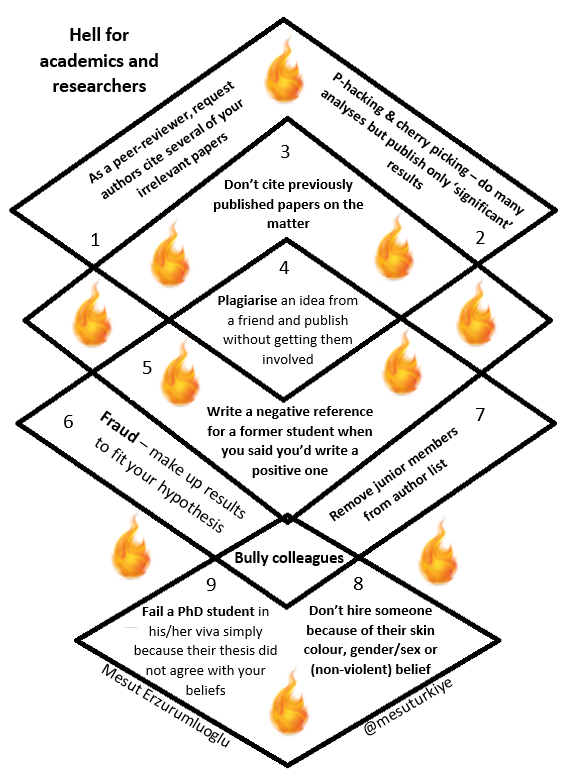
Hell for academics and researchers (NB: The list is loosely ordered and is not an exhaustive one). Of course, inspired by Dante’s Nine levels/layers/circles of Hell

A few months ago, I spent almost a week trying to replicate a published “causal” association which had received >500 citations in the last 5 years. My aim was to provide a better effect estimate and to do this, I used two different datasets, one with similar and another with a larger sample size. However, both of my analyses returned null results (i.e. no effect of exposure on outcome). Positive controls were carried out to make sure the analysis pipeline was working correctly. Ultimately, I moved on to other ‘more interesting’ projects as there was no point spending time writing a paper that was probably going to end up in a ‘not-so-prestigious’ journal and never going to get >500 citations or be weighted heavily when I apply for grants/fellowships.

Consequently, inadvertently I contributed to publication bias on this issue – and no other analyses on the subject matter were published since the original publication, so I am sure others have found similar results and chose not to publish.

State of academia (very generally speaking): Really talented and successful people working like slaves for unimportant academic titles and average salaries. What’s worse is that the job market is so fierce that most are perfectly happy(!) to just get on with their ‘jobs and do what they’ve always been doing (Note: this is my first attempt at drawing using Paint 🙂 )

However, I have changed my mind about publishing null/negative results after encountering Russell, Wittgenstein and others’ long debates on proving ‘negative’ truths/facts (and in a nutshell, how hard it is to prove negatives – which should make it especially important to publish conclusive null findings). These giants of philosophy thought it was an important issue and spent years structuring their ideas but here I am, not seeing my conclusive null results worthy of publication. I (and the others who found similar results) should have at least published a preprint to right a wrong – and this sentiment doesn’t just apply to the scientific literature. I also think academics should spend some time on social media to issue corrections to common misconceptions in the general public.

This also got me thinking about my university education: I was not taught any philosophy other than bioethics during my undergraduate course in biological sciences (specialising in Genetics in the final year). I am now more convinced than ever that ‘relevant’ philosophy (e.g. importance of publishing all results, taking a step back and revisiting what ‘knowledge’ is and how to attain ‘truth’, how to construct an argument1, critical thinking/logical fallacies, what is an academic’s intellectual responsibility?) should be embedded and mandatory in all ‘natural science’ courses. This way, I believe future scientists and journal editors would appreciate the importance of publishing negative/null results more and allow well-done experiments to be published in ‘prestigious’ journals more. This way, hopefully, less published research findings are going to be false2.

References/Further reading:

  1. Think Again I: How to Understand Arguments (Coursera MOOC)
  2. Ioannidis JPA. Why Most Published Research Findings Are False. PLoS Med. 2(8): e124 (2015)
  3. How Life Sciences Actually Work: Findings of a Year-Long Investigation (Blog post)
  4. An interesting Quora discussion: Why do some intelligent people lose all interest in academia?
  5. Calculating the ‘worth’ of an academic (Blog post)
A gross generalisation but unfortunately there is some truth behind this table – and it’s not even a comprehensive list (e.g. gatekeepers, cherry picking of results). Incentives need to change asap – and more idealists are needed in academic circles!

*the title comes from the fact that today’s natural scientists would have been called ‘natural philosophers’ back in the day

Read Full Post »

Ne en güçlü, ne de en zeki olanlar hayatta kalır… Hayatta kalanlar değişime en çok adapte olabilenlerdir.” – Charles Darwin’in söylediği iddia edilir


Cambridge Üniversitesi’ne nasıl kabul aldın?

Twitter’da gördüm sanırım: “Aynı soru sana üç defa sorulduysa bir blog yazısı yazma vakti gelmiştir”e benzer bir cümleydi. Ben de “Cambridge Üniversitesi’ne nasıl kabul aldın?” ve benzeri sorularla pek çok defa karşılaştıktan sonra birşeyler karalamaya karar verdim. Leicester Üniversitesi’nde çalışırken bunun onda biri dahi sorulmamıştı 😉

Doktora öğrencilerine, doktorayı yeni bitirenlere ve akademik kariyer düşünen gençlere yönelik uzun bir doküman hazırladım. Az da olsa ingilizce terimler kullandım ama merak eden herkes okuyabilsin diye elimden geldikçe azaltmaya çalıştım (Not: iyi derecede ingilizce bilmeyenlerin iyi üniversitelere girmesi, hasbel-kader girdiyse de oralarda tutunması zor).

Okuyacağınız herşey benim şahsi düşüncelerim ve hiçbirine katılmak zorunda değilsiniz. Eminim yazdıklarımda hatalar ve eksikler olacaktır; bunları da bana bildirirseniz dökümanı hep beraber geliştirmiş oluruz. Katkıda bulunanlara da bir şekilde değineceğim. Şimdiden teşekkürler!

Darwin’e atfedilen yukarıda paylaştığım hakikat dolu sözle bir bağlantı kuracak olursam, evet, bir akademisyen için çok akıllı/zeki olmak bir avantajdır. Ama oyunun kurallarını (örneğin ‘arkadaşlarım/hocalarımla aramı nasıl iyi tutarım?‘, ‘iyi makale nasıl yazılır?‘, ‘nasıl fon getiririm?‘i) öğrenmek ve onlara göre adapte olmak da en az o kadar önemli – özellikle akademide oldugu gibi ‘oyun’un kuralları devamlı degişiyorsa… İşin bu kısımlarına da vakit harcayın.

Aşağıdaki dökümanda “Doktora sürecinde nelere dikkat etmeliyim?”, İngiltere’de akademik kariyer opsiyonları, “CV ve ‘Personal statement’ nasıl hazırlanır?“, ‘mülakat anı, öncesi ve sonrası neler yapmalıyım?‘, tez yazarken dikkat edilecekler, makale yazarken dikkat edilecekler ve prosedür, “Hocanızla ilişkiniz nasıl olmalı?” gibi konularda bilgiler ve tavsiyelerim bulunuyor. Umarım yardımcı olur. İlgileneceğini düşündüğünüz arkadaşlarınıza da yollarsanız sevinirim.

Ek olarak ilgili video ve tweetler:

Manisa Celal Bayar Üniversitesi Biyomühendislik ve Elektronik Mühendisliği lisans öğrencilerine sunum (13 Mayıs 2020)
Brit-Iş TV’den Ergin Balabeyoğlu’na verdiğim kısa roportaj
Rafşan Çelik’le Cambridge Üniversitesinde Akademisyen Olmak ve İngiltere’de Yaşam, Kültür ve Akademik Hayat uzerine (Instagram üzerinden*) söyleşi yaptık (3:38’de başlıyor).


Ingiltere’de üniversiteler – genel kurallara uyma dışında – devletten bağımsızdır. Örneğin hepsi kendi fonunu kendi bulur, yani büyük bir şirket gibi işlerler. Fakat en büyük fon 7 senede bir devletten gelir – üniversitelerin başarı seviyesine göre. Bu da onunla ilgili bir Tweet zinciri
Kıymetli Prof. Hikmet Geçkil Hocamın da bu dokümanı tavsiye ettiğini gördüm ve mutlu oldum. Umarım faydalı olmuştur

Read Full Post »

smoking_genetics_gwas_mesut_erzurumluoglu
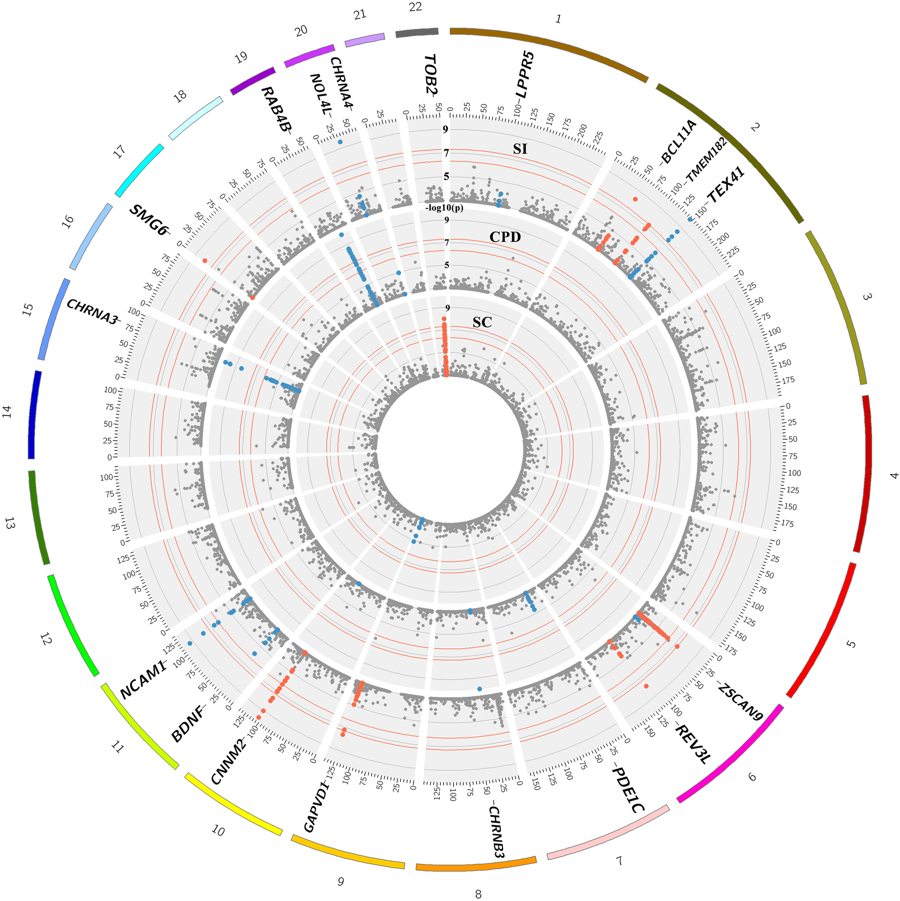
A ‘Circos’ plot (with three concentric circular ‘Manhattan’ plots) presenting results from our latest genetic association study of smoking behaviour – showing some (not all) regions in our genome that are associated with smoking behaviour (Erzurumluoglu, Liu, Jackson et al, 2019). SI: Smoking initiation – whether they smoke or not; CPD: Cigarettes per day – how many cigarettes do they smoke per day; SC: Smoking cessation – whether they’ve stopped smoking after starting. Labels in the outer circle show the name of the nearest gene to the identified variants. X-axis: Genomic positions of the variants in the human genome (chromosome numbers, 1-22, in the outer circle), Y-axis: Statistical significance of the genetic variants in this study – higher the peak, greater the significance. Red peaks are the newly identified regions in the genome, and the blue ones were identified by previous groups. Image source: Molecular Psychiatry

I believe that all scientists should be bloggers and that they should spare some thought and time to explain their research to interested non-scientists without using technical jargon. This is going to be my attempt at one; hopefully it’ll be a nice and short read.

We’ve just published a paper in one of the top molecular psychiatry journals (well, named Molecular Psychiatry 🙂 ) where we tried to identify genetic variants that (directly or indirectly) affect (i) whether a person starts smoking or not, and once initiated, (ii) whether they smoke more. The paper is titled: Meta-analysis of up to 622,409 individuals identifies 40 novel smoking behaviour associated genetic loci. It is ‘open access’ so anyone with access to the internet can read the paper without paying a single penny.

If you can understand the paper, great! If not, I will now try my best to explain some of the key points of the paper:

Why is it important?

Smoking causes all sorts of diseases, including respiratory diseases such as chronic obstructive pulmonary disease (which causes 1 in 20 of all deaths globally; more stats here) and lung cancer – which causes ~1 in 5 of all cancer deaths (more stats here). Therefore understanding what causes individuals to smoke is very important. A deeper understanding can help us develop therapies/interventions that help smokers to stop and have a massive impact on reducing the financial, health and emotional burden of smoking-related diseases.

Genes and Smoking? What!?

There are currently around fifty genetic variants that are identified to be associated with various smoking behaviours and we identified 40 of them in our latest study, including two on the X-chromosome which is potentially very interesting. There are probably hundreds more to be found*. So, it’s hard to comprehend but yes, our genes – given the environment – can affect whether we start smoking or not, and whether we’ll smoke heavier or not. This is not to say our genes determine whether we smoke or not so that we can’t do anything about it.

There are three main take-home messages:

1- I have to start by re-iterating the “given the environment” comment above. If there was no such thing as cigarettes or tobacco in the world, there would be no smoking. If none of our friends or family members smoked, we’re probably not going to smoke no matter what genetic variants we inherit. So the ‘environment’ you’re brought up in is by far the most important reason why you may start smoking.

2- I have to also underline the term “associated“. What we’re identifying are correlations so we don’t know whether these genetic variants are directly or indirectly affecting the smoking behaviour of individuals – bearing in mind that some might be statistical artefacts. Some of the genetic variants are more apparently related to smoking than others though: for example, variants in genes coding for nicotine receptors cause them to function less efficiently so more nicotine is needed to induce ‘that happy feeling‘ that smokers get. Other variants can directly or indirectly affect the educational attainment of an individual, which in turn can affect whether someone smokes or not. I’d highly recommend reading the ‘FAQ’ by the Social Science Genetic Association Consortium (link below) which fantastically explains the caveats that comes with these types of genetic association studies.

3- Last but not least, there are many (I mean many!) non-smokers who have these genetic variants. I haven’t got any data on this but I’m almost 100% sure that all of us have at least one of these variants – but a large majority of people in the world (~80%) don’t smoke.

Closing remarks

To identify these genetic variants, we had to analyse the genetic data of over 620k people. To then identify which genes and biological pathways these variants may be affecting, we queried many genetic, biochemical and protein databases. We’ve been working on this study for over 2 years.

Finally, this study would not be possible (i) without the participants of over 60 studies, especially of UK Biobank – who’ve contributed ~400k of the total 622k, and (ii) without a huge scientific collaboration. The study was led by groups located at the University of Leicester, University of Cambridge, University of Minnesota and Penn State University – with contribution by researchers from >100 different institutions.

It will be interesting to see what, if any, impact these findings will have. We hope that there will be at least one gene within our paper that turns out to be a target for an effective smoking cessation drug.

Further reading

1- FAQs about “Gene discovery and polygenic prediction from a 1.1-million-person GWAS of educational attainment” – a must read in my opinion

2- Smoking ‘is down to your genes’ – a useful commentary on the NHS website on an older study

3- 9 reasons why many people started smoking in the past – a nice read

4- Genetics and Smoking – an academic paper, so quite technical

5- Causal Diagrams: Draw Your Assumptions Before Your Conclusions – a fantastic course on ‘Cause and Effect’ by Prof. Miguel Hernan at Harvard University

6- Searching for “Breathtaking” genes – my earlier blog post on genetic association studies

Data access

The full results can be downloaded from here

*in fact we know that there is another paper in press that has identified a lot more associations than we have

Read Full Post »

Download a PDF version of the blog post from here:


After performing a genome-wide association study (GWAS), we’d then ideally want to link the identified associations/SNPs to (druggable) genes and biological pathways. Unearthing novel biology can inform drug target (in)validation but also lead to higher-impact publications (see ‘selected publications’ below). The latter point is especially important for early-career researchers who will be applying for fellowships and/or lectureships soon 🙂

Happy to help out with any of the below.

A slide from my Journal club on the October 2017 GTEx paper: Identifying the causal variants and genes, and the relevant tissues and pathways is the ultimate aim of GWASs. If the causal gene(s) turns out to be ‘druggable’, it can lead to pharmaceutical companies to develop treatments for the disease of interest. See My Research page to download the full slides.

Methods and Software

The below are some of the Post-GWAS ‘SNP follow-up’ steps/software that I have been taking/using for the last 2-3 years:

1- Finemapping the identified signals:

This step refines each signal to a set of variants that are 99% likely to contain the underlying causal variant – assuming the causal variant has been analysed

• Wakefield method [1] – Output: 99% credible set (Tutorial and R code available here: Wakefield_method_finemapping)

2- Query eQTL databases:

Rather than just assume that the gene nearest to the sentinel SNP is the causal gene, we can bring in other lines of evidence such as eQTL and pQTL analyses to check whether the SNP(s) is associated with the expression of a gene.

• GTEx v7 dataset (n up to 492; RNASeq) [2] – publicly available at [3] (see My Research page to download my Journal club slides on GTEx v6 paper)

• NESDA-NTR Blood eQTL dataset (n=4,896; microarray) [4] – publicly available at [5]

• Lung eQTL dataset (n=1,111; microarray) [6] – need to request lookups from Dr. Ma’en Obeidat

• BIOS (Biobank-Based Integrative Omics Study) Blood eQTL dataset (n=2,116; RNAseq) [7] – publicly available at [8]

• Westra et al Blood eQTL dataset (n=5,311 with replication in 2,775; microarray) [9] – publicly available at [10]

• There are other tissue/organ specific databases such as BRAINEAC (n=134) and Brain xQTL (n=up to 494)

3- eQTL-GWAS signal colocalisation:

• eCAVIAR [11] by Hormozdiari et al, 2016 [12] – Click for Powerpoint presentation (ecaviar_colocalisation_mesut_04_07_18) and methods (ecaviar methods_v3)

• It also helps to plot the Z-scores of the eQTL (separate plots for each gene near the signal) and GWAS SNPs on the same plot – maybe with the SNPs in the 99% credible set mark differently to other SNPs near the sentinel SNP. Of course, choosing the relevant tissue(s) is crucial!

4- Query pQTL databases:

• Sun et al, 2018 dataset [13] – need to request lookups from the authors (maybe Dr. Adam Butterworth)

5- Variant effect prediction:

Checking whether our sentinel SNP is in LD with a coding variant that is predicted to be functional provides another line of evidence for a putatively causal gene.

• DeepSEA – for noncoding SNPs [14] (see My Research page to download my Journal club slides on DeepSEA)

• SIFT, PolyPhen-2, and FATHMM via Ensembl VEP – for coding SNPs [15]

6- Enrichment of associations at DNase hypersensitivity sites:

Using your GWAS results to identify chromatin features relevant to your trait of interest can yield important information on the genetic aetiology of that trait (e.g. DNase hypersensitivity site enrichment in fetal lung would mean that developmental pathways in the lung are playing an important role)

• GARFIELD [16]

• FORGE [17] – very easy to use but superseded by GARFIELD

7- Pathway enrichment analysis:

• ConsensusPathDB [18] – as it queries more biological pathway and gene ontology databases than the alternatives. You can input all the genes that are implicated by eQTL/pQTL databases and variant effect prediction (e.g. genes that harbour a coding variant in the 99% credible set). Good idea to remove genes in the MHC region (e.g. HLA genes) to identify pathways other than the immune system-related ones. Methods can be found here: ConsensusPathDB_methods

• You can also do an additional check to see if the ‘significant’ pathways (e.g. FDR<5%) are mainly due to the implicated genes – as identified by eQTL/pQTL and variant effect prediction (list 1) – or the regions identified by GWAS itself: extract all the genes within 500kb of the sentinel SNPs (list 2) and then make 100 lists (same size as list 1) with genes randomly selected from this set. Then input these to ConsensusPathDB and see how many times the pathways identified by list 1 appears in the output as ‘significant’.

8- LD score regression:

Bivariate LD score regression allows one to identify the genetic correlation between two traits which implies shared biology.

• LD Hub [19] – check the genetic correlation between your trait of interest and up to >600 traits (see My Research page to download my Journal club slides on LD Hub)

• Stratified LD score regression [20] – check if there’s significant enrichment of heritability at variants overlapping histone marks (e.g. H3K4me1, H3K4me3) that are specific to cell lines of interest (e.g. lung-related cell lines for a GWAS of a respiratory disease)

9- Single-variant and genetic risk-score PheWAS (phenome-wide association study):

• GeneAtlas [21] or the UK Biobank Engine [22] for single-variant PheWAS

• PRS Atlas [23] – for polygenic risk score PheWAS (see My Research page to download my Journal club slides on the PRS Atlas)

• Other automated and reliable software include PHESANT

10- Druggability analysis:

Once a list of potentially causal genes is created, one can then query drug/target databases to see whether the respective genes’ products (i.e. protein) are already targeted by certain compounds – or even better, in clinical trials (see ‘Approved Drugs and Clinical Candidates’ section for each protein in ChEMBL – if there is one).

• DGIdb – publicly available at [24]

• ChEMBL – publicly available at [25]

11- Protein-protein interactions:

If several proteins within your gene list are predicted/known to interact, this will provide a separate line of evidence for those genes – that is if they’re implicated by different signals/SNPs.

• STRING [26] – a score of >0.9 implies a ‘high-quality’ prediction

12- Literature review:

• A thorough literature review of the identified genes is always a good way to start a story. Download RefSeq_all_gene_summaries for extracted gene function summaries from RefSeq [27]

13- GWAS catalog lookup:

Checking to see if your associated SNPs are also associated with other traits can be important for (i) shared biology and (ii) specificity – can be important for drug target discovery.

• PhenoScanner [28]

• GWAS catalog – publicly available at [29]

14- Mouse Knockout studies:

• International Mouse Phenotyping Consortium (IMPC) [30] – see (i) if the genes of interest have been knocked out and (ii) what phenotypes were observed in the knockout mice

15- Mendelian randomization analysis:

Although over-hyped in my opinion, when carried out correctly it becomes a very useful tool to assess the causal relationship between an exposure and outcome. You can use your associated SNPs as a proxy for your trait (e.g. LDL cholesterol associated SNPs) and then check to see if your trait causes a disease (e.g. obesity)

• MR-Base [31] – carry out Mendelian randomization studies using your trait of interest as exposure or outcome

Selected Publications:

The methods above were used in the papers below:

1- Shrine, Guyatt, and Erzurumluoglu et al, 2018. New genetic signals for lung function highlight pathways and pleiotropy, and chronic obstructive pulmonary disease associations across multiple ancestries. Nature Genetics [32]

2- Wain et al, 2017. Genome-wide association analyses for lung function and chronic obstructive pulmonary disease identify new loci and potential druggable targets. Nature Genetics [33]

3- Allen et al, 2017. Genetic variants associated with susceptibility to idiopathic pulmonary fibrosis in people of European ancestry: a genome-wide association study. The Lancet Respiratory Medicine [34] – I like Figure 3 in this paper where they align and plot both the Lung eQTL and IPF GWAS results to visualise whether the causal variant in the eQTL study and GWAS are likely to be the same. However, as mentioned above at point 3 (i.e. eQTL-GWAS signal colocalisation), I would suggest using Z-scores rather than P-values to observe the direction of effects

4- Erzurumluoglu, Liu, and Jackson et al, 2018. Meta-analysis of up to 622,409 individuals identifies 40 novel smoking behaviour associated genetic loci. Molecular Psychiatry [35]the Circos plot in this paper is brilliant! No competing interests declared 😉

Further reading

• Visscher et al, 2017. 10 Years of GWAS Discovery: Biology, Function, and Translation. AJHG

• Okada et al, 2014. Genetics of rheumatoid arthritis contributes to biology and drug discovery. Nature – one of those inspirational papers; I really liked Figure 2 the first time I saw it

• Erzurumluoglu et al, 2015. Identifying Highly Penetrant Disease Causal Mutations Using Next Generation Sequencing: Guide to Whole Process. BioMed Research International – I recommend this paper for PhD students who are looking for a comprehensive review comparing the ways Mendelian diseases and complex diseases are analysed. It is a little out of date in terms of the software/databases (e.g. The gnomAD database is not in there) that are in the tables but the main messages hold

Download a PDF version of the blog post from here:


Social Media
There’s a little thread under the below tweet, where Dr. Eric Fauman (Pfizer) states “The gene pointed at by an eQTL is actually less likely to be the causal gene”.

Read Full Post »

« Newer Posts - Older Posts »